
 By Sandeep Verma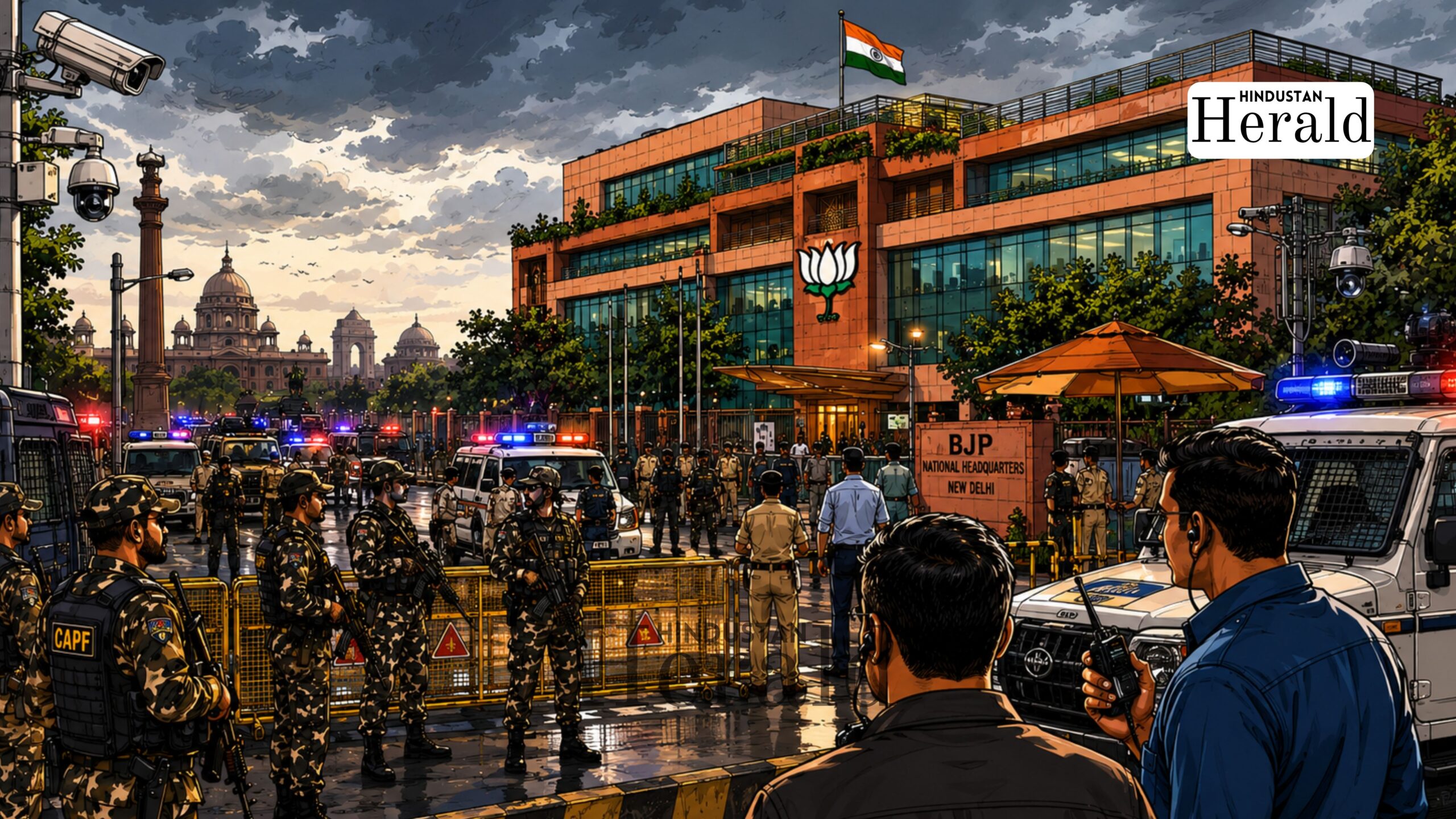
New Delhi, May 9: Nobody was expecting Saturday to be quiet. Not this week, not in this city, and certainly not around a building that has become, in the past decade, as much a symbol of political power as any ministry or monument in the capital.
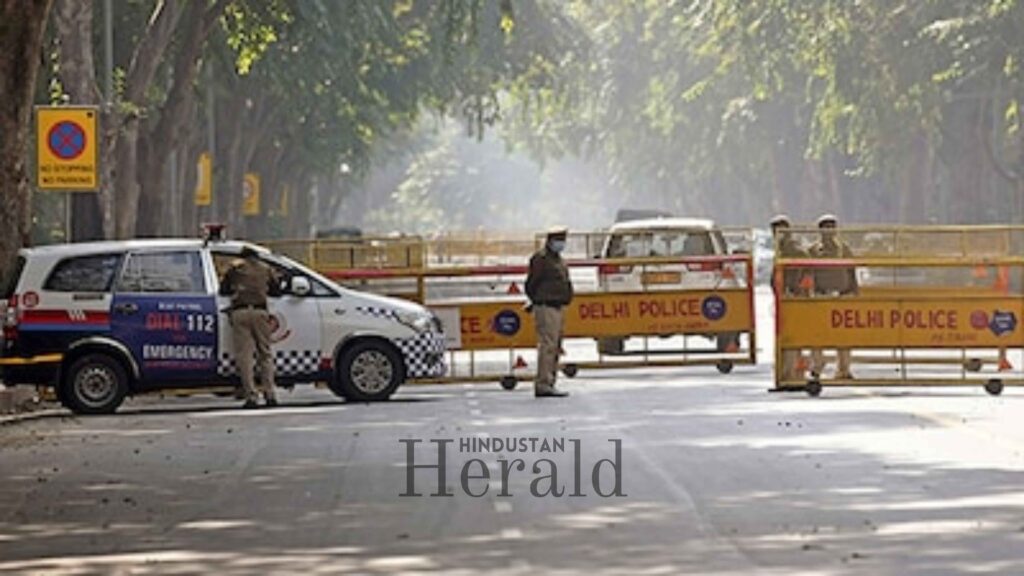
By mid-morning, Deen Dayal Upadhyay Marg was visibly different. Police vehicles lined the stretch outside the Bharatiya Janata Party’s national headquarters. Paramilitary personnel stood at intervals that made the deployment impossible to miss. Plainclothes officers, recognisable in the way plainclothes officers always are, moved through the area with the particular kind of focused calm that precedes something nobody wants to happen.
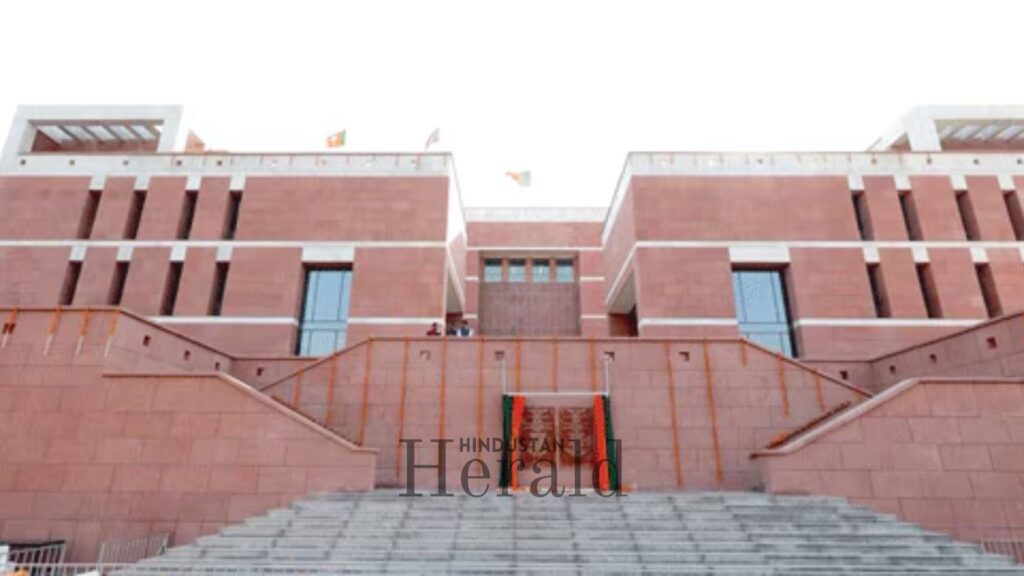
Intelligence agencies had sounded a high alert. The BJP headquarters and several key government institutions nearby were, as per sources, specifically named in threat inputs pointing to a possible terrorist attack. The methods reportedly flagged were the kind that need no introduction in Delhi anymore: suicide bombers and vehicle-borne IEDs. The city, it seems, has learned to speak the grammar of mass-casualty attacks.
No attack took place as of the time of this report. But the nature of the input was assessed as credible, and the security response on the ground reflected that assessment with unusual candour.
The Week This Threat Landed In
Timing, in terrorism, is rarely accidental.
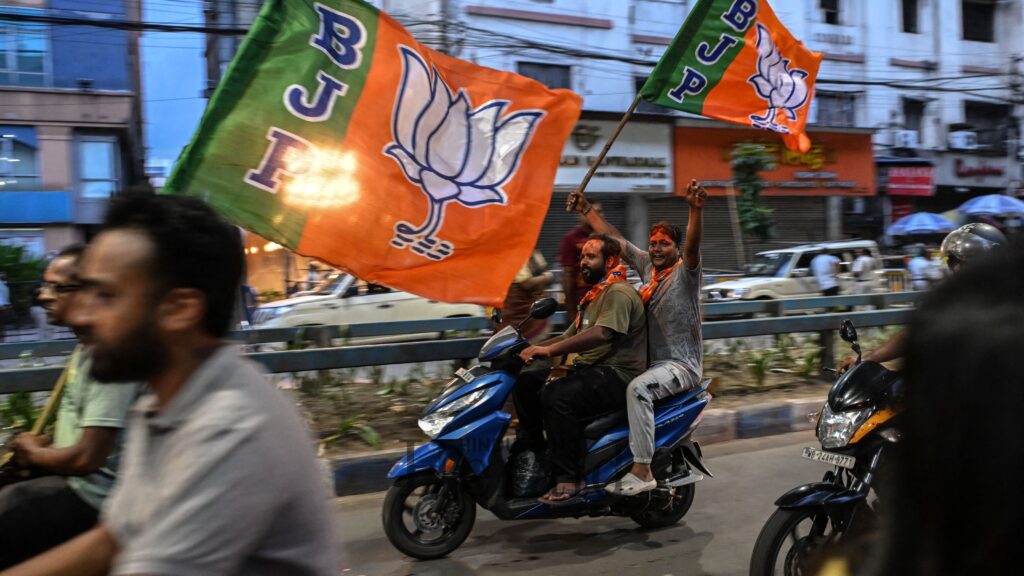
This alert arrived in the immediate aftermath of the first anniversary of Operation Sindoor, India’s May 7, 2025 military campaign that struck Lashkar-e-Taiba and Jaish-e-Mohammed infrastructure deep inside Pakistan following the Pahalgam attack, in which 26 civilians, mostly Hindu tourists, were killed. On Wednesday morning, at the precise hour the strikes were launched a year ago, the Indian Air Force posted an anniversary video on X carrying Prime Minister Narendra Modi’s voice warning that India would “identify, track, and punish every terrorist and their backers.”
The IAF’s accompanying message left little room for ambiguity: “Operation Sindoor continues. India forgets nothing. India forgives nothing.”
That message was directed outward, at networks across the border. But those networks, or affiliates of them, may have been listening with a different intention. An attack on the BJP’s headquarters, on the week of the Sindoor anniversary, would not be random. It would be a statement. Security officials tracking the threat inputs appear to have reached the same conclusion.
November Has Not Been Forgotten
There is a reason the word “vehicle-borne IED” lands differently in Delhi these days.
On November 10, 2025, a car loaded with ammonium nitrate exploded near the Red Fort, killing at least 15 people and injuring more than 20 others. Preliminary police findings pointed to a suicide attack, and the Indian government formally designated it a terrorist act two days later.
The National Investigation Agency subsequently named the alleged bomber as Umar Un Nabi, a Kashmiri resident and, remarkably, an assistant professor of general medicine at a Haryana university. His alleged accomplice, Amir Rashid Ali, had come to Delhi specifically to facilitate the purchase of the car used as the weapon.
That last detail is worth sitting with. A working academic. A car bought in someone else’s name. A busy metro station near a national landmark. The November attack did not require exotic infrastructure or a large operational cell. It required patience, local knowledge, and the kind of radicalisation that moves quietly through institutional life without leaving obvious traces. The security establishment knows this. The networks that plan these things know the establishment knows this. Saturday’s threat, in that context, is not a new playbook. It is the same one, aimed at a higher-value target.
Why the BJP Headquarters Specifically
This is not simply a party office. Not anymore, and perhaps not for quite some time.
The building at DDU Marg is where the ruling party’s national operations run. Senior leadership passes through it daily. It is where communication strategy is shaped, where state-level political decisions are filtered through national priorities, where the machinery of India’s most powerful political organisation quietly hums. An attack on this building would be, simultaneously, an attack on a physical structure, an institution, a political identity, and a government narrative.
Security analysts examining the post-Sindoor internal threat landscape have pointed to a distinct pattern in recent months: the explosion at the BJP office in Chandigarh, the blast outside the BSF headquarters in Jalandhar, and the discovery of ISI-linked modules in Punjab all point to a strategy of probing political and security targets rather than civilian soft targets alone. The shift is deliberate. Civilian casualties generate grief. Attacks on BJP infrastructure generate something more politically combustible.
As one analyst put it bluntly: “Terror networks are no longer on the margins. Recruitment is becoming more diverse, operations more technology-driven, and coordination more global.” The implication is uncomfortable but unavoidable: the post-Sindoor period has not produced deterrence so much as it has produced adaptation.
The Larger Equation
Operation Sindoor struck the headquarters of both Lashkar-e-Taiba and Jaish-e-Mohammed. Pakistan retaliated. The exchanges escalated into a four-day military conflict before a ceasefire on May 10, 2025. India came out of that confrontation with a sharper public posture on counter-terrorism and a government that staked considerable political capital on the message that the era of restraint was finished.
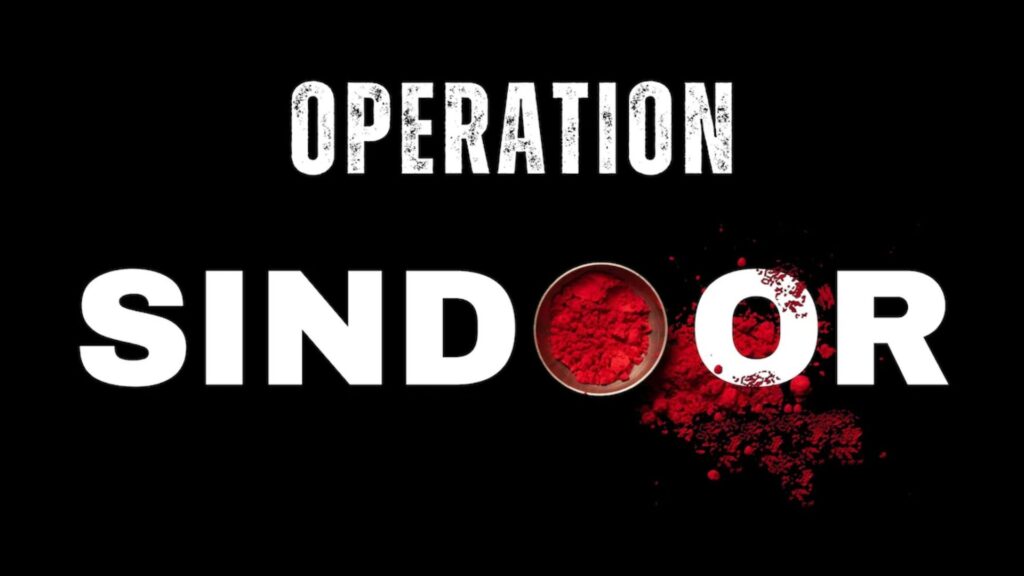
That posture has consequences. Despite the operation demonstrating India’s military resolve, Pakistan-backed networks have continued activities in more covert and sophisticated ways, seemingly undeterred. The strikes destroyed infrastructure. They did not destroy intent.
Speaking just two days ago on the Sindoor anniversary, Modi said his government remained “as steadfast as ever in our resolve to defeat terrorism and destroy its enabling ecosystem.” Those words, delivered at a time of national pride and political consolidation, now sit alongside a security alert on a Saturday morning in central Delhi. The gap between the speech and the street is, as it often is in this country, narrower than anyone would like.
What Saturday Actually Looked Like
The deployment was visible enough that it could not be explained away as routine. Multiple checkpoints. Heavy patrolling in the lanes feeding into DDU Marg. Heightened screening of vehicles. Sources familiar with the situation indicate coordination between Delhi Police, paramilitary units, the Intelligence Bureau, and, as is standard in credible threat scenarios, elements of the National Security Guard on standby.
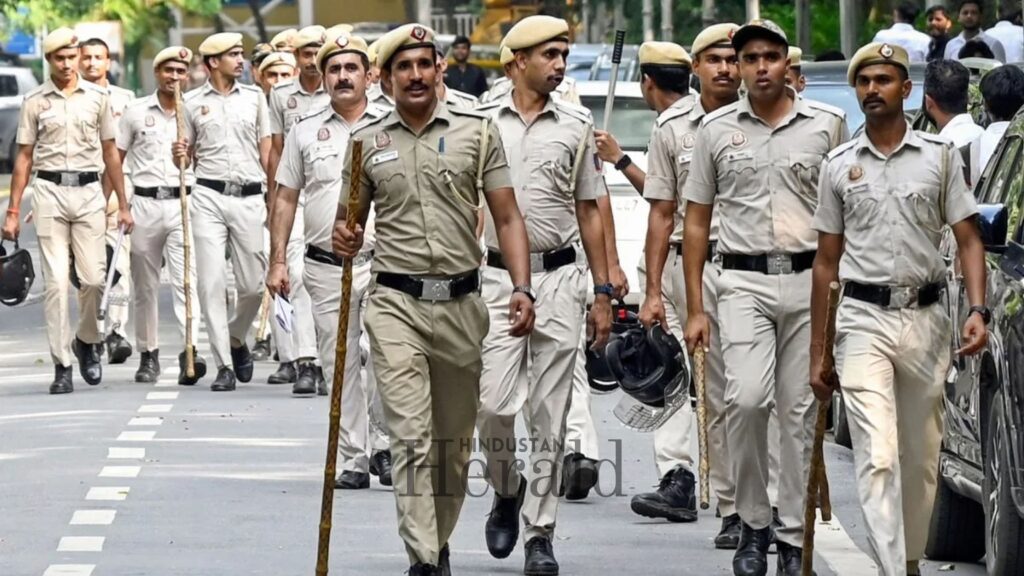
The BJP’s own office machinery continued to function, at least outwardly. Party workers came and went, though with noticeably tighter entry procedures. No official statement had been issued by Delhi Police or the party’s communication wing by the time this report was filed. In situations like this, silence is its own kind of operational discipline.
A City That Keeps Being Tested
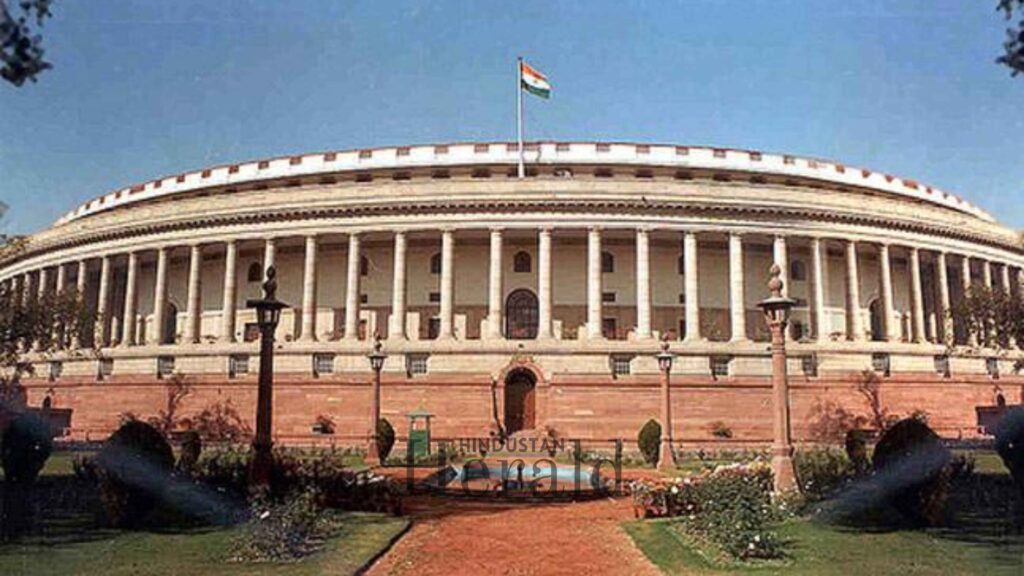
Delhi has been here before. The 2001 Parliament attack. The coordinated market bombings of 2008. The 2011 High Court blast. And then November 2025, which reminded a city that had perhaps grown accustomed to believing the worst was behind it that the threat never fully recedes. It just changes form.
What is different now is the political temperature. India is not the same country it was even three years ago in its relationship with the idea of terrorism as a manageable, recurring cost. Pahalgam changed the public mood in a way that is difficult to overstate. Sindoor channelled that mood into military action and political identity. And the BJP, more than any other institution in the country, is the vessel in which that identity currently resides.
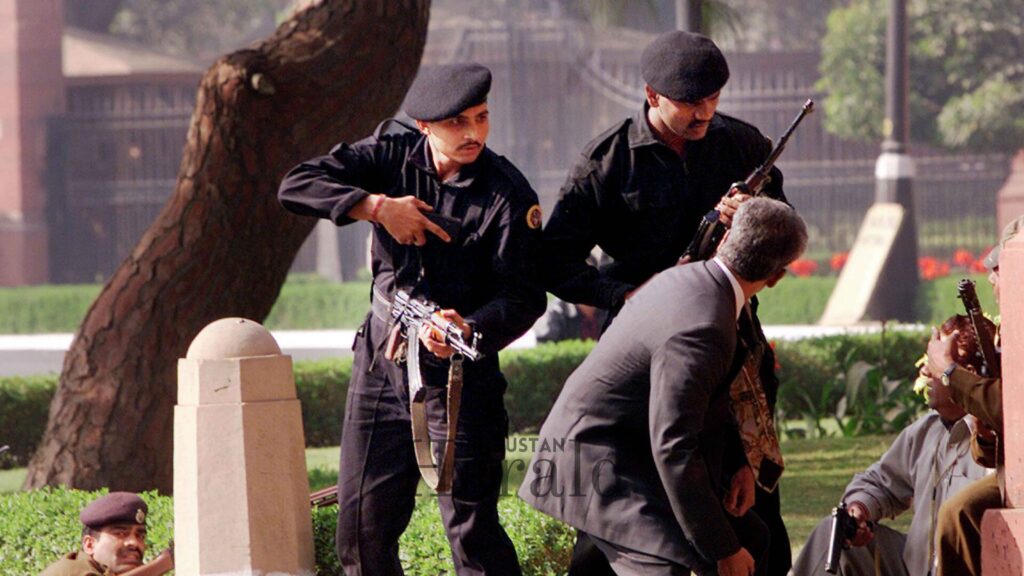
Targeting its headquarters is not merely a security calculation by whoever issued the threat. It is a political calculation. An attempt to embarrass a government that has built its image on being unbowable. An attempt to demonstrate that for all the BrahMos missiles and IAF anniversary videos, the capital is still reachable.
For now, the security cordon holds. The alert remains active. The city goes about its Saturday as cities do, mostly unaware of how close or how far the danger actually is.
That uncertainty is, of course, the whole point.
Stay ahead with Hindustan Herald — bringing you trusted news, sharp analysis, and stories that matter across Politics, Business, Technology, Sports, Entertainment, Lifestyle, and more.
Connect with us on Facebook, Instagram, X (Twitter), LinkedIn, YouTube, and join our Telegram community @hindustanherald for real-time updates.

Regional journalist bringing grassroots perspectives and stories from towns and cities across India.
- Sandeep Verma

- Sandeep Verma
- Sandeep Verma
- Sandeep Verma




 Ananya Sharma