
 By Ananya Sharma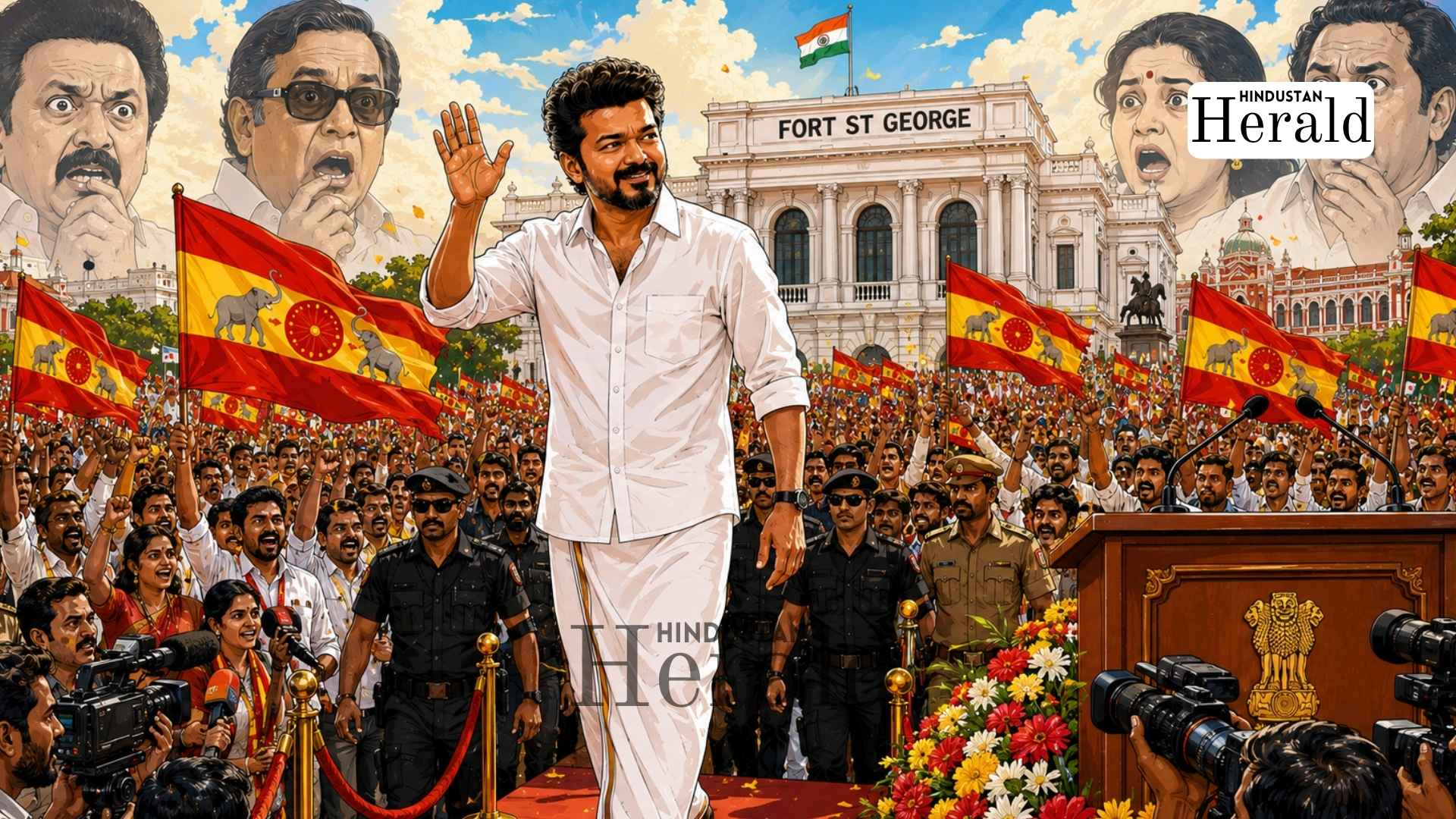
Chennai, May 8: Nobody saw this coming. Not really. Sure, people followed the campaign. Sure, the rallies were massive. But deep down, a lot of political observers in this state were quietly betting that Tamil Nadu would do what Tamil Nadu always does pick the DMK or pick the AIADMK, go home, repeat in five years.
That is not what happened.
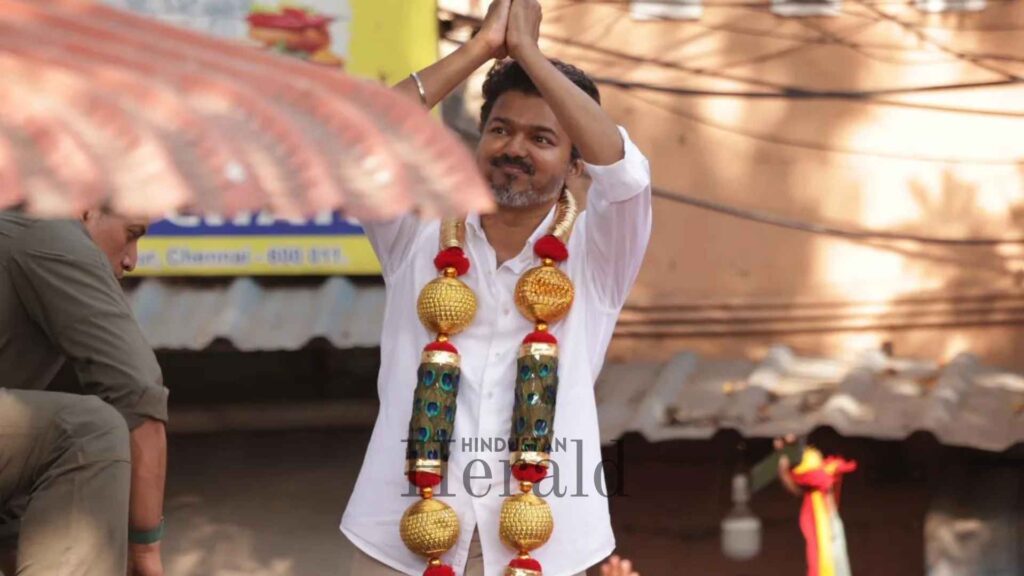
Vijay yes, the actor, the one from the films your parents and your kids both watch is going to be sworn in as Chief Minister of Tamil Nadu tomorrow morning. May 9. Eleven o’clock. And for once, that sentence is not speculation or fan excitement. It is simply what is happening.
First, Just Sit With What Changed
This state has been run by two parties for nearly 60 years. Not 60 years where they shared power. 60 years where they took turns. The DMK wins, governs five years, makes promises, delivers some, breaks others. Then the AIADMK wins, does roughly the same thing, with different people getting the contracts. Then the DMK again. Then the AIADMK again. Tamil Nadu politics has basically been a ceiling fan going round and round, same blades, just changing direction.
Vijay’s TVK just broke that fan.
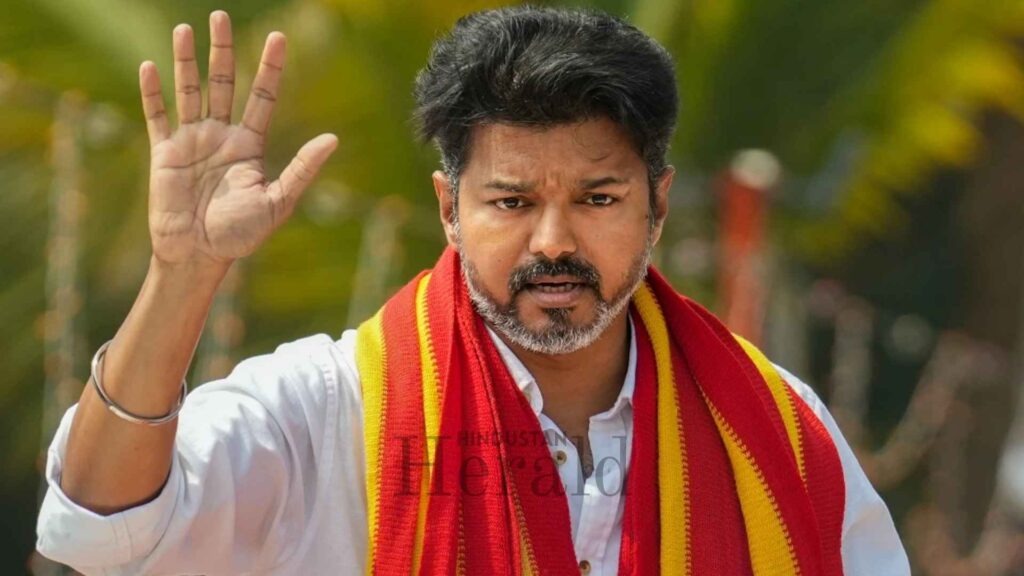
The party that did not exist two years ago walked into the 2026 Tamil Nadu Assembly elections, contested 233 seats alone without tying up with a single ally beforehand, and came back as the single largest party in the house. That is the kind of result that makes political scientists reach for a fresh sheet of paper.
What the Votes Actually Said
Results came out on May 4. TVK got 108 seats in a 234-seat assembly. That is not a majority on its own you need 118 for that. But no one else came close. The DMK, which ran the government going into this election, came back with 59 seats. Let that sink in. They got nearly half of what a two-year-old party managed.
The AIADMK got 47.
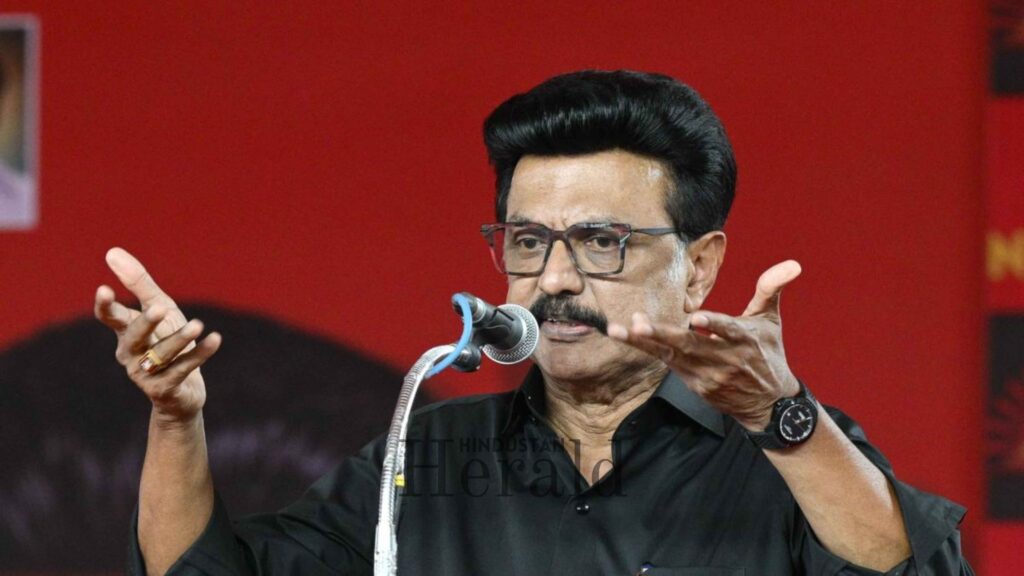
And M K Stalin, the Chief Minister, lost his own seat. Kolathur. A seat he had won three elections straight. Gone. On the same night his party got cut down to 59 seats, he personally lost. The symbolism of that was not lost on anyone watching the counting.
Voter turnout was 85.1 percent. Highest ever recorded in Tamil Nadu. People were not staying home this time.
The Messy Four Days After the Results
Winning 108 seats felt like a celebration. The ten days after felt like a chess match played in sweaty backrooms.
TVK needed 10 more seats to hit majority. Every small party, every independent MLA, every leftover from various alliances suddenly became very important. Very sought after. Very aware of that fact.
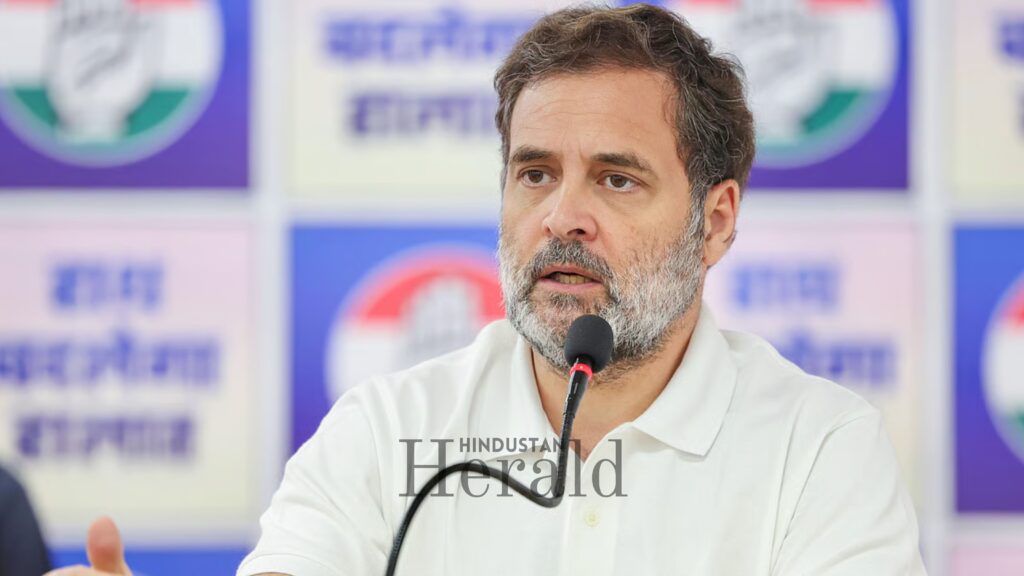
The Congress party moved first. Now, Congress had fought this election with the DMK. They were in the same alliance, shared stages, made joint promises to voters. But once the results came in and the DMK lay wounded with 59 seats, Congress did a quiet calculation and walked across. They have five MLAs. They brought those five to Vijay’s side.
Their price? One condition. TVK must never, ever get into bed with the BJP. Vijay said yes. Congress came aboard.
Still needed five more.
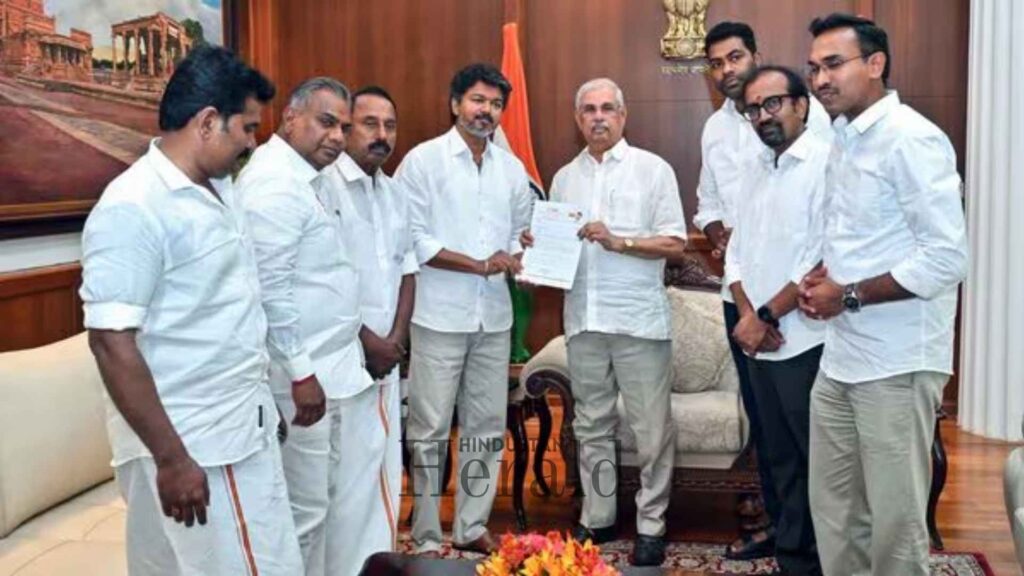
On May 6, Vijay went to Lok Bhavan that is where the Governor, Rajendra Vishwanath Arlekar, sits and formally said: I have the numbers, invite me to form the government.
The Governor sent him back. Come with proof of 118 signatures, he said. Then we talk.
That decision lit a fire.
Karur MP Jothimani of the Congress said the Governor was “playing politics via the Raj Bhavan.” The Tamil Nadu Congress Committee called for protests at district headquarters across the state on May 8 today. Kamal Haasan, who leads his own party and sits in Parliament’s upper house, said publicly that not inviting TVK would mean “disrespecting the mandate” of the people who voted.
Somebody even went to the Supreme Court. Filed a petition asking the court to tell the Governor to just do his constitutional job.
This is not the first time India has seen something like this. Maharashtra had a version of this. So did Karnataka. So did Jharkhand. When the party winning a state is not the party that the Central government likes, the Raj Bhavan sometimes finds reasons to slow things down. Constitutional law is pretty clear the single largest party gets the first invitation. There was nobody else with a ready majority. But the delay happened anyway.
How the Math Finally Got Settled
Thursday evening things moved fast.
The CPI gave two seats. Unconditional support, they said. The CPI(M) followed, another two. The VCK came in as well two more seats. And the Indian Union Muslim League added two more on top.
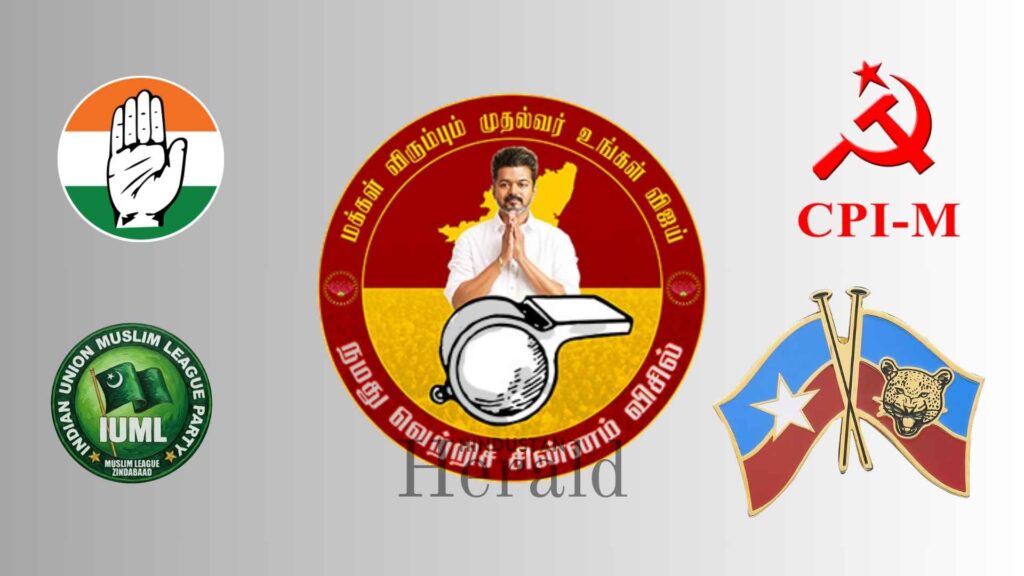
Add all of that up. TVK’s 108. Congress’s 5. CPI’s 2. CPI(M)’s 2. VCK’s 2. IUML’s 2.
That is 121 seats. Three more than needed.
Vijay went back to Lok Bhavan on May 8. This time the Governor did not send him away. The claim was accepted. Swearing-in is tomorrow, May 9 at 11 am, according to reports.
Small practical detail worth knowing: Vijay won from two seats, Perambur and Tiruchirappalli East. The law says an MLA can only hold one seat at a time. So he vacates one, a by-election gets called for that constituency, and TVK’s own seat count technically becomes 107 before coalition support is added. The government still has a working majority. But that by-election will be watched closely.
The Bigger Question How Did He Actually Pull This Off
Forget the coalition drama for a second. Go back to April 23, the day people actually voted.
TVK did something genuinely difficult. It pulled votes from both the DMK and the AIADMK at the same time. Not in one pocket of the state. Across Salem, Coimbatore, Erode, Tiruchirappalli, Madurai the cities swung hard toward Vijay. Young people. Women. First-time voters. People who had spent years feeling like the two Dravidian parties were just two versions of the same broken promise.
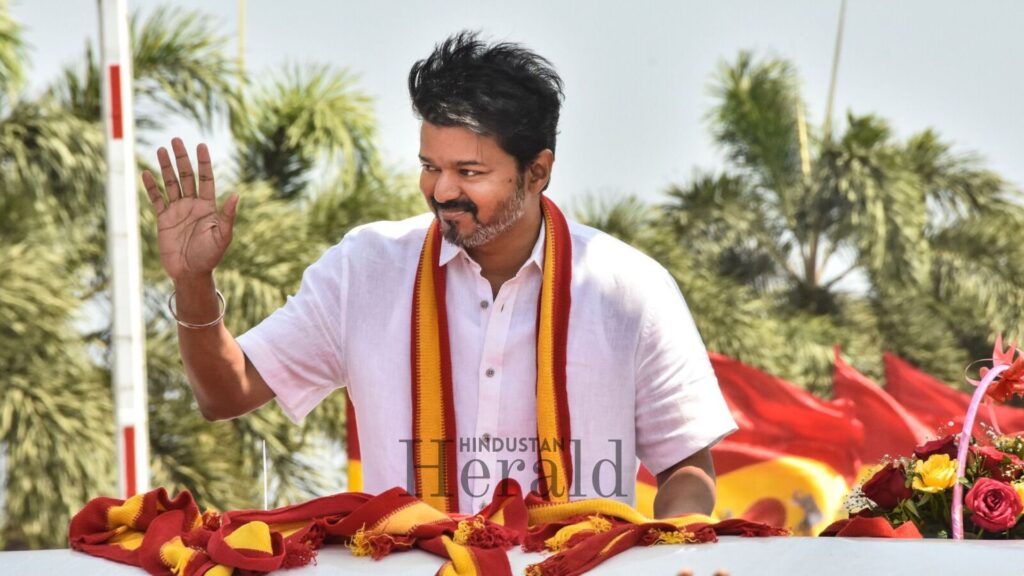
Analysts are calling it the Vijay factor. Which is a clean phrase for something messier and more interesting. Yes, Vijay is a film star with a fanbase that most politicians would give anything for. But fan followings do not automatically become vote banks. Tamil Nadu politics has seen that fail before. What TVK did was take that energy and turn it into actual boots-on-the-ground organisation. They were at booths. They were doing door-to-door. They ran social media the way a startup would, not the way a legacy party does.
And the message was simple enough for anyone to understand: we are not them. We are new. Give us a chance.
People did.
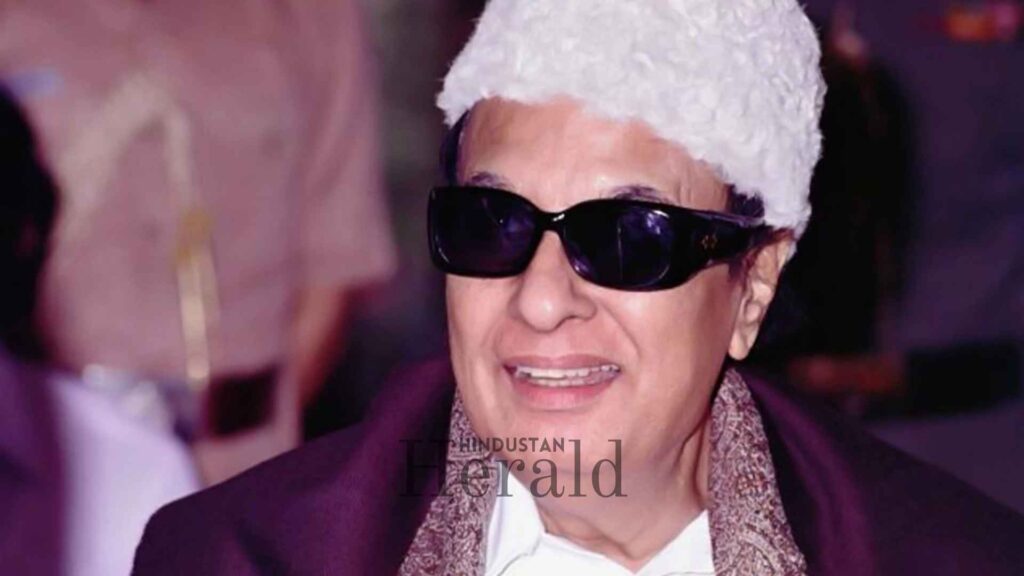
Everyone is comparing Vijay to M G Ramachandran right now. To Jayalalithaa. Both massive film stars, both became Chief Ministers, both left behind legacies that Tamil Nadu still argues about. The comparison is fair on the surface. But there is one difference worth noting. MGR built on an existing party. Jayalalithaa inherited a structure. Vijay built TVK from nothing in 2024, named himself the CM candidate at a party meeting in Mahabalipuram in November 2025, and six months later won a state election. That kind of timeline does not have many parallels anywhere in Indian political history.
What Actually Comes Next The Unglamorous Part
The oath ceremony will be covered wall to wall. Social media will be loud. Fans will celebrate. All of that is fine and expected.
But after the cameras leave, the work starts. And it is not easy work.
Tamil Nadu runs expensive welfare programmes. Free electricity, subsidised food, women’s self-help schemes these are not luxuries anymore in Tamil Nadu politics, they are expectations. A new government does not get to quietly cancel them. But paying for them while also investing in new things is a genuine fiscal challenge that the state has been wrestling with for years.
Vijay’s coalition is held together right now by the shared goal of forming the government. Once the government is formed, each partner will have its own list of expectations. Congress will want its condition about the BJP honoured. The Left parties will push on their issues. The IUML has its communities to answer to. Managing a coalition government is, as many Chief Ministers before Vijay have discovered, a full-time negotiation that never really ends.
And then there is New Delhi. TVK positioned itself from day one as explicitly against the BJP’s politics. That stance won votes. It also means the relationship between Chennai and Delhi is going to need careful handling. State governments depend on the Centre for funds, for projects, for a hundred administrative clearances that can be speeded up or slowed down depending on how the relationship is going. Vijay will have to find a way to stand by his principles and also run a state. Both at the same time.
None of this makes what happened this week less remarkable. It just makes it real.
Tonight, Before All That Begins
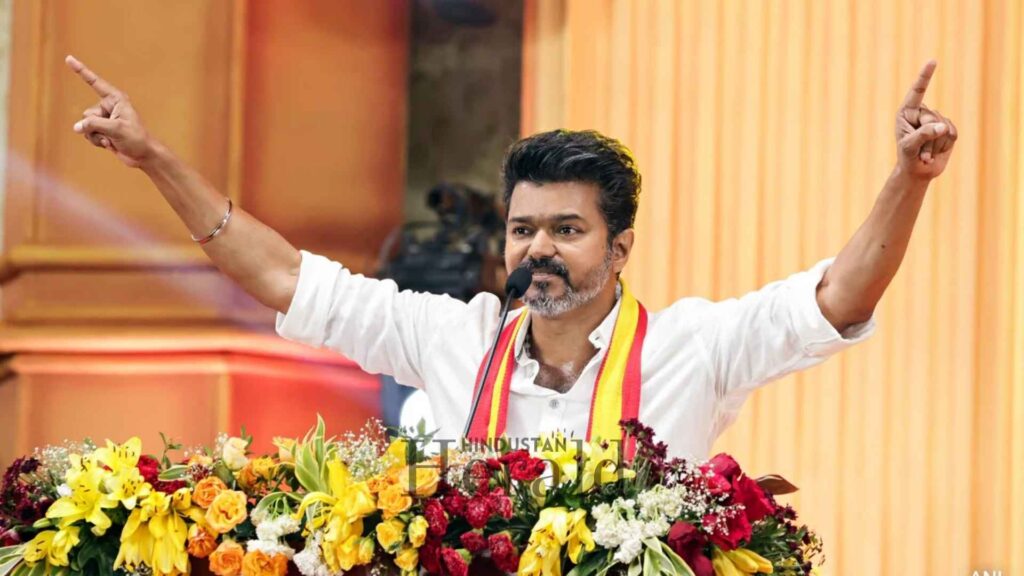
Somewhere in Tamil Nadu tonight, first-time voters who queued up in the April heat are watching this on their phones. Young people who knocked on doors for TVK are watching this. Women who made up a huge part of that record 85 percent turnout are watching this.
They voted for something different. Tomorrow they find out whether different can also mean better.
Vijay takes the oath at 11 am.
The real work begins at 11:01.
Stay ahead with Hindustan Herald — bringing you trusted news, sharp analysis, and stories that matter across Politics, Business, Technology, Sports, Entertainment, Lifestyle, and more.
Connect with us on Facebook, Instagram, X (Twitter), LinkedIn, YouTube, and join our Telegram community @hindustanherald for real-time updates.

Covers Indian politics, governance, and policy developments with over a decade of experience in political reporting.
- Ananya Sharma

- Ananya Sharma
- Ananya Sharma
- Ananya Sharma


 Sandeep Verma