
 By Ananya Sharma
Chennai, May 12: C. Joseph Vijay has been Chief Minister of Tamil Nadu for barely two days. And already, he has done something that several governments before him promised and quietly forgot.
On Monday, the newly sworn-in Chief Minister ordered the closure of 717 state-run TASMAC liquor shops operating within 500 metres of schools, temples, and bus stands across Tamil Nadu. All of them. Within two weeks. A statewide survey was conducted, locations were mapped, and an official order went out. No committee formation, no “we will study the matter,” no kicking it down the road.
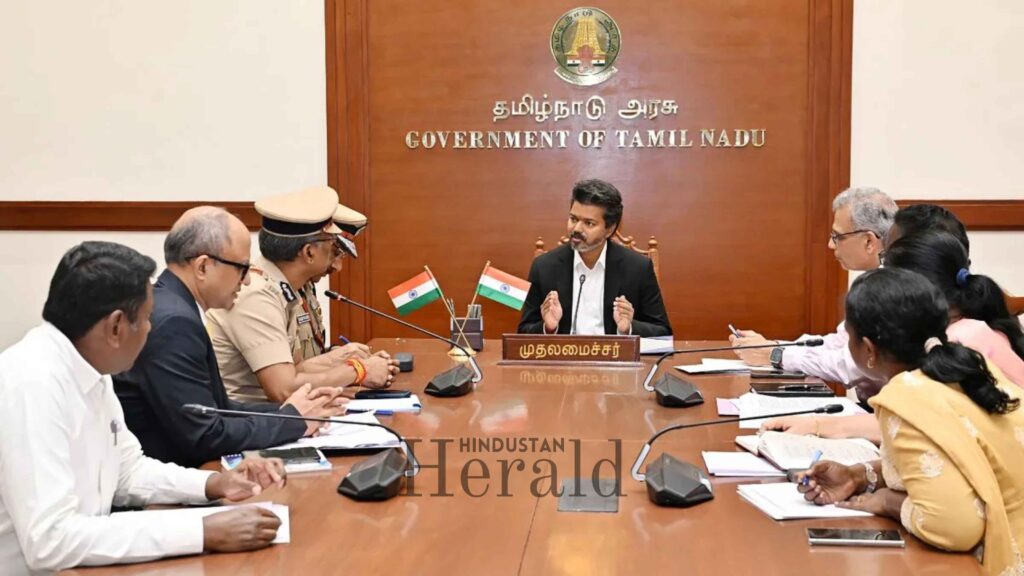
For a state that has watched liquor politics play out in slow motion for decades, this felt different.
717 Shops. Not a Round Number. That Matters.
The specificity of the figure is worth pausing on. This was not a government announcing that it intends to act on liquor shops near sensitive areas. It conducted a survey first, then released a number. 717 shops. Of these, 276 are next to places of worship, 186 near educational institutions, and 255 clustered around bus stands.
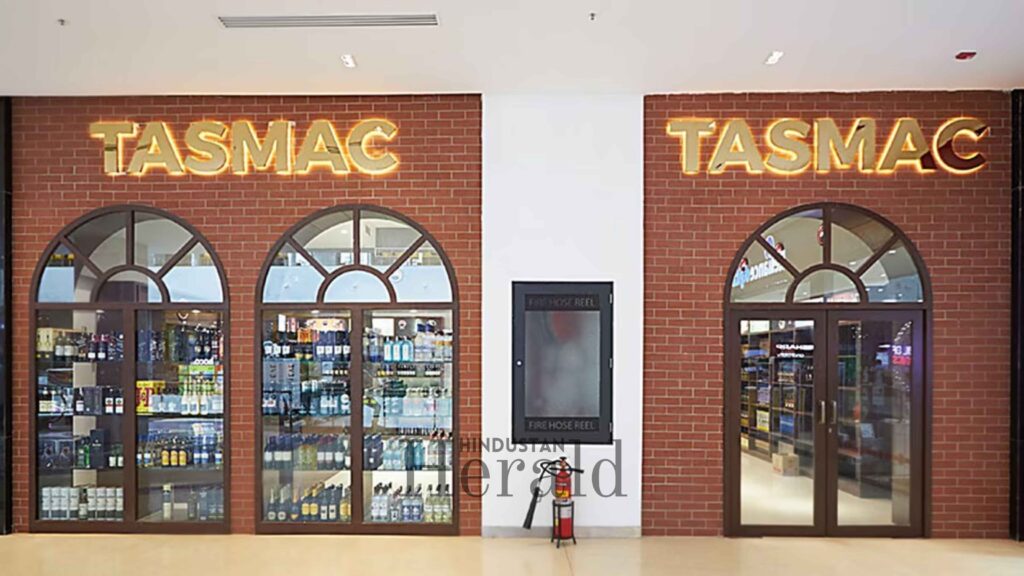
Tamil Nadu runs 4,765 TASMAC outlets in total. That means roughly one in every seven state-run liquor shops in Tamil Nadu sits within 500 metres of a school, a temple, or a bus stand. That number has apparently been sitting there for years, unaddressed. No previous government felt it necessary to map this out and act on it, at least not in any meaningful, time-bound way.
The two-week shutdown deadline changes the nature of the conversation. This is not a policy announcement. It is an administrative instruction with a clock attached.
What This Looks Like on the Ground
Walk past a TASMAC shop near a government school on any given afternoon and you understand why this has been a persistent demand from parents, women’s groups, and neighbourhood associations for years. The issue is not abstract. It is the man drunk at the bus stand at 3 in the afternoon. It is the woman who has to navigate past a liquor shop every time she picks her child up from school. It is the sense that the state built these outlets for revenue and left communities to deal with the consequences.
That frustration has been expressed, loudly and repeatedly, by social activists, religious organisations, and ordinary citizens across Tamil Nadu for the better part of two decades. What changed is that the person now sitting in the Chief Minister’s chair actually campaigned on this issue and appears, at least in these first hours, to mean it.
Vijay’s Tamilaga Vettri Kazhagam had a drug-free Tamil Nadu as a core promise in its manifesto. Youth safety, women’s security, reducing alcohol-related harm, these were not footnotes. They were campaign centrepieces. The TASMAC order is, in that sense, the most straightforward possible delivery on a stated commitment.
The Revenue Conversation No Government Likes to Have
Here is where it gets complicated. TASMAC is not just a liquor seller. It is one of the most significant contributors to the Tamil Nadu state exchequer. The corporation brings in thousands of crores annually, and governments across administrations have relied on that revenue to balance books and fund schemes. Shutting 717 outlets does not collapse TASMAC, but it is not a minor adjustment either.
Previous administrations faced this same tension and generally resolved it the same way: in favour of the revenue. Social demands were acknowledged, committees were formed, reports were filed, and the shops stayed open.
Vijay’s government is making a different bet. The political calculation appears to be that the goodwill from this decision, especially among women, working-class families, and religious communities, is worth absorbing the financial impact of closing 15 percent of the network. Whether that calculation holds as governance gets harder is a question only time will answer.
Still, it is worth recognising that closing shops near schools and temples does not, by itself, reduce total alcohol consumption in the state. Drinkers do not stop drinking because their nearest TASMAC moved. What it does change is the character of public spaces around sensitive areas, and that is not a small thing for the communities that have been living with this for years.
TASMAC’s Other Problem: The ED Shadow
The political backdrop here includes something beyond social welfare. TASMAC has been under Enforcement Directorate scrutiny over alleged money laundering and financial irregularities. The corporation’s internal operations have faced questions for some time, and the previous government found itself defending the organisation under uncomfortable circumstances in the run-up to the elections.

By walking in and ordering mass closures on day two, Vijay is also signalling a clean break from that association. Whether it is genuine reform or political optics, or some honest combination of both, it positions the TVK administration as having walked into a messy situation and immediately tried to change its direction.
How Vijay Got to This Chair
Getting here was not straightforward. The 2026 Tamil Nadu Assembly elections produced a complicated result. TVK emerged as the single largest party but fell short of a majority. Days of negotiations followed, with Congress, the Left parties, and the Viduthalai Chiruthaigal Katchi eventually extending support. The coalition arithmetic was not clean or comfortable.
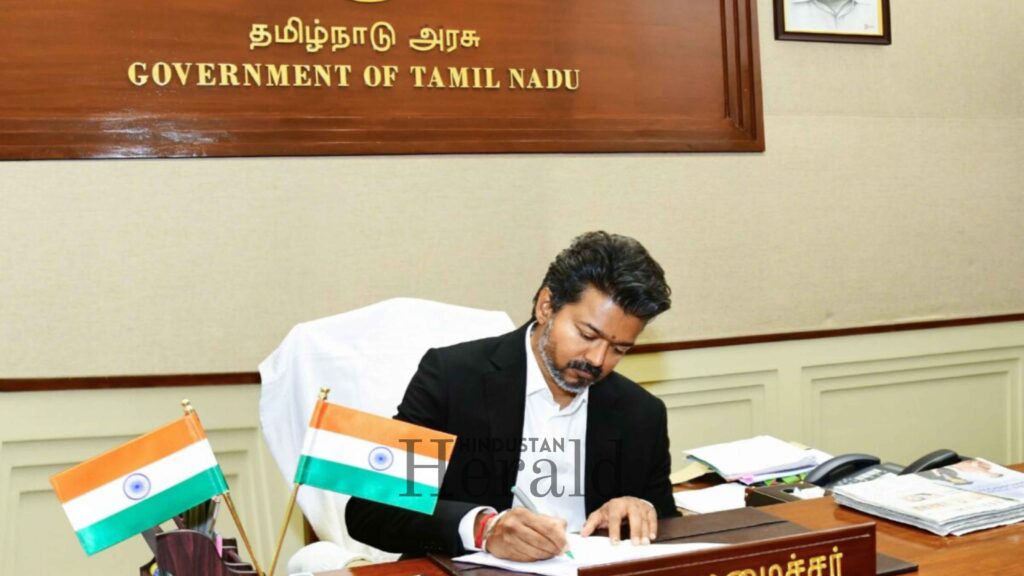
Which makes the speed of this TASMAC order more striking. In a coalition government, early decisions are usually cautious. You are managing partners, managing expectations, managing the bureaucracy you have inherited. Vijay came out swinging on an issue that touches revenue, entrenched interests, and state infrastructure all at once.
That is either confidence or pressure, possibly both.
Thirty Years of This Conversation in Tamil Nadu
It is worth being clear-eyed about what 717 closures can and cannot do. Tamil Nadu has had versions of this conversation since at least the early 1990s. Prohibition debates, partial restrictions, zoning regulations, they have come and gone. The TASMAC network has grown through most of it.
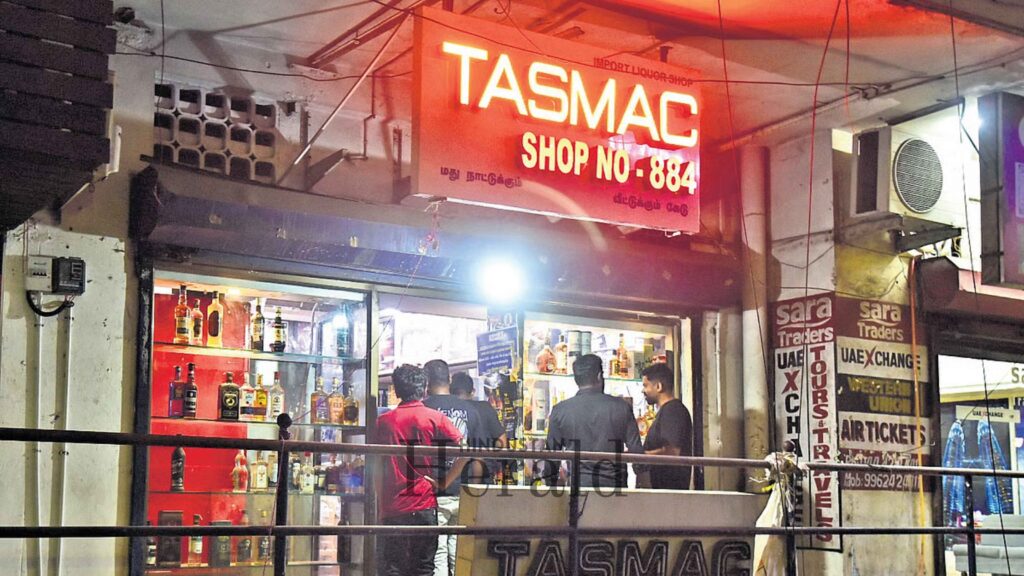
The women’s anti-arrack movement that shook Andhra Pradesh in 1992 had echoes across the south, including Tamil Nadu. Local women’s groups have organised repeatedly over the years demanding closures, relocation of shops, and stricter enforcement. Their demands were never entirely ignored, but they were rarely acted on with the kind of directness that this order represents.
The question hanging over all of this is: what comes next. Will the remaining TASMAC shops face tighter operational controls? Will the government address enforcement against illicit liquor, which has historically filled gaps when state-run supply is curtailed? Will it invest in de-addiction infrastructure, which is woefully underfunded across Tamil Nadu? These are harder, slower problems than ordering 717 closures, and they will define whether this moment becomes policy or just a headline.
Two Days In, One Big Move
For now, what exists is a two-week deadline and 717 shops that will, if the order holds, cease operations near places where children go to learn, where families go to pray, and where millions of Tamil Nadu residents catch their morning and evening buses.
That is a tangible, visible change. It is exactly the kind of thing Vijay promised when he was still an actor-turned-politician that most of the political establishment refused to take seriously. They take him seriously now.
Whether this is the beginning of genuine reform in Tamil Nadu’s alcohol policy or the high-water mark of TVK’s social ambitions, the state is watching closely. And for the first time in a long time, communities near these 717 outlets have something to wait for that feels real.
Stay ahead with Hindustan Herald — bringing you trusted news, sharp analysis, and stories that matter across Politics, Business, Technology, Sports, Entertainment, Lifestyle, and more.
Connect with us on Facebook, Instagram, X (Twitter), LinkedIn, YouTube, and join our Telegram community @hindustanherald for real-time updates.

Covers Indian politics, governance, and policy developments with over a decade of experience in political reporting.
- Ananya Sharma

- Ananya Sharma
- Ananya Sharma
- Ananya Sharma




 Sandeep Verma