
 By Ananya Sharma
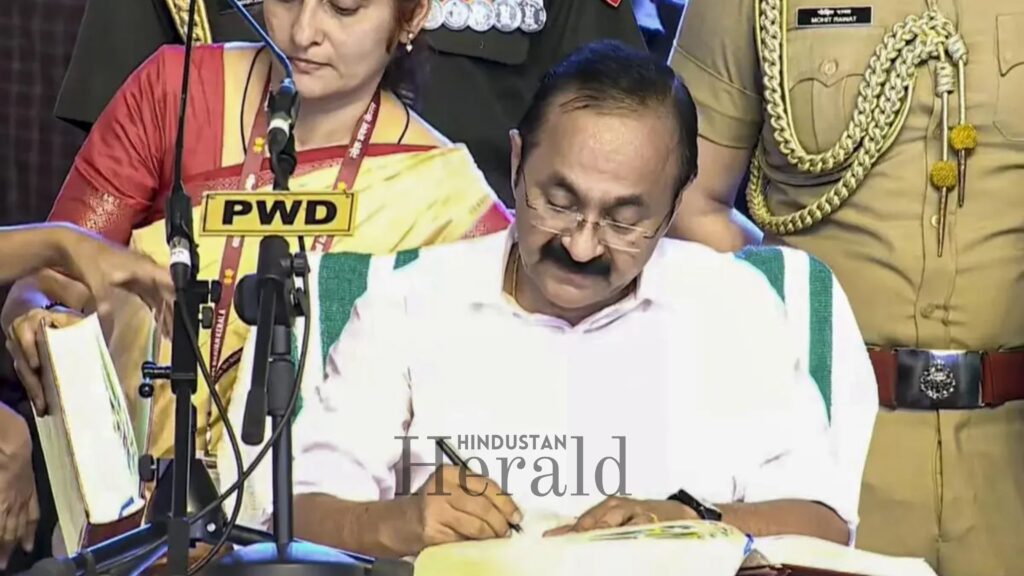
Thiruvananthapuram, May 20: Kerala Chief Minister VD Satheesan made it official on Wednesday. The SilverLine semi-high-speed rail project, one of the most bitterly contested infrastructure proposals in the state’s recent history, is dead. The new UDF government, just weeks into its term, has denotified all land acquisition orders tied to the 530-kilometre corridor and directed that every police case connected to protests against the project be withdrawn.
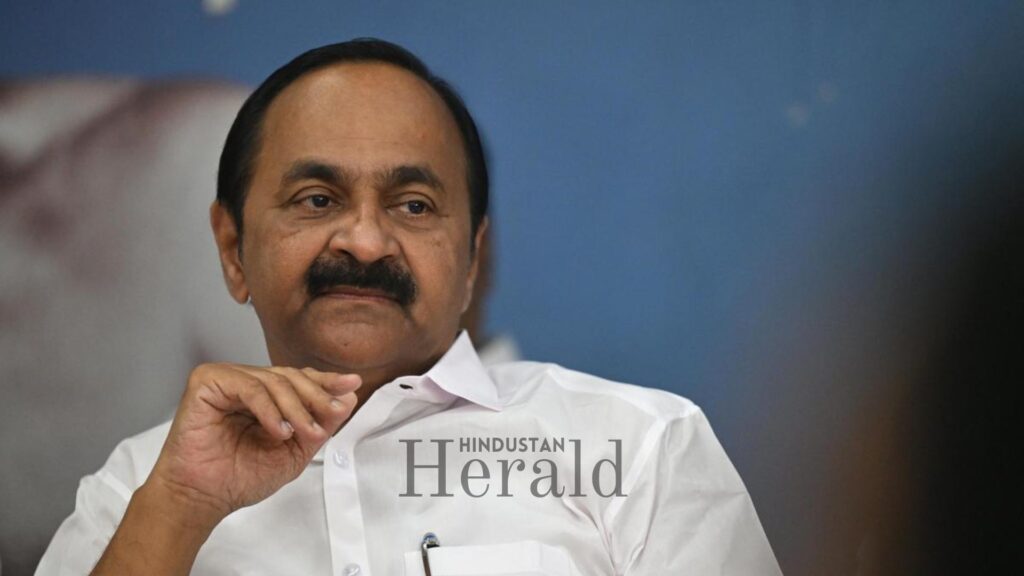
The announcement came after the second Cabinet meeting of the Satheesan government. Standing before reporters, the Chief Minister was blunt. “The project is not taking off. The Central government has not approved it either. We had also opposed this. The people who own the land are unable to sell it. So we have decided to cancel the project.”
It was a moment that protest groups, environmentalists, and thousands of landowners across eleven districts had been waiting years for.
A Project That Was Born Controversial
The seeds of SilverLine were planted more than a decade and a half ago. According to a Manorama report, the high-speed rail project between Thiruvananthapuram and Kasaragod was first presented by the LDF government as part of its state budget for 2009-10. But it remained largely on paper through successive governments until the Pinarayi Vijayan-led LDF administration pushed it forward in earnest after 2020.

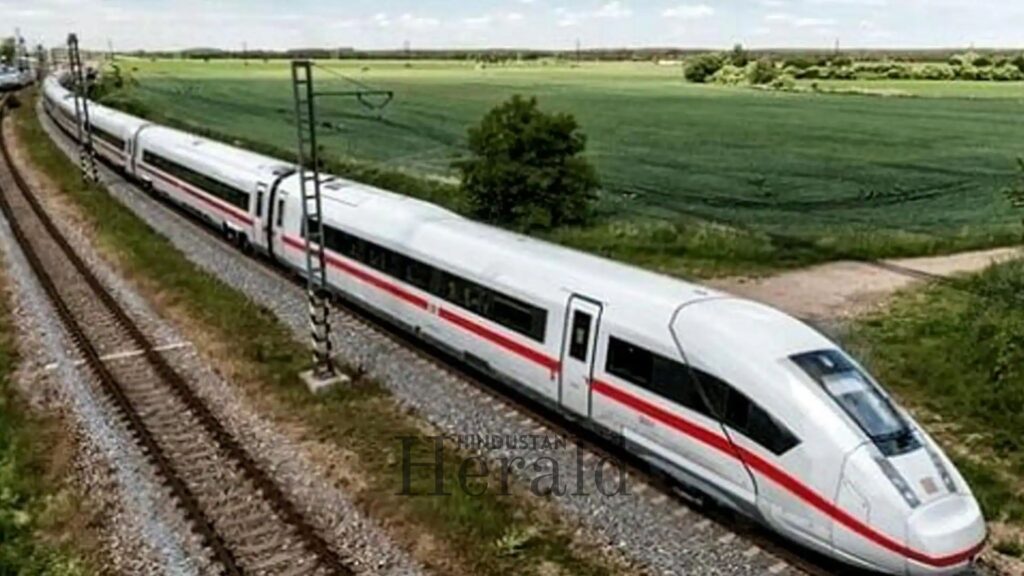
The SilverLine corridor was designed as a 532-kilometre semi-high-speed rail line connecting Thiruvananthapuram in the south and Kasaragod in the north, with trains operating at a maximum speed of 200 kilometres per hour and capable of covering the distance in under four hours, compared to the current ten to twelve hours by conventional rail.
On paper, the project sounded transformative. In practice, it became a flashpoint.
The Rs 64,000-crore project became a flashpoint between the Kerala government, environmental and social activists, opposition parties, and urban development experts. Criticism came from multiple directions simultaneously displacement of families, ecological damage, allegations of financial mismanagement, and a fundamental question about whether Kerala could afford to take on such debt at all.
For meeting the expenses of the Rs 66,079 crore project, Rs 34,454 crore was to come as loans, while the Centre and state were each required to provide Rs 7,720 crore. The Kerala government alone was to spend Rs 8,656 crore on land acquisition and related matters.
The Numbers Behind the Opposition
When the Detailed Project Report was finally released by the LDF government in January 2022 after months of refusing to make it public, with one former official even claiming it contained matters related to national security the opposition tore it apart.
Satheesan, then serving as Leader of Opposition, dubbed the DPR as bogus, saying the over 3,700-page report was incomplete and unscientific. “The DPR does not contain studies regarding the social and environmental impact the project will have,” he said.

That charge carried weight. Environmental activists had long argued that routing a fully fenced, standard-gauge rail corridor through Kerala’s densely populated and ecologically sensitive terrain was a recipe for disaster. Activist Medha Patkar, who had been vocal against the project, said Kerala had become a flood-prone state and that mega-infrastructure projects like this had led to waterlogging since they become barriers to the natural flow of water.
Patkar also pointed out that the government’s claim of it being a “green project” was hollow, since the rail ran on electricity produced largely from thermal plants.
The project route would have passed through eleven of Kerala’s fourteen districts. Land acquisition alone required 1,383 hectares, of which 1,198 hectares was private land. For families living along the corridor, the yellow survey stones that began appearing on their properties were not symbols of progress they were symbols of forced displacement.
Satheesan had alleged at the time that twenty thousand families would be displaced, and that the LDF was undertaking the project in violation of laws for a ten per cent commission. Those were fighting words. The LDF dismissed them as political theatre.
Yellow Stones, Protests, and Police Cases
What followed across 2021 and 2022 was one of Kerala’s most intense grassroots agitations in years. Survey teams sent to mark land were confronted by residents. Yellow boundary stones were uprooted and thrown away. Protest committees formed in village after village along the proposed route.
Extensive protests against the project were held across the state, led by the Congress. Agitators uprooted and threw away many yellow markers associated with the project. Hundreds of cases were registered against protesters. Many were ordinary citizens farmers, homeowners, retirees who had simply refused to accept that their land would be taken for a project they had never been consulted about.
The central government’s position only complicated things further. In October 2021, the Union government refused to back foreign funding for the project. In response, the Kerala government in November expressed willingness to take up the financial liabilities on its own. That was a significant shift and a warning sign. Without foreign funding, the fiscal math became even harder to defend for a state that was already dealing with serious public debt pressures.
Financial analysts had flagged that if there were cost overruns in the project, proposed fares would also shoot up, which might in turn attract fewer passengers and put state finances in jeopardy. The projected daily ridership of 67,740 passengers was also questioned by Satheesan at the time, who noted that current rail ridership on the same route was far lower.
What Wednesday’s Decision Means
The formal denotification announced by the Satheesan Cabinet on Wednesday addresses every major demand that protest groups had been raising for years.
Addressing the press conference after the Cabinet meeting, Satheesan said: “In today’s Cabinet, we have decided to denotify the SilverLine project. The acquisition process will be denotified. We will recommend that the concerned authorities withdraw all cases connected with the SilverLine agitation. We have asked the Revenue Department to remove all boundary signals for acquiring this land.”
Protest groups reacted with visible relief. K. Rajeevan of the agitation committee said the Cabinet had accepted four major demands the committee had submitted the previous day: cancellation of the 2020 project decision, withdrawal of the 2021 land acquisition notification, withdrawal of all pending police cases connected to protests, and removal of the remaining yellow survey stones placed in various locations.
That all four demands were accepted in a single Cabinet meeting, the day after the memorandum was submitted, was seen as a strong signal from the new government about where its priorities lie.
Satheesan’s Long-Standing Position
It is worth noting that Wednesday’s announcement is entirely consistent with everything Satheesan has said about SilverLine for years. His opposition to the project was never soft-pedalled.
Satheesan had said clearly: “We opposed the SilverLine project after studying its DPR. It would have created an environmental disaster in Kerala and financially destroyed the state. Our stand was based on facts.”

That he is now in a position to act on that stand as Chief Minister rather than opposition leader gives the denotification a certain political symmetry. The man who led the streets protests against the yellow stones is now the man who has ordered them removed.
Still, questions linger. The problem that SilverLine was meant to solve kerala’s creaking transport infrastructure has not gone away. The state’s conventional rail network remains overcrowded, slow, and inadequate for a state with one of the highest population densities in the country. Road congestion continues to worsen. The DPR had noted that road traffic had been growing at a rate of ten to eleven per cent in the state whereas the growth of road length had been negligible.
What replaces SilverLine in Kerala’s infrastructure imagination is not yet clear. Satheesan’s government has spoken broadly about a Vision 2031 framework for implementing manifesto promises, but no specific alternative rail project has been announced as of Wednesday.
The Broader Lesson
SilverLine’s collapse tells a story that goes beyond Kerala. It is a story about what happens when ambitious infrastructure projects are pushed forward without transparent public consultation, without published environmental impact assessments, and without a credible financial plan. The LDF’s determination to proceed despite opposition from the Centre, from environmental groups, from civil society, and from hundreds of thousands of citizens along the corridor ultimately produced nothing except years of anxiety for landowners and a significant fiscal and administrative mess to clean up.

The LDF’s decision to disallow the Detailed Project Report from public scrutiny had fanned the controversy further. Opacity, in a democratic polity, rarely produces the outcomes governments intend.
For now, the yellow stones will be removed. The land acquisition notifications will be cancelled. The police cases will be withdrawn. And Kerala will have to think again this time, it is hoped, more carefully and more honestly about how it intends to move its people from one end of the state to the other.
Stay ahead with Hindustan Herald — bringing you trusted news, sharp analysis, and stories that matter across Politics, Business, Technology, Sports, Entertainment, Lifestyle, and more.
Connect with us on Facebook, Instagram, X (Twitter), LinkedIn, YouTube, and join our Telegram community @hindustanherald for real-time updates.

Covers Indian politics, governance, and policy developments with over a decade of experience in political reporting.
- Ananya Sharma

- Ananya Sharma
- Ananya Sharma
- Ananya Sharma




 Arun Upadhayay