
 By Ananya Sharma
Bhopal, May 19: A Bhopal district court on Monday denied anticipatory bail to advocate Samarth Singh, the husband of 33-year-old Twisha Sharma, who was found hanging at her marital home in the city’s Katara Hills area on May 12. The ruling, delivered by Additional Sessions Judge Pallavi Dwivedi, came a day after a separate bench granted bail to Samarth’s mother, retired district judge Giribala Singh, on Friday, May 15 a split verdict that has deepened public scrutiny of a case already generating enormous national attention.

Following the rejection of his anticipatory bail plea, the Katara Hills police announced a reward of Rs 10,000 for information leading to the arrest of Samarth Singh, who has been absconding since the case came to light. Assistant Police Commissioner Rajnish Kashyap Kaul confirmed the reward was announced by Deputy Commissioner of Police Zone-2, with multiple police teams conducting raids at several locations.
A Five-Month Marriage That Ended In Tragedy
Twisha Sharma, a 33-year-old marketing and communications professional from Noida, was found dead at her marital home in Bhopal’s Katara Hills area on May 12. She had married Bhopal-based advocate Samarth Singh in 2025 after meeting him through a dating application a year earlier. The marriage had lasted barely five months.
Twisha’s family alleged that ever since her marriage on December 12, 2025, she had been subjected to mental and physical harassment by her husband and mother-in-law. Those accusations have since been backed by a set of deeply disturbing details messages to her family, a WhatsApp trail presented in court, CCTV footage now in police custody, and a post-mortem report from AIIMS Bhopal that has complicated the official version of events.
No suicide note was found at the scene. Her body was taken to a local hospital where doctors declared her dead.
The case carries an added dimension that has unsettled many observers: the accused husband is a practising lawyer, and his mother, Giribala Singh, is a recently retired district judge figures embedded within the very legal system now being asked to deliver justice.
What Twisha Told Her Family
According to Twisha’s father Navnidhi Sharma, she had been in regular contact with her family till around 10 pm on the day of her death. Family members claimed Twisha had repeatedly spoken about harassment at her in-laws’ home and wanted to return to Noida.

She was reportedly pregnant at the time. In one of her messages to the family, she reportedly said: “My life has become hell, everyone here is cruel.” She also reportedly claimed that her husband questioned the paternity of her unborn child. Her family said she had even booked a ticket to leave Bhopal but was allegedly pressured into cancelling it.
Twisha’s final Instagram messages, including one that read “I am trapped,” have since circulated on social media and sparked widespread outrage.
In court proceedings on Friday, advocate Ankur Pandey, appearing on behalf of the victim’s family, stated that chat messages were submitted showing how Giribala Singh had allegedly harassed the victim for an abortion, while also casting aspersions on her fidelity. The family’s counsel further argued that Twisha was pregnant but was being pressured not to continue the pregnancy.
These WhatsApp exchanges, according to the family’s legal team, go well beyond the verbal they document a pattern of psychological pressure applied systematically against a woman who, by multiple accounts, desperately wanted out.
What The CCTV Shows
In the first CCTV clip, which is around 11 seconds long, Twisha can be seen climbing the staircase of the terrace of her in-laws’ house in Bhopal shortly before her death. Another CCTV video, lasting over two minutes, showed her husband and two others carrying her body downstairs after the incident. The footage also appears to show CPR being given to Twisha on the staircase in an attempt to save her.
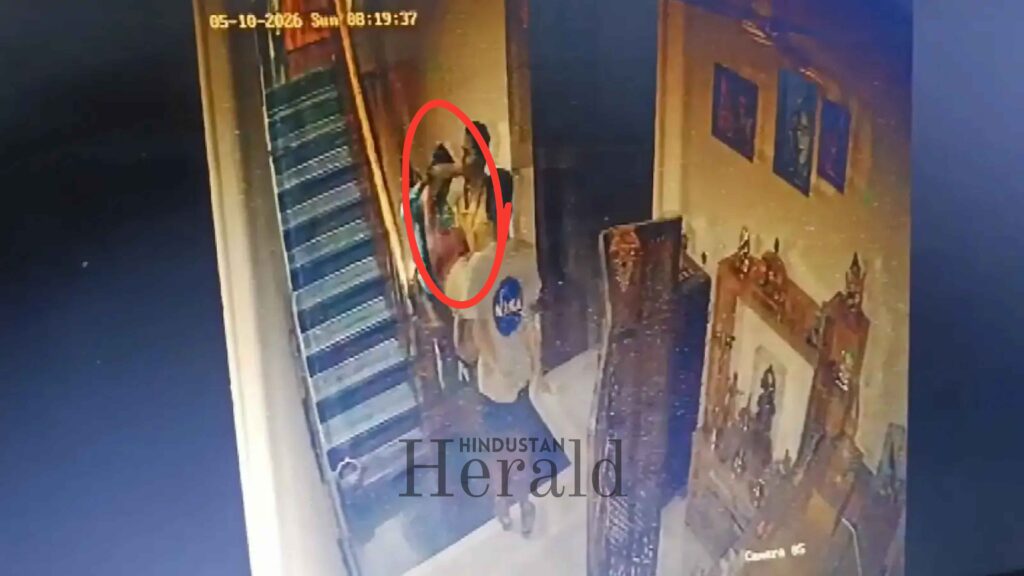
The visuals are now being examined by investigators as part of the ongoing probe. The footage has raised questions among the family’s legal representatives about the sequence and timing of events questions that investigators have not yet publicly addressed.
Still, the family maintains that the footage, combined with the absence of a suicide note and the injuries documented by AIIMS Bhopal, does not support the conclusion that Twisha died alone and without force.
The Post-Mortem That Raised Questions
An initial autopsy report from AIIMS Bhopal raised eyebrows after noting “multiple antemortem injuries” caused by blunt force on her body. Antemortem injuries injuries sustained before death are a significant forensic finding in any hanging case, and the family has seized on this to push for a second post-mortem examination.
Twisha’s counsel argued before the court that a second post-mortem examination should be conducted due to the exceptional nature of the case. “There is immense pressure on the police and the lawyers; this is a matter of grave concern,” the counsel stated.
Twisha’s family had formally demanded a second post-mortem to ascertain the actual cause of her death. As of Monday, that demand was still reportedly under consideration. The government’s position on ordering a fresh examination has not been made public.
What Happened In Court
The courtroom proceedings on Monday offered a direct clash between two legal readings of the same five-month marriage.
Defending Samarth Singh, the defence counsel argued that there was absolutely no evidence of monetary transactions or coercive demands. “Twisha herself was quite extravagant. There is no case of dowry, nor is there any evidence of monetary transactions. At the time of the incident, her state of mind appeared normal,” the defence lawyer argued before the judge.

The prosecution and the family’s counsel countered that the dowry angle in this case is not limited to the conventional exchange of money or goods. Rather, they argued, the harassment took the form of emotional coercion, reproductive pressure, attacks on her character, and physical abuse all of which, they contend, are amply documented in her messages.
Recognising the severity of the allegations, the potential for evidence tampering, and the physical injuries documented before death, the judge officially dismissed Samarth Singh’s anticipatory bail plea.
The court’s refusal to grant pre-arrest bail is significant. Under Indian law, anticipatory bail is typically granted where the court finds that an arrest would be unjust or that the accused poses no flight risk and is unlikely to interfere with the investigation. In rejecting Samarth’s plea, the court has signalled at least at the preliminary stage that neither condition has been met here.
The case is registered as BA/1485/2026 (Giribala Singh vs State) and BA/1486/2026 (Samarth Singh vs State).
The Mother-In-Law’s Bail And The Questions It Raises
The split outcome bail for the retired judge, denied for her son has not gone unnoticed. On Friday, the same court granted anticipatory bail to Giribala Singh.
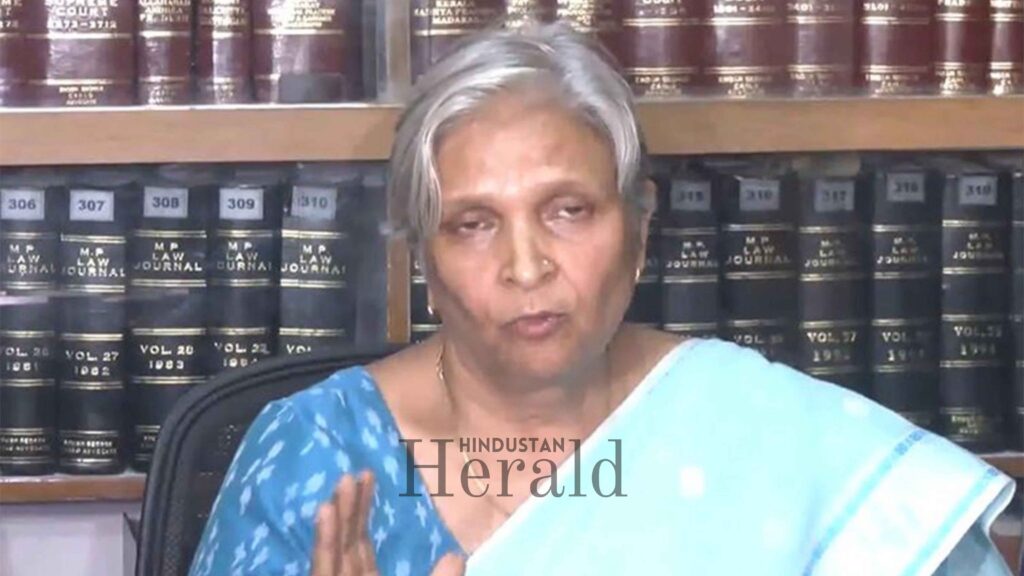
While the retired judge secured swift anticipatory bail on account of her age, her son found no such leniency from the bench.
That distinction has provoked its own debate. Critics have pointed out that Giribala Singh is, by the family’s account, not a peripheral figure in the alleged harassment but a central one. The WhatsApp chats submitted in court, as described by the victim’s counsel, allegedly show her directly pressuring Twisha regarding the pregnancy. Whether her age alone was sufficient to justify bail irrespective of her alleged role is a question that legal commentators are beginning to raise publicly.
The family’s counsel had formally opposed anticipatory bail for Giribala Singh as well, but the court ruled otherwise.
Profile Of The Victim
Twisha Sharma, an MBA graduate from Noida, had also acted in the Telugu film Mugguru Monagallu. She was a former Miss Pune winner and a marketing professional residing in Noida before her marriage. By all accounts, she was an educated, professionally active woman who had entered what she believed was a new chapter in her life one that lasted barely five months before ending at a home she had reportedly been trying to leave.
She was 33 years old.
The Bigger Picture: Dowry Laws, Power, And Accountability
The Twisha Sharma case sits at an uncomfortable intersection that India has confronted before but rarely resolved cleanly: the intersection of domestic abuse allegations and the legal establishment.
When the accused are a lawyer and a retired judge, the concerns are not abstract. They include potential interference with witnesses, access to procedural knowledge that an ordinary accused would not have, and the implicit weight of institutional familiarity that can, even unconsciously, shape how investigating officers and courts approach a case.

The family’s counsel had flagged this pressure explicitly in court not as a conspiracy theory but as a structural reality. Cases involving members of the legal fraternity carry additional risks of evidence compromise, and the court’s decision to deny Samarth’s bail appears to have taken that concern seriously.
The charges in this case are being prosecuted under the provisions of the Bharatiya Nyaya Sanhita, which replaced the Indian Penal Code. The relevant sections cover dowry-related death, abetment of suicide, and cruelty by a husband or his relatives.
That said, the investigation is ongoing. The police have not officially closed off any theory. A second post-mortem has been demanded. A Special Investigation Team may yet be constituted. For now, the most urgent task for law enforcement is locating Samarth Singh, who remains at large and for whom a Rs 10,000 reward has been announced a modest sum, perhaps, for a case that has commanded the attention of the entire country.
For Twisha Sharma’s family, none of this brings her back. But the court’s refusal to give her husband the protection of anticipatory bail is, at minimum, a signal that the justice system is not ready to look away.
Stay ahead with Hindustan Herald — bringing you trusted news, sharp analysis, and stories that matter across Politics, Business, Technology, Sports, Entertainment, Lifestyle, and more.
Connect with us on Facebook, Instagram, X (Twitter), LinkedIn, YouTube, and join our Telegram community @hindustanherald for real-time updates.

Covers Indian politics, governance, and policy developments with over a decade of experience in political reporting.
- Ananya Sharma

- Ananya Sharma
- Ananya Sharma
- Ananya Sharma




 Sandeep Verma