
 By Shelesh Joshi and Kavita Iyer
Mumbai, May 19: There is a particular kind of relief that only comes after a long, grinding fight. For Gautam Adani, that moment arrived this week, and by most accounts, it could not have come soon enough.
The Adani Group has walked away from a set of US legal proceedings that, eighteen months ago, looked capable of doing serious, lasting damage to one of India’s most powerful corporate empires. The US Department of Justice has dropped every criminal charge against Gautam Adani and his nephew Sagar Adani. The Securities and Exchange Commission has wrapped up its civil case for a combined $18 million penalty. The US Treasury Department has settled a separate Iran sanctions probe against Adani Enterprises for $275 million. Three cases. Three resolutions. One very significant exhale from Ahmedabad to Mumbai to the bond desks of Singapore and London.
When the Ground Shifted in November 2024
To understand what this week means, you have to go back to that November morning in 2024 when a federal grand jury in Brooklyn unsealed a five-count criminal indictment against Gautam Adani, Sagar Adani, and six others linked to the group.
The charge, stripped to its core, was this. The accused allegedly paid over $265 million in bribes to Indian state government officials to secure solar energy supply contracts worth billions. And while doing that, the DOJ alleged, they went out and raised more than $3 billion from US and international investors by lying about the company’s compliance with anti-bribery standards. The Adani Group called the charges “baseless” and did not waver from that position for a single day across the entire eighteen months that followed.
None of that stopped the fallout. Adani Group stocks fell sharply. Global lenders began quietly pulling back. The dollar bond market, which the group leans on heavily to fund its ports, airports, power plants, and solar farms, effectively closed its doors at any rate that made sense. A company that had spent years building a reputation as a credible borrower in international capital markets suddenly found those markets looking the other way. It was, by any measure, a serious crisis.
The SEC Was Not Far Behind
A parallel civil case from the Securities and Exchange Commission added another layer of pressure. The SEC focused on the same set of allegations, specifically that Gautam and Sagar Adani misled investors during a $750 million bond offering by Adani Green Energy by suggesting that senior leadership had clean hands on anti-bribery compliance.

Executives at Azure Power Global, a Canadian-listed solar firm with Indian operations, were also named in the complaint. Early in 2026, as the case ground slowly through procedural stages, the SEC moved to serve legal summons on the Adani executives through Indian authorities. India’s Law and Justice Ministry reportedly refused twice to cooperate. It was the kind of jurisdictional standoff that made lawyers rich and resolved nothing quickly, keeping the uncertainty alive and the pressure on.
Enter the Trump Lawyer
The turning point, when it came, came fast. The Adani Group brought in Robert J. Giuffra Jr., co-chair of Sullivan and Cromwell and, notably, one of US President Donald Trump’s personal attorneys. In Indian corporate circles, that appointment was read immediately for what it was. A signal that the Adani camp was done playing defence and was ready to go on the front foot in Washington.
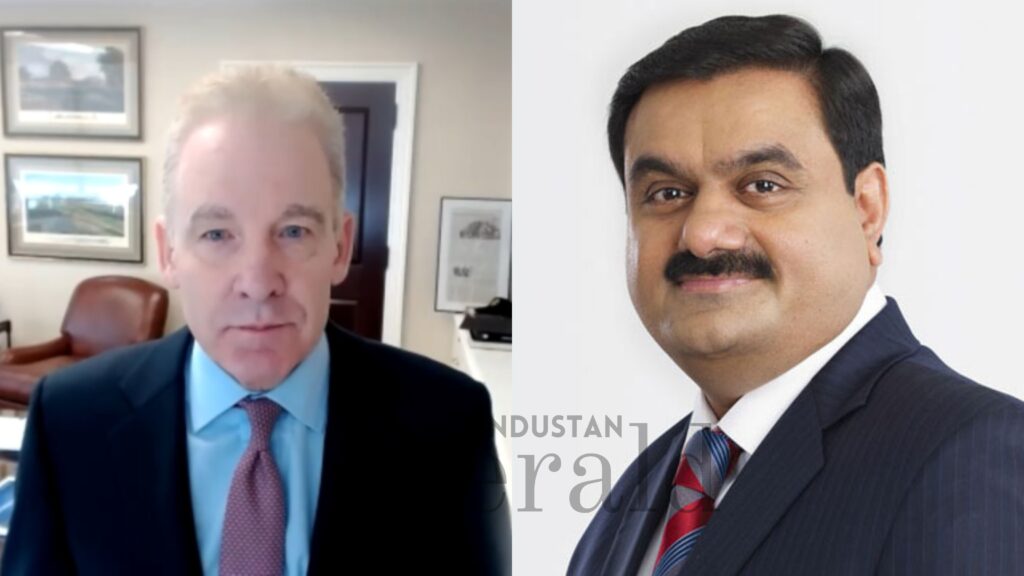
In April 2026, Giuffra walked into the DOJ’s headquarters and delivered a 100-slide presentation to senior prosecutors. The argument was precise and pointed. The alleged conduct happened in India. The defendants were Indian. The securities at the centre of the SEC case were not listed on American exchanges. US prosecutors, the defence argued, had no real jurisdiction here and, beyond that, lacked the evidence to make the case even if jurisdiction could be established.
The defence teams made a nearly identical argument to the SEC, calling the proceedings an impermissible attempt to stretch American securities law far beyond its intended reach.
These are not new arguments in international securities law. Legal scholars in both countries had been quietly making them since the indictment was first filed. The difference this time was who was making them, and in whose ear.
The $10 Billion Offer Nobody Is Officially Talking About
That said, the legal arguments were not the only thing in those 100 slides. According to reporting by The New York Times, one slide in Giuffra’s presentation offered something more tangible. If the DOJ dropped the charges, Gautam Adani was prepared to invest $10 billion in the American economy and create 15,000 jobs. According to sources familiar with the matter cited by Reuters, Adani’s position was straightforward. He wanted to invest in the US but could not move forward while federal criminal charges were hanging over him.
Prosecutors reportedly told Giuffra that the investment offer would carry no formal weight in how the case was resolved. And yet, as The New York Times noted, the proposal received a warm response from at least one senior official at the Justice Department.
Draw your own conclusions. What is clear is that the pledge landed in the middle of an administration that has made investment commitments and job creation the central currency of its foreign policy. Indian Prime Minister Narendra Modi has made similar investment pledges a fixture of his bilateral meetings with Trump. Adani’s offer was, in that sense, entirely fluent in the language Washington currently speaks.
Three Cases Closed, Three Very Different Price Tags
The resolution that emerged this week was not a single settlement but a set of three separate closures, each handled by a different arm of the US government.
The DOJ dropped everything. The criminal indictment against Gautam Adani and Sagar Adani was dismissed with prejudice, meaning it is gone permanently. No appeal, no revival, no possibility of it resurfacing down the road. The DOJ sent Judge Nicholas Garaufis in Brooklyn a short letter explaining that after reviewing the matter, it had decided not to devote further prosecutorial resources to the charges. That is a highly unusual outcome in US federal criminal proceedings. It signals that the government concluded, after extended review, that pressing forward was no longer justified.
The SEC settled for $18 million. Pending court approval, Gautam Adani will pay a $6 million civil penalty and Sagar Adani will pay $12 million. Both have agreed to the settlement without admitting or denying the allegations, which is standard in SEC resolutions of this kind. Adani Green Energy separately confirmed to Indian stock exchanges that it was never a party to the proceedings and faces no charges.
The Treasury settled for $275 million. This was the most financially significant of the three and also the most straightforward. Adani Enterprises, the group’s flagship listed company, had purchased liquefied petroleum gas through a Dubai-based trader that was supposedly sourcing supply from Oman and Iraq. That gas, US authorities determined, had actually originated from Iran, which is under comprehensive US sanctions. The company has agreed to pay $275 million, has stopped importing LPG into India through such channels, and has created a new head of compliance role to manage US Treasury Department requirements going forward.
Add it all together and the bill comes to roughly $293 million. For a conglomerate carrying $32 billion in net debt and operating across eleven publicly listed companies in ports, airports, power, renewable energy, cement, media, and data infrastructure, that is a number the group can absorb.
Markets Did Not Wait to Celebrate
The stock market reaction was swift and broad. On May 15, when the settlement and charge-dropping reports began circulating, Adani Group stocks moved sharply higher across the board. Adani Enterprises touched a peak gain of 3.5% at Rs 2,803. Adani Ports hit a record high of Rs 1,823, up 2.5%. Adani Power jumped 3.2% to Rs 229. Adani Green Energy gained nearly 3%, reaching Rs 1,457, its best price since late 2024.
By mid-May, Adani Enterprises was up roughly 24% for the year and Adani Green was up approximately 41%, both sitting above their 52-week highs according to LSEG data. Gautam Adani’s personal net worth, by multiple estimates, has climbed back to around $109 billion, placing him once again at the top of Asia’s wealth rankings.
The rally was not a surprise. What was notable was its breadth, every major Adani Group company rising in tandem. That kind of coordinated move tells you something about how deeply the legal cloud had been weighing on the whole portfolio, not just the companies directly named in the proceedings.
What This Really Means for the Group’s Money Machine
The celebratory stock prices are the easy part to understand. The more consequential story is what this resolution means for how the Adani Group raises money, because that is where the real vulnerability had been sitting.
The group carried approximately Rs 2.78 lakh crore, around $32 billion, in net debt as of September 2025. Of that, 41% comes from global banks and international capital markets. That is not a minor detail. It means that the group’s growth engine is structurally dependent on its ability to borrow from institutions in London, New York, Tokyo, Abu Dhabi, and Singapore.
When a federal criminal indictment is sitting on the chairman’s head, those institutions do not walk away loudly. They just stop returning calls. Credit committees quietly shelve proposals. Bond roadshows get cancelled. The cost of borrowing creeps up as risk premiums widen.
Deven Choksey Research put it plainly in a recent note. The legal clearance in the US could reopen international capital markets for the group and give fresh momentum to its infrastructure and renewable energy expansion. The firm acknowledged that high debt remains a structural concern but argued that earnings growing at 20% annually provide a credible path to managing it. That runway just got cleaner.
Adani Green Was Always the Most at Stake
Of all the group’s businesses, Adani Green Energy had the most riding on a resolution. The company posted genuinely strong numbers for fiscal year 2026. It added a record 5.1 GW of new renewable capacity, taking its total operational base to 19.3 GW, a 35% jump year on year. Power sales revenue rose 22% to Rs 11,602 crore. EBITDA margins held at 91%, which is exceptional for a capital-intensive infrastructure business.

The problem was the debt. Net debt at Adani Green climbed to Rs 91,252 crore by March 2026, up from Rs 64,462 crore the year before. The group needs to reach 50 GW by 2030, and getting there requires billions of dollars in project finance every year. That financing was getting harder to arrange with a US criminal case in play.
Adani Power is in a similar position. India’s largest private thermal power producer is planning to raise Rs 8,000 crore from local debt markets this year and is targeting 41,870 MW of generation capacity by 2032, more than double its current base of approximately 18,000 MW. For both companies, and for the group’s broader infrastructure ambitions across airports and ports, the US legal clearance is not symbolic. It is operational.
The Bigger Picture Nobody Wants to Say Too Loudly
There is a geopolitical layer to this story that is worth acknowledging even if official Washington will not. The Trump administration has now set aside several high-profile criminal cases brought under the Biden-era DOJ. The Adani case is the most internationally prominent of them. The fact that Adani’s new legal counsel had direct personal ties to the President, the fact that the $10 billion investment pledge echoed language used at Modi-Trump bilateral meetings, and the fact that India-US relations are at a notably warm moment all form a context that is hard to ignore.
None of this is to suggest the legal arguments were without merit. By most independent assessments, the jurisdictional questions the defence raised were legitimate and serious. But law and geopolitics have rarely operated in entirely separate lanes, and in this case, they appear to have been running on the same track.
For now, Gautam Adani walks out of an eighteen-month American legal ordeal with no criminal conviction, no admission of wrongdoing on the core bribery and fraud allegations, a manageable set of financial penalties, and a group that is free to go back to doing what it has always done best, which is building things at a scale that most Indian companies would not attempt and most global investors cannot ignore. Whether that $10 billion lands in America, and whether the 50 GW target lands on schedule, are the questions that will define the next few years. For now, the legal chapter is closed.
Stay ahead with Hindustan Herald — bringing you trusted news, sharp analysis, and stories that matter across Politics, Business, Technology, Sports, Entertainment, Lifestyle, and more.
Connect with us on Facebook, Instagram, X (Twitter), LinkedIn, YouTube, and join our Telegram community @hindustanherald for real-time updates.

Tracking world politics, global markets, trade movements, policy decisions, and the changing balance of economic power.

Former financial consultant turned journalist, reporting on markets, industry trends, and economic policy.
- Kavita Iyer

- Kavita Iyer
- Kavita Iyer
- Kavita Iyer




 Ananya Sharma and Kavita Iyer