
 By Ananya Sharma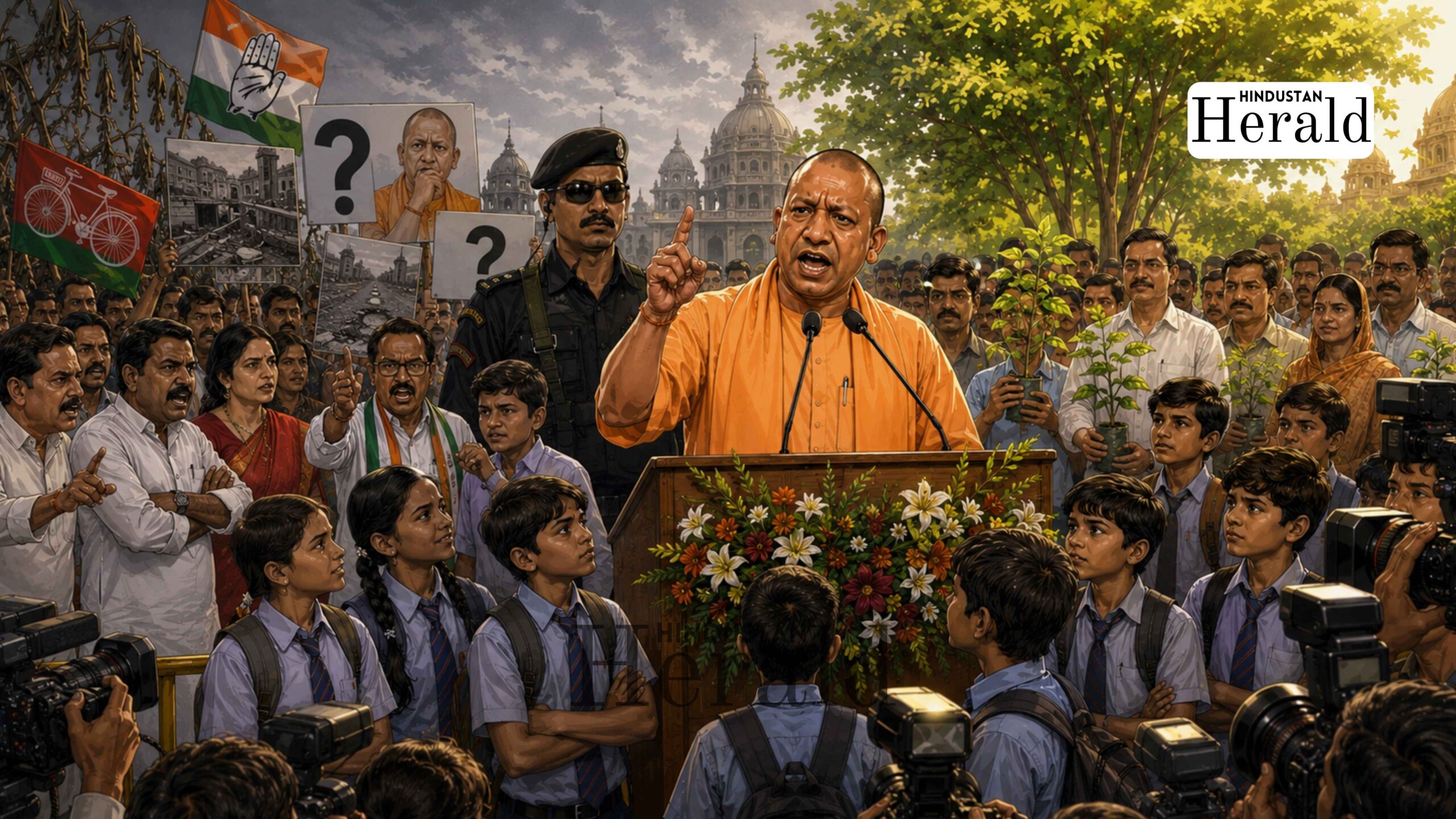
Lucknow, May 18: There is a Hindi word, chuimui, that most people learn as children. It is the name of a small plant whose leaves fold shut the moment you touch them. Sensitive. Delicate. Retreating. Yogi Adityanath used it on Sunday to describe exactly what he does not want Uttar Pradesh’s children to become.
That one word, delivered at what was supposed to be a routine government function in Lucknow, is now all over the internet.
The occasion was a cheque distribution programme for part-time instructors. The state had just raised the monthly honorarium for 24,717 such instructors from Rs 7,000 to Rs 17,000, and the chief minister was there to mark the occasion and say a few words. What he said turned out to be more than a few, and considerably more charged than the event called for.
The Line That Ran Away From the Speech
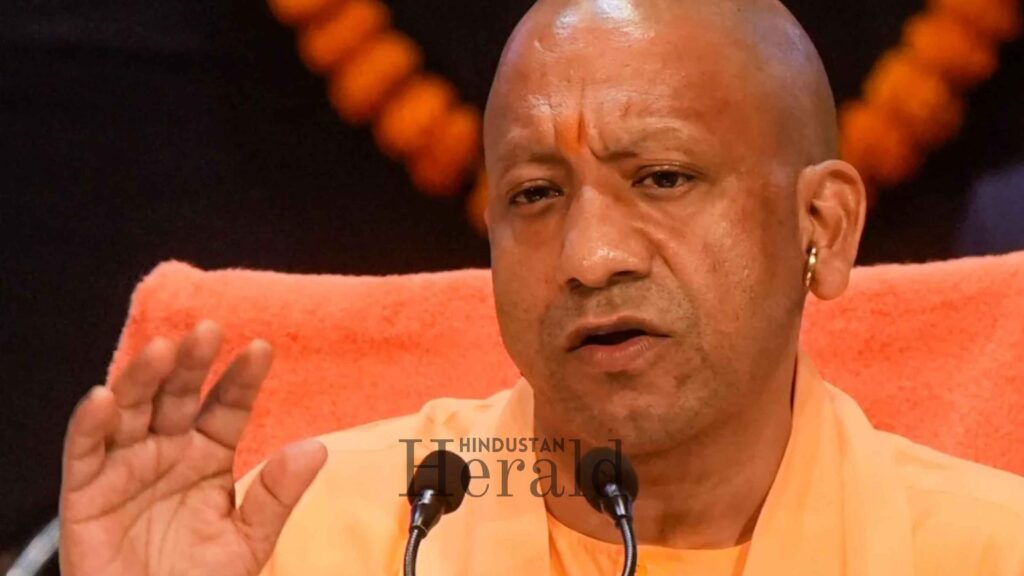
Adityanath told the gathering, in Hindi: “Don’t make children chuimui plants. Make them so vibrant and fierce that anyone would think twice before laying a hand on them. This will come from education and values.”
The word he used for fierce was “prachand.” It is not a soft word. It suggests intensity, force, a kind of overwhelming energy. Applied to primary school children, it landed differently on different ears. Supporters heard a call for confidence and backbone. Critics heard something harder to name, a kind of aggression-as-aspiration that sits uneasily with how most people think about child development.
By Sunday evening, the clip was moving fast on X. By Monday morning, it had generated memes, op-ed pitches, WhatsApp threads, and the full spectrum of Indian political commentary, which is to say it had generated everything at once.
He Also Picked a Fight With the Press
The second moment that caught fire came when the chief minister turned his attention to the practice of students cleaning school premises. In official language, this is called “shramdaan,” voluntary community service. In viral video language, it is footage of children sweeping classrooms and scrubbing toilets that tends to get posted with outraged captions.
Adityanath was visibly impatient with that framing. “Sometimes I am left astonished,” he said, before going on to ask, rhetorically, what exactly was wrong with children doing community work at school. He singled out the media directly, suggesting that journalists were deliberately misrepresenting shramdaan as exploitation.
He said teachers should not face action for involving students in such activities. They should be honoured for it, he argued, because they are preparing children for the future.
The pushback was swift. Child rights groups pointed out that the question of whether shramdaan crosses into unauthorized child labour is not resolved simply by calling it voluntary. The legal distinction depends on who assigns the task, how often it happens, and whether it substitutes for what should be paid sanitation staff. Those are real questions, and they did not get real answers on Saturday.
Several journalists, for their part, did not appreciate being cast as the villains of school cleanliness discourse.
The Numbers the CM Wanted People to Hear
It would be unfair not to mention what else was said, because the speech was not only controversy. Adityanath made a series of claims about the state of basic education in UP that, if accurate, are genuinely significant.
He said school dropout rates in the state have come down to 3 per cent now, against 17 to 18 per cent when he took office in 2017. He said the goal is zero. He cited Operation Kayakalp and said 96 per cent of schools under the Basic Education Department now have all the facilities they need. Separately, the government has claimed it has spent over Rs 80,000 crore on school education and provides every enrolled child with two uniforms, a bag, books, shoes, socks, and a sweater, free of cost, every year.
Those are not small claims. Whether independent audits back them up fully is a separate matter. But they form the essential backdrop to what Adityanath was actually arguing. His logic runs something like this: the infrastructure is there now, the children are in school, the basics have been handled. What is left is character. And character requires a certain toughness. Chuimui children, in his view, are not a sign of progress. They are a failure of it.
It is a coherent argument, even if it makes a lot of people uncomfortable.
What the Opposition Made of It
The Samajwadi Party responded along expected lines, questioning the dropout statistics and calling the chuimui and prachand framing irresponsible language for a chief minister to use about school children. Whether that criticism landed or got lost in the general noise of the news cycle is hard to say. UP political discourse moves quickly.
Child rights organisations were more specific in their concerns. The distinction between building resilience in children and using a government platform to frame aggression as a virtue matters, they argued, and it matters especially in a state the size of UP, where what the chief minister says in a speech can shape how teachers and parents interpret their own behaviour toward children.
That is not a trivial concern.
The Bigger Question Underneath All of It
Strip away the outrage and the memes and what you are really looking at is a disagreement about what schools are for. Adityanath’s vision, consistent across multiple speeches and education initiatives, is of schools that produce citizens with strong cultural roots, civic responsibility, self-reliance, and toughness. Sanskaar, a word he returns to often, is at the centre of that vision. Shramdaan fits into it. So does the prachand child.
The opposing view holds that child-centred education means starting from where the child is, building safety and curiosity and critical thinking, not producing a particular kind of person the state has pre-decided on. That view would argue the chuimui framing gets it backwards. Children who feel safe and valued do not become fragile. They become confident. The two things are not opposites.
Both camps believe, sincerely, that they want the best for the child. That is what makes this argument so difficult to resolve and so easy to have loudly.
The Part That Will Not Go Away Quickly
What was said in Lucknow on Sunday was not an accident or a slip. Adityanath is a practiced public speaker who chooses his words with intent. The chuimui line was a point he wanted to make. So was the challenge to the media. So was the defence of shramdaan.
He said, at the same event, that his government has no hesitation in extending benefits to part-time instructors because they never resorted to coercive methods or violence in pressing their demands. That framing, rewarding non-confrontational behaviour in adults while advocating for fiercer character-building in children, is an interesting tension that the speech did not resolve.
That said, viral clips rarely carry context. Most people who shared the chuimui video on Sunday did not sit through the full address. Most people forming opinions about shramdaan have not read the Right to Education Act. That is just how political speech works in 2026, compressed, decontextualised, emotionally charged, and moving faster than anyone can properly analyse it.
The debate will outlast the news cycle by a few days at most. But the question it raises, about what toughness means, and who gets to define it for children who have no vote and no platform, will stay relevant long after the clip stops trending.
Stay ahead with Hindustan Herald — bringing you trusted news, sharp analysis, and stories that matter across Politics, Business, Technology, Sports, Entertainment, Lifestyle, and more.
Connect with us on Facebook, Instagram, X (Twitter), LinkedIn, YouTube, and join our Telegram community @hindustanherald for real-time updates.

Covers Indian politics, governance, and policy developments with over a decade of experience in political reporting.
- Ananya Sharma

- Ananya Sharma
- Ananya Sharma
- Ananya Sharma


 Sandeep Verma