
 By Shelesh Joshi and Rajiv Menon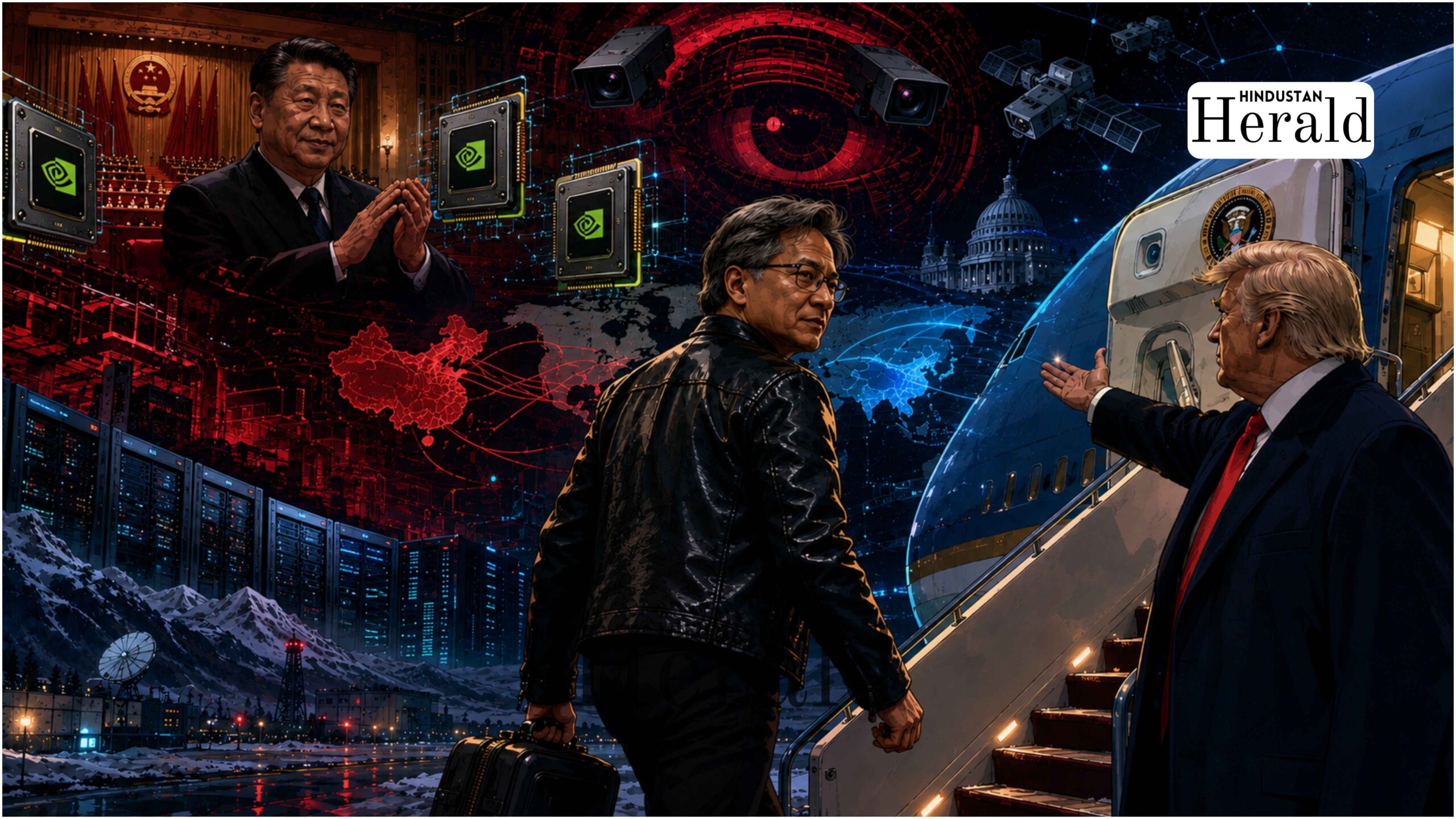
New Delhi, May 18: There is something quietly extraordinary about the image of Jensen Huang boarding Air Force One at a refuelling stop in Anchorage, Alaska mid journey, not even on the original guest list just to make it to Beijing in time for a meeting that may determine whether the world’s most powerful chip company ever sells another GPU to China.
That is what happened last week. And it tells you almost everything you need to know about where the US China AI rivalry actually stands right now. Not in the tidy language of policy briefs, but in the sweaty reality of Jensen Huang scrambling onto a presidential aircraft because the stakes are simply too high to stay home.
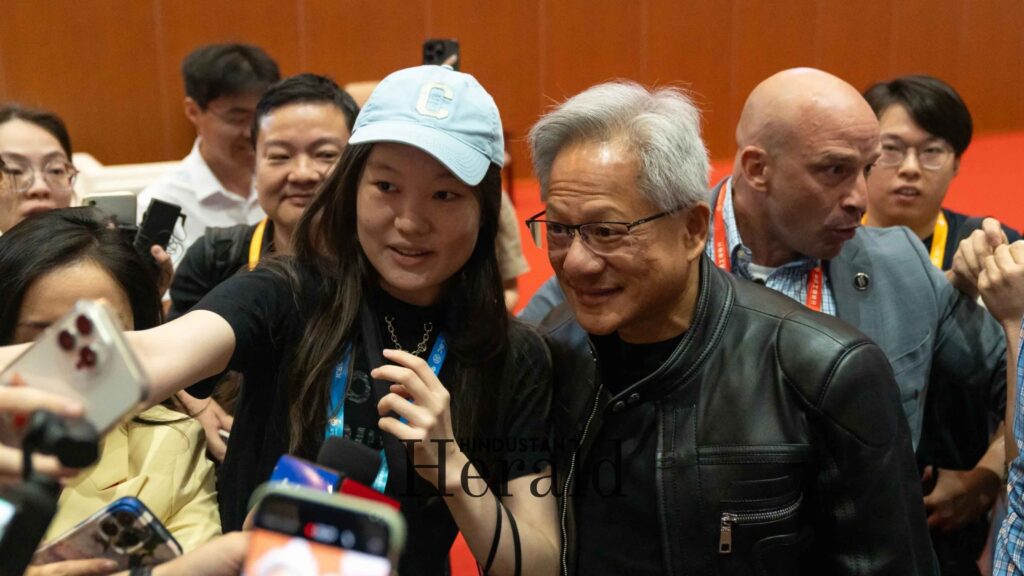
Jensen Huang joined President Donald Trump’s state visit to China from May 13 to 15 as a last minute addition to the delegation. An initial White House list had not included Nvidia’s chief at all. According to reporting by CNBC, Trump picked Jensen Huang up at the Anchorage refuelling stop on the way to Beijing, with Elon Musk of Tesla already on board. Trump later confirmed Jensen Huang’s presence on social media, adding that opening up China for American businesses would be his first request to President Xi Jinping.
Revealed: The Alarming Story of How Jensen Huang Almost Missed Beijing
The story of why Jensen Huang was almost left behind is as revealing as the story of why he eventually showed up.
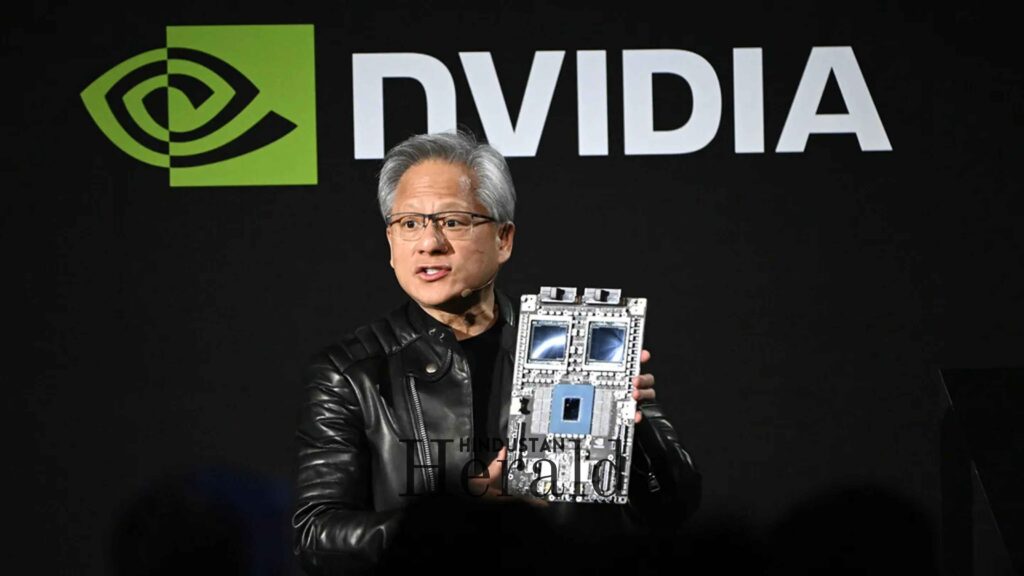
As reported by Fast Company, Jensen Huang had been an outspoken critic of the Trump administration’s approach to chip export restrictions, arguing publicly that cutting off Chinese access to Nvidia hardware would only accelerate Beijing’s push to build a competing domestic stack. Jensen Huang even borrowed Trumpian language to make the point, calling the export control posture a “loser mentality” that jeopardised American supremacy in AI. That is a difficult position to walk back when you then need the same administration to fly you to Beijing.
According to Semafor, Jensen Huang had initially been reluctant to join the delegation, precisely because his presence carried obvious political risk. Nvidia had become the central corporate symbol of the US China tech war, and having its CEO standing behind Trump at a summit with Xi would draw exactly the kind of scrutiny neither side particularly wanted. Analysts quoted by Reuters described Jensen Huang’s potential inclusion as a “political liability.”
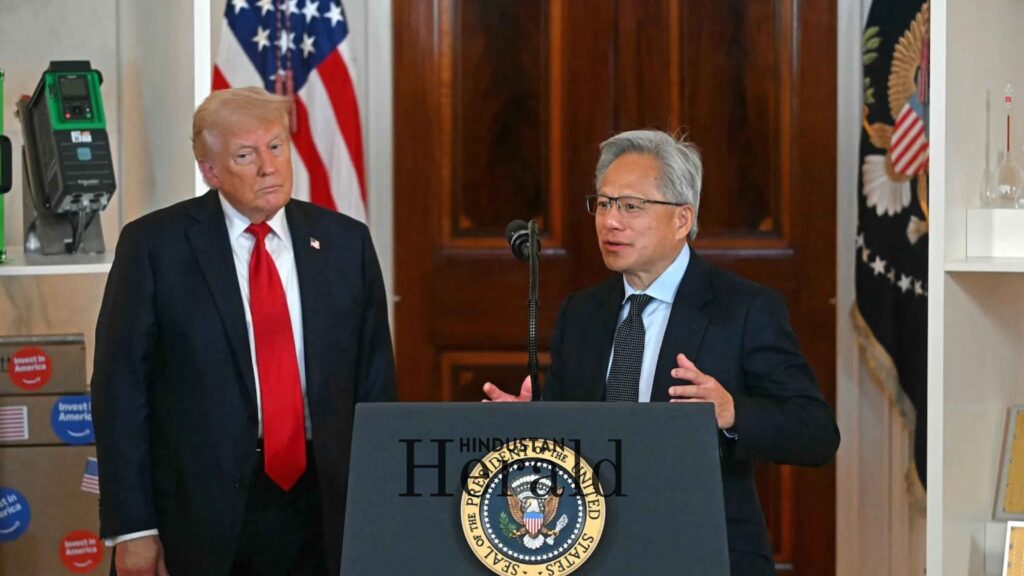
Still, as CNBC reported, Trump overrode those concerns and called Jensen Huang personally to extend the invitation. Nvidia’s response, when pressed for a statement, was characteristically careful. “Jensen is attending the summit at the invitation of President Trump to support America and the administration’s goals,” a spokesperson said. What those goals are, exactly, is the question nobody on either side seemed fully prepared to answer.
The Alarming Deal That Exists on Paper and Nowhere Else
Here is the core of the problem, and it is worth sitting with for a moment.
According to an exclusive report by Reuters, the US government has cleared roughly ten Chinese technology firms to purchase Nvidia’s H200 AI chip the second most powerful processor in the company’s current lineup. The approved buyers include Alibaba, Tencent, ByteDance, and JD.com. Distributors including Lenovo and Foxconn have also received authorisation. Each approved customer is permitted to acquire up to 75,000 chips under the licensing terms.
Not a single chip has shipped.
Lenovo confirmed its place on the approved list in a statement to Reuters, saying it was “one of several companies approved to sell H200 in China as part of Nvidia’s export license.” Alibaba, Tencent, ByteDance, and JD.com did not respond to requests for comment.
The reason nothing has moved is that both sides have effectively blocked the transaction from their own end, for entirely different reasons.
In Washington, hardliners within the administration remain deeply uncomfortable with any arrangement that puts advanced American AI hardware into Chinese data centres. Commerce Secretary Howard Lutnick told a Senate hearing last month that the Chinese central government had not permitted its companies to proceed with purchases, because Beijing was trying to keep domestic technology investment focused on homegrown suppliers rather than foreign ones.
In Beijing, the hesitation is partly strategic and partly structural. As Reuters reported, the deal as currently structured requires chips to physically pass through American territory before being shipped to China, as part of a revenue sharing arrangement negotiated by Trump under which the US takes a 25 percent cut of the proceeds. That routing condition has generated considerable unease in Beijing about the possibility of tampering or embedded vulnerabilities, even if American officials describe the arrangement primarily as a legal workaround.
Think about what that actually means from Beijing’s perspective. You are being asked to run your most sensitive AI infrastructure on hardware that must first pass through the territory of your chief geopolitical rival. That is not a supply chain arrangement. That is a surveillance question. And Beijing, whatever else one might say about it, does not take surveillance questions lightly.
Jensen Huang’s Alarming Fall From 95 Percent to Effectively Zero
To understand the scale of what Jensen Huang has watched Nvidia lose, you have to go back just a few years.
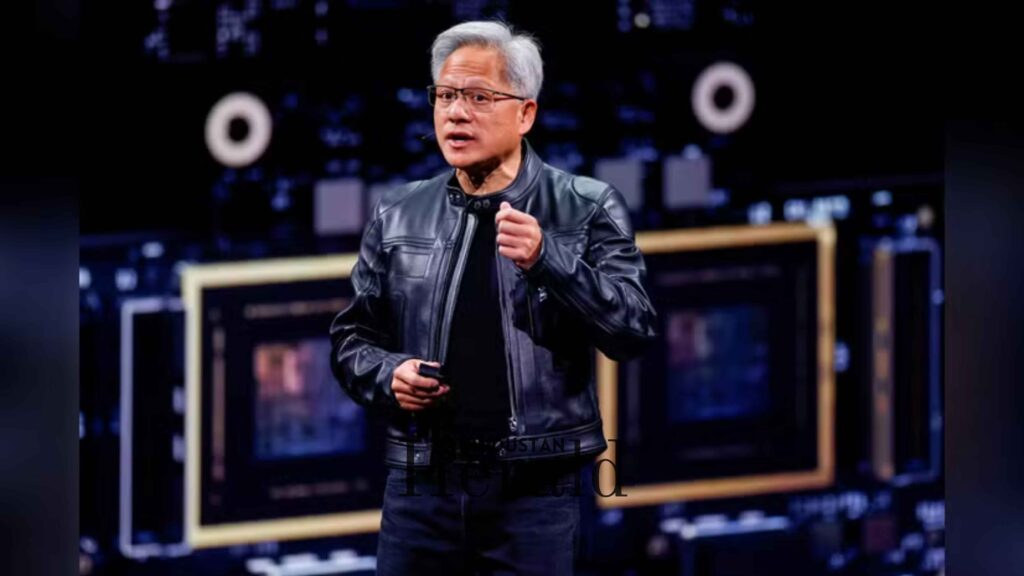
Before export controls began tightening in 2022, as reported by Reuters and confirmed by Jensen Huang himself in multiple public appearances, Nvidia commanded roughly 95 percent of China’s advanced AI chip market. That is not a dominant position. That is near total control of the infrastructure layer for an entire nation’s AI ambitions.
By April this year, as Outlook Business reported, Jensen Huang acknowledged that Nvidia’s share of the Chinese AI accelerator market had effectively fallen to zero. The gap did not stay empty. According to Tom’s Hardware, homegrown rivals including Huawei, Cambricon, Alibaba, and Baidu’s chip units have been steadily filling the vacuum left behind. Huawei’s Ascend processor series, in particular, has gained traction among Chinese cloud providers precisely because Nvidia’s products are no longer reliably accessible.
The story took another alarming twist when, as reported by Built In, China’s Cyberspace Administration reportedly barred domestic technology firms from purchasing Nvidia AI chips altogether, directing companies like Byte Dance and Alibaba to stop testing even the RTX Pro 6000D server a chip Nvidia had specifically engineered for the Chinese market to comply with US restrictions. Jensen Huang and his team had tried to thread the needle. Beijing closed the eye of the needle entirely.
Washington Is Not of One Mind Either
The picture in Washington is messier than it appears from the outside, and that messiness matters enormously for Jensen Huang.
As Fast Company reported, analysts suggested that the confusion around Jensen Huang’s initial exclusion from the delegation reflected a deeper disconnect inside the administration between those who see Nvidia’s China access as a bargaining chip in broader negotiations with Beijing, and those in the national security apparatus who believe any chip sale to China is a strategic concession regardless of the technical specifications attached.
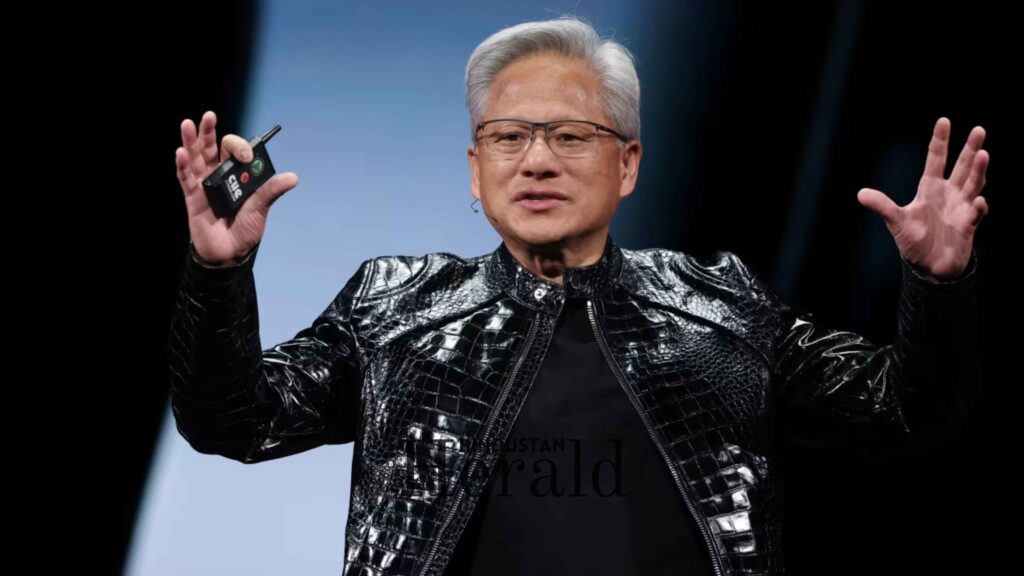
Chris McGuire, senior fellow for China and emerging technologies at the Council on Foreign Relations, put it bluntly in comments carried by Reuters: “Any deal that allows Nvidia to sell more chips to China means fewer Nvidia chips for US firms, and a smaller US lead in AI over China. It is remarkable that President Trump keeps getting convinced to put Nvidia’s interest ahead of America’s.”
That is a serious charge. Jensen Huang’s counter argument, made repeatedly and on record, is that it gets the logic precisely backwards. Keeping Nvidia out of China does not weaken Chinese AI. It just means Chinese AI gets built on Huawei chips instead, Nvidia loses the revenue it needs to fund next generation research, and America ends up with a smaller lead, not a larger one. Both arguments are internally coherent. Both cannot be entirely right. That tension is what keeps this story unresolved.
A Revealed Split Screen From Beijing
What made last week’s summit genuinely strange was the split screen quality of it all.
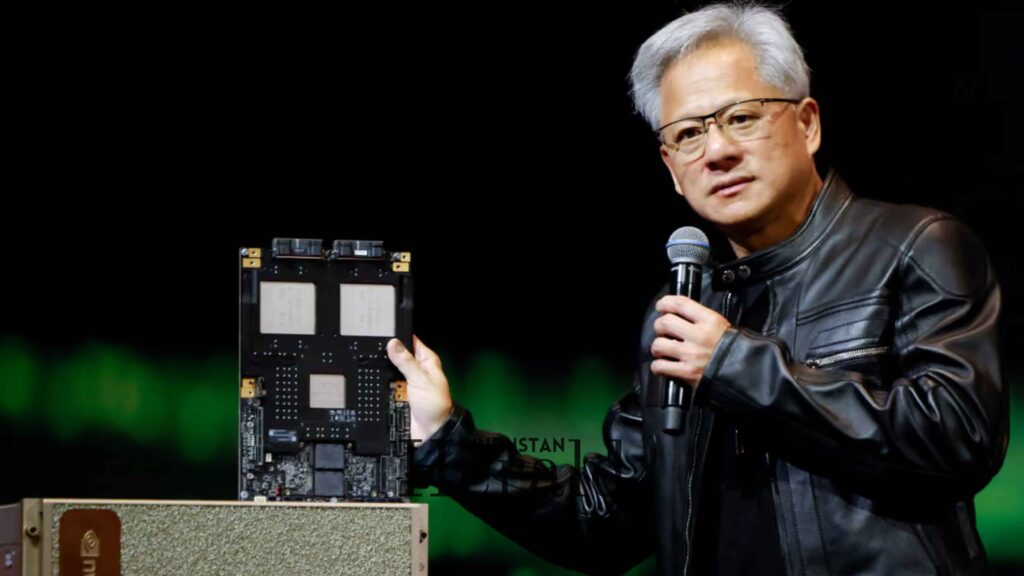
Jensen Huang was photographed at the welcoming ceremony at the Great Hall of the People, alongside Trump and Xi. Tim Cook of Apple was there. Elon Musk was there. It looked, for all the world, like a return to the era of commercial engagement between the two countries. And yet, as Enterprise DNA and BNN Bloomberg separately reported, the US China trade truce announced on May 12 which cut American tariffs on Chinese goods from 145 percent to 30 percent and Chinese tariffs on US goods from 125 percent to 10 percent has not translated into actual chip movement. Approvals on paper have not produced deliveries on the ground.
As Digitimes put it plainly: Washington’s approval alone may not be enough to revive Jensen Huang’s high end China business.
What India Should Be Reading Into Jensen Huang’s Beijing Trip
India sits at an interesting angle to this story and would do well to pay close attention.
As Jensen Huang finds Nvidia squeezed between two governments, the natural consequence is that the company searches harder for other markets where it can deploy its hardware, build ecosystems, and secure revenue. India is one of the most significant of those alternatives. The iCET framework signed during Prime Minister Modi’s 2023 Washington visit, the India Semiconductor Mission, and the Tata Powerchip facility announced for Dholera, Gujarat are all pieces of a larger play for supply chain relevance in precisely this environment.
What happens in Beijing has a direct bearing on how urgently New Delhi is courted by companies like Nvidia, and on what terms. A Jensen Huang locked out of a fifty billion dollar Chinese market is a Jensen Huang with strong reasons to deepen India relationships, offer more favourable localisation terms, and invest in the kind of developer ecosystem that creates long term dependency. India, if it moves with some deliberateness, has leverage it has not always known how to use.
Still, there is no cause for complacency. The country lacks domestic chip fabrication capacity at any competitive scale. The AI buildout will remain import dependent for the foreseeable future. The question is not whether India buys Nvidia chips it will but whether it does so as a passive customer or as a partner with negotiating weight and a credible technology roadmap of its own.
For Jensen Huang, the Chips Remain Unsold
Jensen Huang made it to Beijing. He stood in the Great Hall. The licences were issued. The approvals were signed. The buyers are ready and waiting.
And the chips have not moved.
That is the most honest summary of where the US China AI relationship stands in May 2026 full of formal agreements and entirely frozen in practice. Jensen Huang finds himself at the centre of the world’s most consequential technology standoff, his company’s fate tied to decisions being made simultaneously in Washington and Beijing, often in direct contradiction to each other.
For Jensen Huang, the Beijing trip was never really a sales call. It was a salvage operation dressed up in diplomatic clothing. Whether the first H200 shipment ever clears customs will depend on whether two governments, both deeply suspicious of each other and both playing to domestic audiences, can find enough common ground to let commerce do what commerce is supposed to do.
Watch that closely. Because whoever blinks first Washington or Beijing will have quietly decided something important about the shape of global AI for the next decade. And Jensen Huang, boarding a presidential plane in Alaska, already knows which outcome he is betting on.
Stay ahead with Hindustan Herald — bringing you trusted news, sharp analysis, and stories that matter across Politics, Business, Technology, Sports, Entertainment, Lifestyle, and more.
Connect with us on Facebook, Instagram, X (Twitter), LinkedIn, YouTube, and join our Telegram community @hindustanherald for real-time updates.

Tracking world politics, global markets, trade movements, policy decisions, and the changing balance of economic power.

Specializes in South Asian geopolitics and global diplomacy, bringing in-depth analysis on international relations.
- Rajiv Menon

- Rajiv Menon
- Rajiv Menon
- Rajiv Menon



 Rajiv Menon
  Neeraj Kapoor