
 By Ananya Sharma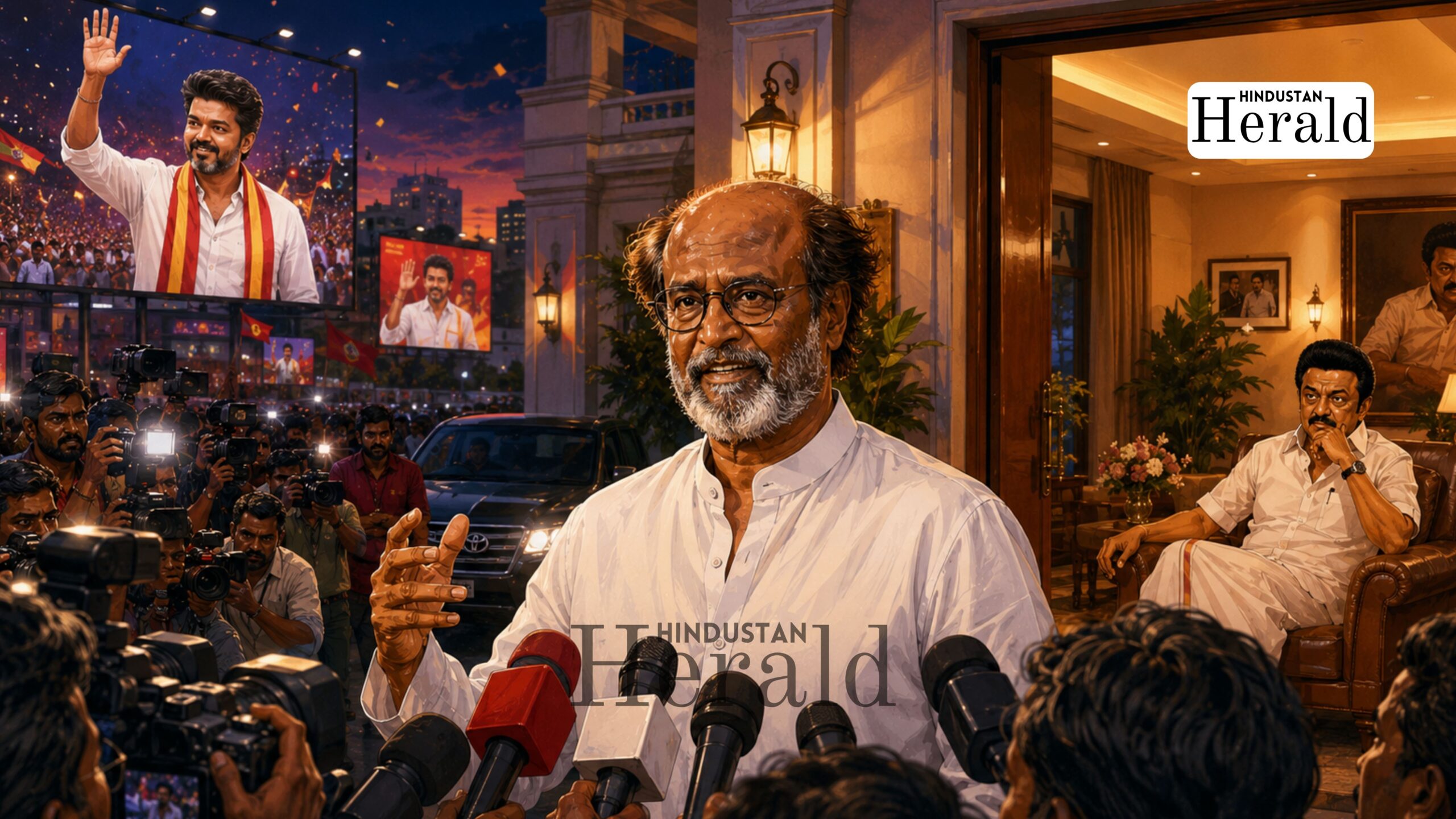
Chennai, May 17: Rajinikanth does not do press conferences unless he absolutely has to. That much anyone following Tamil cinema for the past three decades already knows. So when the megastar called journalists to his Poes Garden residence on Sunday, it was a signal in itself. Something had gotten under his skin.
What got under it was two weeks of social media noise around a photograph. A simple image of him visiting former Chief Minister MK Stalin at his home on May 6, days after one of the most seismic election results this state has ever seen. The picture travelled fast. The theories that followed it travelled faster.
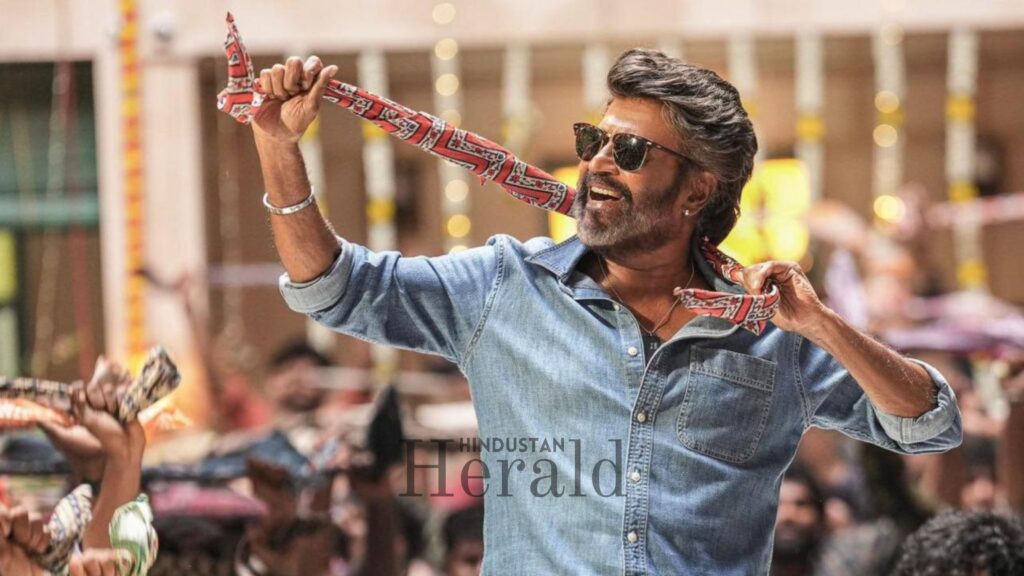
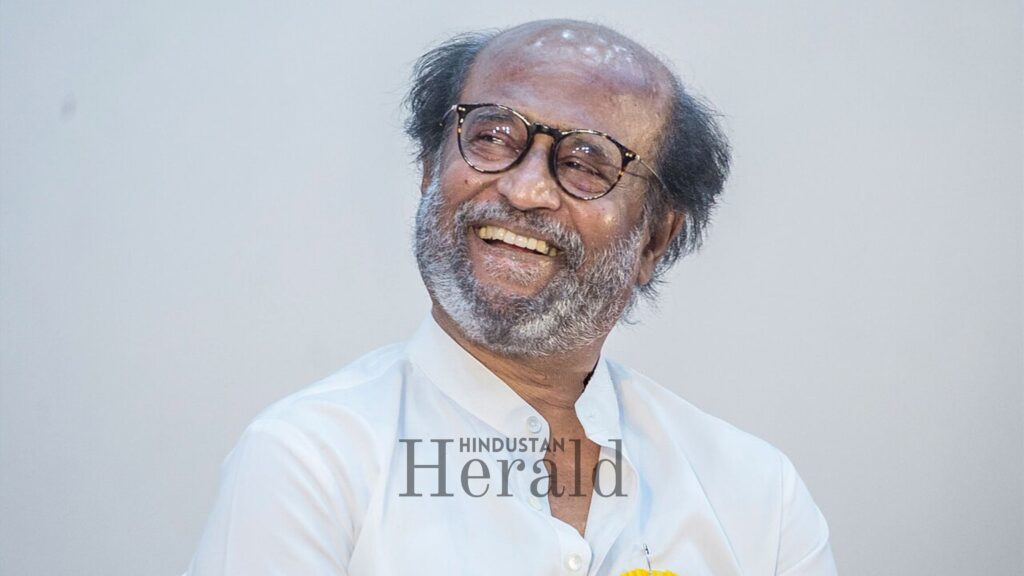
By Sunday morning, Rajinikanth had had enough.
“I am holding this press meet because many criticisms are being made about me in connection with the election,” he told reporters. “If I do not respond to them, they will become accepted as the truth.”
He was calm. But he was also clearly not happy.
A Friendship Being Mistaken for Politics
His explanation for the visit was simple. Stalin has been his friend for close to four decades. That is the whole story. Not strategy, not back-channel politics, not a secret alliance to undercut the new Chief Minister. Just a man checking on a friend who had a genuinely terrible week.
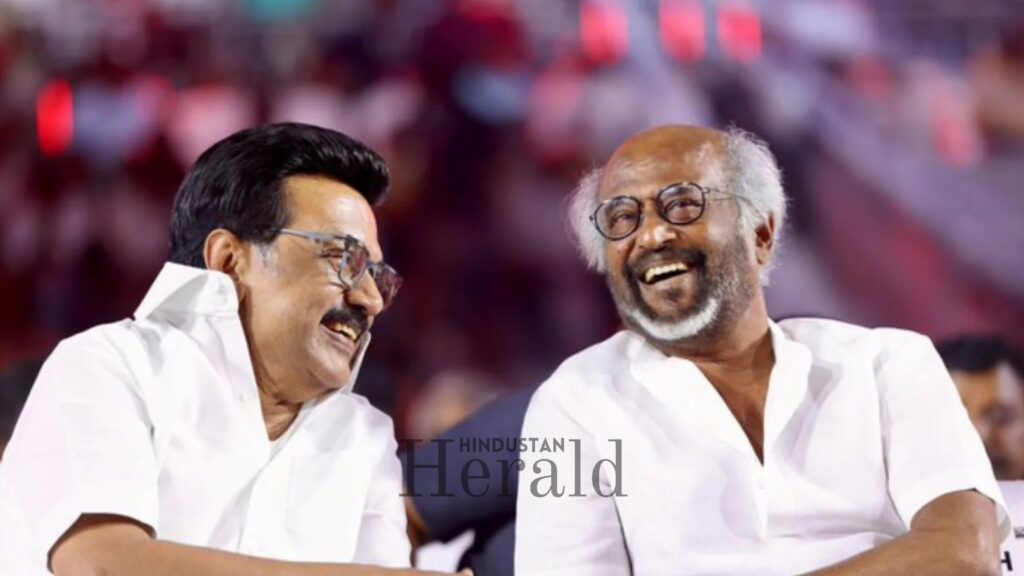
“After the election results, I met Mr Stalin. That drew some criticism. Mr Stalin has been my friend for 38 to 40 years,” he said. His PRO had already tried to shut this down days earlier. Riaz K Ahmed put out a statement saying, “Superstar Rajinikanth and the esteemed MK Stalin have been friends for 42 years. On the basis of personal friendship, Mr Stalin met him. There is absolutely no politics involved in this.”
That did not work. If anything, the official denial seemed to fuel more suspicion online. So Rajinikanth came out himself.
To be fair to the people doing the speculating, the timing was not exactly neutral. Stalin had not just lost an election. He had lost his own seat, in a constituency he had held three consecutive times, to a two-year-old party run by a film star. He had resigned as Chief Minister the very next day. And into that wreckage walked Rajinikanth, another film industry veteran with a long history of political adjacency, carrying what everyone assumed was more than just sympathy.
The assumption was wrong. But you could see where it came from.
What Actually Happened in This Election
To make sense of why a courtesy visit became a controversy, you need to sit with what Tamil Nadu just went through.
The elections were held on April 23, 2026, and the results came in on May 4. Voter turnout hit 85.1 percent, the highest in the state’s history. Vijay’s Tamilaga Vettri Kazhagam, a party that did not exist two years ago, won 108 of 234 seats and ended a 59-year unbroken dominance by Dravidian parties. That is not a political upset. That is a structural rupture.
Stalin lost his Kolathur seat to TVK candidate VS Babu by around 8,700 votes, the same constituency where he had won three times before. He became only the second incumbent Chief Minister in Tamil Nadu’s history to lose his assembly seat, after Jayalalithaa lost from Bargur in 1996. He resigned on May 5.
Fifteen of his cabinet ministers lost their seats. The party that had run this state for five years was suddenly reduced to 59 seats and pushed into the Opposition, without its own leader even holding a place in the Assembly. By any measure, what happened to the DMK was not just a defeat. It was a humiliation.
Analysts noted that TVK pulled voters from both the DMK and AIADMK, cutting across caste lines and pulling in youth, women, urban voters, and first-timers. They attributed Vijay’s appeal more to a genuine hunger for change than to any specific ideology.
That background matters. Because it explains why a photograph of Rajinikanth sitting with Stalin on May 6 felt loaded to so many people. The state was still processing the shock. Everyone was reading everything.
The Jealousy Question He Refused to Dodge
Here is where Sunday’s press conference became something worth paying attention to.
The criticism that had been circulating was not only about the Stalin visit. There was a separate, sharper allegation running alongside it: that Rajinikanth was jealous of Vijay. That somewhere behind the gracious public neutrality was a man who had wanted to walk this exact path himself and now had to watch someone else do it at 52, successfully, on the first attempt.
It is not an entirely irrational thing to wonder. Rajinikanth spent years flirting with a political entry. He made the announcement in 2017. He built a party structure, a volunteer network, genuine public excitement. Then in 2021, with the elections approaching, he withdrew citing health issues. He has lived with that decision ever since, watching the space he might have occupied get filled by others.
So when Vijay did what Rajinikanth could not, the comparison was always going to be made. The question was whether Rajinikanth would acknowledge it or deflect.
He acknowledged it. Directly.
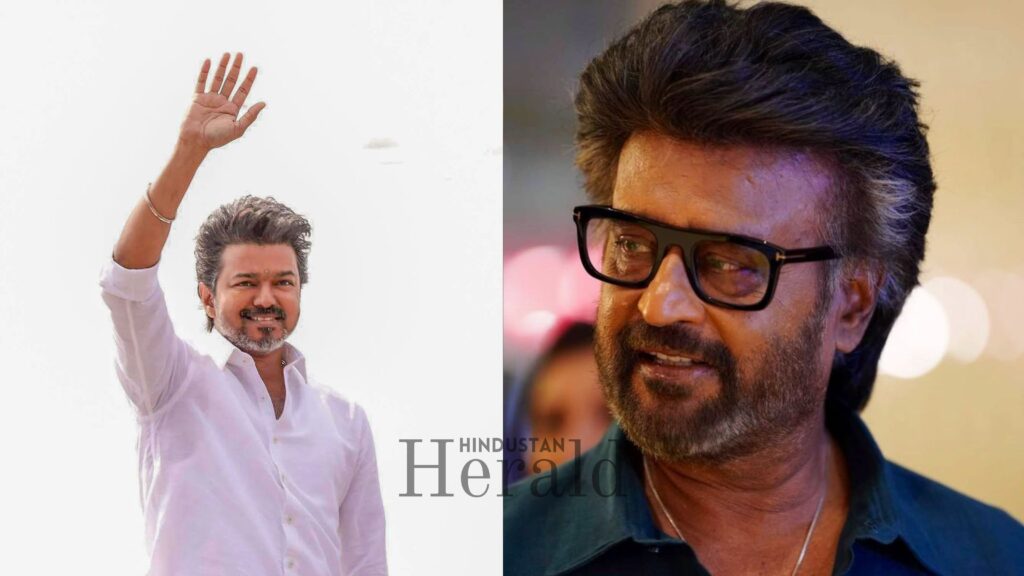
“There is a generation gap of 25 years between me and Vijay. If I compare myself with Vijay, it is not good for me. If Vijay compares himself with me, it is not good for him. I have seen him since he was a child. Why should I be jealous of him becoming the CM?” he said.
And then he went further than most people probably expected.
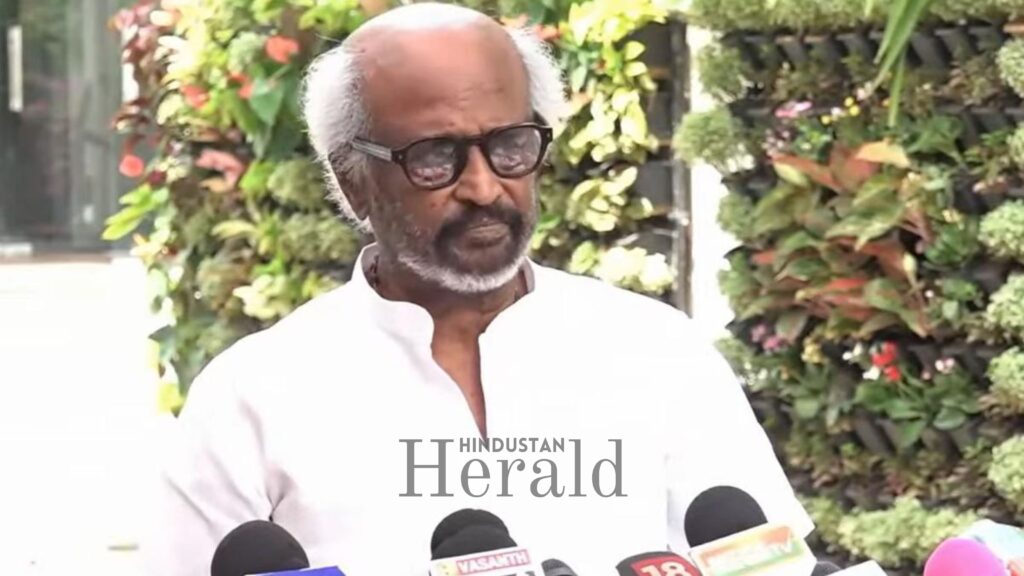
“At the age of 52, he has achieved more than what MGR or NTR achieved. He has defeated powerful parties and the BJP on his own, coming from the film industry. I am not jealous, but I have a mix of surprise and happiness. I appreciate him. Vijay has high expectations from people. I believe he will fulfill them. My best wishes to him.”
That is a significant thing to say out loud. Comparing Vijay favourably to MGR is not a small gesture in Tamil Nadu. MGR is not just a former Chief Minister here. He is practically a deity in the state’s political memory. Placing Vijay in that company, unprompted, in front of cameras, is the kind of statement that closes a conversation. Or at least it should.
“When I am not in politics, why should I be jealous of him? What is destined for someone will happen, and what is not won’t,” he added.
There is something quietly honest in that last line. A man who stepped away from the thing he had built toward, making peace with how that story ended.
The History Behind the Friendship
One thing the online discourse mostly missed is that Rajinikanth and MK Stalin go back a long way. Their friendship predates all of this, predates Stalin’s political peak, predates Rajinikanth’s flirtation with entering the arena himself.
Rajinikanth has had long-standing engagement with Tamil Nadu politics even without formally entering it. He extended support to the DMK during key elections in the late 1990s. In 1995, when he was widely expected to launch his own political career, he instead backed the DMK alliance and campaigned for it. He did it again in 1998. The personal ties between him and the DMK leadership were built over years of proximity, shared cultural ground, and what appears to be genuine mutual respect.
Going to see Stalin after a historic personal defeat was not a coded political move. It was what you do when a friend of forty years has just had the worst week of his life.
Still. The photograph landed in a state where everyone was primed to read meaning into everything, and once the theories started they were not easy to stop. That is Tamil Nadu politics. Even absence of action is considered a statement.
Where Things Stand Now
Vijay’s government has stabilised. He sailed through a trust vote with support from Congress, the Left parties, VCK and IUML, and during his Assembly speech described his administration as a government of the common people committed to social justice, secularism and equal opportunity.
The DMK is rebuilding in Opposition. With Stalin having lost his assembly seat, his son Udhayanidhi, the former Deputy Chief Minister and current MLA from Chepauk, is expected to take over as Leader of the Opposition. A father-to-son transition under these circumstances, after this kind of defeat, is its own complicated story.
And Rajinikanth returns to being what he has been for a few years now: someone who watches Tamil Nadu’s politics closely, carries enormous influence in the cultural imagination of the state, but holds himself formally outside the arena.
For now, at least, that is where he wants to stay. He said as much on Sunday. He congratulated Vijay after the results. He visited an old friend who was hurting. He asked people to give the new government two years without interference.
None of that, it turns out, required the interpretation it received. Sometimes a friendship is just a friendship, even when it shows up in a photograph at exactly the wrong political moment.
Stay ahead with Hindustan Herald — bringing you trusted news, sharp analysis, and stories that matter across Politics, Business, Technology, Sports, Entertainment, Lifestyle, and more.
Connect with us on Facebook, Instagram, X (Twitter), LinkedIn, YouTube, and join our Telegram community @hindustanherald for real-time updates.

Covers Indian politics, governance, and policy developments with over a decade of experience in political reporting.
- Ananya Sharma

- Ananya Sharma
- Ananya Sharma
- Ananya Sharma


 Ayesha Khan and Ananya Sharma