 By Shelesh Joshi and Rajiv Menon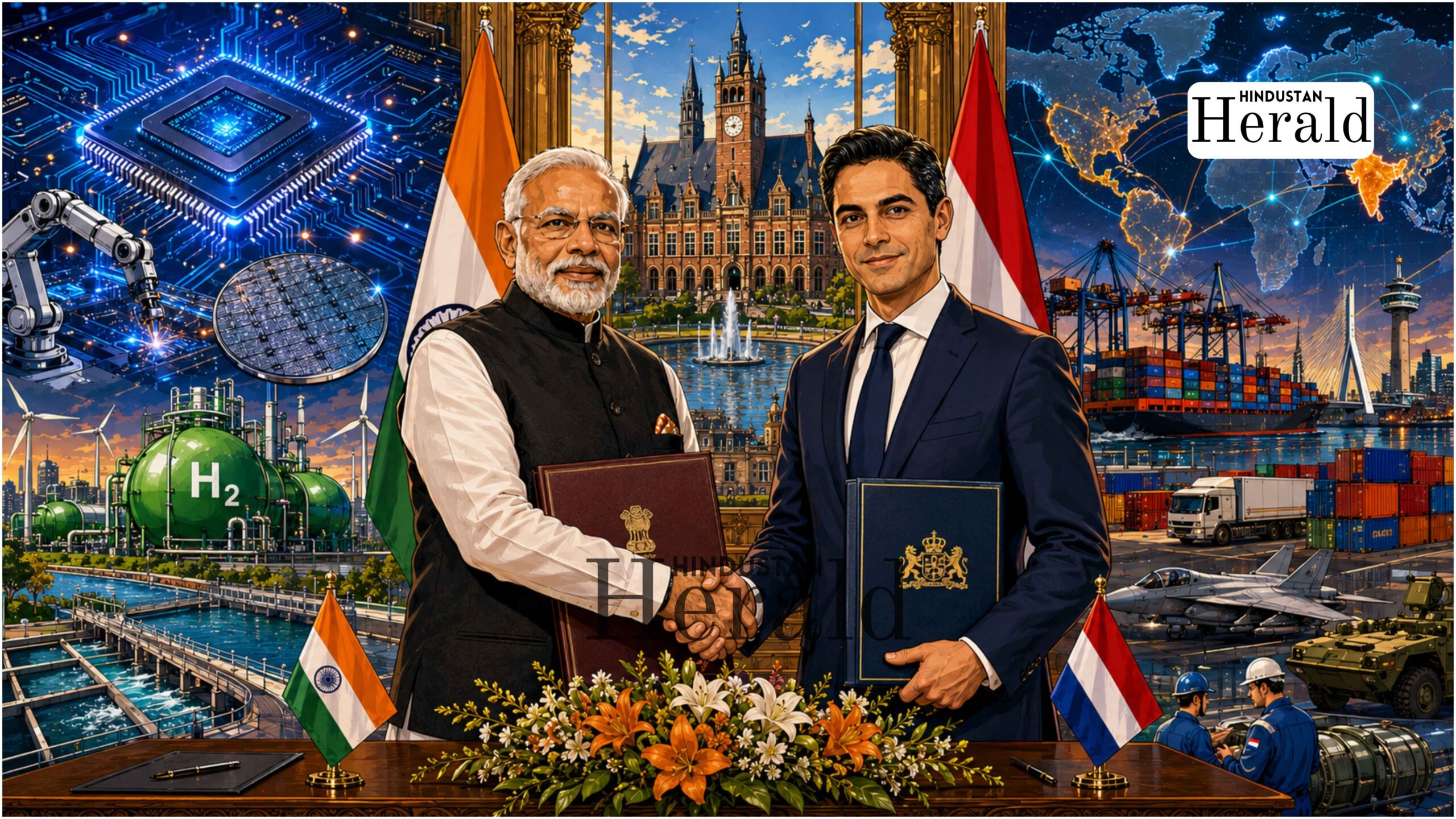
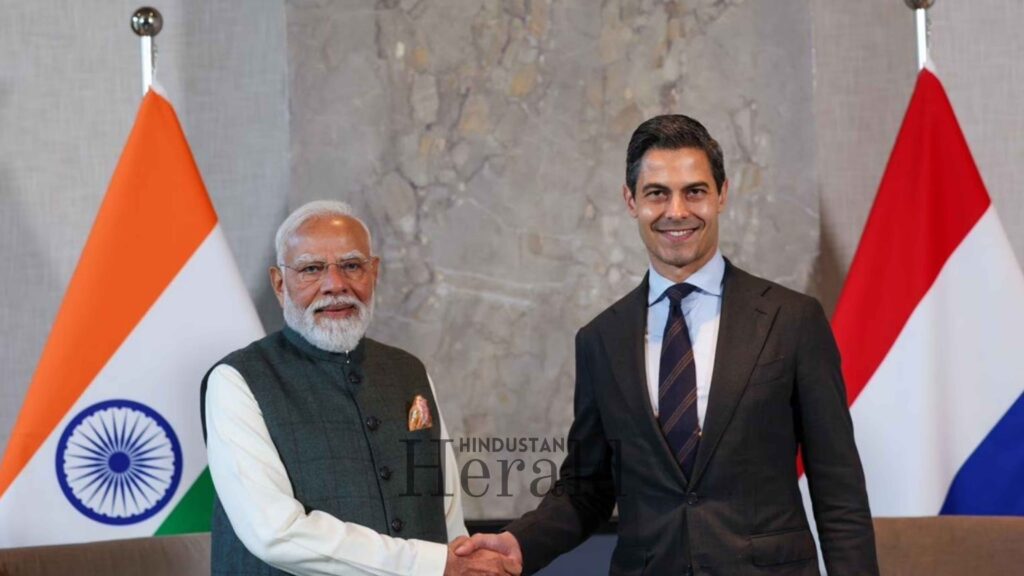
The Hague, May 17: Saturday evening in the Netherlands did not feel like a routine diplomatic stopover. Prime Minister Modi had flown in the previous day, fresh off a brief halt in the UAE, as part of a four-nation European swing. But the energy around the The Hague leg of the trip was different from the start. There were too many moving parts, too many sectors on the agenda, too much private sector interest, for this to be a courtesy call dressed up as statecraft.
By the end of the evening, 17 agreements had been signed. The two countries had formally become Strategic Partners. And a relationship that most people back home associate with tulips and Dutch water pumps had quietly grown into something considerably more serious.
How Did We Get Here
The honest answer is that this did not happen overnight. India and the Netherlands have been doing real work together for years, mostly in areas that do not generate much noise. Water technology. Agriculture. Trade. The kind of cooperation that does not make headlines but does make a difference.
What changed recently is the context around them. The world is reorganising. Supply chains that used to run through China are being rerouted. Technology that used to flow freely is now subject to export controls and political calculations. Europe is rethinking who its real partners are.
In that environment, a country like India, large, fast-growing, democratically governed, and strategically non-aligned, looks a lot more valuable to a country like the Netherlands than it did ten years ago. Saturday was the moment both sides decided to say that out loud.
The Agreements, and What They Are Really About
The MEA put out a list. Semiconductors, critical minerals, health, water management, renewable energy, agriculture, culture. Seventeen agreements in total.
Reading a list like that can feel numbing. But strip away the bureaucratic categories and what you have is two countries deciding to be useful to each other in ways that actually matter. The one that will affect the most ordinary Indians most directly is probably the migration and mobility pact. Indian professionals and students have been increasingly drawn to the Netherlands as a destination. This agreement makes the path there cleaner and more structured.
As reported by PTI, the two countries traded USD 27.8 billion worth of goods and services in 2024-25. Both Modi and Jetten pointed to the newly signed India-EU Free Trade Agreement as the thing most likely to accelerate that further. The commercial foundations are real. These are not agreements written on hope.
On Defence, the Tone Has Shifted
For a long time India’s defence relationships in Europe had a familiar shape. India needed equipment, Europe supplied it, money changed hands, everyone went home. What Modi and Jetten discussed on Saturday was different. They talked about a defence industrial roadmap. Joint manufacturing. Technology transfer. Joint ventures.
India has been trying to have this kind of conversation with European partners for years, with mixed results. France came through on the Rafale and has built a genuine co-production relationship over time. Others have been slower.
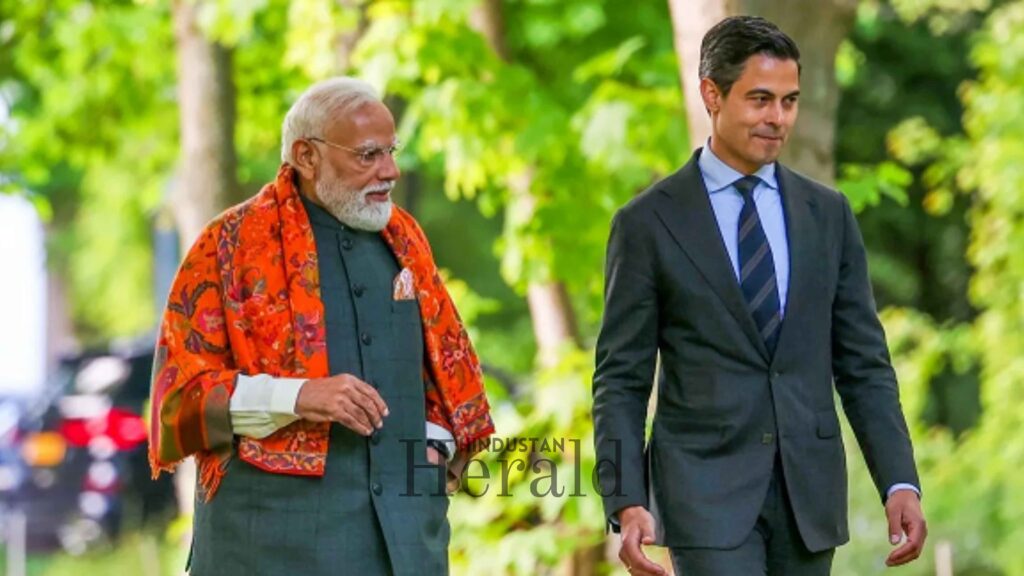
The Netherlands entering this conversation seriously is encouraging. Whether it translates into actual factories and actual manufacturing deals is a different question, and the word “explore” in the joint statement is doing some heavy lifting. But the tone has changed. And in diplomacy, tone tends to precede action.
Pahalgam Came Up, and Jetten Did Not Hedge
One of the things India has been doing quietly throughout this European tour is testing how far its partners will go on the terrorism question. The answer from the Netherlands was unambiguous.
As per the joint statement, PM Jetten described the Pahalgam attack of April 2025, which killed 26 tourists, as “heinous and abhorrent.” He backed India fully in its fight against terrorism, including the kind that originates across a border. The joint statement called for zero tolerance and specifically rejected double standards in how the world responds to terror.
That phrase, “double standards,” is not diplomatic filler. It is a deliberate signal aimed at the international community’s tendency to look away when the country harbouring militants is also considered a useful strategic asset. Getting a NATO member to attach its name to that framing is something India’s foreign policy establishment will take note of, even if it does not say so loudly.
The Chip Story Nobody Is Telling Plainly
There is a company in Eindhoven called ASML. Most people outside the technology industry have never heard of it. That is a shame, because it is arguably the most strategically important industrial company in the world right now.
ASML makes the machines used to manufacture advanced semiconductors. Not some of the machines. The only machines. Without their extreme ultraviolet lithography equipment, you cannot build a modern chip at the cutting edge. Not in Taiwan. Not in South Korea. Not in the United States. Nobody.
The Americans have spent the last two years pressuring the Dutch government to cut off China’s access to this technology. That campaign has worked, to a degree. ASML’s export pipeline to China has been progressively choked.
What that creates is a quiet competition among non-Chinese countries to be seen as the preferred destination for Dutch technology relationships as the global semiconductor map gets redrawn. India is competing for that position. Its India Semiconductor Mission has real projects moving in Gujarat and Assam. Its government has made chip manufacturing a national priority. And its Prime Minister just spent an evening in The Hague building the kind of political trust that precedes industrial access.
The Saturday agreements talk about trusted supply chains and critical mineral cooperation. That is the version safe to put in a press release. The real conversation is happening at a level that does not get quoted.
On Green Hydrogen, the Incentives Line Up
Every major diplomatic meeting these days produces a clean energy announcement. Most of them mean very little. This one is different, and the reason is geography and economics rather than political goodwill. The Port of Rotterdam is not theorising about green hydrogen. It is actually building the infrastructure to receive and distribute it at scale. The terminal is under construction. The demand is being contracted. The market is real.
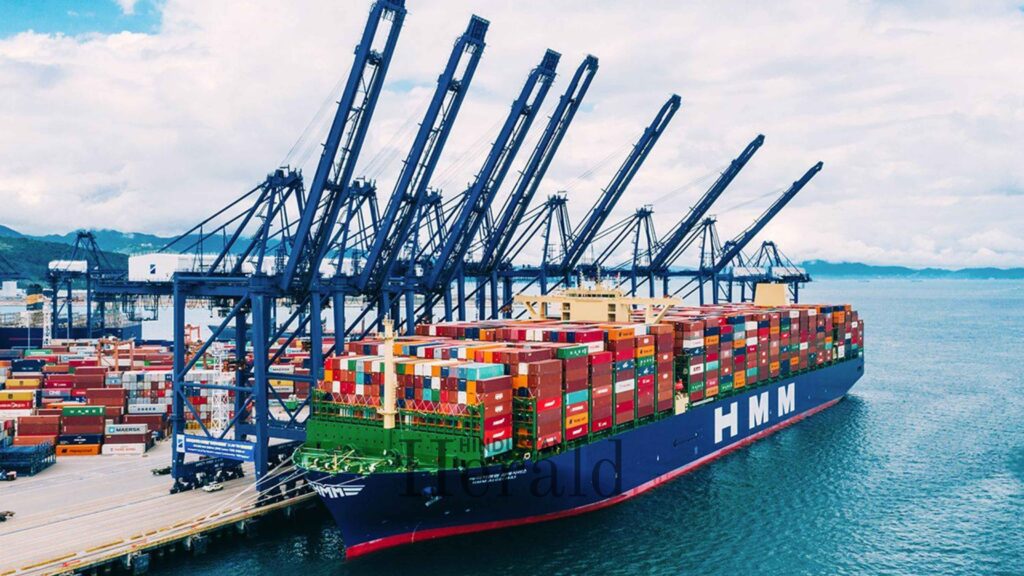
The problem is supply. Rotterdam needs producers who can deliver green hydrogen in large volumes at a price that makes commercial sense. That is a very short list, and India is on it. India’s solar and wind resources give it a natural cost advantage in green hydrogen production. The challenge has always been certification and market access. A bilateral framework that lets Indian hydrogen meet European import standards directly removes the single biggest bureaucratic barrier to trade. This will not happen next year. But it will happen, because both sides need it to.
Water Was Always the Soul of This Partnership
Strip away every new element of Saturday’s agenda and you are left with the thing that brought these two countries together in the first place.
The Dutch relationship with water is unlike anything else in the world. They have been engineering their way out of floods for centuries. Their expertise in delta management, coastal resilience, and sustainable irrigation is not theoretical. It was built by necessity, over generations, at enormous cost. India is arriving at its own version of that necessity. The monsoon has become less predictable. Groundwater is being extracted faster than it is being replenished. Mumbai floods. Chennai floods. The Brahmaputra surges. The Ganga delta faces pressures that will only intensify with climate change.
The new agreements bring Dutch expertise directly to bear on these problems, through joint research on the Brahmaputra and Ganga delta systems, smart irrigation programmes, and urban flood resilience planning for Indian cities. This work will not trend on social media. It will not make the evening news. But a generation from now, when some of these interventions have matured, people in flood-prone cities and water-stressed districts will feel the difference.
The Hormuz Moment
The two leaders also found time to address West Asia and specifically called for free navigation through the Strait of Hormuz. As reported by PTI, roughly one-fifth of global energy moves through that waterway every day. Shipping there has been severely disrupted through much of this year.
For India, this is not a foreign policy abstraction. It is a kitchen table issue. Energy prices, household budgets, the cost of running a business, the savings that Indian workers in the Gulf send back home every month. All of it is sensitive to what happens in that narrow stretch of water.
The Netherlands cares for its own reasons. Rotterdam is Europe’s energy hub. Disruption in Hormuz shows up in European fuel prices and industrial costs within weeks. Two countries with different addresses but the same anxiety finding common language on this is useful. It will not stop a conflict. But shared positions matter when the world is looking for coalitions.
What the Indo-Pacific Language Tells You
There was a line in the joint statement about a free, open, and peaceful Indo-Pacific, grounded in international law and free from coercion. Everybody reading it knew who it was about.
Not long ago, getting a European government to use this language was genuinely difficult. Most of them had too much trade exposure to China to risk the friction. They preferred studied ambiguity. That is changing. Slowly, unevenly, but unmistakably. The Netherlands signing onto this framing alongside India is one more tick on a scoreboard that India’s foreign policy establishment monitors closely.
What Modi Said When He Dropped the Script
Modi made all the expected points during his opening remarks. Historical ties. Democratic values. Shared interests in trade and technology.
But there was one line that was purely his. He said there should be a meeting of Dutch expertise and India’s “speed and skill” in every sector. It is the kind of line that sounds simple but carries a full argument inside it. India is not asking for charity or tutelage. It is offering a partnership of equals, where one side brings knowledge and the other brings velocity. Jetten heard it clearly. The roadmap they signed together reflects exactly that logic.
Zooming Out
Take a step back from Saturday and a larger picture comes into focus. India is doing something deliberate and patient across Europe. It is converting relationships that used to be primarily about trade into something deeper and more durable, one country at a time.
France for defence technology and strategic trust built over decades. Germany for industrial depth and green finance. Italy for a growing defence industrial conversation. And now the Netherlands for chip ecosystem relationships, water knowledge, green hydrogen infrastructure, and a partner willing to speak plainly on terrorism and the Indo-Pacific.
No single relationship in this network is sufficient. Together they are starting to look like a considered strategy for a world that is sorting itself out along new lines. The 17 agreements signed in The Hague on Saturday are one chapter in that story. Written carefully. Built to last.
Stay ahead with Hindustan Herald — bringing you trusted news, sharp analysis, and stories that matter across Politics, Business, Technology, Sports, Entertainment, Lifestyle, and more.
Connect with us on Facebook, Instagram, X (Twitter), LinkedIn, YouTube, and join our Telegram community @hindustanherald for real-time updates.

Tracking world politics, global markets, trade movements, policy decisions, and the changing balance of economic power.
Specializes in South Asian geopolitics and global diplomacy, bringing in-depth analysis on international relations.
- Rajiv Menon

- Rajiv Menon
- Rajiv Menon
- Rajiv Menon