
 By Shelesh Joshi and Kavita Iyer
Mumbai, May 18: Corporate credit in India was supposed to crack by now. Every bearish playbook written over the last two years had a version of the same prediction. Global trade would slow. Tariffs would bite. Domestic demand would soften. And Indian companies, carrying the debt burdens of an ambitious decade, would finally start showing the cracks that analysts had been quietly pencilling into their models. That did not happen.
Instead, something far less dramatic but considerably more significant quietly unfolded. Indian companies spent four years doing the boring, unglamorous, deeply necessary work of fixing their balance sheets. They paid down debt nobody asked them to pay down. They walked away from deals that looked great on a press release. They built cash buffers when the easy thing to do was spend them. And now, with the global economy throwing everything it has at emerging markets, India’s corporate sector is standing in a way that most of its peers simply cannot match.
Moody’s Ratings has made it official. India is the most resilient large emerging market economy since 2020. The buffers are real. The headroom is there. And for investors, credit analysts, and anyone tracking where the next stress fracture in global markets might appear, that is a story worth understanding properly.
Corporate Credit Recovery Was Built During The Unglamorous Years
Here is the thing about how India’s corporate sector got to this point. It was not glamorous. The mid-2010s were a period of aggressive expansion for a lot of large Indian companies. Debt-funded acquisitions, ambitious infrastructure bets, capacity built on the assumption that growth would keep coming. Some of it worked. A lot of it did not.
By the time the pandemic hit in 2020, several of those balance sheets were already looking strained before the revenue shock even arrived.
What happened next is the part that does not get told enough. Instead of doubling down, instead of borrowing more to grow their way out of trouble, a significant number of Indian conglomerates and mid-sized manufacturers made a deliberate and genuinely difficult choice to clean house.
They sold assets they did not need. They paid down expensive debt. They walked away from deals that would have looked good on a press release but would have added leverage they could not afford.
It was unglamorous work. It did not generate headlines. But Moody’s is now essentially saying it paid off. Median net debt-to-EBITDA across the rated portfolio has improved in a way that actually moves the needle on credit headroom. That headroom is the gap between where a company’s numbers sit today and the point where lenders start asking uncomfortable questions. That gap is wider now than it has been in a long time.
Going into a period of genuine global uncertainty, that matters more than almost anything else on a balance sheet. Moody’s specifically points to clear monetary policy frameworks, anchored inflation expectations, and flexible exchange rates as the structural supports underpinning India’s resilience over competing emerging markets.
The sectors covered in the assessment are wide ranging. Fast-moving consumer goods, infrastructure, energy, telecommunications, metals and mining, and information technology services. Together they represent a reasonable cross-section of how corporate India earns, borrows, and manages risk. Across most of that universe, the story coming back is the same. Leverage is down, liquidity is up, and the average Indian corporate balance sheet looks considerably less fragile than it did three or four years ago.
The US-India Trade Deal Broke A Logjam That Had Been Weighing On Exporters
For much of 2025, there was a specific and somewhat unusual source of anxiety sitting over Indian corporate credit that had nothing to do with balance sheets or earnings multiples. The United States had imposed steep tariffs on Indian goods, first at 25 per cent and then pushed as high as 50 per cent, partly in response to stalled trade negotiations and partly tied to India’s continued purchases of Russian oil. For exporters in auto components, specialty chemicals, textiles, and pharmaceuticals, the uncertainty was killing visibility.
You cannot plan a production schedule or lock in long-term supply contracts when you do not know what the landed cost of your goods in the US market is going to look like six months from now. That logjam broke on February 2, 2026. US President Donald Trump announced a cut in reciprocal tariffs on Indian imports to 18 per cent, down from the 25 per cent base rate.
Indian equity markets did not wait for the fine print. The Sensex jumped over 4,200 points the following morning. The Nifty climbed close to record highs. Export-facing stocks, which had spent months being punished by tariff uncertainty, suddenly had a reason to be bought again. For corporate credit specifically, the significance of the deal is less about the tariff numbers and more about what the removal of that uncertainty does to earnings visibility.
When CFOs can see what their revenue line is going to look like, they plan better. They invest more confidently. They stop hoarding cash as a hedge against scenarios they cannot price. That said, the deal is still a work in progress.
The framework is in place but the specifics around agricultural market access, the exact timeline for implementation, and what India actually committed to on Russian oil purchases are still being worked out. Businesses have welcomed the direction of travel. They are waiting for the details before they fully recalibrate their export strategies.
Sector By Sector, The Picture Is Mixed But Mostly Manageable
Infrastructure and utilities companies are probably sleeping the best right now. These are businesses built around the idea of predictability. Regulated tariffs, long-term concessions, government-backed off-take agreements. Their cash flows do not move much with the global cycle.
Power generators, toll road operators, and gas distributors are essentially collecting predictable cash against predictable debt. For rating pressure to emerge here, something would need to go wrong with policy or regulation specifically. A bad global quarter does not really touch them. Consumer staples companies sit in a similarly defensive position, for different reasons.

Hindustan Unilever, ITC, Dabur, and Marico sell things that people keep buying regardless of what is happening in the global economy. The margin picture has actually improved over the last year as input costs, particularly palm oil and packaging materials, came off their highs. These companies are not exciting right now. But in an uncertain environment, not exciting is a very comfortable place to be.
Information technology services, home to TCS, Infosys, and HCL Technologies, carries minimal debt and generates exceptional cash flow. The risk here is not financial distress. The risk is that discretionary technology spending by US and European corporates softens if those economies slow, and Indian IT exporters feel that with a one or two quarter lag. The US-India trade deal and the easing of geopolitical tension helps sentiment, but it does not directly change what a nervous CFO in New York or Frankfurt decides to spend on technology projects this year.
MSCI India consensus earnings growth estimates for the 2025-26 calendar year stand at 13 per cent and 16 per cent respectively, with analysts expecting a meaningful pick-up after five consecutive quarters of depressed earnings.
Pharmaceuticals is having a genuinely good moment. The India-EU free trade agreement, concluded recently, opens duty-free access to a large European market for Indian drugmakers. Indian generics manufacturers and contract research firms are increasingly being pulled into Western supply chains by customers who want to reduce their dependence on Chinese pharmaceutical inputs. That structural demand is real and it is building.
Metals and mining is the one sector where the word complicated feels genuinely earned. The problem is China, and it has been for a while. When Chinese domestic demand for steel and aluminium weakens, Chinese producers do not reduce output to match. They dump the surplus on global markets at prices that make life miserable for producers everywhere else, including India.
Indian steelmakers have done a reasonable job of diversifying their product mix. But this is a sector that cannot fully escape what happens when the world’s largest steel producer has a bad year at home. Telecom is one of the genuine success stories of the last five years, even if getting there was genuinely painful.
Bharti Airtel and Reliance Jio now operate in a structurally rational competitive environment with improving average revenue per user and growing enterprise revenue streams. Vodafone Idea remains the unresolved question mark. But even that situation has been more contained than its most pessimistic observers expected.
The RBI Has Been Quietly Getting A Lot Right
It would be a mistake to talk about Indian corporate resilience without acknowledging how much of it has been enabled by domestic policy doing its job properly.
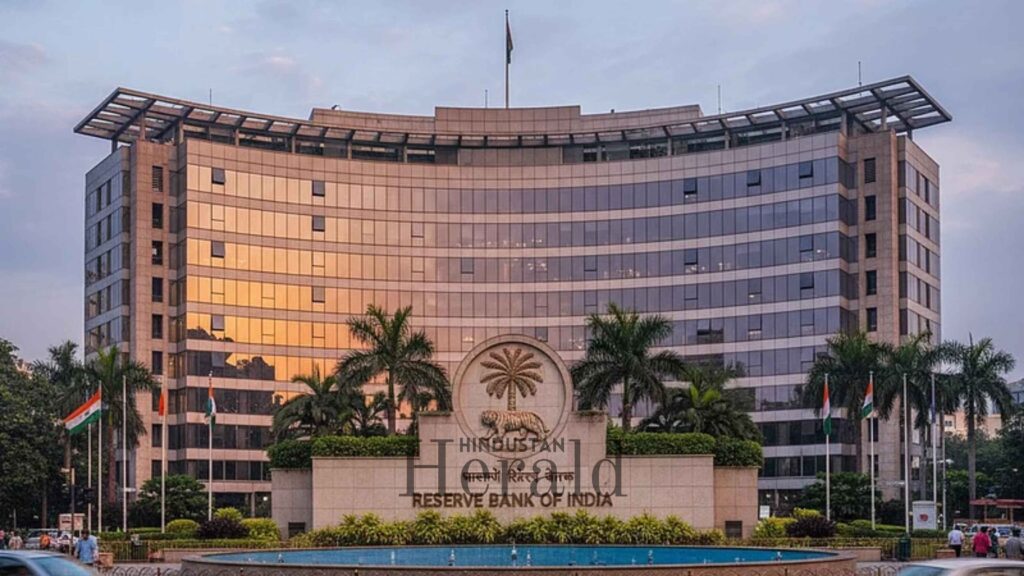
The Reserve Bank of India has delivered 125 basis points of rate cuts through 2025, bringing the repo rate down to 5.25 per cent. Governor Sanjay Malhotra has been consistent and clear in his communication, which matters because policy uncertainty is itself a real cost for corporates trying to plan ahead.
With GDP growth running at 7.3 per cent for FY 2025-26 and inflation sitting near 2 per cent, India finds itself in the kind of macro environment that most other large economies would currently give a great deal to be in. Bank of Baroda economist Dipanwita Mazumdar expects the repo rate to fall further to 5 per cent by year end. Garima Kapoor of Elara Securities is in a similar camp, pointing to easing inflation and sustained public investment as the conditions that give the RBI room to keep going.
As reported by Business Standard, the RBI is also actively managing liquidity conditions through variable rate repo auctions, reinforcing Governor Malhotra’s stated priority of deepening liquidity in sovereign debt markets, a move that benefits corporate issuers through improved benchmark pricing.
The Production Linked Incentive scheme is channelling fresh capital into electronics, pharmaceuticals, textiles, and specialty chemicals, creating an investment pipeline that supports order books even in a cautious global environment. The National Infrastructure Pipeline keeps construction, engineering, and cement companies busy regardless of what private sector appetite for new projects looks like in any given quarter. None of this makes Indian corporates invulnerable. But it does mean they are not fighting the macro environment at the same time as they are managing external headwinds. That combination matters more than it sounds.
Three Risks That Could Still Unsettle This Story
Moody’s does not pretend the stable outlook is unconditional, and it is worth being direct about what could change it. A US recession would be the worst single scenario for India Inc. It would hit IT services, pharmaceutical exports, and metals prices simultaneously, at the same time as it weakened the rupee and pushed up the real cost of foreign currency debt. That combination would test even the strongest balance sheets in the rated universe.
An oil price spike is a perennial risk for India that never fully goes away. Tensions around the Strait of Hormuz and broader Middle East instability mean the risk is not theoretical. A sustained move up in crude prices hits India through the current account deficit, the rupee, and the input cost lines of energy-intensive industries all at once. It is the kind of shock that can turn a manageable situation into an uncomfortable one quite quickly.
A domestic demand disappointment would undermine the single biggest assumption in Moody’s base case. The whole argument for why India Inc. can absorb external weakness rests heavily on domestic consumption and government spending holding up. A poor monsoon, a real estate correction, or unexpected fiscal tightening could chip away at that assumption faster than most models would suggest.
Why Investors Should Pay Very Close Attention To India Credit Right Now
Moody’s tracked India through four serious global stress episodes between 2020 and 2025. The Covid-19 shock. The Fed tightening cycle of 2022. US regional banking stress in 2023. The tariff turbulence of 2025. India came through all four better than most of its emerging market peers. That is not a coincidence. It reflects real improvements in policy frameworks, corporate financial discipline, and the depth of domestic markets.
J.P. Morgan analysts expect a meaningful earnings recovery in the second half of 2026, with consumption-driven growth picking up as the income tax relief from the Union Budget filters through to household spending.
For investors in Indian corporate credit and equity, the picture is genuinely encouraging with appropriate caveats. The companies that did the difficult, unglamorous work of repairing their balance sheets over the last four years are now positioned to benefit from a more supportive environment. The ones that did not will find the next eighteen months considerably more revealing.
For now, India’s nonfinancial corporate sector has earned a degree of confidence that is backed by actual numbers rather than just optimism. That is a better starting point than most places in the world can claim right now. And in a global environment this uncertain, a better starting point is worth everything.
Stay ahead with Hindustan Herald — bringing you trusted news, sharp analysis, and stories that matter across Politics, Business, Technology, Sports, Entertainment, Lifestyle, and more.
Connect with us on Facebook, Instagram, X (Twitter), LinkedIn, YouTube, and join our Telegram community @hindustanherald for real-time updates.

Tracking world politics, global markets, trade movements, policy decisions, and the changing balance of economic power.

Former financial consultant turned journalist, reporting on markets, industry trends, and economic policy.
- Kavita Iyer

- Kavita Iyer
- Kavita Iyer
- Kavita Iyer




 Ananya Sharma and Kavita Iyer