
 By Ananya Sharma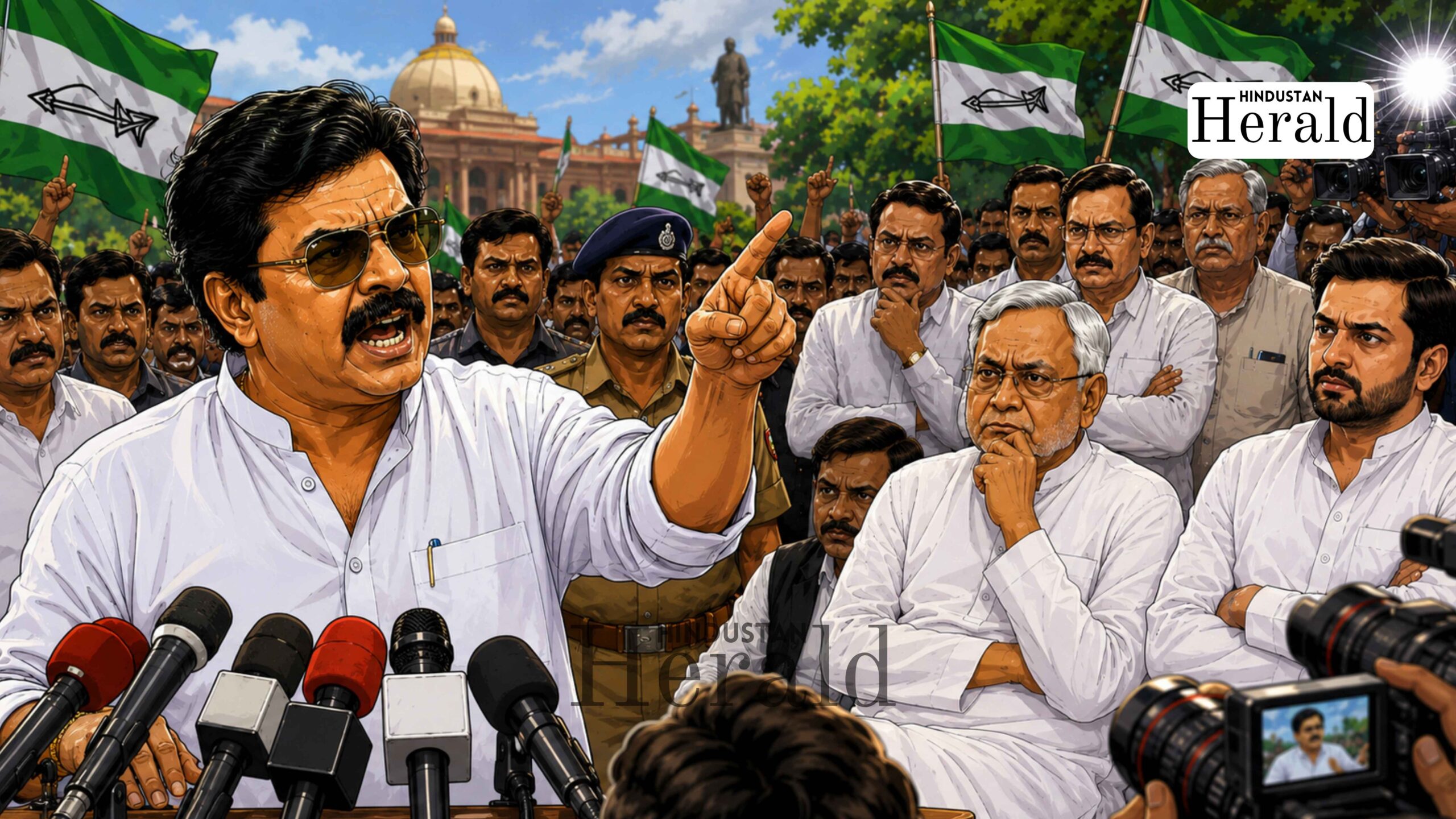
Patna, May 19: Bihar’s political temperature spiked sharply this week as former MP Anand Mohan Singh unleashed a string of blunt, unsparing attacks on the Janata Dal (United) leadership, accusing party insiders of systematically burying Nitish Kumar’s political identity and running the party as a marketplace for ministerial posts. His remarks, coming barely twelve days after the massive cabinet expansion at Gandhi Maidan in Patna, have opened a raw wound inside the NDA alliance and set off a round of fire-and-counter-fire that shows no sign of cooling.
The Trigger – A Son Left Out in the Cold
Anand Mohan had been making a series of allegations over recent days, claiming he was being ignored within the party and accusing JDU of running a money-driven politics internally. The most personal of his grievances, and arguably the one that lit the fuse, was the exclusion of his son, Chetan Anand, from the newly expanded Samrat Choudhary cabinet. Anand Mohan launched a sharp attack on the JDU leadership over Chetan Anand not being made a minister, alleging that those close to Nitish Kumar had politically “buried him alive” and turned the party into what he called a “thaili ki party” a party of moneybags.
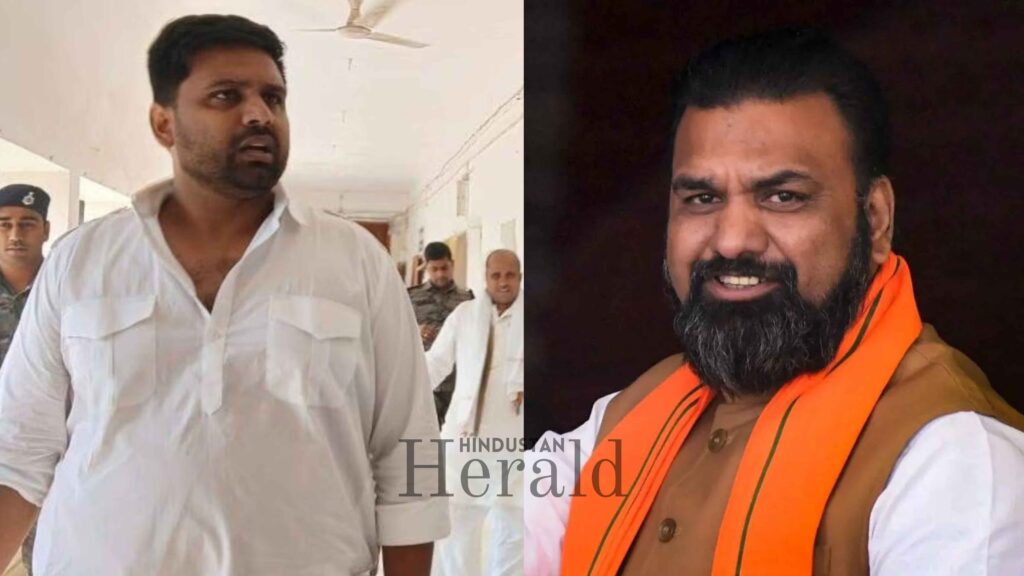
That loaded phrase, “thaili ki party,” carries particular weight in Bihar’s political grammar. It is an accusation that decisions over tickets and ministerial berths are being traded for cash, not awarded on the basis of loyalty or service. At a preparatory meeting for the Maharana Pratap statue installation event at a hotel in Sitamarhi’s Dumra Road, Anand Mohan alleged that in JDU, whoever delivers the money bag will become a minister, and that these people have finished off the NDA.
He further claimed that Nitish Kumar’s image and identity were being pushed aside within his own organisation, pointing out that even at the May 7 swearing-in ceremony at Gandhi Maidan, where he attended with 85 legislators, the outgoing Chief Minister’s image was not given adequate space. Party posters and boards, he said, were no longer carrying the names of senior leaders.
“Father and Son Both Need Doctors”
The sharpest jab Anand Mohan landed was not aimed at the party machinery alone. It was aimed squarely at the appointment of Nishant Kumar, the son of Nitish Kumar, as Bihar’s Health Minister. His remark was blunt: Nishant Kumar was given the Health Ministry because both father and son need doctors. It was a two-pronged dig. On one side, it mocked the logic behind Nishant’s portfolio allocation. On the other, it was a veiled reference to questions that had already been swirling on social media about the new minister’s composure and preparedness.
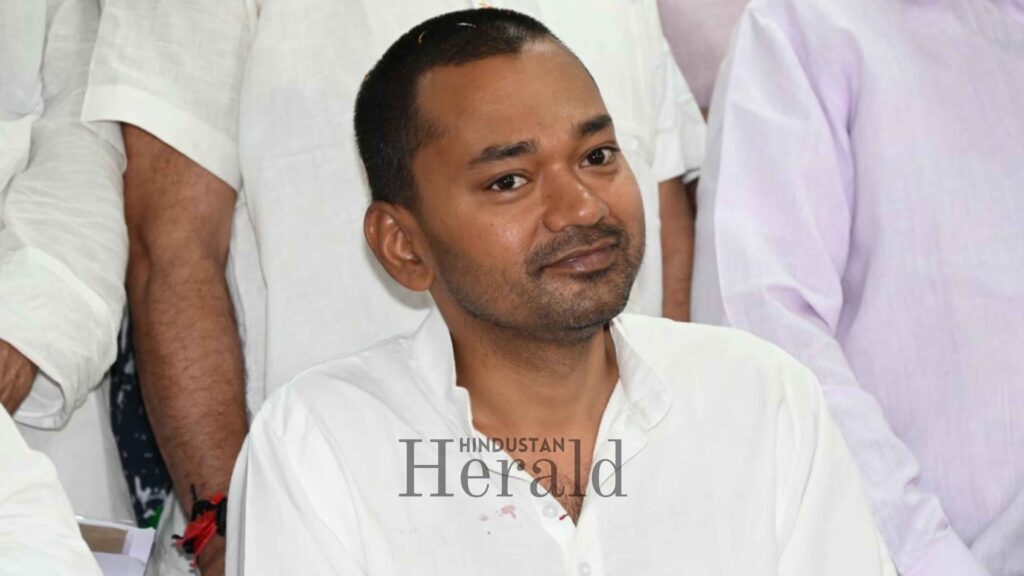
Nishant Kumar’s entry into Bihar politics had been watched with intense public interest. A former software engineer who had studied at Birla Institute of Technology Mesra, Nishant had for most of his adult life claimed he had no intention of entering politics. He assumed charge as Bihar’s Health Minister on May 8, 2026, vowing to deliver corruption-free governance and significantly improve healthcare facilities across the state. Still, the manner of his arrival into public life raised serious questions across the political spectrum about dynastic succession within a party that had for years preached against exactly that.
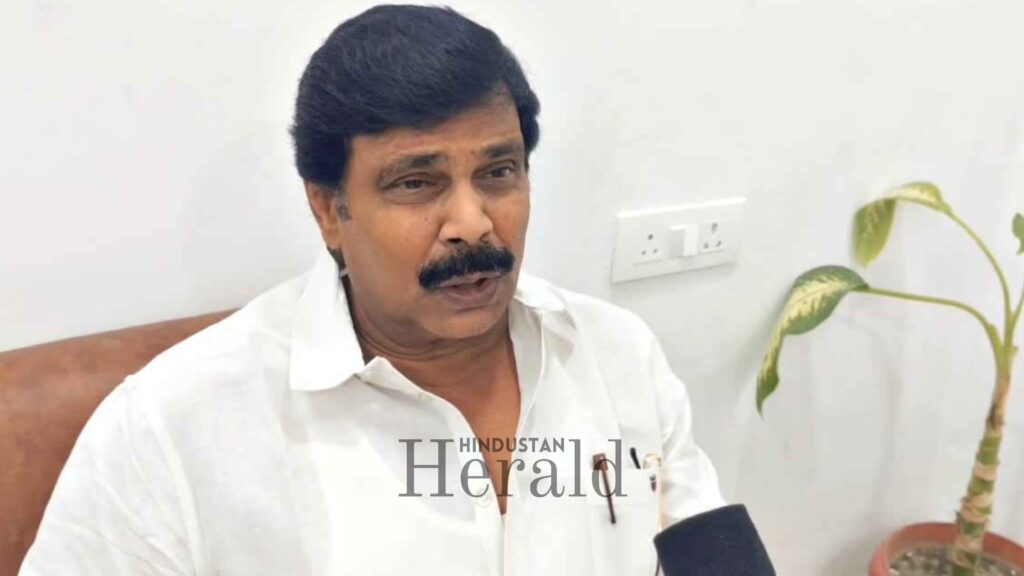
Within days of taking oath, Nishant became the subject of widespread mockery after a clip surfaced of him accidentally referring to the “1925 Bihar elections” while thanking voters, a date that predates India’s independence, the existence of JDU, and most modern democratic institutions. Congress leader Supriya Shrinate shared the video online, intensifying the trolling, while users jokingly referred to Nishant Kumar as a “time traveller.” The opposition, particularly the RJD, had already been sharpening its dynastic argument. An RJD spokesperson had said, “The very leaders who lectured us on ‘Jungle Raj’ and nepotism for decades have now embraced the same ‘Parivarwad’ to secure their own political futures.”
Anand Mohan’s “father and son need doctors” jibe added a nastier edge to this conversation. Coming from within the NDA’s own tent, it carried far more political weight than anything the opposition could launch.
The Warning – Four People Will Ruin JDU
Beyond the Nishant barb and the Chetan Anand grievance, Anand Mohan made a more structural charge. As per sources familiar with his remarks, he warned that four specific people within the JDU’s inner circle were on course to destroy the party. He did not name these four individuals publicly. That deliberate vagueness was itself a political move. It kept the party guessing, set insiders against each other, and ensured that his allegations continued circulating as a topic of speculation rather than a claim that could be cleanly refuted.
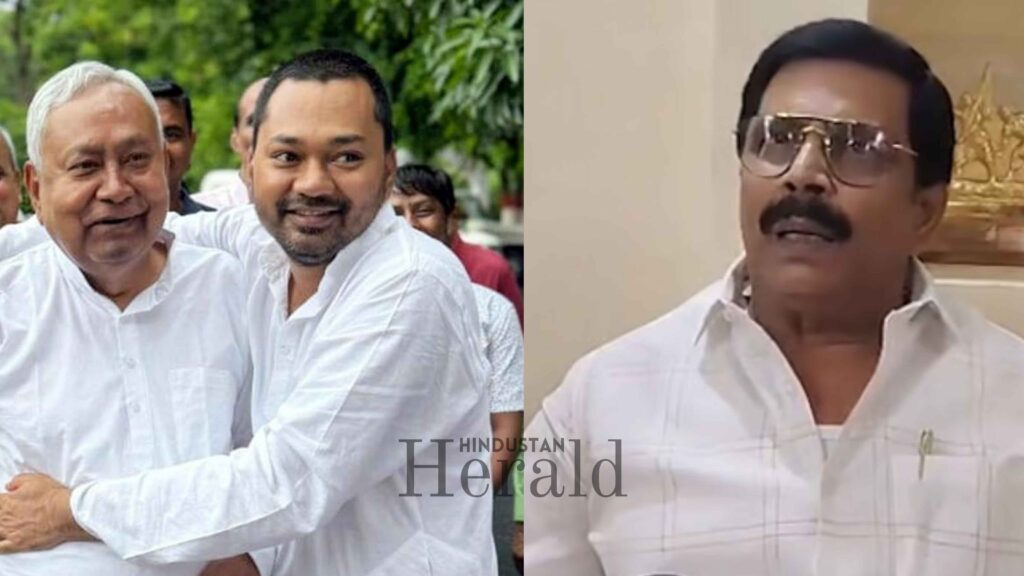
The warning about four individuals fits within a pattern of claims Anand Mohan has been building over recent weeks. He had been repeatedly alleging that certain people within JDU were engaged in eliminating Nitish Kumar’s political identity. Combined with the money-politics charge and the Nishant appointment controversy, the four-people warning amounts to a fairly comprehensive indictment of the current direction of the party’s internal management.
JDU Hits Back – “No One Can Bury Nitish Kumar”
The party did not stay quiet. Housing and Construction Minister Leshi Singh shot back that JDU had never had a culture of “thaili ki rajneeti,” saying that former Chief Minister Nitish Kumar lives in the hearts of crores of people and that no one can erase his identity. The language here was pointed. By affirming that Nitish’s identity cannot be erased, she was implicitly acknowledging that Anand Mohan’s charge had landed and required a firm public response. JDU chief spokesperson Neeraj Kumar and other party leaders added that decisions related to the party are matters for the leadership, and that outsiders need not comment on them.
That last phrase, “outsiders,” signals something important. Anand Mohan, despite his family’s presence within JDU through his son Chetan Anand’s MLA seat, is himself not formally a card-carrying member of the party at the moment. The JDU’s framing of him as an outsider is a deliberate attempt to delegitimise his criticism. As it turns out, that framing may be more politically convenient than accurate, given Anand Mohan’s close historical ties to Nitish Kumar stretching back to the JP movement era.
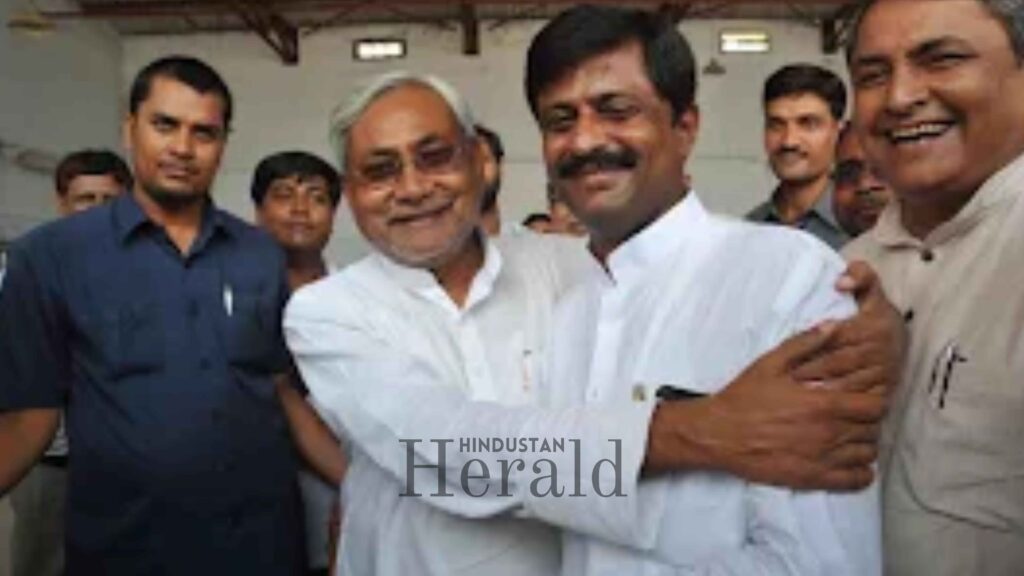
JDU MLC Sanjay Singh also responded to the controversy, and reports indicate that Nitish Kumar himself reached out by visiting Sanjay Singh’s residence shortly after the storm broke, a move widely read as the former Chief Minister sending a message of solidarity to his loyalists and attempting to contain the narrative damage from within. The visit was brief but symbolically significant in a week when Anand Mohan’s barbs were being carried on every major Hindi news channel.
What Is This Really About?
Strip away the personal grievances and the colourful language, and what you find underneath is a fairly classic Bihar political story: a powerful leader using public theatre to extract a concession. Anand Mohan wanted his son in the cabinet. Chetan Anand, a JDU MLA from Sheohar, was a name doing the rounds ahead of the expansion. As recently as January, when Nitish Kumar visited Chetan Anand’s dahi-chura event and stayed for about five minutes, it had been widely read as a signal that a ministerial berth was coming. When the cabinet list was finally announced on May 7 with Chetan Anand conspicuously absent, Anand Mohan’s subsequent eruption becomes easier to read.
That said, reducing this to pure personal pique would miss something real. The questions Anand Mohan is raising about dynastic appointments, money-for-ministry allegations, and the sidelining of senior figures within JDU are not questions that only he is asking. They are circulating quietly across Bihar’s political class. The opposition has been raising them loudly. As one analysis noted, Nishant Kumar’s appointment as Health Minister mirrors the 2015 entry of Lalu Prasad Yadav’s son Tej Pratap Yadav into the same department, a comparison that stings precisely because JDU spent years attacking the RJD for exactly that kind of dynastic behaviour.
The Bigger Picture: Bihar’s Post-Nitish Transition
What makes this week’s controversy especially significant is the political moment in which it is unfolding. Bihar is in the middle of a genuine leadership transition. Nitish Kumar, who stepped down from the Chief Minister’s post after the 2025 Assembly victory and moved to the Rajya Sabha, remains the JDU president and the most powerful political figure in the state. But the formal CM chair now belongs to Samrat Choudhary, and the cabinet his government has assembled reflects a careful negotiation of factional and caste interests within the NDA coalition.
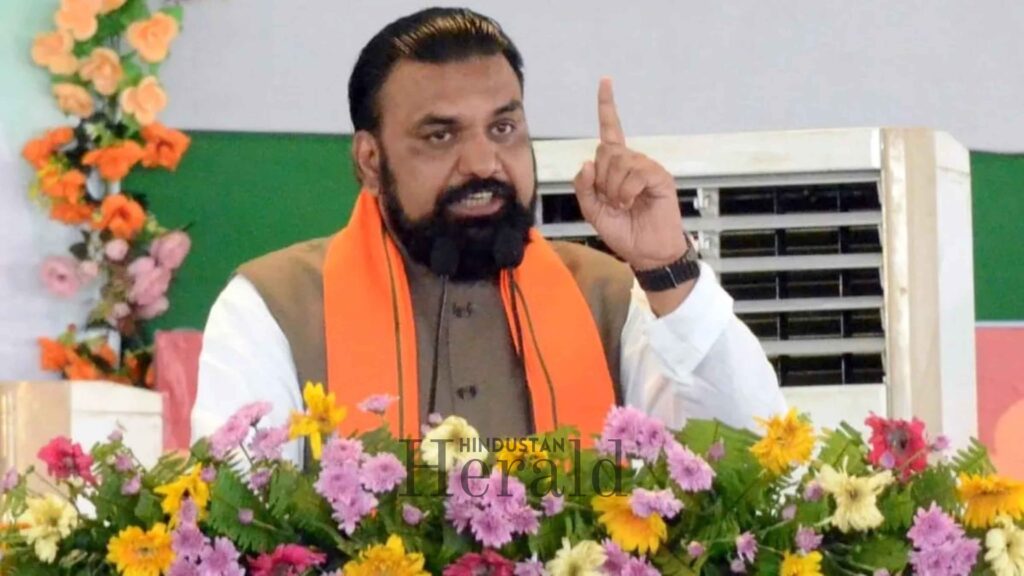
Nishant Kumar’s induction into this cabinet was presented as a natural progression. PTI had reported that it was the wish of JDU leaders and workers to see Nishant in the government, though he had initially refused, wishing to earn his spurs as a party worker first. The swearing-in drew top NDA leaders, including Prime Minister Narendra Modi, Union Home Minister Amit Shah, and Defence Minister Rajnath Singh, lending the occasion significant national-level endorsement.
For now, JDU has a formal majority in the Bihar Assembly and the NDA alliance remains intact on paper. But internal tensions over who gets what, and who gets to decide, have been visible for weeks. Anand Mohan has given those tensions a voice, a face, and a set of accusations sharp enough to follow this government into its next phase. Whether he is negotiating, warning, or simply venting, his words have landed. In Bihar politics, that is rarely accidental.
Stay ahead with Hindustan Herald — bringing you trusted news, sharp analysis, and stories that matter across Politics, Business, Technology, Sports, Entertainment, Lifestyle, and more.
Connect with us on Facebook, Instagram, X (Twitter), LinkedIn, YouTube, and join our Telegram community @hindustanherald for real-time updates.

Covers Indian politics, governance, and policy developments with over a decade of experience in political reporting.
- Ananya Sharma

- Ananya Sharma
- Ananya Sharma
- Ananya Sharma


 Sandeep Verma