
 By Shelesh Joshi and Rajiv Menon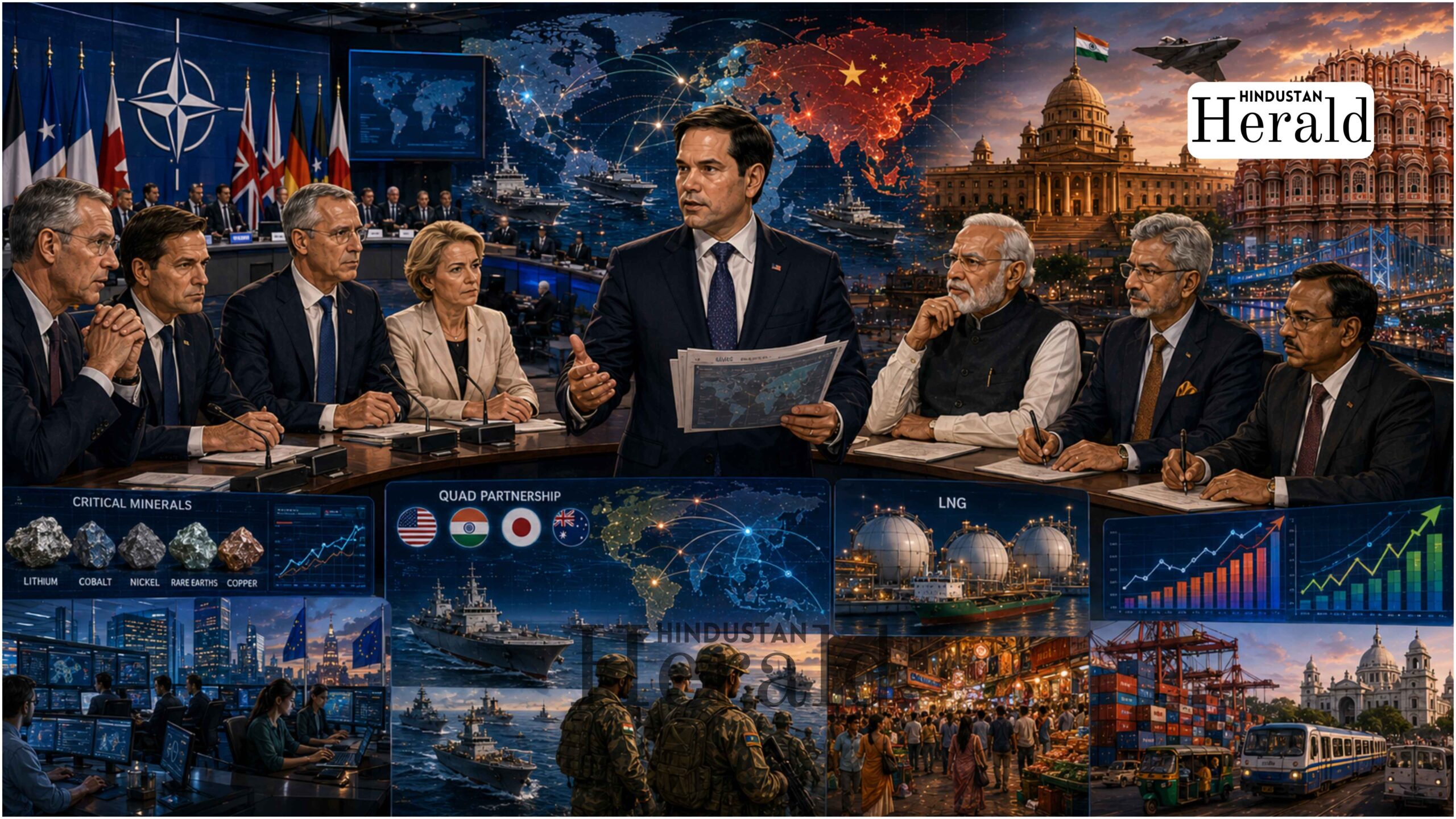
New Delhi, May 20: Let’s be honest about what this week’s travel schedule actually says about where American foreign policy is right now.
Rubio flies to Sweden on May 22 to sit with NATO allies who are privately furious, publicly diplomatic, and genuinely unsure whether the country that built the alliance still believes in it. Then, without much of a pause, Rubio boards another flight east and spends four days in India landing in Kolkata first, then Agra, Jaipur, and finally New Delhi, where the formal meetings will happen. The State Department says Rubio’s agenda covers energy security, trade, and defence cooperation. That is accurate as far as it goes. It just does not go very far.
There is quite a lot riding on both stops, and the two are more connected than they might appear on a map.
Europe Is Nervous, and Rubio Knows It
The NATO meeting in Helsingborg is not the kind of gathering where ministers fly in to shake hands and reaffirm shared values. The mood heading into it is genuinely tense. President Trump has spent the better part of his second term making European governments feel like tenants who have overstayed their welcome in an apartment they thought they co-owned.
The threats to withdraw from the alliance, the demands for higher defence spending, the refusal to send American naval vessels to secure the Strait of Hormuz unless Europeans joined in all of it has added up. European leaders have largely responded by agreeing to spend more on defence, setting targets of 3.5% of GDP on core military expenditure and an additional 1.5% on broader security measures. That is a significant shift from where the conversation was even three years ago, and it happened largely because Washington pushed hard enough that ignoring the pressure stopped being an option.
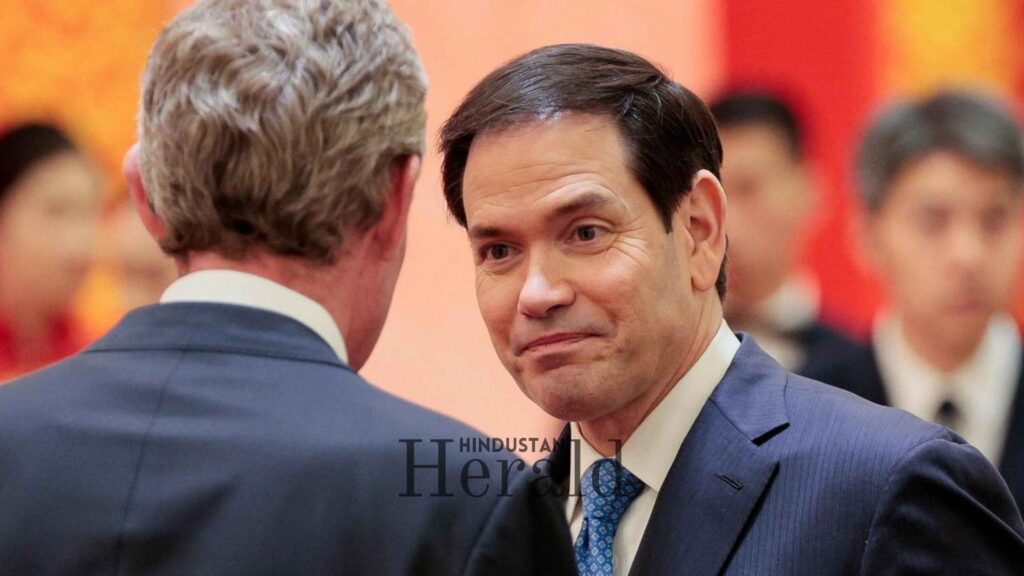
Rubio has been the person Trump’s White House sends when it wants to deliver the same message but without the accompanying chaos. He was at Munich in February. He went to Italy when the president’s comments about the Pope threatened to turn a religious disagreement into a diplomatic incident. Rubio tends to say the same things Trump says spend more, carry your weight, America is not a charity but he says them in a way that leaves the other side feeling consulted rather than lectured.
Whether that distinction still holds after eighteen months of this administration is something European foreign ministers are quietly debating among themselves. But Rubio showing up matters, and the Helsingborg meeting is also one of the last chances for the alliance to get its position sorted before the NATO summit in Ankara in July. What gets agreed or pointedly not agreed in Sweden will shape that larger gathering.
Rubio will also sit separately with the Arctic Seven Canada, Denmark, Norway, Sweden, Finland, and Iceland about security in the High North, a region that has gone from a geographic footnote to a live strategic concern faster than most foreign ministries were prepared for.
Then Rubio Gets on a Plane to India
The jump from a NATO ministerial to a four-city Indian itinerary is not as jarring as it might seem. Both trips are, at their root, about the same underlying anxiety: America trying to convince partners it is still a reliable anchor in a world that is reorganising itself at speed.
India and NATO have almost nothing in common institutionally. But the question both sets of partners are quietly asking Washington is essentially identical. Can we count on you? Not in the abstract, not in the communiques actually, operationally, when it matters. Rubio is being sent to both places in the same week partly because the answer, for now, needs to be delivered in person.
The Strait of Hormuz is one thread that ties the two stops together directly. European allies refused to join American naval efforts to secure the waterway, and that refusal became one of the more public friction points in the transatlantic relationship this year. For India, the same strait is not a geopolitical abstraction it is the route through which roughly 40% of the country’s crude oil travels. When Trump and Modi spoke in April, both flagged it as a shared concern. That conversation is going to come up again when Rubio sits down in New Delhi.
Four Cities, Which Is Already Telling You Something
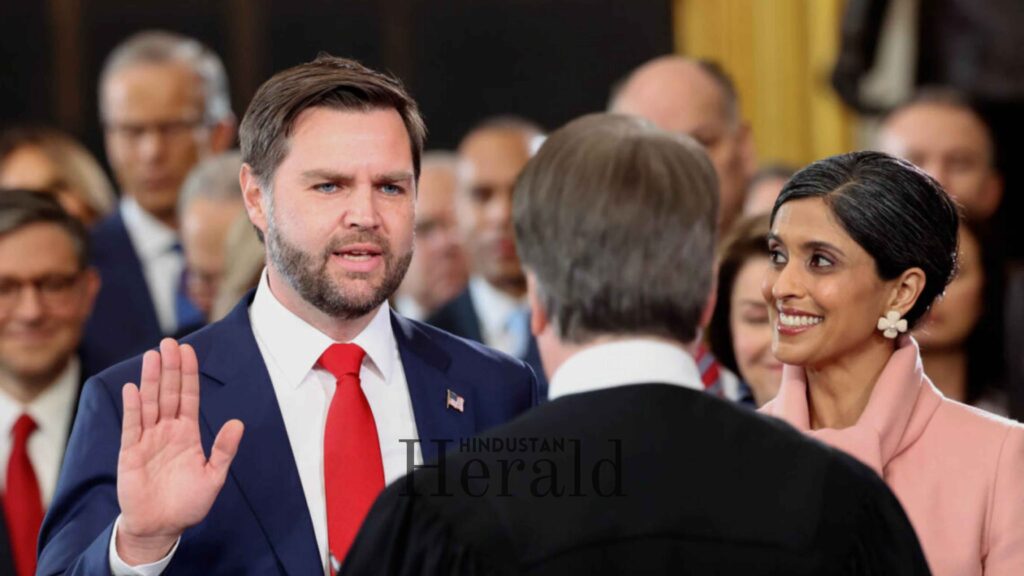
A secretary of state on a tight schedule does not plan a stop in Agra unless someone in the planning process decided it was genuinely worth the time. The four-city itinerary Kolkata, Agra, Jaipur, New Delhi is a deliberate choice, and it follows almost exactly the route Vice President JD Vance took during his visit in April.
Kolkata makes strategic sense. It is India’s eastern gateway, positioned toward Southeast Asia in ways that Mumbai and Delhi simply are not. China’s growing footprint in Myanmar and the Bay of Bengal region makes India’s eastern flank increasingly important to American planners, and Kolkata sits right at that edge.
Agra and Jaipur are cultural stops, yes. But repeating Vance’s itinerary this closely suggests Washington is deliberately building an image of the India-US relationship as something rooted in genuine affinity rather than just shared threat perceptions. Whether Indian citizens find this convincing or slightly performative probably depends on who you ask. But Rubio’s intent is clear enough.
The Quad Meeting Is the Real Anchor of Rubio’s India Trip
On May 26, in New Delhi, Rubio is expected to sit down with External Affairs Minister S Jaishankar, Australian Foreign Minister Penny Wong, and Japanese Foreign Minister Takeshi Iwaya for a Quad Foreign Ministers’ Meeting. That is the diplomatic centrepiece of the entire trip.
The Quad had a moment of genuine uncertainty when Trump returned to office. His instincts are not multilateral he prefers direct deals between countries over groupings with joint statements and working committees. But the Quad has survived that uncertainty better than many predicted, partly because all four members have strong independent reasons to want it to continue.
Critical minerals are expected to dominate the conversation Rubio walks into. China has systematically positioned itself as the dominant processor of the raw materials that go into semiconductors, electric vehicle batteries, and advanced defence systems. All four Quad nations are exposed to that dependence in different ways, and the grouping launched a Critical Minerals Initiative earlier this year as a first step toward building alternative supply chains. Japan has been particularly aggressive in pushing this agenda. India brings scale and geological resources. Australia has the mining base. America has the capital and the technology.
Getting those pieces to move in the same direction is harder than any joint statement makes it sound. But the Quad is probably the most credible multilateral mechanism currently available for attempting it, and New Delhi wants to make sure Rubio leaves on May 26 with something more than a well-crafted paragraph.
The Trade Problem Is Real and Both Sides Know It
Here is where things get genuinely complicated for Rubio. The Trump administration hit India with some of the steepest tariffs it imposed on any major trading partner. A large chunk of those were walked back after negotiations, but the experience rattled Indian businesses and left a residue of uncertainty that has not fully cleared.
Then came the 25% penalty tariff specifically targeting India’s purchases of Russian oil a practice Washington has pressured New Delhi to abandon, with limited results. At its peak, combined American levies on Indian goods placed the country in the same tier as nations that are actively adversarial toward Washington. That is a strange place to put a country you keep describing as a strategic partner of the first order.
The H1B visa situation added a different kind of strain. A proposed USD 100,000 fee on new applications sent genuine alarm through India’s technology community, which sends more workers to the United States on that visa than any other country. These are not abstract policy disagreements. They affect real people and real businesses, and they land in the domestic politics of both countries in ways that formal diplomatic language tends to understate.
Both sides are now working on a bilateral trade deal. Indian officials heading into meetings with Rubio want to leave with something firmer than goodwill actual assurances that the progress made so far will not be undone by the next announcement from Washington.
China Is in the Room Even When It Is Not Mentioned
Rubio will arrive in New Delhi having recently been part of American diplomatic conversations with Beijing that Indian officials are eager to understand better. Any shift in the US-China relationship even a tactical one, even a partial one has downstream implications for India that New Delhi does not want to learn about after the fact.
The specific concern is not hard to articulate. If Washington and Beijing are managing toward some kind of working arrangement on trade, does that come at the cost of American firmness on issues that matter directly to India the Line of Actual Control, Chinese naval activity in the Indian Ocean, Beijing’s economic relationships with India’s smaller neighbours? Indian officials will want Rubio to be clear about where those lines are.
Rubio’s own instincts on China have always been hawkish. His Senate record on this is unambiguous. That gives Indian interlocutors some baseline confidence. But individual convictions and administration policy are not always the same thing, and New Delhi has enough experience with Washington to know the difference.
India Is Not Exactly Playing It Straight Either
It would be incomplete to frame this visit as India patiently waiting for Rubio to bring reassurance. New Delhi has had a packed diplomatic calendar of its own lately. BRICS foreign ministers were in town recently Russia’s Sergey Lavrov and Iran’s Abbas Araghchi among them. That is a guest list that Washington notices, even when it refrains from commenting publicly.
India has not stopped buying Russian oil. It is not going to walk away from Chabahar. It will continue engaging with Iran and Russia on terms that reflect Indian interests rather than American preferences. This is not defiance it is simply what an independent foreign policy looks like when you are a country of India’s size and ambition.
Rubio is experienced enough to know this. The real question is how much the Trump administration is willing to tolerate Indian independence on these issues in exchange for deeper cooperation on the things it actually wants LNG sales, defence procurement, Quad solidarity, and Indo-Pacific alignment against Chinese expansion. That is a negotiation, not a ceremony. And it is one that has been going on, in various forms, for twenty years.
What Rubio Needs to Walk Away With
Washington needs Rubio’s visit to produce visible movement on trade, a Quad meeting with genuine operational content, and ideally some commitment from India on American LNG imports which both sides have discussed as a way to reduce New Delhi’s dependence on Russian energy while giving American producers a major new market.
New Delhi needs durable relief on tariffs, real progress on defence technology transfers that have been promised in various forms for years without full delivery, and a Quad statement that gives the grouping concrete forward momentum rather than just reaffirming its existence.
Neither side will get everything it wants. That is not how these things work, and both capitals are realistic about it. What Rubio’s visit can accomplish, at its best, is demonstrate that the relationship has enough substance to absorb the friction and enough strategic logic to keep both sides invested.
The fact that Rubio is making this trip at all flying directly from a NATO meeting to spend four days across Indian cities, ending with a Quad ministerial signals that Washington takes this seriously. New Delhi has heard that message before. This time, it is waiting to see what actually comes with it.
Stay ahead with Hindustan Herald — bringing you trusted news, sharp analysis, and stories that matter across Politics, Business, Technology, Sports, Entertainment, Lifestyle, and more.
Connect with us on Facebook, Instagram, X (Twitter), LinkedIn, YouTube, and join our Telegram community @hindustanherald for real-time updates.Author Profile

Tracking world politics, global markets, trade movements, policy decisions, and the changing balance of economic power.
- Shelesh Joshi

- Shelesh Joshi
- Shelesh Joshi
- Shelesh Joshi





Specializes in South Asian geopolitics and global diplomacy, bringing in-depth analysis on international relations.
- Rajiv Menon
- Rajiv Menon
- Rajiv Menon
- Rajiv Menon

 Neeraj Kapoor and Rajiv Menon