
 By Neeraj Kapoor and Rajiv Menon
New Delhi, May 19: Andrej Karpathy has joined Anthropic. He posted about it on X on Tuesday morning, and within the hour, practically everyone in the AI world had an opinion about what it meant. That kind of reaction does not happen for most hires. It happened for this one.
Karpathy kept his statement short. “I think the next few years at the frontier of LLMs will be especially formative,” he wrote. “I am very excited to join the team here and get back to R&D.” He also mentioned that his passion for AI education has not gone anywhere, and that he plans to return to that work eventually. Brief, measured, no grand declarations. Which is, honestly, very Karpathy.
He started at Anthropic this week, working on pre-training under team lead Nick Joseph.
Andrej Karpathy – The Man Behind the Announcement
There are researchers who build impressive careers inside the established machinery of big labs, and then there are people who seem to leave a mark on every room they walk into. Karpathy is the second kind.
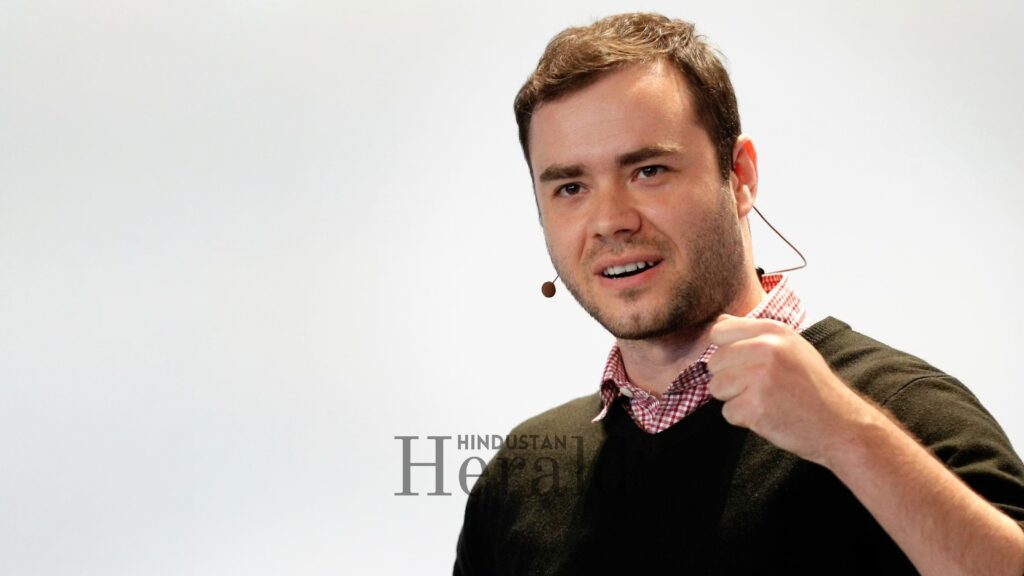
He was part of the founding group at OpenAI back in 2015, when the lab was still a bet and not a phenomenon. He worked on deep learning and computer vision in those early years before leaving in 2017 to join Tesla, where he took charge of Autopilot and Full Self-Driving. That role was not about writing papers or running benchmarks in a controlled setting. It was about making neural networks work reliably, on real roads, inside real cars, at a scale that most researchers never get close to. He did that for five years.
After leaving Tesla in 2022, he returned to OpenAI for a year, then left again in 2024 to start Eureka Labs, which was built around one idea he has held for a long time: that AI could fundamentally change how people learn. He built courses. He ran a YouTube channel. His Neural Networks: Zero to Hero series became something of a standard text for a generation of people trying to understand how these models actually work, not just what they produce.
The future of Eureka Labs is now uncertain. He has not said much about it since the announcement, and according to TechCrunch, it is not clear whether he will continue with the startup at all. That is a loose end. But for Anthropic, his arrival is anything but.
Pre-Training Is Where Models Are Born
Most coverage of AI companies focuses on the product side: new model releases, benchmark comparisons, chatbot features. Pre-training sits beneath all of that, and it is where the real character of a model gets decided.
Pre-training is the process of running massive training jobs on enormous datasets, the phase where a model absorbs language, reasoning patterns, factual associations, and the general shape of human knowledge. It is extraordinarily expensive in compute and time. It is also where small decisions made by researchers can have enormous downstream consequences, for better or worse, across every application built on top of that model.
Karpathy will work within this team at Anthropic, and beyond that, he will help build a new group with a specific focus: using Claude itself to speed up pre-training research. That is the part of the announcement that deserves more attention than it has received. The idea is that instead of relying purely on raw compute to push model quality forward, you use the model to assist in its own improvement. AI-assisted AI research. It sounds circular until you think about what a capable model can actually do when pointed at a hard research problem.
Whether it works at scale is a genuinely open question. But the fact that Anthropic is making this bet, and hiring someone with Karpathy’s background to lead it, says something real about the direction the company is trying to go.
What This Costs OpenAI, Symbolically
There is a number attached to Karpathy somewhere in Anthropic’s accounting. But the cost to OpenAI is harder to quantify and probably more significant.
He was there at the founding. He was part of the original group that decided, back when it was still a strange and idealistic project, that building artificial general intelligence safely was worth attempting. The lab he helped create has since become the most recognised name in consumer AI, the company behind ChatGPT, the organisation that arguably triggered the current era of the technology. And now one of its founding members has walked across to its primary rival.
That is not a disaster for OpenAI. The lab has enormous resources, strong researchers, and a product dominance that is not going to evaporate because one person changed jobs. Still, the symbolism carries weight in a field where reputation and perceived direction matter enormously. Talent follows talent. When a researcher of Karpathy’s standing chooses a lab, other researchers notice.
As Axios put it plainly: the AI race is often framed around funding rounds and compute. But the competition for the small pool of researchers who can actually move the frontier is just as fierce, and arguably harder to win.
Anthropic’s Wider Push
The Karpathy hire did not arrive alone. On the same day, Anthropic also announced that Chris Rohlf had joined its frontier red team, the group responsible for stress-testing models against serious threats. Rohlf brings over twenty years in cybersecurity, including time at Yahoo’s internal security unit and six years at Meta. He was also a fellow at Georgetown’s Center for Security and Emerging Technology.
“We have a real opportunity in front of us to dramatically improve cyber security with AI,” Rohlf wrote on X. “I can’t think of a better company or team to join at this critical moment in time.”
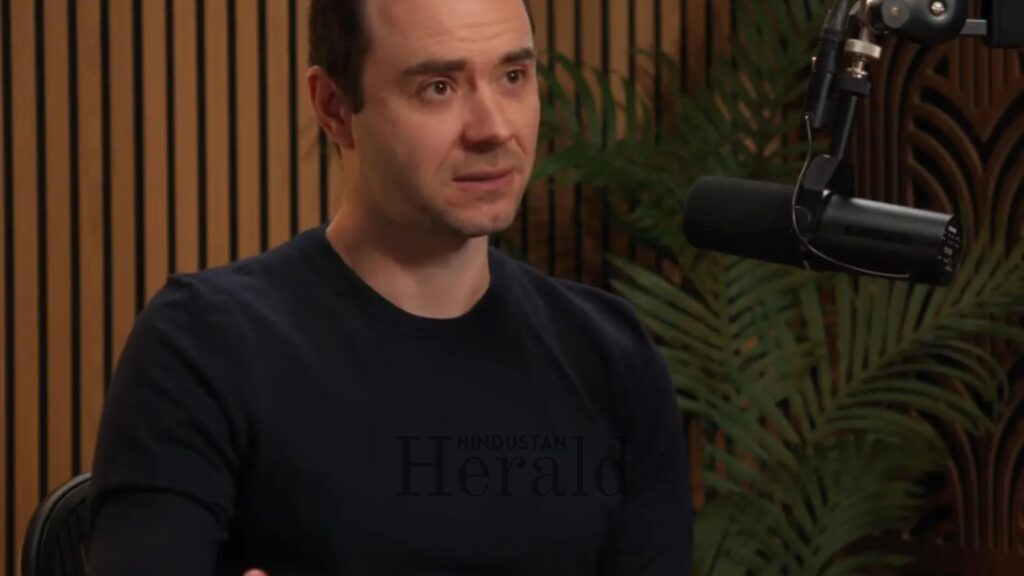
Two hires, two different parts of the organisation. One on the capability side, one on safety and adversarial testing. That combination is not accidental. It maps fairly neatly onto how Anthropic has always described itself: a company that wants to build powerful models and take seriously what those models can do when things go wrong.
Why India Should Be Paying Attention
None of this is happening far away. The models being built at Anthropic, OpenAI, and Google DeepMind are already woven into tools used by Indian professionals, students, developers, and enterprises every day. Decisions made in San Francisco research labs ripple outward fast.
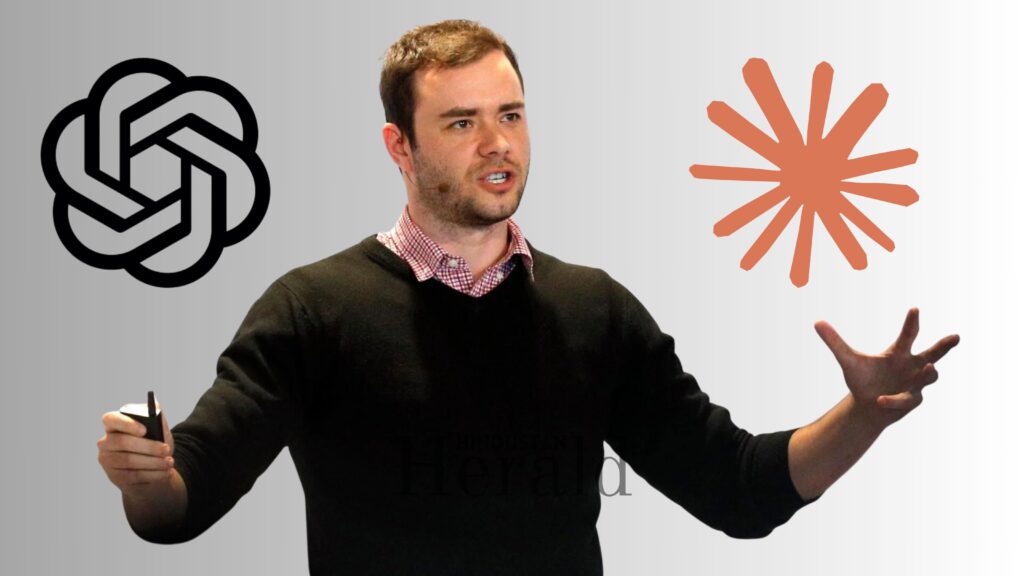
There is also the education thread that runs through everything Karpathy does. His courses have a substantial following among Indian engineering students and early-career AI practitioners, many of whom have no other access to this quality of instruction. He has, in a genuine sense, contributed to the technical formation of a significant number of people in this country. His eventual return to education work, whenever that happens, will matter here in a way it might not register elsewhere.
And then there is the talent question. India produces a large number of the engineers and researchers who end up at frontier labs. How those labs grow, what bets they make, and which research directions they pursue shapes the field that Indian AI professionals are entering. Karpathy at Anthropic, leading a team pointed at some of the hardest open problems in model development, is part of the landscape they are walking into.
For Now
There is a version of this story where the hire is significant mostly as a signal, a talented researcher who adds credibility to a lab’s public image without fundamentally changing what it builds. That is possible. It happens.
But Karpathy is not someone who has historically been content with a decorative role. At Tesla, he ran a programme that had to actually work. At OpenAI, he was present when the foundational culture was still being made. The courses he built were not marketing exercises. They were genuine attempts to transfer something difficult to people who needed it.
If Anthropic gives him the room to work the way he has worked before, the bet is not just symbolic. It is real. And the next year or two will show whether the wager pays off.
Stay ahead with Hindustan Herald — bringing you trusted news, sharp analysis, and stories that matter across Politics, Business, Technology, Sports, Entertainment, Lifestyle, and more.
Connect with us on Facebook, Instagram, X (Twitter), LinkedIn, YouTube, and join our Telegram community @hindustanherald for real-time updates.
Tech writer passionate about AI, startups, and the digital economy, blending industry insights with storytelling.
- Neeraj Kapoor

- Neeraj Kapoor
- Neeraj Kapoor
- Neeraj Kapoor



Specializes in South Asian geopolitics and global diplomacy, bringing in-depth analysis on international relations.
- Rajiv Menon
- Rajiv Menon
- Rajiv Menon
- Rajiv Menon




 Shelesh Joshi and Rajiv Menon