
 By Shelesh Joshi and Kavita Iyer
New Delhi, May 19: The rupee falls against the US dollar to a fresh record low of 96.38 on Tuesday, and the headlines did what headlines always do. They announced a fall, a slide, a weakening. The language of decline came naturally, as it tends to when a currency loses ground against the world’s reserve currency.
But walk into the back offices of an IT firm in Bengaluru, or step onto the export floor of a Tiruppur garment unit, or sit inside the boardroom of a Mumbai pharmaceutical company, and you will find people who read the same number and quietly reached for a calculator. Not out of worry. Out of anticipation.
Because every time the rupee falls against the dollar at this pace and to this degree, something else happens simultaneously. India’s export economy gets cheaper to buy from. Its services get more attractive to hire. Its factories become more competitive to source from. The number on the currency screen is not just a loss. For a significant and strategically important part of the Indian economy, it is something closer to an opportunity.
Why the Rupee Falls Against the Dollar in May 2026
The rupee opened Tuesday’s session at 96.22, drifted to 96.38, and closed marginally firmer. It was not a crash. There was no panic in the dealing rooms. It felt more like a slow exhale, the kind that follows months of pressure building without release.
The US Dollar Index held firmly above 104 through the session, reflecting global appetite for dollar assets. Expectations that the US Federal Reserve would hold interest rates higher for longer kept emerging market currencies on the back foot, not just in India but across Southeast Asia and Africa simultaneously.
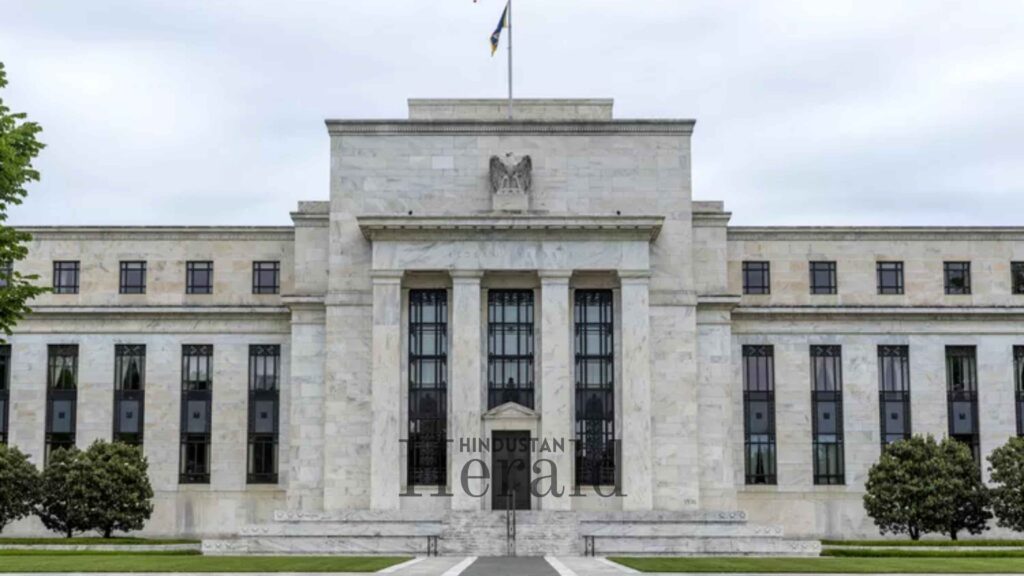
Each time the rupee falls against the dollar in this environment, the trigger is rarely domestic alone. Foreign Portfolio Investors continued pulling money out of Indian equities and debt throughout the day. That steady exit creates dollar scarcity in the domestic market, and dollar scarcity moves the spot rate in one predictable direction.
Fuel prices added to the mood. Petrol and diesel were raised for the second time within a week, fanning concerns about inflation filtering into everyday costs.
Still, the session stayed orderly. The Reserve Bank of India was believed to be operating quietly through state-run banks, selling dollars to slow the pace rather than reverse the trend entirely. The RBI has not been attempting to hold the rupee at any fixed number. It has simply been making sure that when the rupee falls against the dollar, it does so in a walk rather than a run.
The Arithmetic That Changes Everything
Here is the number that matters more than 96.38 itself. Two years ago the rupee was trading around 83 to the dollar. Today it sits at nearly 96. That movement represents a shift of roughly 16 percent. Every time the rupee falls against the dollar by this magnitude, exporters collect 16 percent more rupees for every dollar their overseas clients pay them, without raising prices, without renegotiating contracts, without any change in the work delivered.
India’s goods exports totalled $437.42 billion in FY25. Services exports, led by software and IT, reached $387.5 billion. The combined export economy runs well above $800 billion annually. Apply the currency tailwind across even a fraction of that base and the picture changes considerably.
The government’s $2 trillion export target by 2030, championed by Commerce Minister Piyush Goyal, was always going to require India to become more price-competitive on the world stage. As the rupee falls against the dollar at these levels, a portion of that competitiveness arrives without any new policy announcement, any trade negotiation, or any reform cycle. It simply happens through the exchange rate.
When the Rupee Falls Against the Greenback, IT Wins First
No sector captures this tailwind more immediately than Indian IT and software services, and the reason is entirely structural. The industry earns in dollars. It pays salaries, rents office space, runs data centres, and manages operations in rupees. Every time the rupee falls against the dollar at a significant level, a dollar that comes in from a client in New York or London converts into more rupees upon repatriation, without any change in the cost of delivering the service.
IT exports reached $224.4 billion in FY25, jumping 12.48 percent over the previous year. The Software Technology Park of India scheme registered exports worth Rs 10.64 lakh crore across its units. NASSCOM pegged total sector revenue at $283 billion for the year, with growth driven by demand from the United States, recovering BFSI activity, and expansion in telecom, retail, and healthcare verticals.
That is a formidable base. And each time the rupee falls against the dollar, analysts estimate operating margins improve by 200 to 400 basis points on a like-for-like basis for companies with dollar-heavy revenue books.
For TCS, Infosys, Wipro, Mphasis, and Persistent Systems, the benefit lands directly on the bottom line. Companies with dollar hedges rolling off in Q1 FY27 will feel the full effect when those positions are replaced at today’s more favourable conversion rates. The IT sector, more than any other, is structurally built to gain each time the rupee falls against the greenback in a sustained and orderly way.
Pharma Margins Grow Each Time the Rupee Falls Against the Dollar
India’s pharmaceutical sector has a cost architecture that was almost designed for exactly this kind of currency movement.
Raw materials, factory wages, quality assurance, regulatory filings, packaging: everything is priced and settled in Indian rupees. Finished medicines, generic tablets, biosimilar vials: everything is sold and invoiced in US dollars or euros. The gap between the two widens every time the rupee falls against the dollar, without a single operational change.
Pharma exports reached $30.47 billion in FY25, growing 9.67 percent in dollar terms. In rupee terms, the same volume of exports grew 11.86 percent. That extra 2.2 percentage points came entirely from the exchange rate. No new factory, no new product, no new market. Just the rupee moving.
Sun Pharma, Dr. Reddy’s Laboratories, Cipla, and Divi’s Laboratories each carry significant US market exposure. For Cipla, the American market contributed nearly 29 percent of consolidated revenues in FY25. Each time the rupee falls against the dollar at this scale, those dollar revenues convert into more rupees when accounts are closed and margins are reported.
India serves pharmaceutical buyers across more than 200 countries. It remains the world’s largest supplier of generic medicines by volume. That position becomes marginally more defensible every quarter the rupee falls against the currencies of competing export nations.
Textiles Find Their Edge as the Rupee Falls Against Global Currencies
The Apparel Export Promotion Council has argued for years that exchange rate competitiveness is one of the three most important policy levers for Indian textiles. For years, a relatively firm rupee made that argument largely theoretical.
Bangladesh and Vietnam held pricing advantages that were genuinely difficult to overcome when international buyers ran the numbers. Indian quality was rarely in question. Indian pricing sometimes was.
Textiles exports grew 6.77 percent in FY25 to $34.84 billion, with major markets in the US, UAE, UK, Germany, and Bangladesh. India ranked sixth globally among textile exporting nations, holding a 3.9 percent share of global trade. Respectable numbers. But the sector has long believed it was operating below potential.
As the rupee falls against the dollar to these levels, that potential looks more reachable. Export floors in Tiruppur, Surat, Ludhiana, and Ahmedabad are reporting renewed enquiries from buyers who had been routing orders to competitor nations. The maths have simply shifted. Indian garments, already competitive on craftsmanship and delivery timelines, are now sharper on landed price too.
Each time the rupee falls against the dollar by a meaningful margin, Indian textiles gain a few more conversations with international buyers who had previously moved on.
Gems and Jewellery Shine Brighter as the Rupee Falls Against the Dollar
There is a particular elegance to how the gems and jewellery sector benefits from currency depreciation, and it comes down to where the value is created versus where it is collected.
The artisan in Jaipur hand-setting a precious stone earns in rupees. The diamond polisher in Surat is paid in rupees. The gold jewellery workshop in Mumbai settles its entire wage bill in rupees. But the finished piece crosses the border and is sold in New York, Dubai, or Antwerp, invoiced in dollars.
Every time the rupee falls against the dollar, that same dollar payment from an overseas buyer converts into more rupees at home. Margins improve without raising prices, without changing designs, without any renegotiation. The exchange rate does the work quietly.
Gems and jewellery exports reached $30.47 billion in FY25, with the US and UAE as the two dominant destination markets. The sector accounts for roughly 7 percent of India’s GDP and has built its global reputation on the back of craftsmanship that simply does not exist at the same scale anywhere else. As the rupee falls against the dollar, that craftsmanship becomes incrementally more affordable for every international buyer paying in a stronger currency.
Engineering and Electronics Gain Ground as the Rupee Falls Against the Dollar
Beyond the traditional export pillars, India’s newer manufacturing export corridors are finding the currency shift equally useful.
Engineering goods reached $116.67 billion in FY25, accounting for more than a quarter of all goods exports and growing 6.74 percent year-on-year. Electronics exports grew 32.46 percent, with smartphone exports alone crossing $20 billion, driven substantially by Apple’s deepening sourcing partnership with Foxconn and Tata Electronics in India.
Every time the rupee falls against the dollar, India becomes a marginally cheaper place for any multinational to manufacture. The dollar-adjusted cost of running a production line here falls with the currency. That logic, compounded over several quarters, influences long-term sourcing decisions.
The Production-Linked Incentive schemes had attracted investments of Rs 1.76 lakh crore across more than 1,300 manufacturing units in 27 states by March 2025. As the rupee falls against the dollar, those incentives are amplified rather than replaced. The currency becomes an additional layer of cost advantage sitting on top of the policy architecture already in place.
How the RBI Is Managing the Rupee Falls Against Pressure
Governor Sanjay Malhotra and the Reserve Bank of India have been sending a clear and consistent message without saying much publicly. They are not defending a level. They are not alarmed. And they are not trying to reverse the direction.

The RBI had already built rupee depreciation toward Rs 94 per dollar into its official inflation and growth projections earlier in the year. When the rupee falls against the dollar beyond that level, as it has now, the central bank treats it as an extension of an anticipated adjustment rather than a development requiring emergency intervention.
The repo rate was cut to 5.25 percent in December 2025, narrowing the interest rate differential that typically draws foreign capital into India. That decision added background pressure to the currency but reflected a deliberate prioritisation: domestic growth over currency defence.
India’s foreign exchange reserves remain at comfortable levels, giving the RBI the capacity to intervene decisively if the rupee falls against the dollar in a disorderly or destabilising way. The extension of the export realisation window to 15 months from nine further signals that policy is oriented toward helping exporters take advantage of the current environment rather than rushing to close it.
Engineering the Export Advantage
Step back from the individual sectors and a broader pattern becomes visible. Each time the rupee falls against the dollar in a sustained, orderly way, India’s export economy receives something that trade negotiators spend years trying to manufacture artificially: a genuine price advantage across multiple sectors simultaneously.
IT companies collect more rupees for the same dollar billing. Pharmaceutical exporters widen the gap between rupee costs and dollar revenues. Textile manufacturers close the pricing distance against regional competitors. Jewellery exporters sell the same craftsmanship at a lower effective dollar cost. Engineering and electronics manufacturers become more attractive sourcing destinations for multinationals running dollar-based procurement budgets.
The $2 trillion export ambition does not get built on currency tailwinds alone. Quality, infrastructure, regulatory ease, and supply chain reliability all matter enormously. But each time the rupee falls against the dollar and holds at a competitive level, the starting point for every one of those conversations improves.
The Window Is Open
The near-term outlook positions the rupee consolidating somewhere in the Rs 94 to Rs 98 range, with recovery toward lower levels dependent on global oil prices and progress on a US-India trade agreement, both of which remain variables. That gives India’s export sector a window that could remain open for several quarters. The more important question is what gets done with it.
A sustained period where the rupee falls against the dollar at this level gives exporters margin cushion. The wise use of that cushion is not simply to collect incrementally more rupees on the same products. It is to invest in quality certification, supply chain depth, compliance infrastructure, and product development that makes buyers loyal rather than merely price-sensitive.
The shift from competing on cost to competing on value is the structural upgrade India’s trade policy has aimed at for the better part of a decade. Each time the rupee falls against the dollar and the export sector uses that breathing room to build rather than simply to collect, that shift moves closer to becoming real.
The screens across Nariman Point show a number that concerns currency watchers. Inside software parks, pharmaceutical boardrooms, jewellery export offices, and garment factories across the country, the same number sits in a different column entirely. It is not in the loss column. Not today. Not for the export economy that India has spent a generation building.
Stay ahead with Hindustan Herald — bringing you trusted news, sharp analysis, and stories that matter across Politics, Business, Technology, Sports, Entertainment, Lifestyle, and more.
Connect with us on Facebook, Instagram, X (Twitter), LinkedIn, YouTube, and join our Telegram community @hindustanherald for real-time updates.

Tracking world politics, global markets, trade movements, policy decisions, and the changing balance of economic power.
- Shelesh Joshi

- Shelesh Joshi
- Shelesh Joshi
- Shelesh Joshi






Former financial consultant turned journalist, reporting on markets, industry trends, and economic policy.
- Kavita Iyer
- Kavita Iyer
- Kavita Iyer
- Kavita Iyer

 Arun Upadhayay and Kavita Iyer