
 By Shelesh Joshi and Kavita Iyer
New Delhi, May 20: Not every power deal deserves a second look. This one does. Hindustan Power Projects has signed an 800 MW supply agreement with Madhya Pradesh that runs for 25 years. Strip away the jargon and what you have is Hindustan Power committing to supply a significant chunk of electricity to one of India’s larger states for a quarter century. That does not happen often. It certainly was not happening three years ago.
The deal is not just about electricity. It is about whether private capital is willing to make long bets on Indian infrastructure again. And right now, that question matters more than most people in the sector are saying out loud.
The Decade That Broke Private Power
To understand why this Hindustan Power deal is being noticed, you need to go back to what the sector looked like between 2012 and 2020.
Private developers built capacity at scale, often on optimistic assumptions about coal availability and state government payment discipline. Neither held. Coal did not arrive on time or in the right quantities. State electricity boards ran up dues they had no real plan to clear. Plants that developers like Hindustan Power had committed to sat idle or ran well below capacity while debt mounted on balance sheets.
Some developers went bankrupt. Others survived by selling assets at distressed prices or restructuring debt under government schemes rolled out to contain the damage. The ones that made it through largely did so by getting out of long-term commitments and staying close to short-term markets where they had more control over their exposure.
It was a rational response to a genuinely bad situation. Lock yourself into a 25-year contract with a state utility that cannot pay its bills, and you are not running a power company. You are running an arbitration process with turbines attached. Short-term markets filled the vacuum. Exchange-traded power, bilateral contracts of a year or two, merchant exposure. Flexible, adaptable, and for a while, good enough.
That flexibility came at a cost that most states did not fully appreciate until summer 2024, when Indian Energy Exchange prices crossed Rs 10 per unit on multiple days and distribution companies found themselves buying power at rates that blew through their annual budgets in a matter of weeks. Rajasthan, Uttar Pradesh, Madhya Pradesh, none of them were immune. States that had leaned on the short-term market as their buffer discovered the buffer had a price they had not modelled for.
That was the turning point. The appetite for long-term committed supply came back, not out of some strategic epiphany, but out of the simple realisation that the alternative had become too expensive. And that is precisely where Hindustan Power stepped in.
Madhya Pradesh Was Not Sitting Comfortably
The state hit around 15,000 MW of peak demand last summer, a number that caught even state planners off guard. That figure is heading toward 18,000 to 20,000 MW by the end of the decade, according to estimates from CRISIL and ICRA. The trajectory is not surprising when you look at what is driving it.
Agricultural load has been rising steadily as more farmers access subsidised power for irrigation. The industrial corridor around Indore has been expanding, pulling in investment from sectors that run energy-intensive operations. Across the state’s urban and semi-urban areas, more households are running air conditioners through summers that are getting longer and harder.
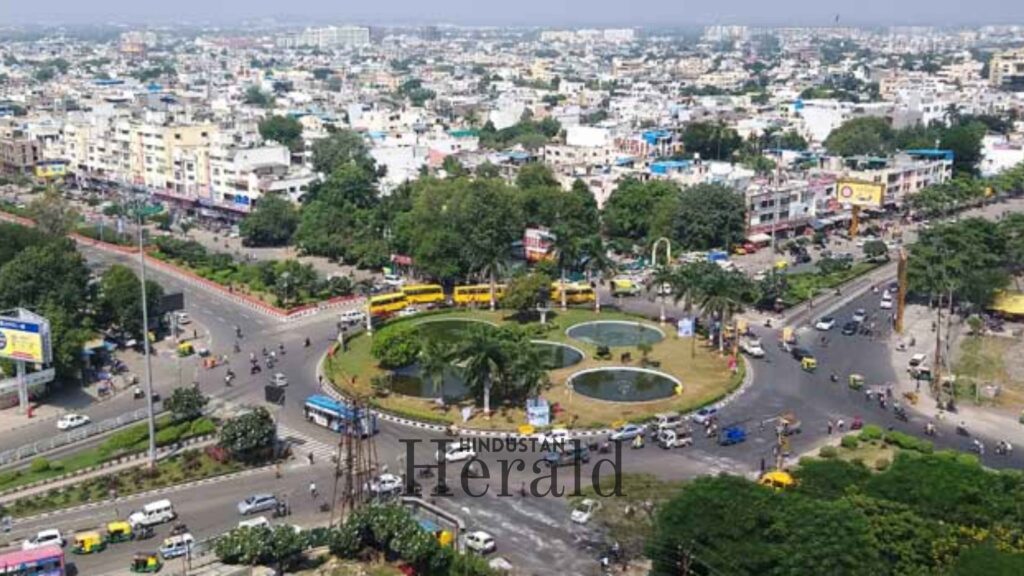
The existing generation fleet was built for a different demand environment. Thermal capacity at Sanjay Gandhi Thermal Power Station and hydro assets along the Narmada river system do what they were designed to do, but they were not designed for peak loads at this level. During the worst of the 2024 summer, the state was reportedly buying expensive short-term power just to keep supply stable. That is not a power strategy. That is crisis management dressed up as procurement.
MPPMCL, which handles purchasing decisions for the state’s three distribution companies, had been actively looking for fresh long-term supply for over a year before this deal with Hindustan Power came together. Sources close to the process say the Hindustan Power agreement addresses a gap that was becoming increasingly difficult to paper over with short-term purchases.
Who Is Actually Taking This On
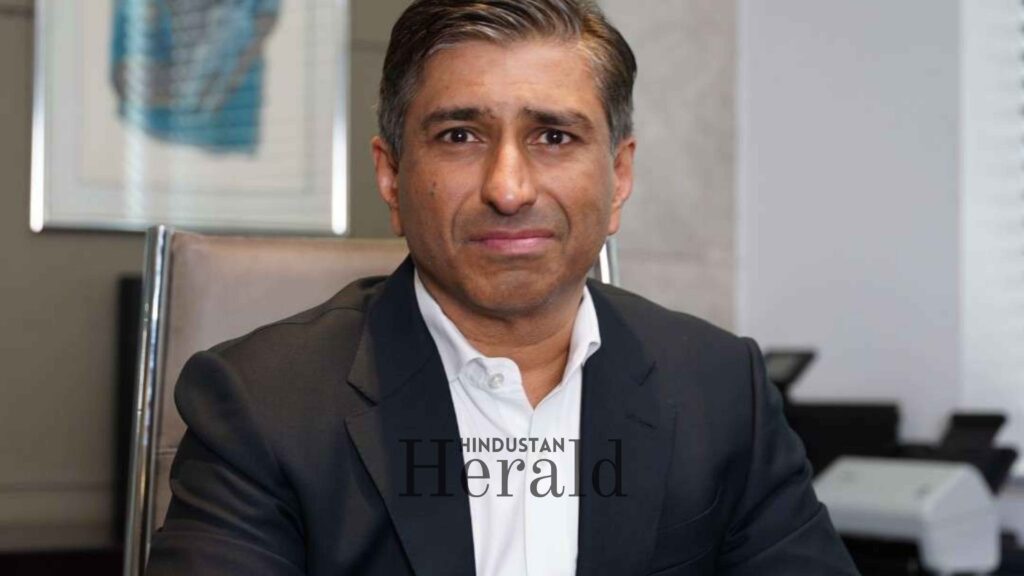
Hindustan Power Projects is a Delhi-based group that Ratul Puri has built over many years. The Hindustan Power portfolio covers thermal generation, solar, hydro, and transmission assets across Madhya Pradesh, Chhattisgarh, Jharkhand, and Punjab. It is a reasonably wide footprint for a private developer, and Hindustan Power has operated in the state before, which means the regulatory relationships and land dynamics in Madhya Pradesh are not entirely unfamiliar territory.
At the project level, Hindustan Power has raised institutional capital including from Blackstone, structuring renewable asset vehicles in a format that serious private equity was comfortable participating in. Firms like Blackstone do not co-invest with developers who cannot manage assets, structure legal arrangements cleanly, or demonstrate a credible operational track record. That history gives MPPMCL a degree of counterparty comfort that not every private developer can offer going into a commitment of this size and duration.
That said, Ratul Puri has faced legal proceedings in India related to separate business matters. Those cases are on the public record and have been widely reported. Any lender, regulator, or institutional co-investor looking at the Hindustan Power deal will factor those proceedings into their assessment. Whether they create actual friction during financial close or slow the regulatory approval process at MPERC is genuinely hard to call at this stage.
What MPPMCL is ultimately focused on is narrower and more operational. Can Hindustan Power build the capacity? Can it secure and sustain the fuel supply? Can it keep a plant running reliably for 25 years across multiple government cycles and shifting policy environments? Those are the questions that determine whether this Hindustan Power deal becomes a functioning power supply arrangement or another line item in a future regulatory dispute.
What The Deal Actually Says
Here is what is publicly confirmed about the Hindustan Power agreement: Developer: Hindustan Power Projects Pvt Ltd Buyer: Government of Madhya Pradesh via MPPMCL Contracted Capacity: 800 MW Duration: 25 years Tariff: Not yet disclosed Fuel and generation source: Not confirmed
The tariff will surface through filings with Madhya Pradesh Electricity Regulatory Commission once the approval process begins. Based on competitive bidding rounds in 2023 and 2024, a thermal plant of this size would typically attract a fixed capacity charge somewhere in the Rs 35 to 55 per kilowatt per month range, alongside a variable charge that tracks fuel costs. Rough arithmetic across 800 MW, a 25-year tenure, and a reasonable plant load factor puts aggregate contracted revenue well above Rs 25,000 crore for Hindustan Power. Escalation provisions would push that number higher over the contract life.
That is an estimate derived from sector benchmarks, not a disclosed figure. But it frames the commercial scale of what Hindustan Power and Madhya Pradesh have both committed to.
The Financing Logic Nobody Talks About Enough
There is a dimension to the Hindustan Power deal that does not get enough attention and it is arguably more important than the capacity number itself. The PPA is not just a sales contract between a buyer and a seller. It is the instrument that makes the Hindustan Power project borrowable in the first place.
Power Finance Corporation and REC Ltd, which together provide the bulk of debt financing for large power projects in India, are not going to underwrite project loans for a plant selling into spot markets. The cash flow variability is too high. Without a long-term contracted revenue line, the debt structuring simply does not work at the scale an 800 MW Hindustan Power project demands.
A 25-year agreement with a state utility changes that picture entirely. It gives lenders a contracted cash flow they can model, stress test against payment delays, build sensitivity cases around tariff disputes and operating cost overruns, and still arrive at debt service coverage ratios that make the loan viable. That is what actually unlocks the capital that builds the plant.
The identity of the offtaker matters here too. MPPMCL’s payment track record has been assessed by analysts at India Ratings and Research as comparatively cleaner than several peer state utilities. For a project lender running a credit model across a 20-year loan horizon, that distinction carries real weight when evaluating the Hindustan Power transaction.
The One Thing Still Missing From The Picture
The generation source backing the Hindustan Power 800 MW commitment has not been publicly confirmed, and that gap is more significant than it might appear. Hindustan Power operates both thermal and renewable assets. Which category this project falls into completely changes the risk profile, the financing structure, the construction timeline, and what regulators will be scrutinising when the Hindustan Power tariff filing lands on MPERC’s desk.
If it is coal, Hindustan Power needs a fuel supply arrangement with Coal India, environmental and forest clearances, land acquisition, and the construction time a large thermal plant requires. There is also the longer horizon to consider. A Hindustan Power contract running through to the early 2050s is anchored to a fuel source whose regulatory and policy environment in India two decades from now is genuinely difficult to predict.
If the Hindustan Power capacity is renewable, the challenge is structurally different. Committing to firm 800 MW supply from solar or wind without pairing it with substantial battery storage or a hybrid arrangement is not straightforward. Both options have become more economically viable as equipment costs have fallen, but a firm long-term supply commitment built on intermittent sources is considerably more complex to finance and operate than a conventional thermal plant. This is the most consequential undisclosed detail about the Hindustan Power deal right now.
The Road Between Signing And Supplying
A signed PPA and an operating power plant are separated by a considerable distance, and Indian infrastructure has a long history of that distance being wider than expected.
Before the Hindustan Power agreement produces a single unit of electricity, the tariff and procurement process need to pass through MPERC. The regulator will look at whether the Hindustan Power rate is reasonable against market benchmarks, whether the procurement followed prescribed competitive norms, and whether the terms adequately protect consumer interests. Regulators have questioned contracts before and required renegotiation. That review process is not a rubber stamp.
After regulatory approval comes financial close, where lenders formally commit their positions based on approved terms and their own credit assessments of Hindustan Power as the developer. Construction follows, then commissioning, then the long operational phase where the real test of a 25-year Hindustan Power commitment begins.
The next 18 to 24 months, specifically how quickly Hindustan Power moves through financial close and into construction, will say more about whether the conditions for private power investment have genuinely improved than any number of press releases will.
Reading The Broader Signal Honestly
Take a step back from the Hindustan Power deal specifics and what this agreement really reflects is a shift in how both sides of India’s power market are thinking about commitment and risk.
States spent the better part of a decade trying to preserve flexibility and avoid locking into long-term contracts. But running a state’s power supply on short-term market purchases through volatile summer peaks has its own costs, and those costs have now been felt concretely enough that the calculus has changed. Madhya Pradesh signing a 25-year deal with Hindustan Power is, among other things, an acknowledgement that predictability has a value that short-term flexibility cannot fully replace.
For Hindustan Power, the logic is equally practical. A 25-year revenue floor is what makes it rational to commit serious capital to new generation capacity and go through the process of raising project debt, securing clearances, and managing a multi-year construction programme. Without contracted offtake at this scale, that process does not make financial sense for a private company with options.
The National Electricity Plan 2022-32 identifies a requirement for more than 80 GW of new capacity addition by the end of the plan period. Getting there requires a pipeline of committed projects. That pipeline requires bankable offtake structures. Long-duration contracts between credible counterparties are what that pipeline is built from, and Hindustan Power stepping into that space with an 800 MW, 25-year commitment is a data point worth noting.
One deal does not prove the pipeline is forming. But Hindustan Power is a developer with real assets and institutional backing, and Madhya Pradesh is a state with real and growing demand. The commitment on both sides is substantial enough to take seriously. Whether Hindustan Power gets this plant built on time and at the committed tariff is the question that will define how this story is eventually told. That answer is still some years away.
Stay ahead with Hindustan Herald — bringing you trusted news, sharp analysis, and stories that matter across Politics, Business, Technology, Sports, Entertainment, Lifestyle, and more.
Connect with us on Facebook, Instagram, X (Twitter), LinkedIn, YouTube, and join our Telegram community @hindustanherald for real-time updates.

Tracking world politics, global markets, trade movements, policy decisions, and the changing balance of economic power.
- Shelesh Joshi

- Shelesh Joshi
- Shelesh Joshi
- Shelesh Joshi





Former financial consultant turned journalist, reporting on markets, industry trends, and economic policy.
- Kavita Iyer
- Kavita Iyer
- Kavita Iyer
- Kavita Iyer


 Arun Upadhayay and Kavita Iyer