
 By Shelesh Joshi and Kavita Iyer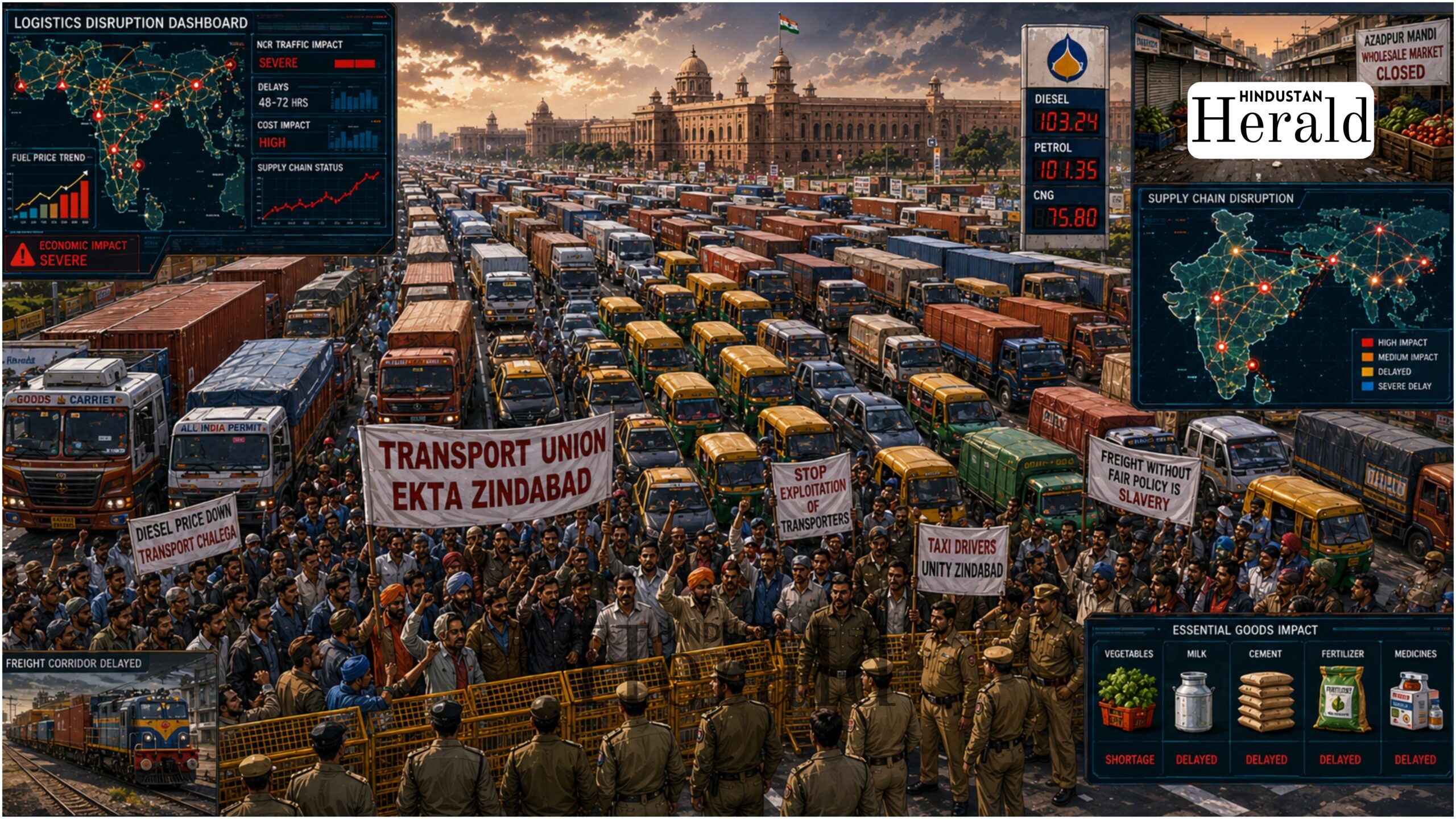
New Delhi, May 21: The Delhi-NCR chakka jam that transport unions had been threatening for weeks became a reality on Wednesday. Taxi and auto unions joined truckers and goods vehicle operators, with over 68 transport associations suspending operations in one of the most disruptive transport shutdowns the region has seen in recent years.
The taxi/auto strike has sent immediate shockwaves across regional supply chains. Freight movement has collapsed. Markets are under pressure. And the Rekha Gupta government faces two urgent sets of demands one from the trucking lobby furious over hiked environmental levies, and another from Delhi-NCR taxi and auto unions who say they have been left financially stranded for 15 years without a meaningful fare revision. The protest window runs May 21 to 23, 2026. A joint demonstration at the Delhi Secretariat is locked in for the final day, signalling that unions are treating this as a build-up not a conclusion.
One Strike Window, Two Sets of Grievances
This chakka jam is not a single-issue agitation. It runs on two parallel tracks with two distinct sets of demands. The first front is led by the All India Motor Transport Congress (AIMTC), mobilising truckers and goods vehicle operators against the recently hiked Environment Compensation Charge (ECC) and the upcoming ban on BS-IV commercial vehicles entering Delhi from November 1, 2026.

The second front belongs to the Chaalak Shakti Union and allied taxi and auto unions, demanding an immediate fare revision that has not come in 15 years despite spiralling fuel costs and a Delhi High Court directive asking the government to act. A formal representation was submitted to Delhi Lieutenant Governor Taranjit Singh Sandhu and Chief Minister Rekha Gupta on May 19. No public response came before the strike began.
Taxi and Auto Unions Hold Back For Now
On Day One, the taxi and auto unions have taken a tactical pause. Other transport unions clarified that the passenger vehicle shutdown has been placed on hold. The active chakka jam from May 21 to 23 currently applies to truck and goods vehicle operators only.
That is not a withdrawal. It is a structured escalation within the broader taxi/auto strike strategy. Unions are holding their punch in reserve, watching whether the government moves. They have been explicit: if no response comes within one to two weeks, a full passenger vehicle shutdown will be activated.
Anuj Kumar Rathore, vice-president of the Chaalak Shakti Union, put it plainly: “If the government does not immediately increase taxi fares and issue a notification, this movement will be intensified into a large-scale protest, for which the Delhi government solely would be responsible.”
AIMTC and the Truckers: The Real Scale of This Shutdown
The All India Motor Transport Congress has put the scale of this action in stark terms. Around 1.7 million commercial vehicles (CVs) including small cargo vehicles and large trucks have been kept off the roads from today across Delhi-NCR.
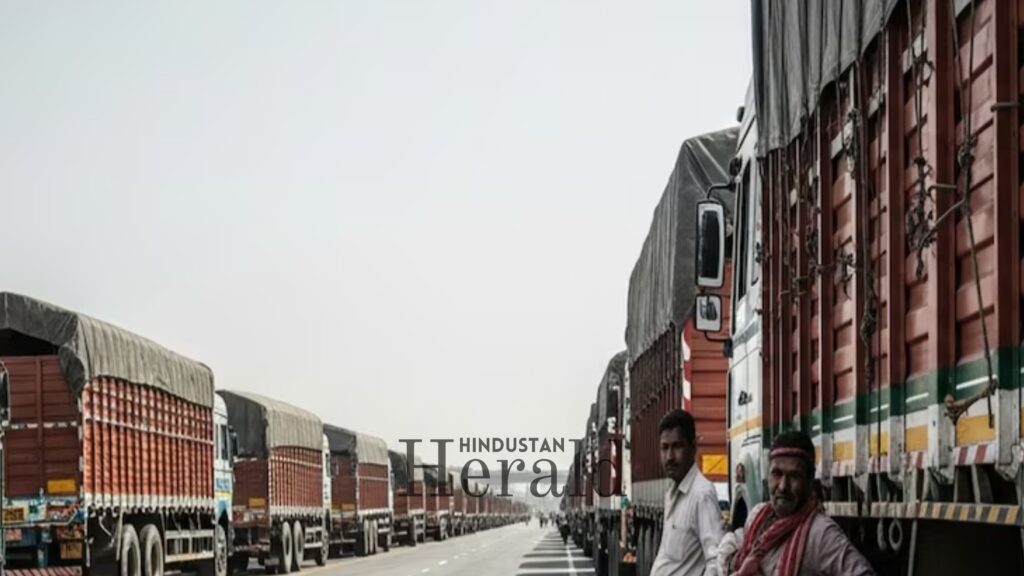
Transport associations from other states have also pledged not to load Delhi-bound vehicles during the three-day window. Supply disruption therefore extends to inbound freight from northern, western, and central India. AIMTC president Harish Sabharwal confirmed that multiple state associations had independently extended support by suspending outbound Delhi-bound freight.
The body represents nearly 9.5 million truckers and 2.6 million private buses and taxis nationally. According to AIMTC, more than 68 transport associations and unions came together under its banner, describing the agitation as a response to “unjust and unfair policies” imposed by the Commission for Air Quality Management (CAQM), courts, and the Delhi government on the region’s transport sector.
The ECC Dispute: A Green Tax Turned Revenue Machine
The central flashpoint driving this chakka jam for truckers is the Environment Compensation Charge a levy on commercial vehicles entering Delhi originally designed to deter transit diesel trucks from using the capital as a corridor.
Transport bodies do not contest the principle. What they contest is what the charge has become. ECC on light commercial vehicles entering Delhi-NCR has been raised from Rs 1,400 to nearly Rs 2,000. Charges on heavy trucks have gone from Rs 2,600 to Rs 4,000 a hike of between 40 and 55 percent in a single revision.
Unions allege the charge is now applied indiscriminately to vehicles carrying essential goods, to empty vehicles entering Delhi for loading, and even to BS-VI vehicles, which are the cleanest diesel vehicles on Indian roads and are permitted even during GRAP-IV pollution restrictions.
The spending data is the sharpest weapon in the truckers’ argument. According to AIMTC, Rs 1,753.2 crore has been collected under ECC since 2015. Of this, the government has spent only Rs 781.4 crore. The remaining Rs 971.8 crore over 55 percent lies unspent.
AIMTC called ECC “a revenue-generating mechanism” with no verifiable air quality outcome a charge the government will find difficult to counter publicly. Transport bodies also highlighted that the Supreme Court’s original direction was to regulate transit vehicles using Delhi as a corridor not trucks delivering goods within the city. The current application of ECC has stretched well beyond that mandate.
The BS-IV Ban: Operators Facing Financial Ruin
The second major trigger for this shutdown is the proposed ban on non-Delhi-registered BS-IV commercial goods vehicles from November 1, 2026 a CAQM-backed policy to push the fleet toward cleaner standards. Transport bodies have called the ban “unscientific and legally unjustified.”
BS-IV vehicles carry valid fitness certificates and PUCC compliance papers and are legally permitted to operate for 15 years under the Motor Vehicles Act. Forcing an early exit from the market halfway through a vehicle’s permitted life means direct, unrecoverable financial loss for thousands of small operators.
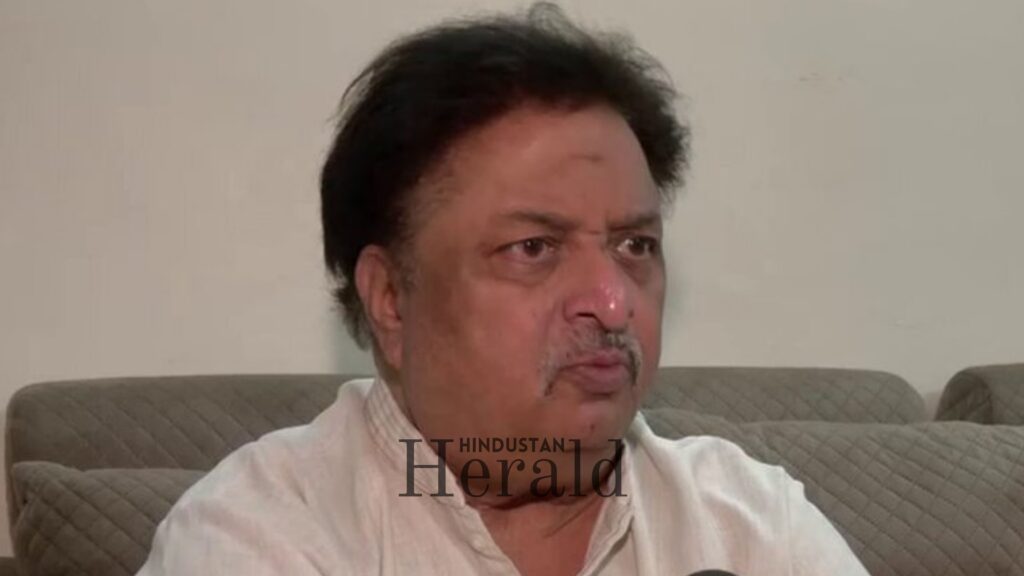
According to transport bodies, the proposed ban could affect the livelihoods of over 17 lakh truck operators and their families across the region. Rajendra Kapoor, president of the All India Motors and Goods Transport Association, listed the sector’s demands clearly: complete withdrawal of the increased ECC, full exemption for BS-VI vehicles, exemption for vehicles carrying essential commodities, and an immediate rollback of the BS-IV entry ban.
A Political Signal From Nitin Gadkari
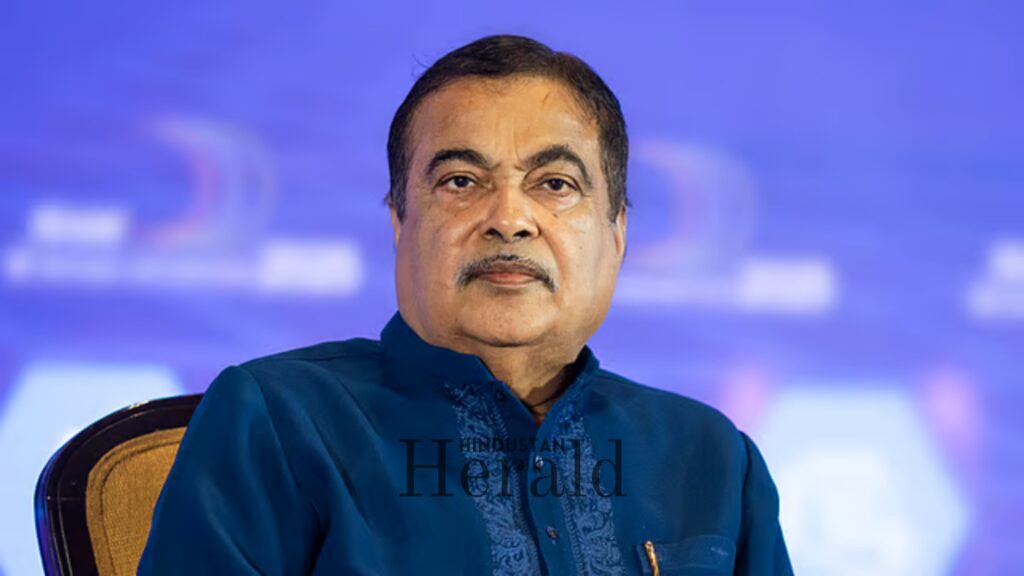
This chakka jam has already triggered a political response at the national level. Union Minister Nitin Gadkari who has previously spoken out against ECC as a levy that burdens the transport sector said on Tuesday that he had discussed the matter with Chief Minister Rekha Gupta and that a solution would be worked out soon. That statement carries no concrete commitment. Union leaders have heard similar assurances before and are watching for action, not language.
Taxi/Auto Strike Threat: Frozen Fares, Rising Costs, a Court Order Ignored
While truckers are driving the most visible disruption on Day One, the taxi/auto strike threat carries a different kind of political weight. Taxi fares across the region have not been revised for 15 years, even as the cost of CNG, petrol, and diesel has multiplied several times over.
Drivers are operating on fare structures set when fuel was a fraction of its current price. The compression on margins has been steady and severe. The Chaalak Shakti Union’s letter to the LG, Chief Minister, Transport Minister, and Police Commissioner was direct: “Taxi fares are still being charged at old rates despite rising inflation, which has severely affected the livelihood of drivers.”
Ola, Uber, and Rapido have all been named in union complaints over arbitrary pricing practices and what operators describe as systematic economic exploitation of drivers. What makes this threat especially pointed is that unions did not simply petition the government. They went to court.
The Delhi High Court directed last year that the problems of taxi drivers in Delhi-NCR be resolved and fares be increased. According to the Chaalak Shakti Union, that directive remains unimplemented. “Due to the continuously increasing prices of CNG, petrol, and diesel, middle-class drivers are struggling to support their families,” Anuj Kumar Rathore said before the 3-day strike began.
What This Shutdown Hits: Milk, Medicines, Wholesale Markets
The economic ripples of this action extend well beyond the operators themselves. The freight suspension is expected to disrupt the supply of milk, medicines, fruits, and vegetables across Delhi-NCR. Disruptions to logistics and goods movement are anticipated throughout Noida, Gurugram, Ghaziabad, and Faridabad the four satellite cities forming the commercial backbone of the region.
Manufacturing supply chains, e-commerce last-mile delivery, and cold chain logistics for perishables will all feel the pressure if operator discipline holds through Day Three. With state associations pausing Delhi-bound freight loading, inbound supply from Punjab, Haryana, Rajasthan, and Uttar Pradesh is effectively curtailed. Wholesale markets at Azadpur and Okhla are likely to see thinning arrivals by Day Two. Retail price pressure on vegetables and fruits could emerge shortly after.
Policy Backdrop: What Is Really Driving This Protest
For analysts tracking India’s logistics and mobility sectors, this shutdown is a data point in a much longer structural story. The ECC dispute sits at the intersection of environmental regulation and transport economics in Delhi-NCR.
The CAQM has defended vehicle entry restrictions as necessary to cut particulate emissions. Still, applying the same levy to BS-VI vehicles as to older, dirtier trucks contradicts the principle of graduated environmental policy and has handed union leaders a technically sound argument the government struggles to dismiss. The BS-IV ban raises a separate and equally legitimate question. The Motor Vehicles Act permits these vehicles a 15-year operational life. Mandating an early exit without compensation or fleet upgrade financing creates a policy gap no official statement has addressed.
On the taxi and auto unions front, the Code on Social Security, 2020 which contains provisions for gig and platform workers remains only partially operationalised. Until its social security chapters are fully enforced, drivers on app platforms across the region have no access to ESI, PF, or gratuity a structural failure that successive governments have acknowledged in principle and addressed minimally in practice.
What the Next 48 Hours Will Determine
The joint protest at the Delhi Secretariat on May 23 is the focal moment for this transport crisis. Unions have submitted their representations. The government has the demands in writing. What happens before Saturday will determine whether this 3-day strike resolves through dialogue or escalates into something considerably larger.
Delhi-NCR taxi and auto unions are watching the truckers’ three days closely. If there is no movement no ECC rollback, no fare revision notification, no formal engagement the taxi/auto strike held back today will almost certainly be fully activated. That second wave would be far more immediately visible to ordinary residents than the current freight disruption, and politically far harder for any government to absorb.
For the 1.7 million commercial vehicle operators who kept their engines off on Day One and for the taxi and auto unions holding their strike in reserve this is not a symbolic gesture. It is a deadline. The Rekha Gupta government has 48 hours to show it is listening.
Stay ahead with Hindustan Herald — bringing you trusted news, sharp analysis, and stories that matter across Politics, Business, Technology, Sports, Entertainment, Lifestyle, and more.
Connect with us on Facebook, Instagram, X (Twitter), LinkedIn, YouTube, and join our Telegram community @hindustanherald for real-time updates.

Tracking world politics, global markets, trade movements, policy decisions, and the changing balance of economic power.
- Shelesh Joshi

- Shelesh Joshi
- Shelesh Joshi
- Shelesh Joshi





Former financial consultant turned journalist, reporting on markets, industry trends, and economic policy.
- Kavita Iyer
- Kavita Iyer
- Kavita Iyer
- Kavita Iyer