
 By Shelesh Joshi and Kavita Iyer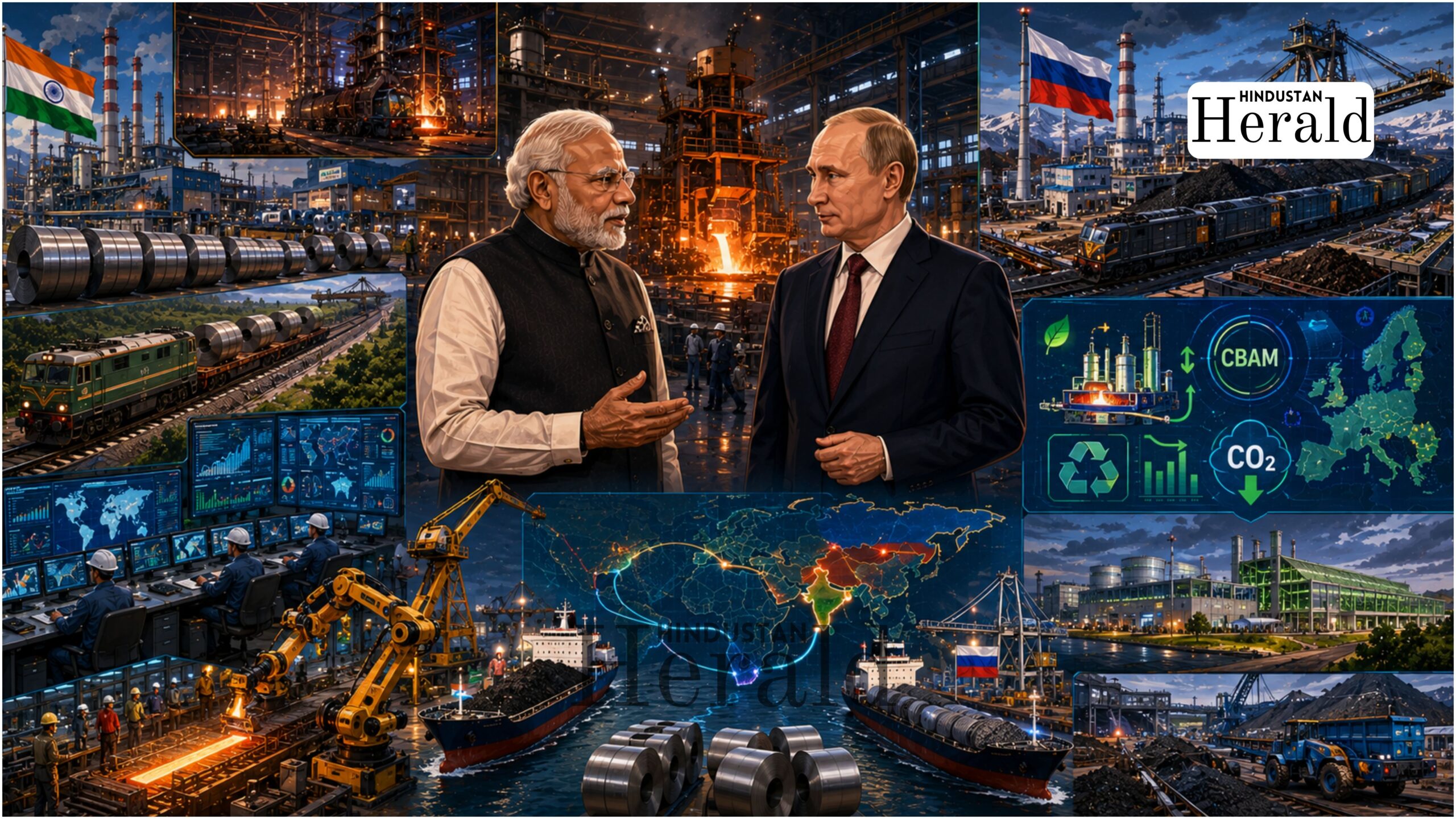
New Delhi, May 21: India Russia steel cooperation is moving faster than most people in the market have clocked. The giveaway was the calendar. India’s Ministry of Steel held a roundtable with a Russian federal delegation on April 16. Then again on April 17. Same officials, second session, barely a day apart. In government circles, that kind of repeat engagement around India Russia steel cooperation is rarely coincidental.
Mikhail Iurin, Russia’s Deputy Minister of Industry and Trade, sat across the table from India’s Steel Secretary on both occasions. For those watching India Russia steel cooperation closely, this was the most substantive bilateral engagement in the sector in years. They talked raw materials, equipment, technology, research. The readouts from the ministry were careful and measured, as these things usually are. But the fact that industry representatives and supply chain partners showed up for the second meeting suggested this India Russia steel cooperation push had moved past the exploratory stage.
Nobody flies a delegation across two continents twice in one month just to exchange pleasantries. The scale of India Russia steel cooperation being discussed here goes well beyond goodwill. And the agenda items confirm it this was a working meeting, not a ceremony.
India Russia Steel Cooperation: The Coal Problem Nobody Wants to Say Out Loud
Start with the numbers, because they make everything else make sense. India churned out over 150 million tonnes of crude steel in the first eleven months of 2025. Second in the world, behind only China. The government has set a target of 300 million tonnes of installed capacity by 2030, rising to 500 million tonnes by 2047. These are written into the National Steel Policy, not floated as aspirations at press conferences.
Getting there requires coking coal. A lot of it. And India has a serious problem with coking coal supply which is exactly why India Russia steel cooperation has become such a priority for the Ministry of Steel. The supply math for India’s 300 MT target simply does not work without a partner like Russia in the mix, which is the clearest single argument for India Russia steel cooperation at this scale.
The domestic stuff is mostly high ash and high sulphur, which means it is essentially unusable for steelmaking without extensive processing. So the country imports, and it has been importing more every year. Metallurgical coal purchases crossed 83 million tonnes in 2025, nearly 10 per cent above the previous year, per S&P Global. By 2030, that figure is projected to land somewhere between 135 and 161 million tonnes. The volume math alone explains why India Russia steel cooperation has moved up the government’s priority list.
The India Energy and Climate Center at UC Berkeley ran the numbers on what this addiction to imported coal could cost over the long haul. They came up with USD 1.2 trillion. That is not a typo.
Australia supplies the bulk of it, around 72 per cent of imports as recently as FY2021. India has been trying to reduce that dependence. The United States has grown its share from 8 to 15 per cent since 2021, partly off the back of a 2026 trade deal. But American coal takes 40 to 45 days to reach Indian ports, versus 20 to 25 days from Australia. On a cost per tonne basis, that transit gap is hard to paper over.
Russia does not compete in premium hard coking coal. That is Australia’s territory. But in PCI coal the pulverised coal injection grade that blast furnaces use to cut down on coke consumption Russia has become India’s single largest supplier without making much noise about it.
GMK Center puts the figure at over 14 million tonnes out of a total 21 million tonnes that India imported in that category. Russia did not get there through diplomacy. It got there by being cheap, reliable, and consistent which is the real commercial foundation beneath India Russia steel cooperation today.
That context reframes the April roundtables entirely. This was not India and Russia exploring a new frontier. This was two countries formalising something that the market had already figured out. India Russia steel cooperation, in the PCI coal segment at least, was already a commercial reality before anyone called it a policy priority. The roundtables simply put an official frame around what buyers and sellers had been doing for years. Which is, in many ways, how the best examples of India Russia steel cooperation have always worked commerce first, policy later.
Why India Russia Steel Cooperation Goes Back Further Than People Realise
A lot of the current framing around India Russia steel cooperation treats it as a consequence of Western sanctions on Moscow post 2022. That reading is too shallow.
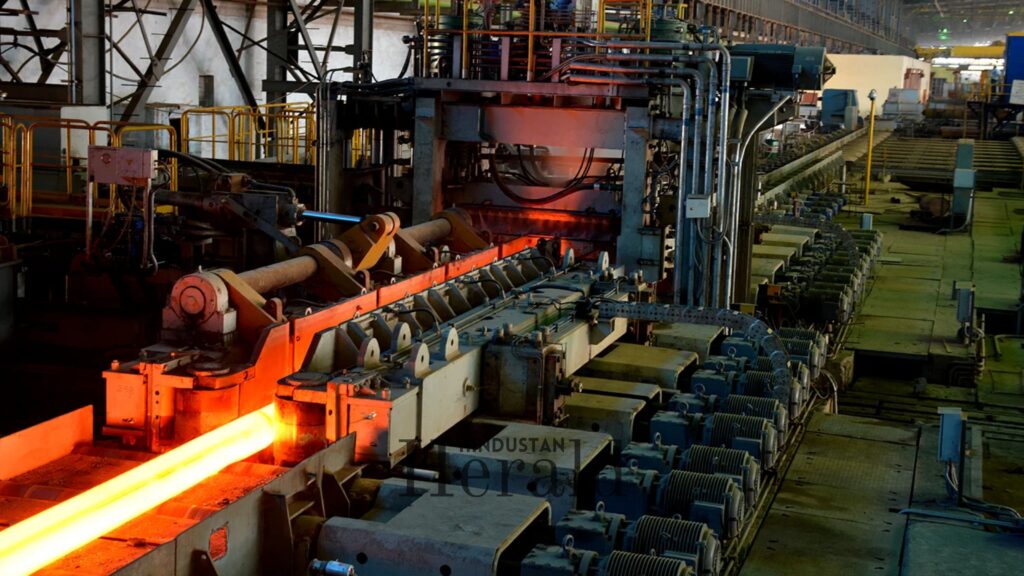
SAIL’s Bhilai Steel Plant was built in the 1950s with Soviet technical assistance. It remains one of India’s most important integrated steel facilities. The engineers who came up through that plant, the equipment procurement systems, the maintenance culture, all of it has Soviet era fingerprints. That kind of institutional history does not dissolve because the political weather changes.
Novolipetsk Steel (NLMK), one of Russia’s biggest steelmakers, set up shop in India back in 2011 12. Its plant at Auric City in Aurangabad, on the Delhi Mumbai Industrial Corridor, produces premium transformer steel with a capacity of around 64,000 tonnes annually. The company has put roughly USD 150 million into that facility, according to the Observer Research Foundation. Not a massive number in isolation, but enough to show that Russian industrial money was betting on India’s manufacturing story long before sanctions made it strategically necessary.
India Russia steel cooperation, in other words, is not a crisis driven pivot. The bilateral relationship in this sector was built incrementally, project by project, over many decades. Analysts who dismiss the current round of India Russia steel cooperation as purely sanctions driven are missing that longer arc. It is a relationship with real roots that both sides are now choosing to grow more deliberately. The foundations were laid long before 2022, and that history gives this round of engagement a different quality than a typical bilateral initiative.
The Trade Numbers Behind India Russia Steel Cooperation
The headline bilateral trade figure between India and Russia is USD 43.81 billion through the first eight months of FY26, per IBEF. Imports from Russia account for USD 40.81 billion of that. The imbalance, roughly 13 to 1 in Russia’s favour, is real, persistent, and politically awkward.
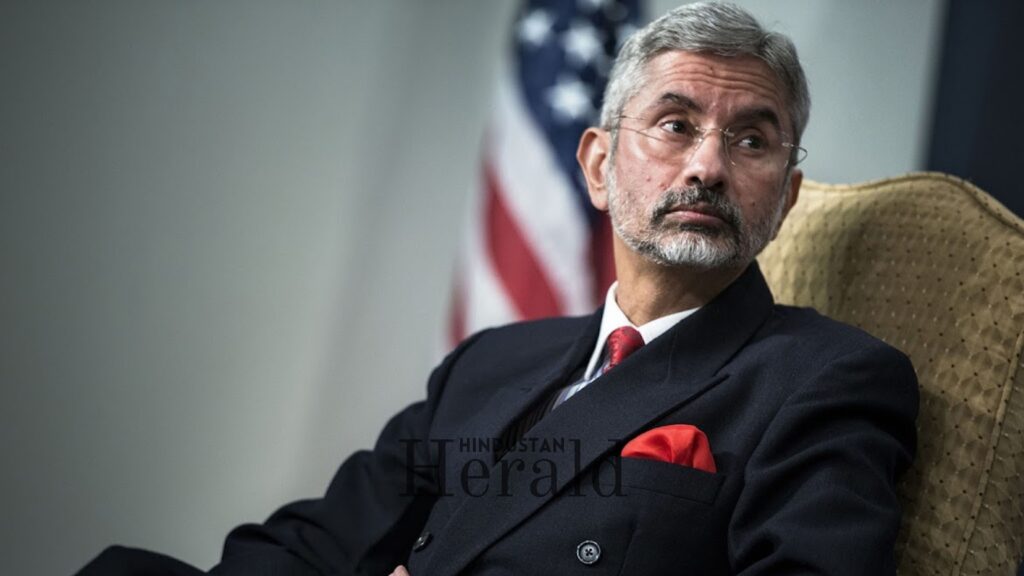
EAM S. Jaishankar brought it up directly at the 24th session of the bilateral inter governmental commission. It is the same point that comes up at every senior level meeting, because nobody has cracked it yet. And until it is resolved, India Russia steel cooperation will carry this structural tension underneath its more optimistic headline numbers.
That said, both sides are clearly still leaning in. Jaishankar was in Moscow in August 2025 for the India Russia Business Forum, where he described current bilateral trade at USD 66 billion and called the USD 100 billion by 2030 target realistic. Prime Minister Modi, at the same forum during Putin’s December 2024 visit to New Delhi, mentioned that talks on a Free Trade Agreement with the Eurasian Economic Union had begun.
Russian investments in India sit at around USD 20 billion by Putin’s own count, spread across oil and gas, petrochemicals, banking, railways, and steel. The steel portion is the one with the most headroom, and it is precisely why India Russia steel cooperation has been climbing up the bilateral agenda in 2025 and 2026. It is the sector where both countries have the clearest commercial logic for going deeper into India Russia steel cooperation, and where the institutional groundwork already exists to move quickly.
The Carbon Risk That Makes India Russia Steel Cooperation Urgent
There is a deadline that India’s steel industry does not talk about enough, and it started ticking on January 1, 2026. That was the day the EU’s Carbon Border Adjustment Mechanism moved into its compliance phase. In plain terms, CBAM puts a carbon price on steel imports from countries that do not have equivalent carbon pricing at home. India does not. Which means Indian steel going to Europe is now more expensive to sell than it was a year ago.
The EU is not a marginal market. It accounts for roughly USD 5.5 billion, or 27 per cent, of India’s annual steel exports, per IECC data. The problem is that around 60 to 65 per cent of India’s planned new steelmaking capacity is being built around the conventional blast furnace basic oxygen furnace route. That is exactly the technology CBAM targets. Meanwhile, domestic hot rolled coil prices fell from about Rs 52,850 per tonne in April 2025 to roughly Rs 46,000 per tonne by November, per ICRA, as Chinese steel poured into export markets.
This is where India Russia steel cooperation starts to look like more than a coal procurement story. Russia has serious depth in direct reduced iron technology and electric arc furnace steelmaking, both of which produce significantly less carbon than the blast furnace route. If some part of the April discussions touched on technology transfer in this area, it would give Indian producers a credible path toward CBAM compliant capacity, built in rather than bolted on afterward.
The official statements did not go into specifics. But innovation and capacity building were flagged by both sides, and within the context of India Russia steel cooperation, that language tends to mean something. Green steel technology is fast becoming a non negotiable part of the India Russia steel cooperation conversation, particularly as CBAM deadlines close in.
What India Russia Steel Cooperation Means for the Market
SAIL is the obvious name to watch. Soviet built, state owned, with decades of operational familiarity with Russian metallurgical systems, it stands to benefit most directly from any equipment partnership or technology transfer that comes out of India Russia steel cooperation talks. The Soviet era supply chain memory is an asset no private sector company can replicate quickly. If long term PCI coal supply arrangements get formalised, SAIL also gains insulation from spot price volatility in the Australian market.
Tata Steel and JSW Steel are the private sector story in India Russia steel cooperation. Both have European exposure and therefore a more pressing CBAM problem than SAIL. Long term coal offtake agreements would help their input cost planning. Russian steelmaking technology partnerships could help them build new capacity that does not immediately put them on the wrong side of EU trade regulations.
The Chennai Vladivostok Eastern Maritime Corridor is worth keeping an eye on too. If that route develops as both governments have discussed, the freight time and cost disadvantage of Russian coal imports narrow considerably, which changes the sourcing economics for everybody engaged in India Russia steel cooperation. Shorter transit time has been one of the persistent arguments for deepening this bilateral relationship.
The trade imbalance is the genuine risk in any expansion of India Russia steel cooperation. India already imports far more from Russia than it exports. Adding steel equipment procurement on top of oil, fertilisers, and coal makes that gap wider, not narrower. New Delhi has been pushing harder exports in pharmaceuticals, engineering goods, and IT services as the offset. Progress has been real but slow.
It is worth being honest about this constraint. India Russia steel cooperation cannot deepen indefinitely on a foundation where one side does almost all the buying. Resolving the imbalance is as much a part of the long term picture as any coal deal or technology agreement.
Reading the Room on India Russia Steel Cooperation
The April meetings did not come out of nowhere. They followed a December 2025 India Russia Business Forum, an August 2025 ministerial visit to Moscow, and a December 2024 bilateral summit in New Delhi. The tempo of engagement around India Russia steel cooperation has been climbing steadily, and sources familiar with the bilateral calendar say further sector specific talks are planned through the rest of 2026.
India’s steel expansion has no real precedent in the modern era outside of what China did in the 1990s and 2000s. Viewed in that light, the push around India Russia steel cooperation is less a diplomatic initiative and more an industrial necessity. The raw material demands that come with scaling from 205 to 300 million tonnes are enormous, and no single supplier country can meet them alone. Russia is not going to replace Australia in the coking coal market. But it is already the dominant PCI coal supplier, it has the technology depth that India increasingly needs, and it has a long institutional relationship with India’s steel sector that most Western partners cannot match on timeline alone.
Whether binding commercial agreements come out of the April discussions is a question for the months ahead. But both governments have been moving with a focus that is hard to mistake for routine diplomatic activity. The pace of India Russia steel cooperation engagement in 2025 and 2026 reflects a shared urgency that goes beyond the usual bilateral rhythm. Both countries need this to work, and that alignment of incentives is what makes the current moment in India Russia steel cooperation different from earlier rounds of engagement.
For anyone tracking India Russia steel cooperation and its implications for Indian industry, the direction is not in much doubt. The only real question is how fast the two sides can move from frameworks to signed agreements.
Stay ahead with Hindustan Herald — bringing you trusted news, sharp analysis, and stories that matter across Politics, Business, Technology, Sports, Entertainment, Lifestyle, and more.
Connect with us on Facebook, Instagram, X (Twitter), LinkedIn, YouTube, and join our Telegram community @hindustanherald for real-time updates.

Tracking world politics, global markets, trade movements, policy decisions, and the changing balance of economic power.
- Shelesh Joshi

- Shelesh Joshi
- Shelesh Joshi
- Shelesh Joshi





Former financial consultant turned journalist, reporting on markets, industry trends, and economic policy.
- Kavita Iyer
- Kavita Iyer
- Kavita Iyer
- Kavita Iyer