
 By Ananya Sharma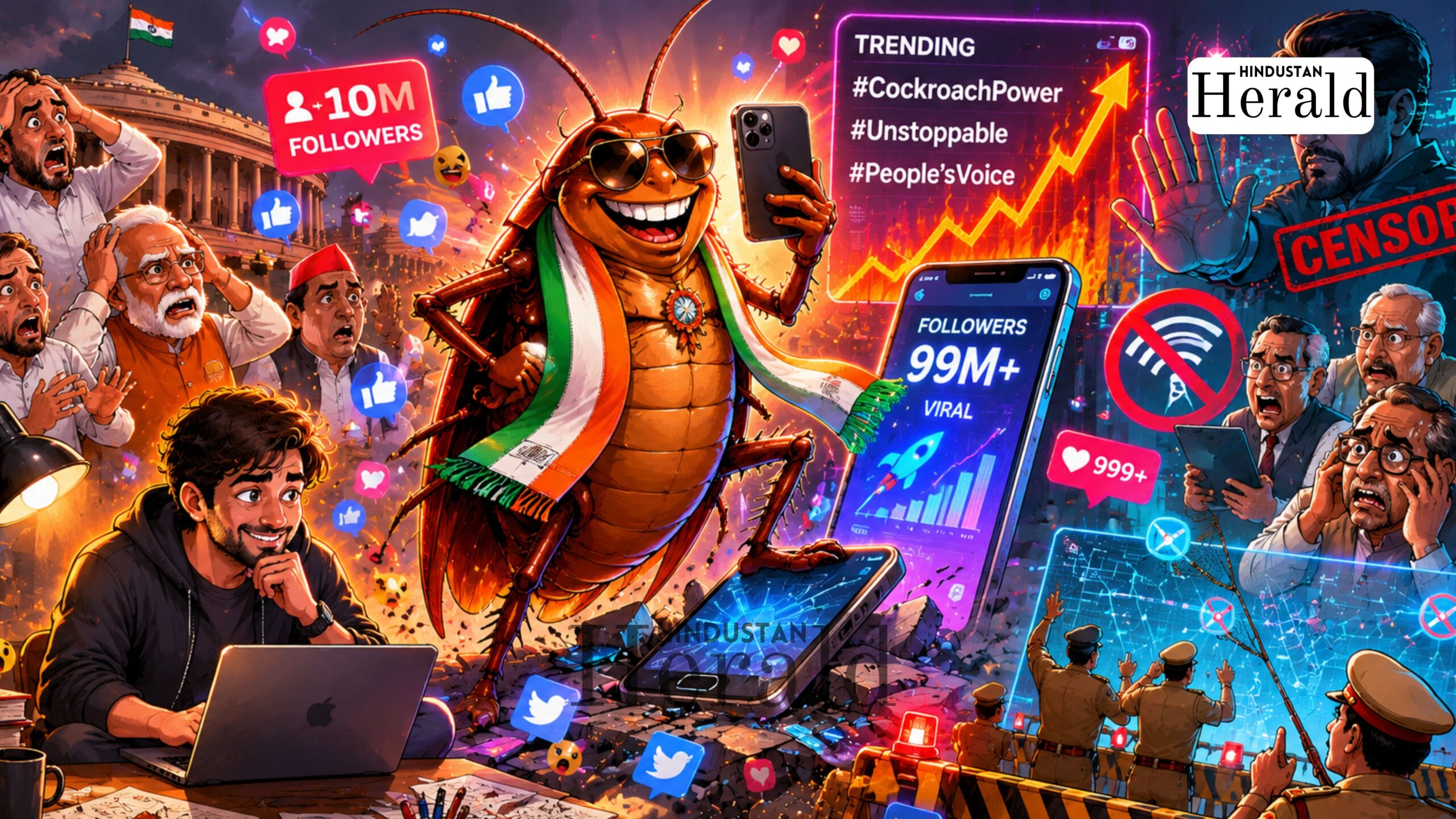
New Delhi, May 21: A satirical political outfit that did not exist a week ago has pulled off something no established opposition party managed in years it overtook the ruling Bharatiya Janata Party on Instagram, triggered a flurry of hacking allegations, and then had its X (formerly Twitter) account withheld inside India, all within the span of five days. The story of the Cockroach Janata Party, or CJP, is equal parts digital farce and pointed political commentary, and by Wednesday night it had become impossible to ignore.
How a Courtroom Remark Lit the Fuse
The chain of events traces back to May 15, when Chief Justice of India Surya Kant made remarks during a Supreme Court hearing that set off an immediate and visceral reaction online. During the hearing, CJI Surya Kant remarked: “There are youngsters like cockroaches, who don’t get any employment or have any place in profession. Some of them become media, some of them become social media, RTI activists and other activists and they start attacking everyone.”
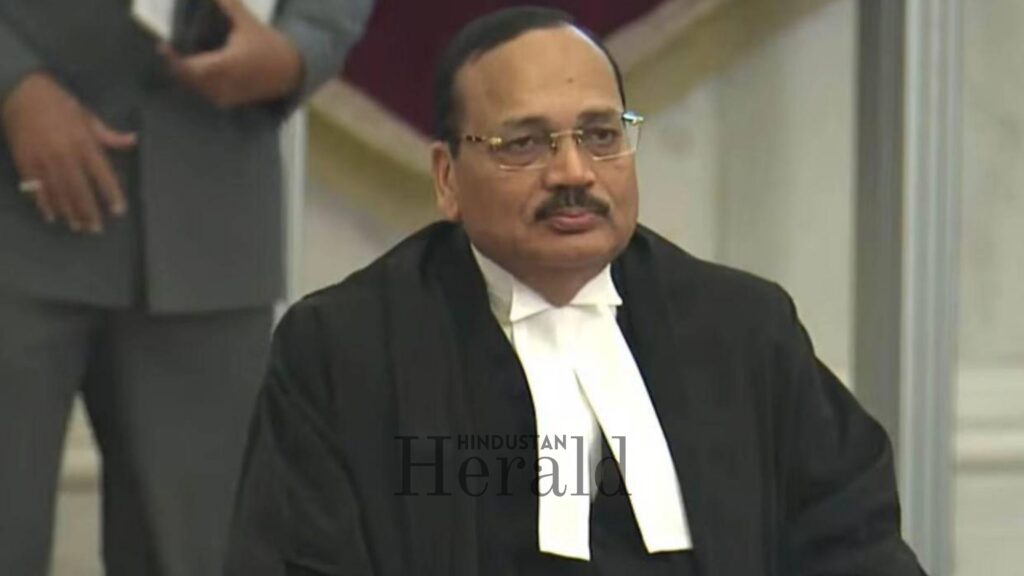
The remark landed badly. Youth unemployment, stagnant job markets, and the sense that institutions treat young Indians as a nuisance rather than a constituency had been building as grievances for years. The CJI’s words, whether fairly quoted or not, became a flashpoint.
The CJI later clarified that his remark focused on people who enter the legal profession using fake and bogus degrees. That clarification, as it turned out, changed very little on the ground. The internet had already moved.
The Party That Wasn’t, Then Was
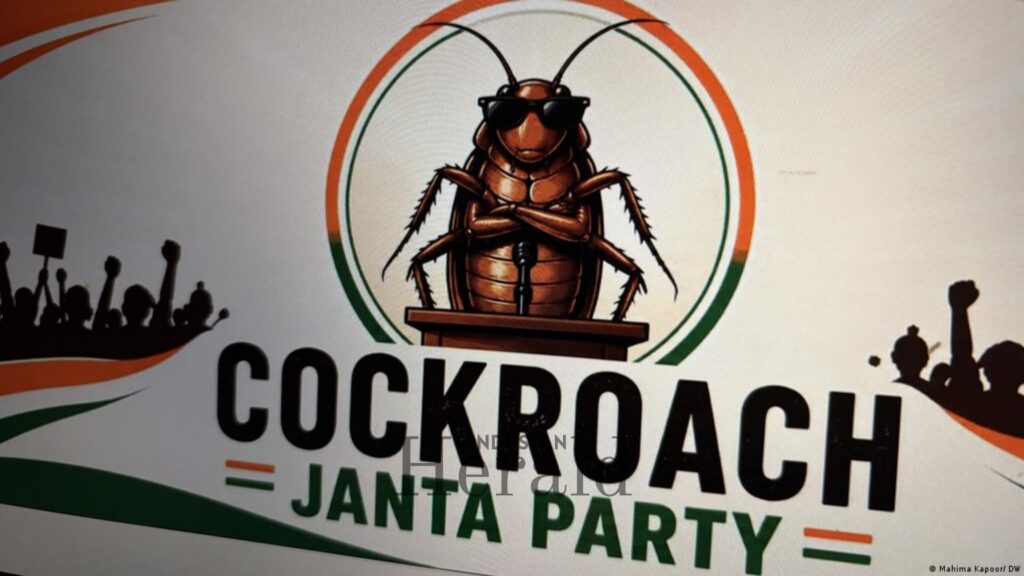
On May 16, Abhijeet Dipke launched the Cockroach Janata Party as a satirical digital movement, inviting supporters to join through an online registration platform. Early membership registrations began pouring in shortly after launch.
Dipke recently completed his Master’s degree in Public Relations from Boston University in the United States. He is 30 years old, from Aurangabad, Maharashtra, and by his own admission had no plan for any of this. Dipke said the idea came “impromptu” after seeing the controversy around the CJI’s remarks. According to him, many young Indians feel disconnected from mainstream politics and want a language of politics that reflects “their humour, frustrations and internet culture.”
The name itself was a reclamation. “Those in power think citizens are cockroaches and parasites,” Dipke told Al Jazeera. “They should know that cockroaches breed in rotten places. That’s what India is today.”
The CJP’s self-description on its website read: “Voice of the Lazy and Unemployed.” Its Instagram bio framed it as “a political front of the youth, by the youth, for the youth.” The tone was ironic, the anger underneath it was not.
Five Days. Thirteen Million Followers.
What followed was one of the fastest organic social media surges in Indian political history.
On May 17, membership surged into the tens of thousands, with estimates ranging between 40,000 and 45,000 supporters as the campaign gained traction across social media platforms.
By May 19, as reported by Business Today, the CJP had crossed 6 million followers on Instagram alone, surpassing the Aam Aadmi Party in the process. Over 6 lakh registrations poured in, showing how quickly the movement caught public attention.
By May 21, the numbers were frankly staggering. The CJP had crossed 13.4 million followers on Instagram, surpassing both the Congress, which stands at 13.3 million, and the BJP, which has 8.8 million followers on the platform.
To put that in context: while the BJP has maintained its account with over 18,000 posts, the CJP reached its record-breaking following with a mere 56 posts.
The slogan that caught on was blunt and borrowed: “Abki baar 10 million paar,” a deliberate play on the BJP’s own campaign rhetoric. The internet understood the reference immediately.
The Unfollow Campaign That Backfired
One of the more ironic episodes in the CJP’s brief existence involved a campaign asking its followers to unfollow the BJP’s Instagram page. The logic was straightforward enough use mass participation to strip the ruling party of its social media dominance. The execution did not go as planned.
According to multiple observers online and reports circulating across social platforms on May 21, instead of a mass exodus from the BJP’s page, the campaign appeared to draw fresh attention to the BJP account. As per sources tracking the follower counts in real time, BJP’s Instagram following reportedly increased by around 1 lakh during the same period, as the campaign inadvertently directed more eyeballs toward the ruling party’s profile. The exact numbers remain difficult to independently verify in real time, but the irony was not lost on either side. What was intended as a digital hit turned into a visibility boost for the very party the CJP had set out to mock.
It is a familiar dynamic in viral internet campaigns the act of pointing at something, even to criticise it, draws a crowd.
The X Account Goes Dark in India
The bigger story on May 21 was the withholding of the CJP’s account on X.
The account, operating under the username CJP_2029, began displaying a notice reading “Account Withheld” in bold text, followed by the message, “@CJP_2029 has been withheld in IN in response to a legal demand.”
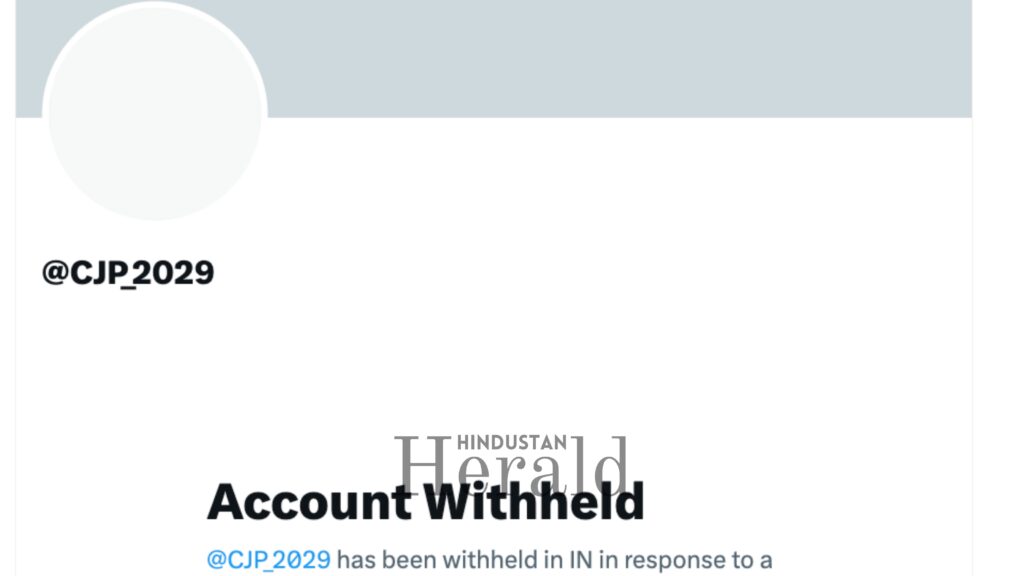
Founder Dipke had seen it coming. He shared a screenshot of the withheld notice and wrote, simply: “As expected Cockroach Janta Party’s account has been withheld in India.” His follow-up was two words: “Own goal.”
According to X’s guidelines, accounts are withheld when the platform receives a valid and properly scoped request from an authorised entity. The platform states that “it may be necessary to withhold access to certain content in a particular country from time to time.”
The X account had amassed around 165,500 followers before it was restricted in India. The account remains accessible outside the country.
No government ministry or agency has officially claimed responsibility for the withholding order, which is standard practice. The IT Ministry did not issue a statement by the time of this report.
Hacking Attempts and a Wider Pattern
The withholding of the X account was not the only threat the CJP reported facing. In a video message, Dipke alleged that the movement’s social media accounts had been subjected to hacking attempts as well, though he did not specify which platform or provide technical details.
“Why would you suspend our social media accounts?” he asked in the video, as reported by The Siasat Daily, addressing unnamed political actors. The question was rhetorical, and the audience understood it as such.
Politicians Take Note
The CJP’s growth did not go unnoticed inside formal politics. The movement drew support from mainstream politicians, including Trinamool Congress MPs Mahua Moitra and Kirti Azad, as well as Samajwadi Party chief Akhilesh Yadav.
Whether this constitutes genuine solidarity or opportunistic signal-sending is a fair question. Opposition parties have struggled to build a coherent youth outreach strategy for years. The CJP, which is not even a real party in any legal or electoral sense, managed to do in four days what formal political organisations had failed to do in election cycles.
The Manifesto, and What It Actually Says
The CJP’s positions, while delivered in a satirical register, are pointed enough. On the NEET controversy, the group posted that the Education Minister should resign and demanded accountability over exam paper leaks. It also supported students protesting CBSE rechecking fees and called for reforms in the education system.
The CJP’s manifesto is an edgy take on issues of voter manipulation allegations against the Modi government. Issues of unemployment, institutional accountability, exam corruption, and political privilege run through the party’s posts, dressed in memes but rooted in genuine frustration.
A Rival Emerges
Not everyone found the CJP’s rise uncomplicated. A rival outfit called the National Parasitic Front emerged as a parody of the CJP itself, describing itself officially as: “Born as the formal opposition to the Cockroach Janta Party and every ecosystem of inertia they represent, the National Parasitic Front is a movement of citizens who refuse to accept governance-as-theatre.”
The group’s website further explained: “We attach ourselves to a broken system, not to feed off it, but to force it to change from within.”
The emergence of a counter-satire, satirising the satire, is either a sign that the original movement had hit a cultural nerve deep enough to warrant parody, or a sign that Indian political internet culture in 2026 has reached a level of recursive self-reference that makes everyone’s head spin. Possibly both.
What Does It Actually Mean?
Analysts caution that online popularity does not necessarily translate into long-term political influence or organisational strength. Traditional political parties derive their power from electoral structures, cadre networks, governance experience and sustained public engagement. Viral internet movements, by contrast, often depend on momentum, novelty and continued online participation.
That is the honest assessment. The CJP has no candidates, no electoral registration, no party fund, and no manifesto that would survive scrutiny inside a formal political framework. Its founder is currently based in the United States. Its membership is a Google Form.
Still, something real is happening here. The speed of the CJP’s growth is a measurement of something youth disengagement from formal politics, frustration with the gap between institutional language and lived reality, and the hunger for political expression that does not require anyone to take themselves entirely seriously.
The withholding of the X account, whatever its legal basis, has ensured that the CJP’s story will now be told not just as a viral curiosity but as a free speech moment. Dipke called it an “own goal.” The metaphor is apt. Every attempt to suppress the movement has, so far, fed it.
Within less than a week, a satirical online campaign evolved into a nationwide talking point and briefly became more visible on Instagram than one of India’s most established political parties a development that many observers see as a defining example of internet-driven politics in 2026.
For now, the cockroaches are winning the follower count. Whether that translates into anything more durable is a question that only the next few months can answer.
Stay ahead with Hindustan Herald — bringing you trusted news, sharp analysis, and stories that matter across Politics, Business, Technology, Sports, Entertainment, Lifestyle, and more.
Connect with us on Facebook, Instagram, X (Twitter), LinkedIn, YouTube, and join our Telegram community @hindustanherald for real-time updates.

Covers Indian politics, governance, and policy developments with over a decade of experience in political reporting.
- Ananya Sharma

- Ananya Sharma
- Ananya Sharma
- Ananya Sharma




 Sandeep Verma