
 By Ananya Sharma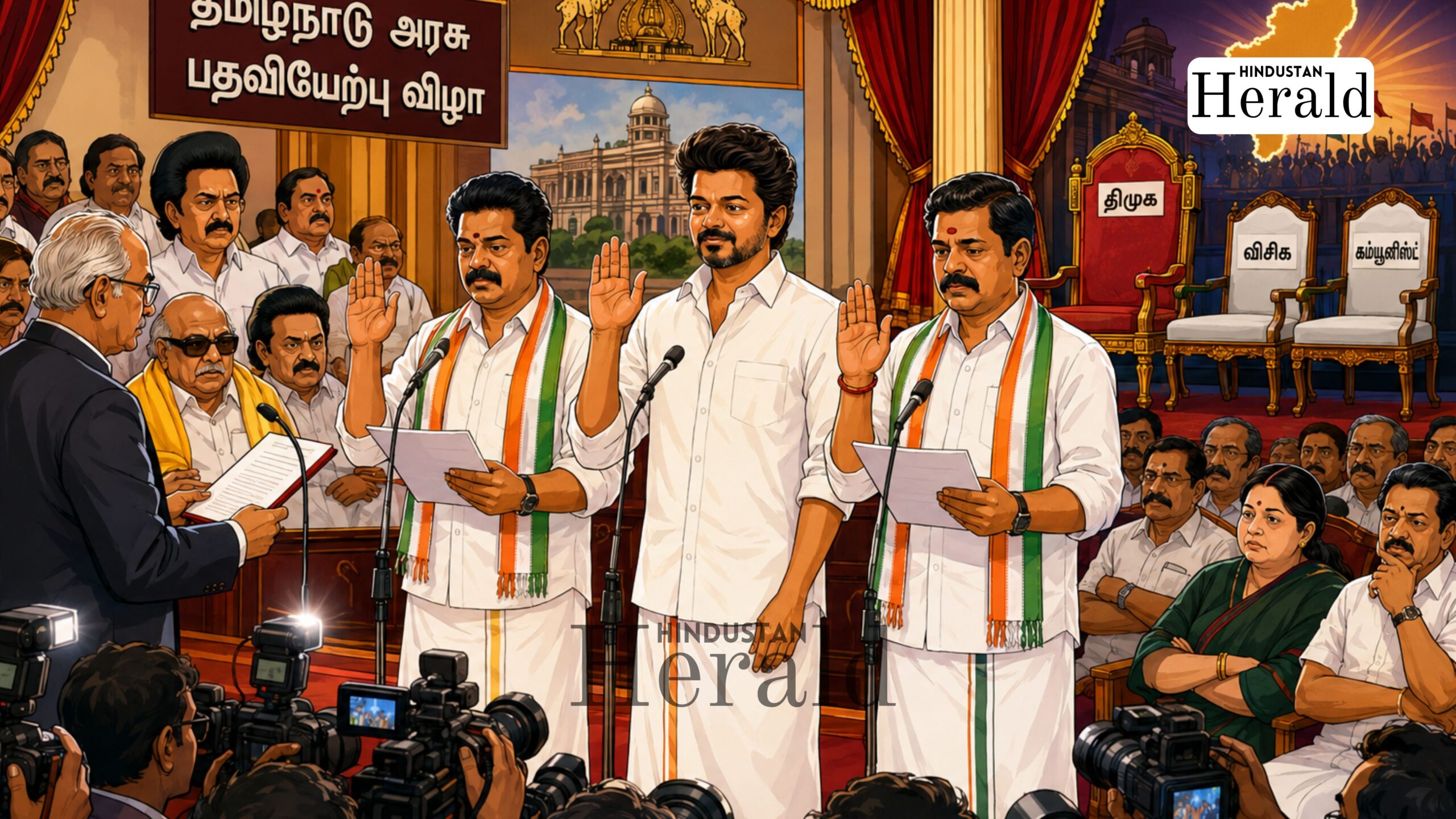
Chennai, May 21: There is something quietly remarkable about what happened in Chennai on Thursday morning. A film star-turned-chief minister walked into Lok Bhavan and did what two generations of Dravidian political giants never once bothered to do: he gave the Congress party a seat at the table.
Fifty-nine years. That is how long it had been since the Congress last held ministerial office in Tamil Nadu. Since C.N. Annadurai swept the old order out in 1967 and ushered in an era of Dravidian dominance, every government that followed, DMK or AIADMK, had kept Congress at arm’s length. Welcomed into alliances, sure. Used for their votes, absolutely. But never trusted with a portfolio. Never given a ministry to run. Thursday changed that.
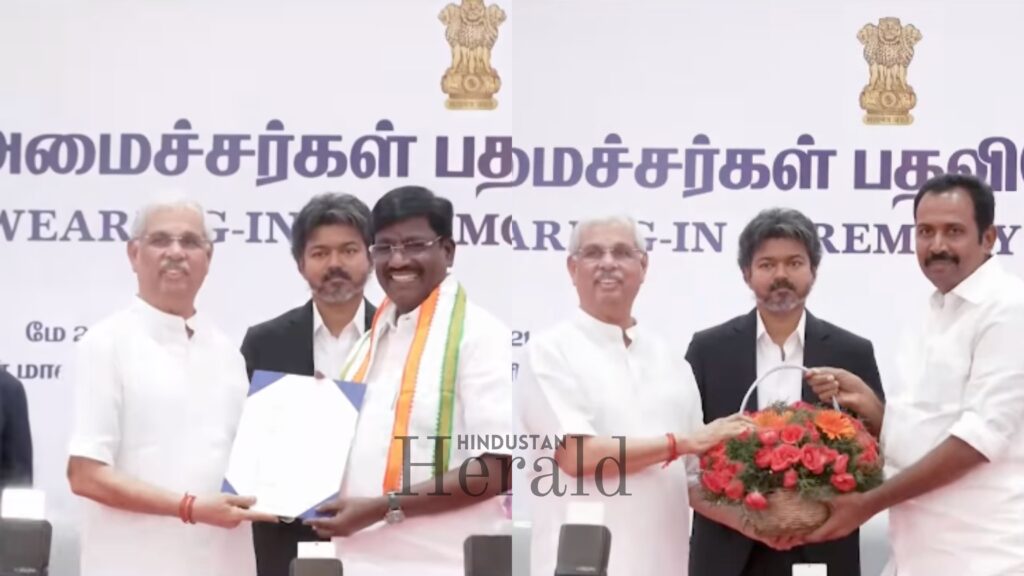
Congress MLAs S. Rajesh Kumar and P. Viswanathan were sworn in as ministers in the Vijay-led government, with Governor Rajendra Vishwanath Arlekar administering the oath at the Lok Bhavan in Chennai. Rajesh Kumar, who won from Killiyoor, gets Tourism. Viswanathan, the Melur MLA, takes Higher Education. Neither portfolio is ceremonial window-dressing. Both carry real money and real policy stakes in a state this size.
How Thursday Unfolded
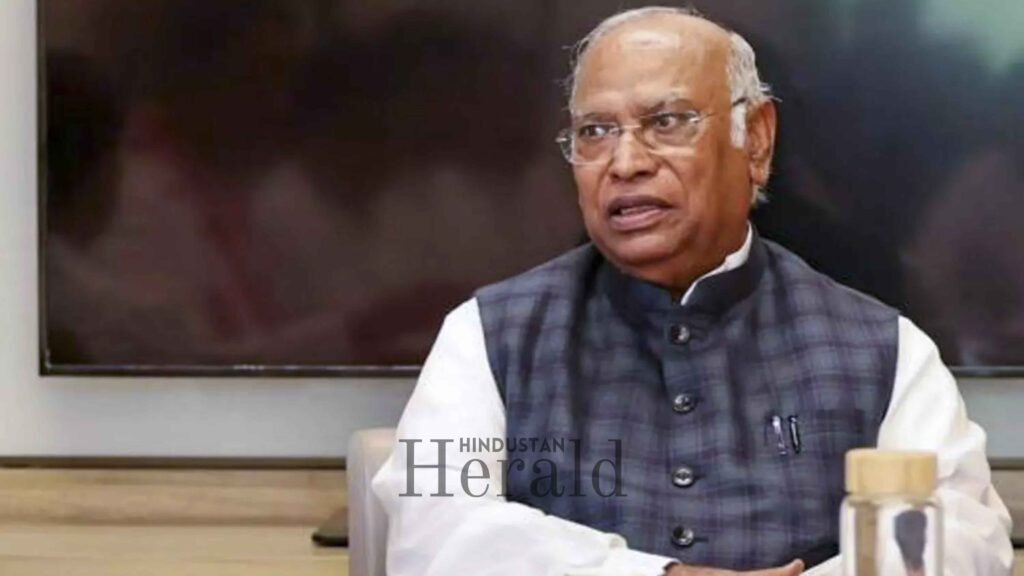
In total, 23 new ministers were inducted into the Council of Ministers on Thursday, with 21 coming from the ruling Tamilaga Vettri Kazhagam and two from Congress. The ceremony was brisk, the optics managed carefully. The induction of the two Congress legislators followed formal approval from party president Mallikarjun Kharge. Delhi, in other words, had signed off.
With the 23 new inductions, the Vijay cabinet now stands at 32 ministers, with three berths left vacant. Those three empty chairs are not an oversight. They are a message, and everyone in Tamil Nadu’s political class read it the same way.
The Seats That Were Left Empty
The Indian Union Muslim League and the Viduthalai Chiruthaigal Katchi were both expected to join the cabinet on Thursday but stayed out. The IUML says it has not finalised which of its two MLAs to send. The VCK says it is ready and has submitted a name. Both statements carry a familiar ring in coalition politics, which is to say, something else is going on beneath the surface.
There are reports circulating that VCK chief Thol. Thirumavalavan pushed for a Deputy CM post, but that did not materialise. The IUML, meanwhile, reportedly had its eye on the Education portfolio, drawing parallels with how its counterpart operates in Kerala. Neither ask was granted, it seems. By filling 32 of the 35 constitutionally permitted slots, Vijay has effectively closed the door on AIADMK rebel MLAs who had been hoping to muscle their way into the ministry. The CPI-M had made clear that any such accommodation was a red line. Vijay heeded it, and solved three problems with one cabinet expansion.
That said, keeping the IUML and VCK just outside the door is its own kind of leverage. Parties waiting on an invitation tend to be more cooperative than parties already holding portfolios. Vijay appears to understand this instinctively.
The Portfolios That Actually Matter
The expansion also reshuffled some senior assignments in ways worth noting. K.A. Sengottaiyan, who had been holding Finance, was moved to Revenue and Disaster Management. The Finance, Planning and Development portfolio went to TVK’s N. Marie Wilson. Handing Finance to a first-time minister from his own party rather than a seasoned older hand says something about how much Vijay trusts his own political generation.
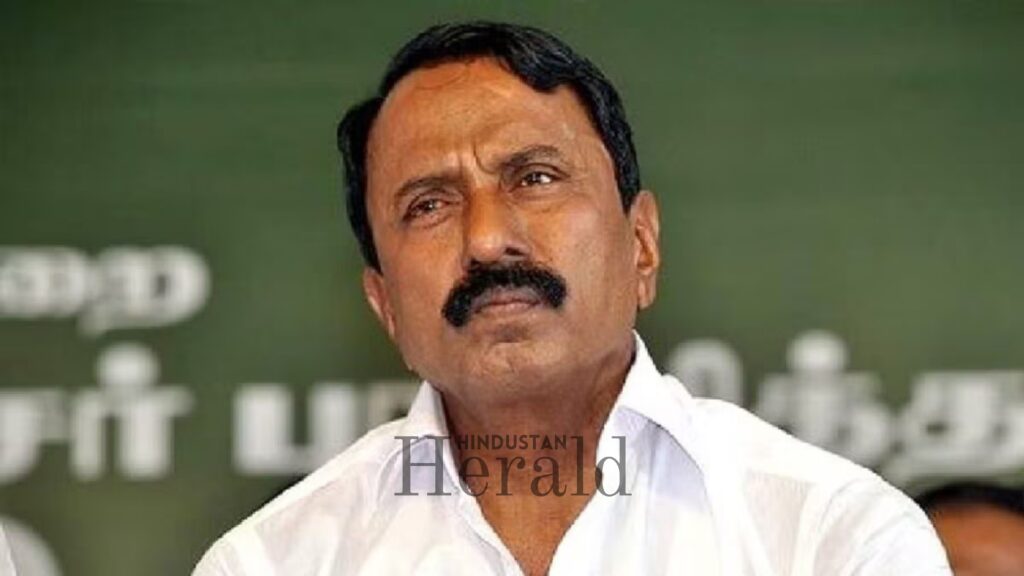
Vijay himself gave up the Women Welfare portfolio, which now goes to newly inducted minister K. Jegadeshwari, and took on Poverty Alleviation instead. The optics of a chief minister personally holding a poverty mandate in a state with deep rural inequality are not lost on anyone. Whether the portfolio becomes substantive governance or remains a branding exercise is the question that will answer itself over the next year or two.
Mohamed Farvas picked up Labour Welfare and Skill Development, a portfolio that carries increasing weight in a state economy that leans heavily on both organised manufacturing and the informal workforce.
A Cabinet That Looks Different
Step back from the individual portfolios and the composition of Thursday’s cabinet carries its own significance. The total number of Dalit ministers in the Vijay government has now risen to seven, and for the first time in Tamil Nadu’s assembly history, the highest number of MLAs from SC-reserved constituencies have been brought into the cabinet. Four women have also been inducted, another first for Tamil Nadu.
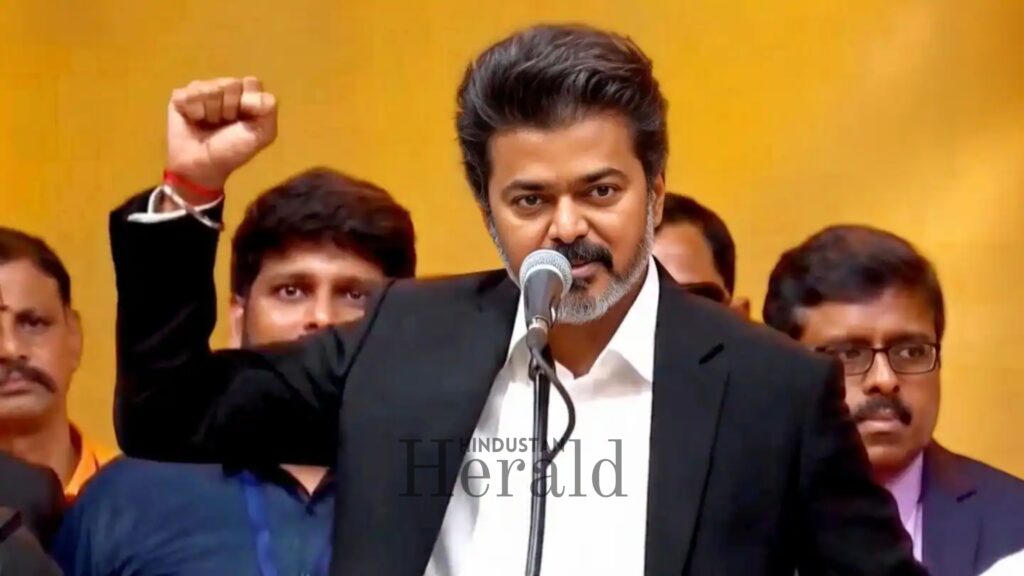
In a state where cabinet composition has historically reflected caste arithmetic more than social aspiration, these numbers land differently. Tamil Nadu has been a laboratory for social justice politics since long before the term became fashionable elsewhere. Whether the Vijay government converts representation into policy outcome is still an open question, but Thursday at least moved the numbers in a direction nobody managed to move them for the better part of three-quarters of a century.
Congress: Back in the Room, But How?
It is worth being precise about what Thursday’s Congress induction actually represents. Rajesh Kumar and Viswanathan did not win their seats on a Congress wave. They won as part of the DMK-led alliance, which the electorate decisively rejected at the state level. Their presence in the TVK cabinet is the result of post-poll alliance management, not electoral momentum. The Congress is back in government in Tamil Nadu after 59 years, yes, but it arrived through the side entrance rather than the front door.
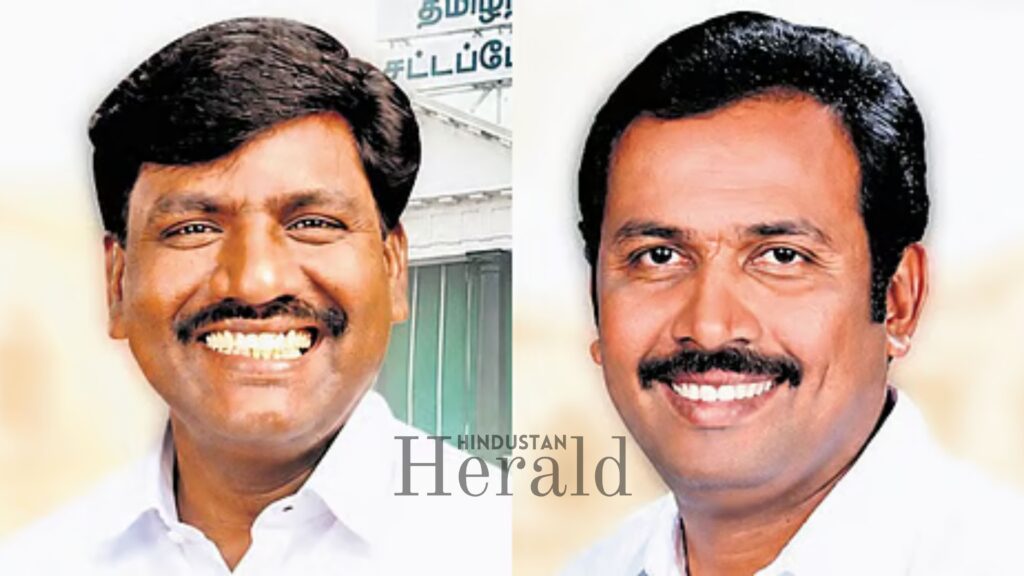
That distinction matters for the party’s own self-assessment. There is a version of Thursday where Congress interprets its return to governance as a sign of revival. There is another, more sober version where the party recognises it is a minor partner in someone else’s coalition, holding two portfolios out of 32, with its fate entirely dependent on the goodwill of a chief minister who built his political party from scratch just a few years ago.
Both versions can be true at the same time. In Indian coalition politics, they usually are.
What Vijay Has Built
When C. Joseph Vijay took the chief minister’s oath in 2025, the government he headed was structurally thin. External support from multiple parties, no full cabinet, a coalition whose arithmetic required constant tending. Thursday’s expansion does not resolve every tension, but it gives the government real institutional weight for the first time.
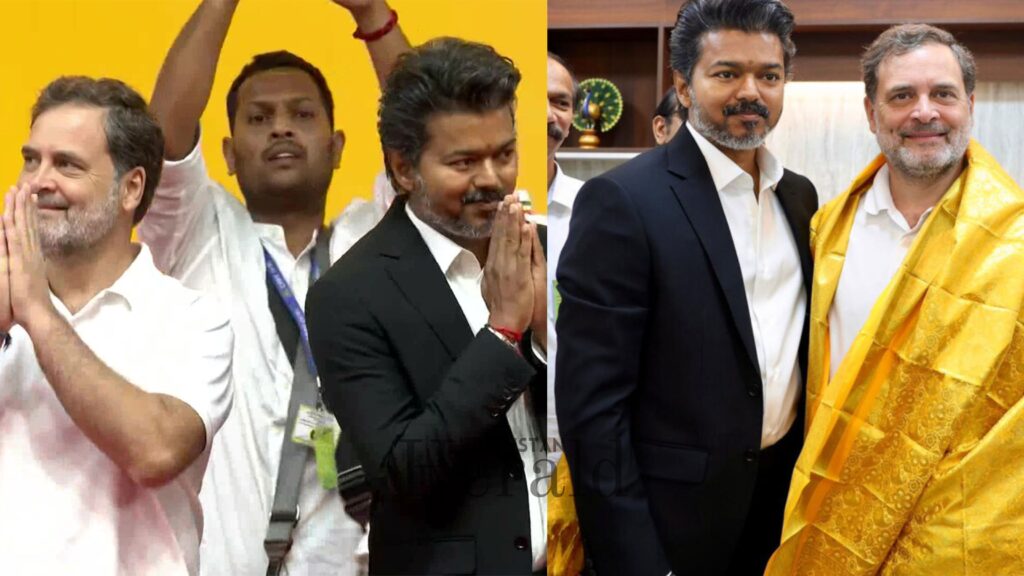
Thirty-two ministers. A reshuffled Finance portfolio in trusted hands. Seven Dalit ministers, four women in cabinet, Congress partners after six decades. The VCK and IUML still outside but essentially committed. The AIADMK rebels shut out without a confrontation. The CPI-M’s red line respected.
For a political leader who started his public life on a film set, Vijay has shown a reasonably sharp understanding of how coalition governments are assembled and managed. The proof of governance, of course, is not in the swearing-in ceremony. It is in what happens after the cameras leave Lok Bhavan and the files start arriving on thirty-two new desks across Chennai.
That part begins now.
Stay ahead with Hindustan Herald — bringing you trusted news, sharp analysis, and stories that matter across Politics, Business, Technology, Sports, Entertainment, Lifestyle, and more.
Connect with us on Facebook, Instagram, X (Twitter), LinkedIn, YouTube, and join our Telegram community @hindustanherald for real-time updates.

Covers Indian politics, governance, and policy developments with over a decade of experience in political reporting.
- Ananya Sharma

- Ananya Sharma
- Ananya Sharma
- Ananya Sharma




 Sandeep Verma