
 By Herald Desk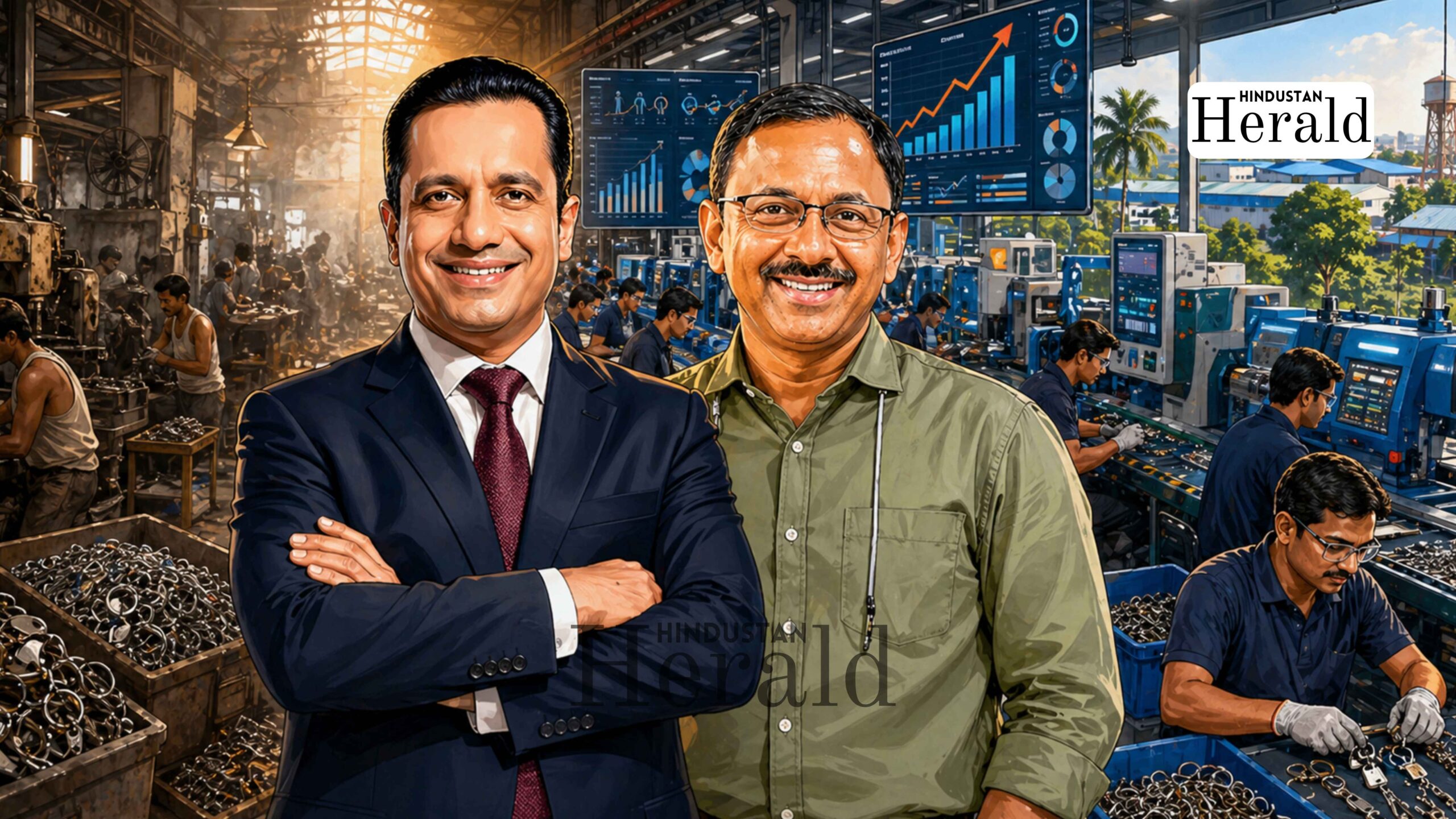
New Delhi, 30 April: There’s a certain kind of pride that comes with running a business your father built. The kind that makes you hold on even when things aren’t quite working. Shrikant Lokhande knows that feeling well.
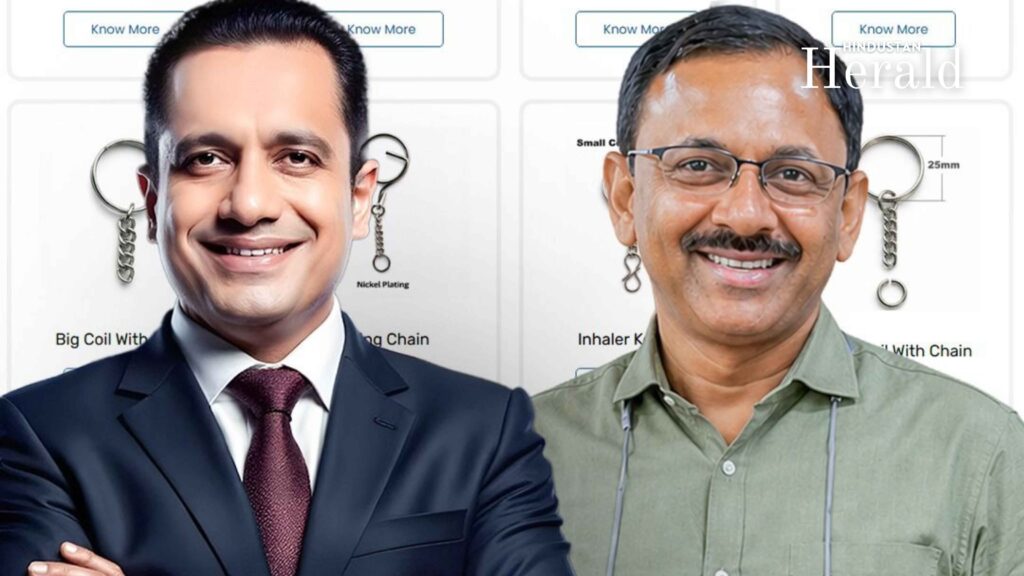
His company, Lokhande Industries, has been quietly humming along in Palghar, Maharashtra since 1978. Key rings, V-ring chains, anchor chains not glamorous products, but essential ones. The kind of hardware that ends up in your pocket, on your luggage, or holding together something you’d never think twice about. For over four decades, the Lokhande family made these things, and made them well.
But somewhere along the way, well enough stopped being good enough.
A Factory With More to Give
The operation itself was never the problem. Lokhande Industries had the infrastructure dedicated divisions for research, testing, packaging, distribution. It had engineers who knew what they were doing. It had loyal workers and a client base built over years. What it didn’t have was a system that could squeeze the full potential out of all of it.
Per-person production was sitting at 1,534 kg a month. Profit per person hovered around ₹19,673. On paper, the business was functional. In reality, it was leaving serious money on the table not because of bad products or bad people, but because nobody had ever sat down and really mapped out where the inefficiencies lived.
No real-time tracking. No clearly defined individual targets. Production planning that relied more on habit than data. Fixed costs were being absorbed poorly. The harder truth? The business had plateaued, and the people inside it had grown used to that plateau.
Bringing in Outside Eyes
That’s when Lokhande Industries decided to work with Dr. Vivek Bindra and Bada Business Private Limited. It wasn’t a desperate move more like the decision a smart business owner makes when they’re honest enough to admit they’ve been running on autopilot.

The collaboration came through a structured program called the Cash Growth Program, or CGP. And unlike a lot of consulting engagements that produce thick reports and thin results, this one started with a ground-level diagnosis. A dedicated team came in, looked at the actual operations, identified the bottlenecks, and then stuck around to fix them.
The Fix Was Simpler Than Anyone Expected
Here’s what’s interesting about what happened next: none of the solutions required major capital investment. No new factory floor. No fresh hires. The changes were almost entirely about how the existing team worked how they tracked their day, how they understood their own output, and how quickly problems got caught.
KRAs and KPIs were introduced real ones, not the kind that get written in a strategy meeting and forgotten by Friday. Each worker had daily output targets. Performance was reviewed not just at the end of the day, but multiple times throughout it. That shift alone changed the rhythm of the floor.
Operational data started getting analyzed seriously not just collected and filed away. Real-time monitoring meant that a dip in productivity at 11 AM could be addressed at 11:15, not discovered during a monthly review. Accountability became part of the culture, not a quarterly formality.
What the Numbers Say
The results, frankly, are the kind that make you read them twice.
Per-person production climbed from 1,534 kg to 2,542 kg a month. That’s a 166% jump. Per-person profit followed with a 164% increase. PAT margins grew by 30%, largely because fixed costs were finally being absorbed the way they should have been all along.
Overall projected revenue growth crossed 100%. The company, in effect, doubled without doubling its costs, its headcount, or its footprint. That’s not a small thing. That’s a fundamentally different business operating inside the same four walls.
What Comes Next
Shrikant Lokhande isn’t stopping there. With the operational house now in order, the company has its eyes on pharmaceutical manufacturing a move into end-to-end production in a sector that carries significantly higher margins. If the projections hold, it could mean another 50% jump in revenue and a serious repositioning of where Lokhande Industries sits in the manufacturing landscape.
It’s an ambitious bet. But then, so was building a hardware company in 1978 and keeping it alive for nearly five decades.
In His Own Words
When asked about the transformation, Shrikant Lokhande didn’t reach for corporate language. He said what most founders feel but rarely articulate clearly:
“The structured approach introduced through our collaboration has helped us unlock the true potential of our existing resources. The clarity in targets and consistent monitoring have directly improved both productivity and profitability.”
What he meant, reading between the lines, is that the factory was always capable. It just needed someone to show it how.
The Bigger Lesson
Lokhande Industries isn’t a tech startup. It isn’t disrupting anything. It makes key rings and chains in a mid-sized town in Maharashtra, the same way it has for generations. And yet its story carries something worth paying attention to the idea that operational discipline, applied consistently and honestly, can transform a business that already has everything it needs.
Not every turnaround requires reinvention. Sometimes it just requires clarity.
Stay ahead with Hindustan Herald — bringing you trusted news, sharp analysis, and stories that matter across Politics, Business, Technology, Sports, Entertainment, Lifestyle, and more.
Connect with us on Facebook, Instagram, X (Twitter), LinkedIn, YouTube, and join our Telegram community @hindustanherald for real-time updates.

- Herald Desk

- Herald Desk
- Herald Desk
- Herald Desk




 Shelesh Joshi and Kavita Iyer