
 By Arun Upadhayay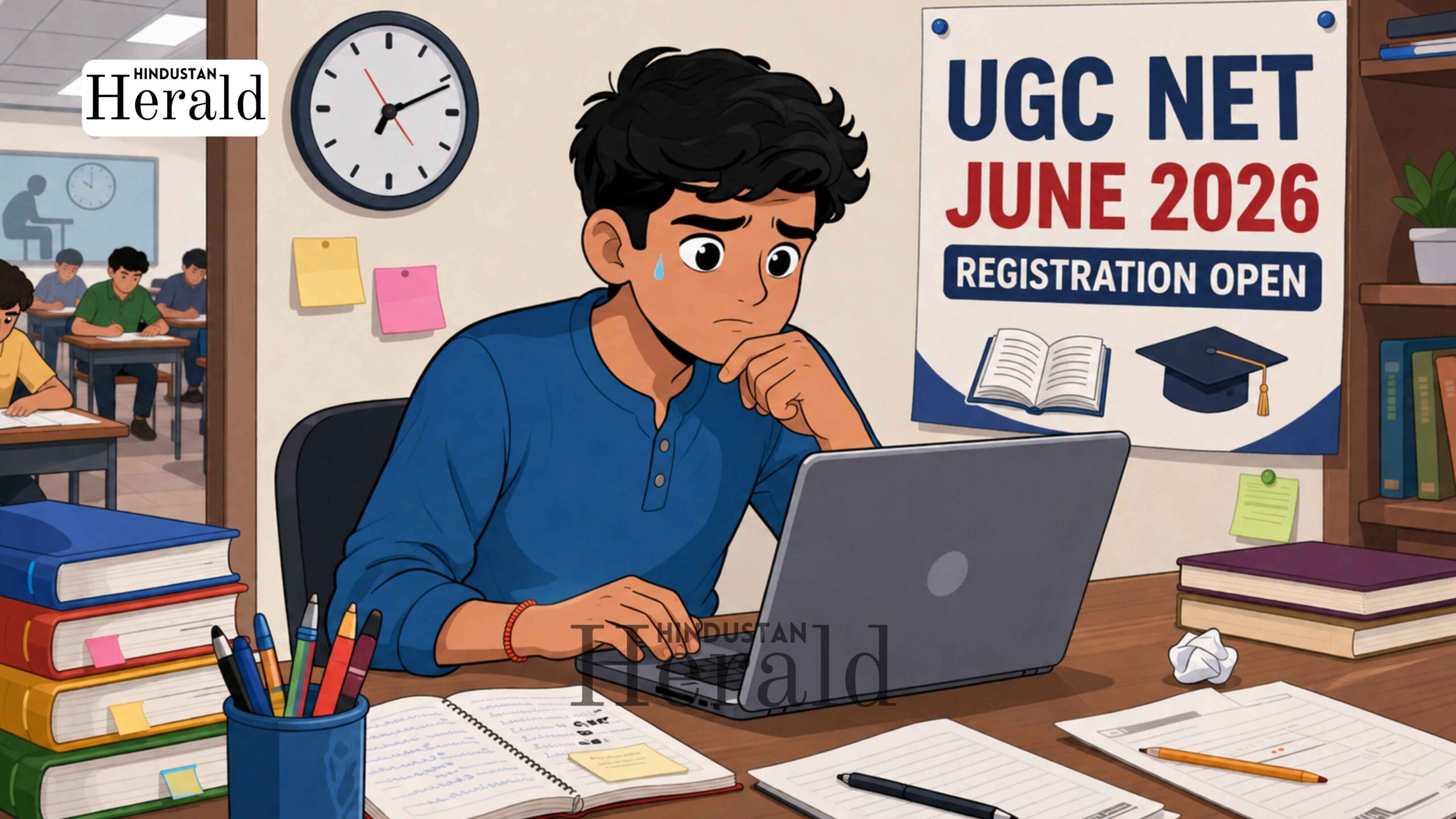
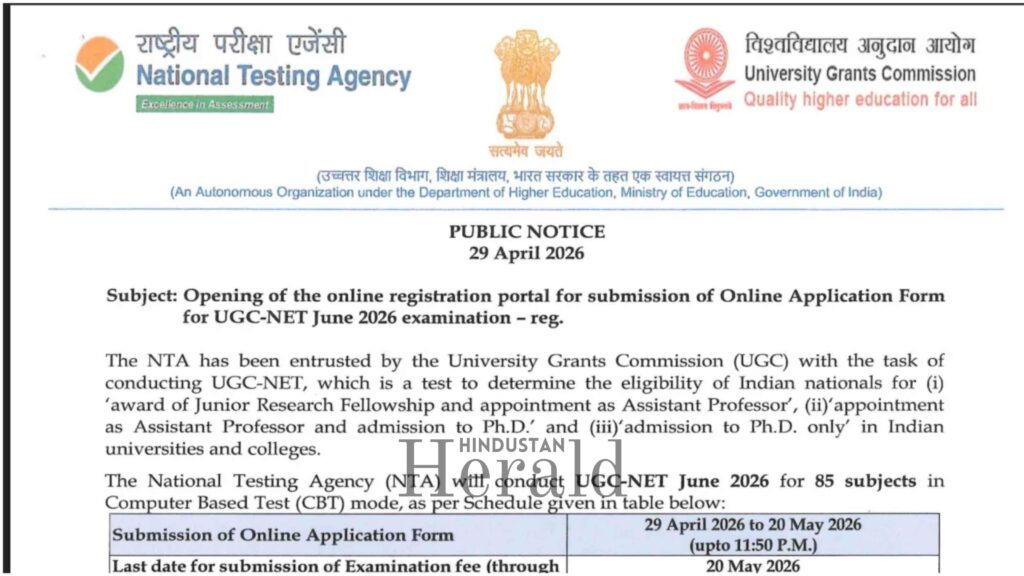
New Delhi, April 30: The registration for UGC NET June 2026 is open and if you have been sitting on your preparation waiting for this moment, this is it.
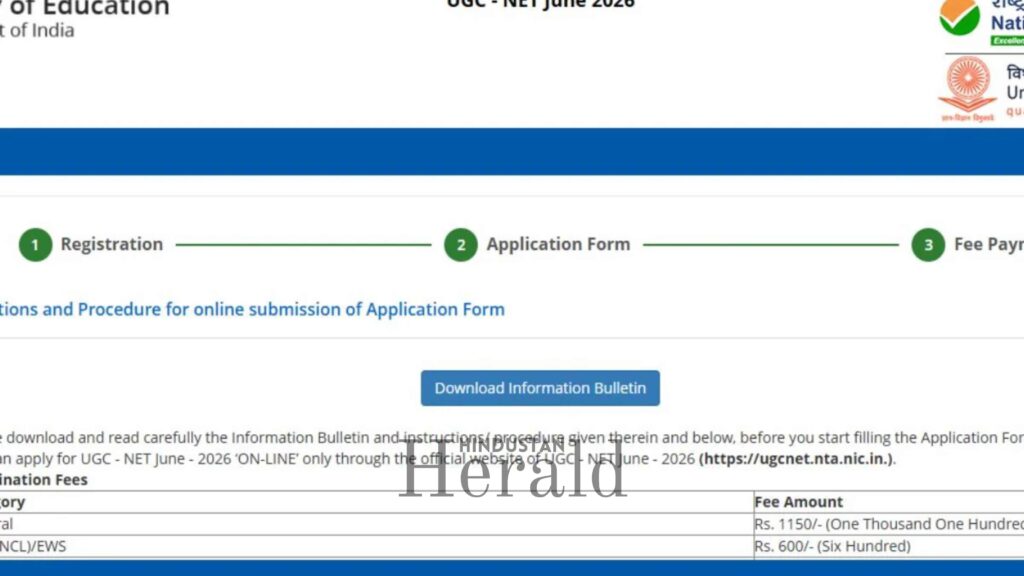
NTA put the forms live on April 28. Nobody got a big announcement. Most people found out through a coaching centre notification or a friend texting them at odd hours. The portal is ugcnet.nta.ac.in, and that is where everything happens from here.
Last date to register without extra charges is May 27. Keep that date somewhere you will actually see it.
What This Exam Is And Why So Many People Take It
A lot of first-timers are not entirely clear on what UGC NET actually gives you, so here is the short version without the jargon.
Pass this exam, and you become eligible to teach at a government college or university in India as an Assistant Professor. That is one thing. The other thing, arguably bigger for a lot of people, is the Junior Research Fellowship. That is where the government gives you a monthly stipend so you can pursue your PhD without needing a job on the side to pay rent. For students from ordinary families in smaller cities, that fellowship is genuinely life-changing. It is the reason many of them can afford to stay in academics at all.
The exam runs across 83 subjects. History, geography, commerce, law, economics, Hindi, English, computer science, education, fine arts, political science, it goes on. Twice a year, June and December. This is the June cycle and it tends to draw a bigger crowd because final-year postgraduate students are finishing up around the same time and appear alongside everyone else.
Dates To Write Down Right Now
Registration opened on April 28, 2026 and the last date without a late fee is May 27, 2026. The exam is going to happen in June but NTA has not published the exact dates yet. They typically do that towards the end of May.
After the registration window closes, there is usually a short correction period, three to five days, where you can go back and fix mistakes in your form. Do not assume your form is clean and skip this. Sit with your documents and match every field one by one. Name spelling, date of birth, category, subject. People have had certificates rejected at the job verification stage years later because a name was off by one letter and nobody caught it during the correction window.
Admit cards are downloaded from the portal. They do not come by post. Download it, print it, and save a copy on your phone.
Who Can Register
You need a Master’s degree from a recognised university with at least 55 per cent marks. If you are from OBC Non-Creamy Layer, SC, ST, PwD, or Transgender category, the minimum drops to 50 per cent.
Still in the final year of your Master’s? You can apply. Your result will just be provisional until you submit your final marksheet later.
For the JRF, the fellowship with the stipend, you need to be 30 years or younger on the first of the month the exam is held. OBC-NCL candidates get three extra years. SC, ST, PwD, Transgender, and women candidates get five extra years. Only going for teaching eligibility and not the fellowship? No age cap.
Fees
| Category | Application Fee |
|---|---|
| General | Rs 1,150 |
| OBC (Non-Creamy Layer) | Rs 600 |
| SC / ST / PwD / Transgender | Rs 325 |
Pay on the NTA portal through UPI, net banking, or card. Once paid, it does not come back unless the same transaction was processed twice by accident.
The Exam Itself
Three hours. Two papers. Same day.
Paper I has nothing to do with your subject. Everyone writes the same one. Fifty questions, a hundred marks, covering things like teaching aptitude, research thinking, logical reasoning, reading comprehension, basic data reading. It is not deeply technical. More about whether you can think clearly and quickly.
Paper II is your subject. A hundred questions, two hundred marks.
No negative marking in either paper. That changes how you approach it. There is no point in leaving blanks. If you are unsure, guess. A wrong answer costs you nothing. A blank definitely gives you nothing.
Hindi and English both available. Language subjects are offered in their respective medium as well.
The Part Nobody Wants To Talk About But Everybody Is Thinking
The last two years were rough for anyone who follows how these exams are run in India.
The NEET paper leak in 2024 blew up into something much bigger than a single incident. It became a national conversation about whether students can trust the system they are putting years of their lives into. Parliamentary debates happened. Protests happened. The CBI got involved. NTA as an institution took a serious hit to its credibility.
Then came the UGC NET December 2023 cancellation. The exam happened, candidates went home thinking they had given their attempt, and then the paper was scrapped because of concerns about a possible breach. Weeks of uncertainty followed for hundreds of thousands of people. That kind of thing does not just affect one cycle. It stays in people’s heads.
NTA has since spoken about changes to how papers are handled, how exam centres are monitored, how everything is tracked from printing to distribution. Whether any of that has actually plugged the holes or whether it is mostly paperwork and press statements, nobody outside the agency really knows.
What is visible right now is that the June 2026 cycle opened on schedule and nothing has gone wrong yet. That is genuinely something. But it is also just one data point and the exam has not happened yet.
If you are feeling anxious about registering after everything that happened, that is a completely reasonable thing to feel. A lot of people are in the same place. The only practical advice is to stay on official channels, ignore the rumour mill that gets going on social media before every major NTA exam, and take things one step at a time.
Things That Quietly Catch People Out
Every cycle, the same avoidable mistakes show up.
First one: not all 83 subjects appear in every cycle. Before you register, check that your subject is actually listed for June 2026 on the portal. Do not assume.
Second: when you upload your photo and signature, follow the exact specifications NTA gives for file size and format. Files that are slightly off get rejected. Fighting that through NTA’s complaint system is slow and genuinely unpleasant.
Third: only trust ugcnet.nta.ac.in and nta.ac.in for information. There are a lot of websites out there with fee tables and deadline charts that look official and are not. Some of that information is outdated. Some of it is simply made up. If you register based on a wrong date you read on one of those sites, NTA is not going to be sympathetic.
Is It Worth It Given Everything
That is the real question sitting in the back of people’s minds right now, especially after 2024.
Honestly, yes. Not because the system is perfect, it clearly is not, but because the qualification still carries genuine weight in the Indian academic job market. Most state government faculty recruitment processes need it. Universities ask for it. Research institutions use it as a starting filter. There is no clean bypass.
For anyone who wants to teach at a serious institution or do funded research in India, this exam is still the most direct route there is. The path has gotten bumpier. The agency running it has stumbled badly in recent memory. But the destination has not changed.
Forms are open. Deadline is May 27. Everything else comes after.
Stay ahead with Hindustan Herald — bringing you trusted news, sharp analysis, and stories that matter across Politics, Business, Technology, Sports, Entertainment, Lifestyle, and more.
Connect with us on Facebook, Instagram, X (Twitter), LinkedIn, YouTube, and join our Telegram community @hindustanherald for real-time updates.

- Arun Upadhayay

- Arun Upadhayay
- Arun Upadhayay
- Arun Upadhayay




 Ananya Sharma