
 By Ananya Sharma
Nashik, May 2: The Additional Sessions Court in Nashik has rejected the anticipatory bail application of Nida Ejaz Khan, the only accused in the TCS Nashik BPO case who remains at large. Additional Sessions Judge K.G. Joshi delivered the order today, days after hearing closed-door arguments from both the Special Investigation Team and Khan’s defence counsel. No protection from arrest was granted at any point during these proceedings, and none has come now either.
For Khan, this was effectively the last realistic chance to avoid custody at the sessions court level. That window has now closed.
What This Case Is Actually About
Before getting into the legal weeds, it helps to understand what brought everyone to this point.
A Tata Consultancy Services BPO facility in Nashik became the centre of a deeply disturbing set of allegations involving sexual harassment, psychological coercion, and what the police allege was a sustained, structured effort to influence female colleagues into converting to Islam. The complainants, at least some of whom belong to backward class communities, say they were targeted systematically at their workplace by colleagues who used a combination of romantic manipulation, job-related pressure, and religious persuasion to draw them in.
Eight people in total have been named across multiple FIRs registered at the Deolali and Mumbai Naka police stations. The complaints cover sexual harassment, outraging religious sentiments, threats, public humiliation, adverse workplace reports, and sexually coloured remarks. Seven of those eight have already been arrested. Nida Khan is the one who has not.
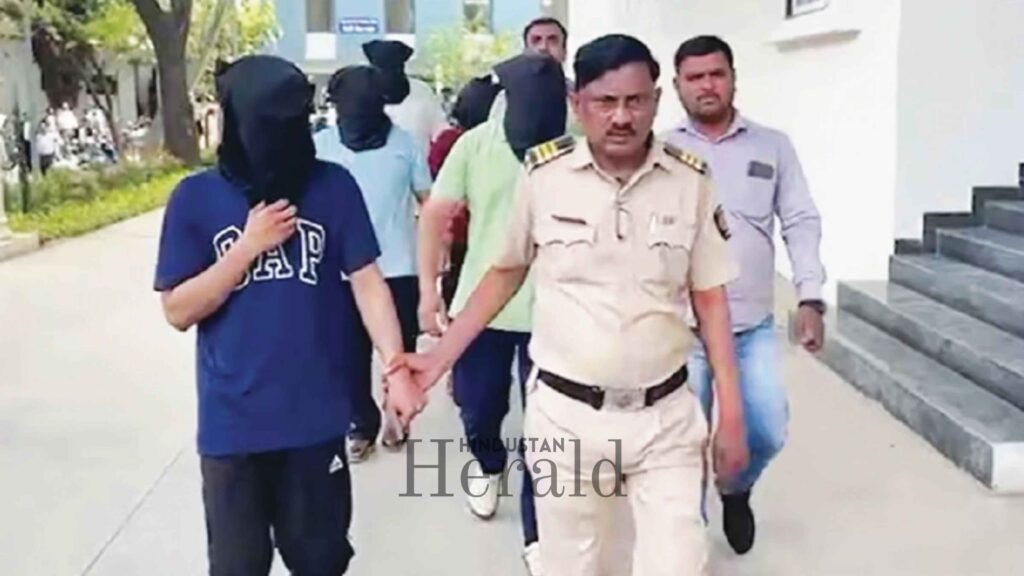
The arrested men are Danish Sheikh, Tausif Attar, Raza Memon, Shahrukh Qureshi, Shafi Sheikh, Asif Aftab Ansar, and Shahrukh Sheikh. Khan, a telecaller at the BPO unit, has been described by Nashik police as absconding since the investigation intensified.
What the Prosecution Told the Court
The SIT’s arguments before Judge Joshi were pointed and, frankly, difficult to dismiss on their face.

According to police submissions, Khan allegedly changed the victim’s name to “Haniya,” had Islamic-themed content uploaded on the victim’s Instagram, installed religious learning apps on her phone, and personally guided her on wearing a burqa and hijab and performing namaz at Khan’s own home. This was not framed as casual religious conversation between colleagues. The prosecution portrayed it as a deliberate, step-by-step process.
Special Public Prosecutor Ajay Mishra told the court that “her financial links need to be probed,” flagging “certain links with Malaysia and Malegaon” as areas that required urgent investigation, and adding that Khan’s phone needed to go through forensic analysis before any conclusions could be drawn.
That last part, the Malaysia angle, is what gives this case a dimension that goes well beyond an internal HR dispute. Whether those links amount to something significant or turn out to be early-stage investigative threads that lead nowhere, only the SIT can determine. But the prosecution’s position was clear: let us do that work first, before giving her bail.
Mishra also argued that granting bail at this stage could enable the accused to influence witnesses or tamper with evidence, and pushed for custodial interrogation to determine whether other women may have been targeted in a similar fashion.
The Defence’s Argument
Khan’s lawyers, Rahul Kasliwal and Baba Sayyad, took a different approach entirely. Rather than disputing every factual claim, they went after the legal framework itself.
Kasliwal argued that Maharashtra has no law criminalising forced religious conversion, and that the charges under the Bharatiya Nyaya Sanhita only speak to hurting religious sentiments, not to conversion as an offence. He also noted there is no central anti-conversion legislation, with states left to frame their own laws. In the absence of such a statute in Maharashtra, he contended, the basis for treating this as a conversion crime collapses.
The defence also cited Khan’s two-month pregnancy and argued that the offences she is charged with carry a sentence of less than seven years, which in standard bail jurisprudence often weighs in the accused’s favour.
Kasliwal further relied on a Supreme Court precedent to argue that multiple FIRs stemming from the same set of facts should be clubbed and investigated together rather than treated as separate criminal matters, calling the multiplicity of cases a procedural problem in itself.
It is a legally coherent set of arguments. The court still said no.
The Absconding Question
One of the more contested aspects of this entire episode has been whether Khan is actually absconding or simply staying away from Nashik for personal and medical reasons.
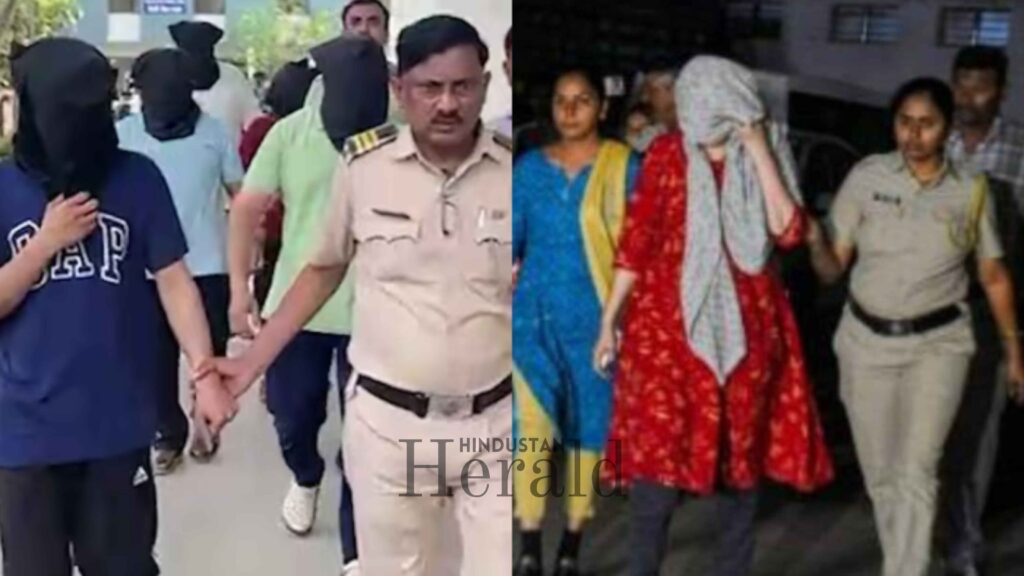
Her lawyers maintained at various points that she was in Mumbai, was with her family, and was not evading the law. The police told a different story. Nashik City Police described Khan as absconding, with officers finding her residence locked when they went to the address provided by her husband. That version of events has consistently found more traction with the court, which has refused to grant her interim protection from arrest since the very first hearing on April 20.
TCS Under the Spotlight
This would be a serious case regardless of where it happened. The fact that it unfolded inside a Tata Consultancy Services office, one of India’s largest and most globally recognised employers, has amplified the scrutiny considerably.
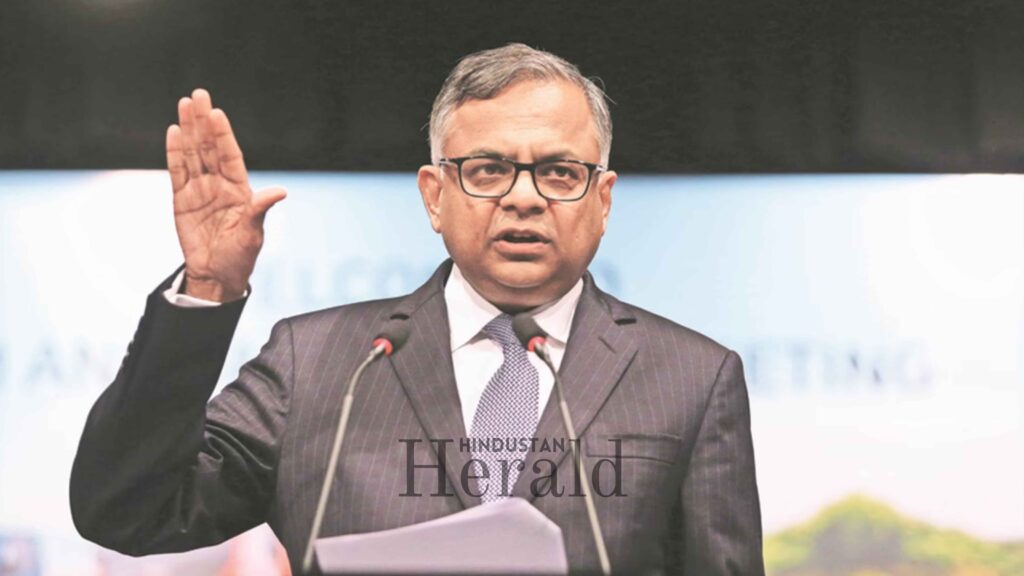
TCS Chairman N. Chandrasekaran announced an investigation to be led by the company’s Chief Operating Officer, Arathi Subramanian, stating that “this incident is being treated with utmost seriousness” and that “action has already been initiated against the accused employees.” The company reiterated its zero-tolerance policy toward workplace coercion and misconduct.

Still, the corporate response has not fully quieted the larger question that hangs over all of this. How does something like this go on, allegedly over a sustained period, inside a company with formal POSH committees, HR reporting mechanisms, and a stated commitment to employee welfare? That question does not have a satisfying answer yet.
A government-appointed committee has been directed to conduct an on-ground inquiry at the TCS Nashik facility, examine the circumstances behind the alleged incidents, assess how authorities responded, and submit recommendations within ten working days. Whether those recommendations carry any real enforcement weight remains to be seen.
Danish Shaikh’s Move
Danish Shaikh, the co-accused currently in judicial custody in the Deolali FIR, had separately sought anticipatory bail in a related case registered at Mumbai Naka police station. The Sessions Court had already refused him interim relief on April 22. On the day the court reserved orders in Khan’s matter, Shaikh withdrew his anticipatory bail application and is expected to instead pursue a regular bail application, with that hearing also likely falling on May 2.
Legally, this is a tactical pivot. Anticipatory bail requires the applicant to show they should not be arrested at all. Regular bail works from the premise that they are already in custody or have been arrested. The bar, the legal arguments, everything shifts. Whether that shift works in Shaikh’s favour is a separate chapter.
The Bigger Picture
It would be easy to look at this case purely through the lens of its most sensational elements. The conversion angle. The Malaysia connection. The workplace setting. The corporate name involved.

But at its core, this is a case about women in a professional environment being subjected to alleged coercion and harassment by colleagues who, if the FIRs are to be believed, were not acting impulsively but with some degree of deliberation and coordination. The SIT is currently probing nine cases linked to the allegations across the Nashik unit. Nine cases from one office is not a random cluster of misconduct. It points to something more systemic, whatever the final legal outcome may establish.
The denial of anticipatory bail to Khan today means the investigation moves forward on the prosecution’s terms, at least for now. Her phone goes to forensics. Her financial links get examined. The Malegaon and Malaysia threads, if they lead anywhere real, get followed.
What happens next depends largely on how quickly the SIT can convert the claims it has made in court into evidence that will hold up when the matter eventually reaches trial. Courts are not press conferences. What plays in argument must eventually play in proof.
For Khan, the next move is either surrender or a challenge before the Bombay High Court. Given how consistently the sessions court has declined to protect her from arrest, most legal observers expect the higher court to be her next destination, and soon.
Stay ahead with Hindustan Herald — bringing you trusted news, sharp analysis, and stories that matter across Politics, Business, Technology, Sports, Entertainment, Lifestyle, and more.
Connect with us on Facebook, Instagram, X (Twitter), LinkedIn, YouTube, and join our Telegram community @hindustanherald for real-time updates.

Covers Indian politics, governance, and policy developments with over a decade of experience in political reporting.
- Ananya Sharma

- Ananya Sharma
- Ananya Sharma
- Ananya Sharma




 Sandeep Verma