
 By Shelesh Joshi and Prakash Nair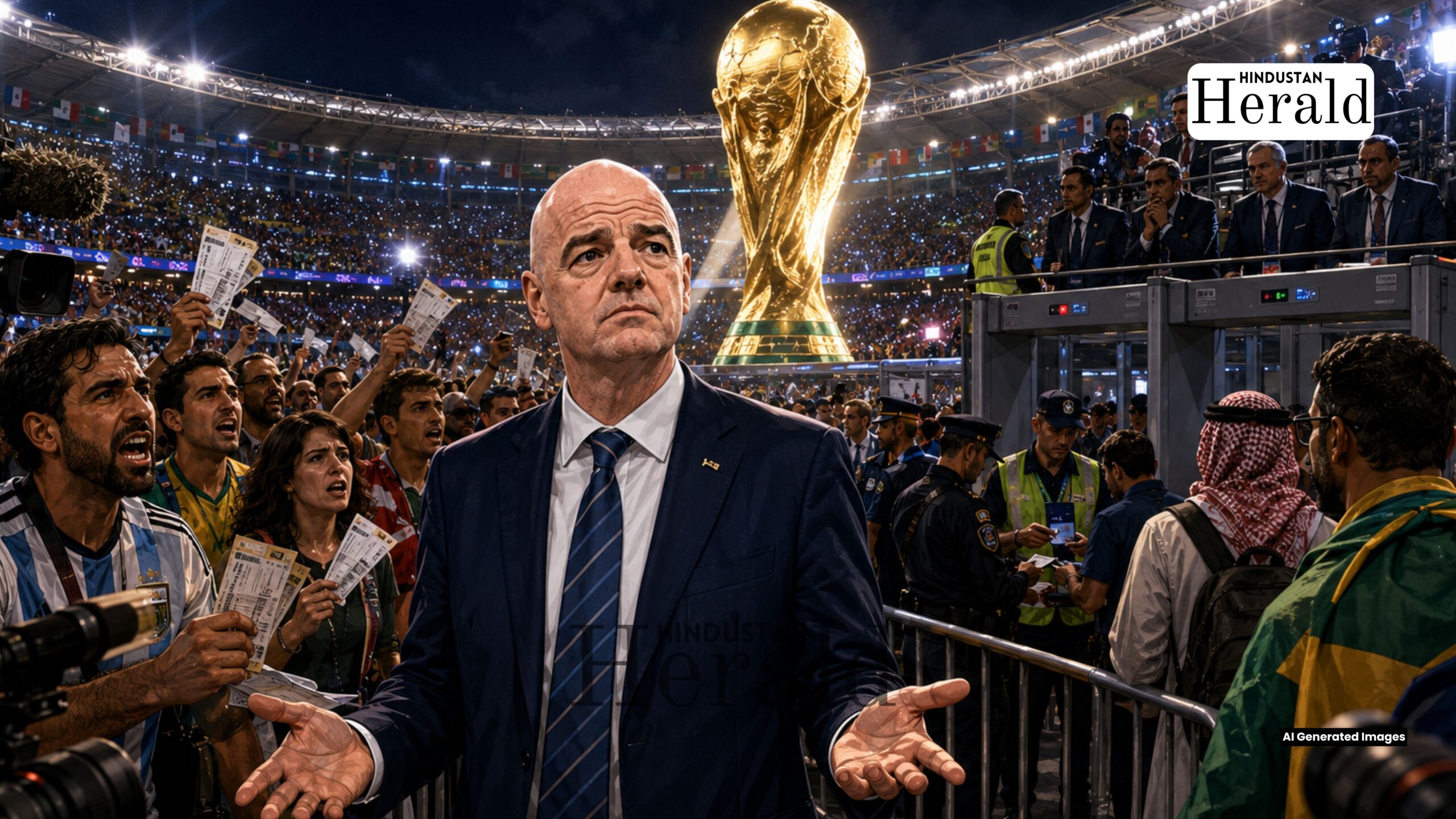
New Delhi, June 12: The FIFA World Cup 2026 controversies began long before a ball was kicked. India nearly had no way to legally watch the tournament. America’s host venues became the subject of a legal subpoena. A FIFA-appointed referee was turned away at a US border. And a final ticket that once cost $1,550 by official commitment was being sold for $32,970.
The 2026 FIFA World Cup kicked off on June 11 with co-hosts Mexico defeating South Africa 2–0 at Mexico City Stadium Julián Quiñones and Raúl Jiménez getting the goals, as confirmed on FIFA’s official website. But the defining story of this tournament has been everything that happened before it started. For Indian football fans, media observers, and anyone tracking the intersection of sport, commerce, and geopolitics, this is not just the biggest World Cup in history. It is also the most controversial.
Quick Summary
- India had no confirmed broadcaster for the World Cup until nine days before kick-off, when Zee Entertainment Enterprises signed a last-minute deal with FIFA, as reported by Al Jazeera, Variety, and Business Standard.
- FIFA originally sought $100 million for India broadcast rights covering 2026 and 2030; the deal with Zee was reported to be approximately $40 million, well below FIFA’s initial ask and below what Viacom18 paid approximately $60 million for the 2022 Qatar World Cup, as reported by Al Jazeera and BestMediaInfo, sourcing Reuters.
- JioStar India’s largest streaming platform reportedly offered $15–20 million and withdrew, as reported by Variety and BestMediaInfo.
- The Delhi High Court granted Zee an anti-piracy interim injunction on June 3, ordering the blocking of pirate streaming sites, per Outlook India.
- The Ministry of Information and Broadcasting amended its sporting events notification to make the opening match, quarter-finals, semi-finals, and the final free-to-air on DD Sports via DD Free Dish, per BestMediaInfo.
- A Somali referee appointed by FIFA was denied entry to the United States, described by FIFA President Gianni Infantino as “unfortunate,” per Africa Soccer and FIFA’s own April 9, 2026 official media release on Inside.fifa.com.
- ICE agents were confirmed to be present at World Cup stadiums in the United States, as stated by DHS Secretary Markwayne Mullin in a CBS News interview released on May 13, per CBS News and the American Immigration Council.
- The cheapest group-stage ticket in 2026 costs $100, up from $11 at the 2022 Qatar World Cup for the equivalent Category 4 seat a near ninefold increase per Gulf News; the top-tier final seat reached $32,970 in May 2026 after FIFA tripled its earlier price of $10,990, per BBC.
- New York and New Jersey attorneys general launched a formal legal investigation and issued a subpoena into FIFA’s dynamic ticket pricing, per ESPN.
Scandal 1: India’s Broadcasting Blackout A Billion Viewers, No Channel to Watch
India entered June 2026 as one of the last major football markets in the world without a confirmed broadcaster for the World Cup.
FIFA had initially sought $100 million for a combined package covering the 2026 and 2030 tournaments. It later reduced its ask to approximately $60 million, as reported by Al Jazeera and Best Media Info, sourcing Reuters. India’s largest streaming platform, JioStar the Reliance-Disney joint venture that had broadcast the 2022 World Cup reportedly tabled $15 to $20 million, far below FIFA’s floor, and walked away, according to Variety and BestMediaInfo.
Sony Pictures Networks India, which had held rights for the 2014 and 2018 tournaments, entered discussions but did not submit a final bid. Door darshan was linked to the process but also chose not to bid, per Best Media Info leaving India with no rights holder less than two weeks from the opening match.
Zee Steps In Nine Days Before Kick-Off
On June 2, FIFA and Zee Entertainment Enterprises signed a deal, ending the standoff. According to Al Jazeera, Variety, SportsPro, and Business Standard, the deal is reported to be approximately $40 million less than half what FIFA had originally sought. Financial terms were not officially disclosed by either party.
The agreement covers 39 FIFA events through 2034 including the 2027 FIFA Women’s World Cup, the 2030 FIFA World Cup, and youth and futsal competitions as confirmed in a joint FIFA and Zee statement, per Al Jazeera. For Zee which in August 2016 sold its Ten Sports network to Sony Pictures Networks India for $385 million in an all-cash deal, as confirmed in Zee Entertainment’s own BSE filing and reported by Business Standard and Business Today this marks its return to major sports broadcasting after a near-decade absence.
Zee had already launched Unite8 Sports four linear channels in Hindi and English ahead of the deal. All 104 World Cup matches are being streamed live on ZEE5 across smartphones, tablets, smart TVs, and connected devices, per Zee’s official platform announcement. On the day the deal was announced, Zee’s shares rose approximately 7 percent, per Al Jazeera.
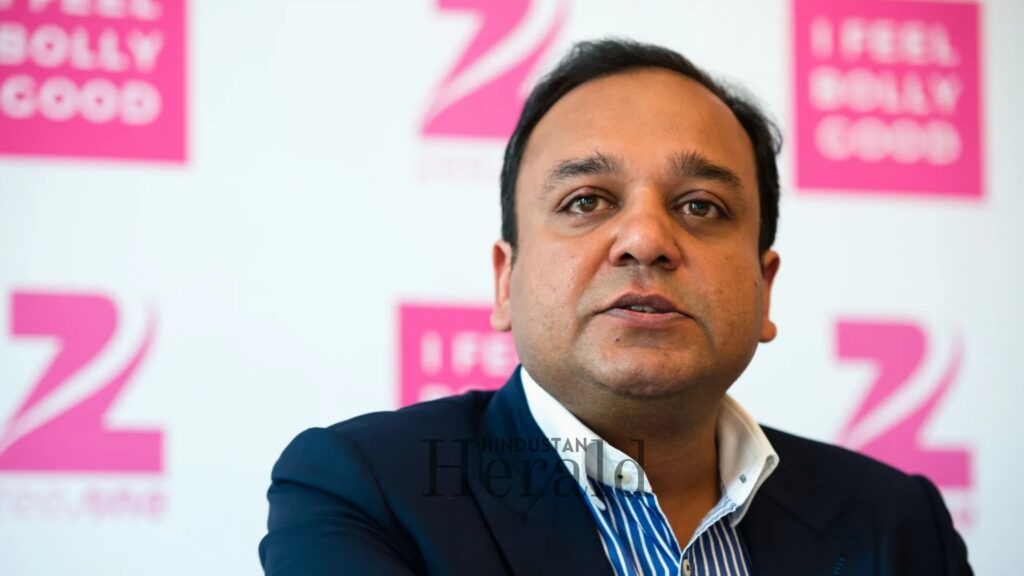
Punit Goenka, CEO of Zee Entertainment Enterprises, said in Zee’s official announcement: “We are excited to bring one of the world’s biggest sporting spectacles to Indian audiences.” Mukund Galgali, Zee’s Deputy CEO and CFO, said in the same release: “Football as a sport has tremendous under-leveraged potential in a country like India and we see a massive opportunity in unlocking its mass appeal for billions of viewers across the Nation.”
The Ministry of I&B Intervenes and the Delhi High Court Acts
The Zee deal resolved the commercial standoff. A secondary controversy followed almost immediately. Under India’s sports broadcasting framework, events of national importance must be made available on free-to-air television through Prasar Bharati and DD Sports.
According to Best Media Info, the Ministry of Information and Broadcasting amended its notification for sporting events of national importance superseding an earlier notification from March 2021 after detailed consultations with Zee officials. The amendment brings the opening match, all quarter-finals, both semi-finals, and the final within the public broadcast framework, making them freely available on DD Sports to any household with a DD Free Dish satellite connection.
Door darshan Sports confirmed the arrangement on its official Instagram account, describing the tournament as “football’s biggest festival.” On June 3, the Delhi High Court granted Zee Entertainment an interim injunction under Section 37 of the Copyright Act. Justice Saurabh Banerjee passed the order restraining identified websites from illegally streaming matches, directing the Department of Telecommunications (DoT) and the Ministry of Electronics and Information Technology (MeitY) to ensure implementation, per Outlook India.
The Timing Problem Remains
The rights crisis is resolved. The timing gap is not. More than 87 percent of the 104 matches air after 10 PM IST, per BestMediaInfo. The final on July 19 15:00 EDT begins at 12:30 AM IST on July 20. An analyst at investment firm Elara Capital, quoted by Al Jazeera, put it plainly: “Only a small fraction of people who watch the Indian Premier League will watch the FIFA World Cup. And an even smaller fraction tune in past midnight to watch a match.”
India remained one of the last major football markets globally without a confirmed broadcaster until nine days before kick-off. China finalised its deal in May, per Business Today India.
Scandal 2: ICE at the Stadiums and Fans Who Couldn’t Get In
The most persistent controversy surrounding the United States as host is immigration enforcement. On May 13, DHS Secretary Markwayne Mullin confirmed in an interview with CBS News that US Immigration and Customs Enforcement (ICE) agents would be present at World Cup stadiums, per CBS News and the American Immigration Council.
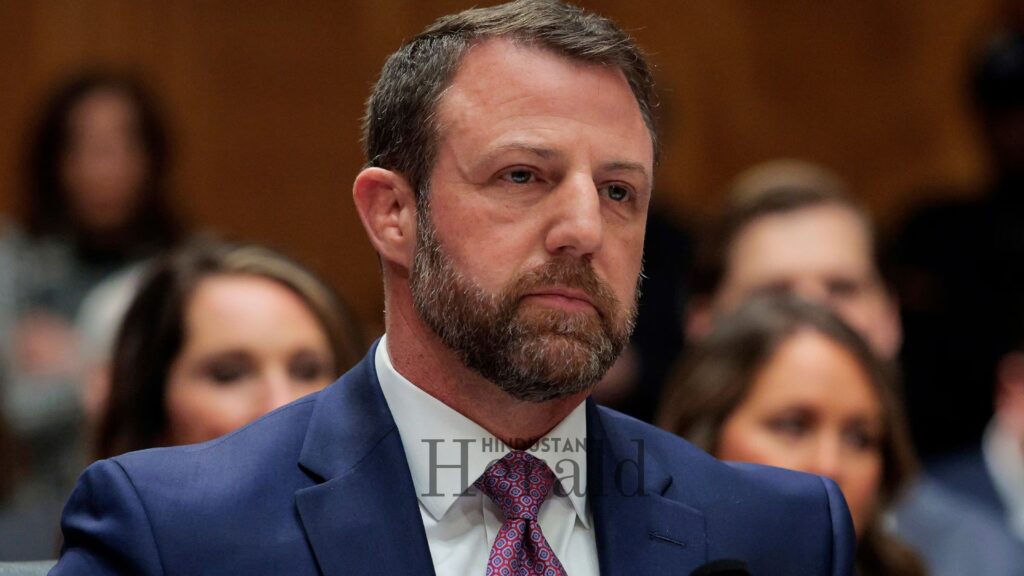
Mullin did not rule out immigration enforcement at matches, stating: “ICE always does immigration enforcement. We’re always going to do that but we’re not there for solely that purpose.” More than 120 immigrants’ rights organisations signed a public letter warning that the World Cup was “at risk of serious rights violations,” per the American Immigration Council.
UN High Commissioner for Human Rights Volker Turk called for a “massive rethink” of US immigration policies in connection with the tournament, saying he hoped issues around “racial profiling, around surveillance, around immigration enforcement are not going to affect this World Cup in the way that they have already done,” as reported by Al Jazeera.
The Trump administration placed Senegal, Ivory Coast, Iran, and Haiti all of which qualified for the World Cup on travel restriction lists, effectively barring most supporters without existing US visas from attending matches, per Al Jazeera.
Al Jazeera reported that fans from Morocco and Scotland who had spent thousands of dollars on flights, hotels, and official FIFA tickets had their travel documents denied or revoked days before they were scheduled to travel despite having completed all standard application processes.
Scandal 3: FIFA’s Own Referee Turned Away at the US Border
On April 9, 2026, FIFA officially announced its full list of match officials for the 2026 World Cup 52 referees, 88 assistant referees, and 30 video match officials selected after what FIFA’s official Inside.fifa.com media release called “a meticulous and comprehensive selection process spanning over three years.”
Pierluigi Collina, FIFA’s Chief Refereeing Officer, described the selected officials in that release as “the very best in the world.” Omar Abdulkadir Artan of Somalia was on that confirmed official list. He was subsequently denied entry to the United States at Miami. The US government stated he was “determined to be inadmissible due to vetting concerns.”
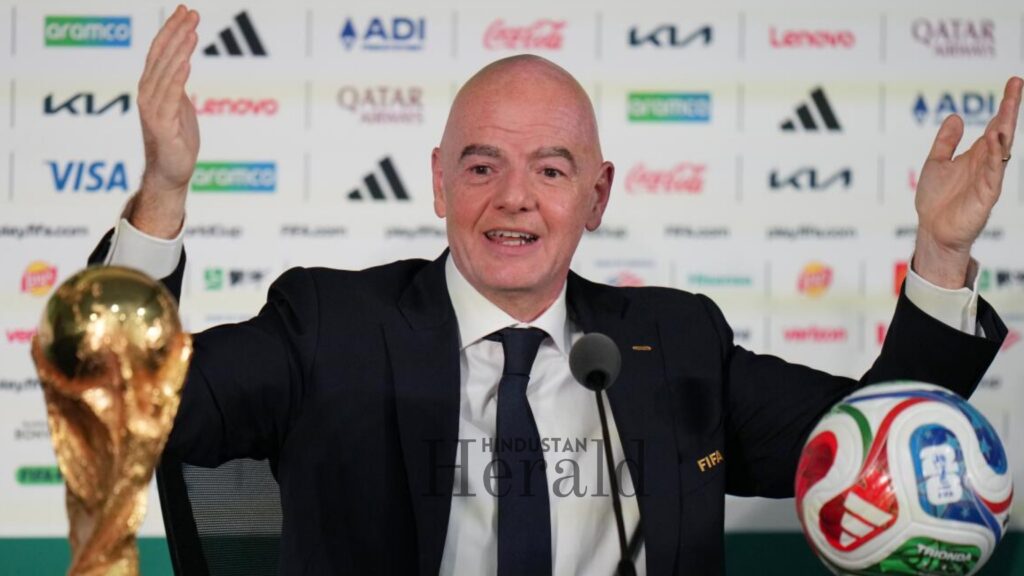
FIFA President Gianni Infantino called the incident “unfortunate” at a press briefing in Mexico, stating that FIFA as a sporting institution cannot override sovereign immigration decisions, per Africa Soccer. Artan returned to Mogadishu, addressed supporters at the airport, and stated his intention to officiate at the 2030 World Cup. The UN High Commissioner specifically referenced Artan’s case in his broader critique of US enforcement at the tournament, per Al Jazeera.
Scandal 4: The Iraq Delegation Detained, Searched, Denied
Iraqi striker Aymen Hussein was detained for approximately seven hours after arriving at Chicago O’Hare Airport, as reported by Newsweek and the Council on Foreign Relations. He was questioned and his phone examined before being allowed in.
Iraq’s official team photographer, Talal Salah, was less fortunate. Salah was held for more than 10 hours at O’Hare, had all his electronic devices checked, and was officially denied entry by US Customs and Border Protection (CBP) as “inadmissible due to vetting concerns,” per CBS Chicago citing a CBP spokesperson.
Salah was sent back to Baghdad via Madrid. Iraq is making its first World Cup appearance in 40 years and will do so without its official photographer, per Iraqi News and PetaPixel. Hussein himself told reporters after his release: “Why is America hosting the World Cup if it is so hostile to foreign nationals?” per Al Jazeera.
Scandal 5: Iran Forced to Base Its Team in Mexico, Tickets Pulled
Iran’s situation has required the most sustained engagement from FIFA of any participating nation. As confirmed in FIFA’s own official publications on Inside.fifa.com, Iran’s Team Base Camp is located at Centro Xoloitzcuintle in Tijuana, Mexico.
The Iranian squad commutes across the border into the United States for their group-stage matches in Los Angeles and Seattle playing in the host country without being permitted to stay overnight. The players themselves were granted US visas. However, several Iranian support staff members were denied entry, per Iran state media as reported by Newsweek.
Separately, Iran’s soccer federation stated that its official World Cup ticket allocation had been withdrawn just days before their June 15 opener against New Zealand. Iran state media called the decision “contrary to the principles” of fairness and equal treatment in international competition, per Newsweek.
Scandal 6: The $32,970 Ticket World Cup Pricing Triggers a Legal Subpoena
Of all the controversies surrounding the 2026 World Cup, the ticket pricing crisis has drawn the most formal institutional scrutiny including a legal subpoena from within the United States itself. When the United States, Canada, and Mexico submitted their hosting bid in 2018, they stated a seat at the final would cost a maximum of $1,550 for the top category a figure confirmed in the original bid book and reported by BBC, ESPN, and The Conversation.
By April 2026, the cheapest standard final ticket had reached $5,785, per The Conversation citing BBC data. The top-tier general admission seat reached $10,990 at that same point, per BBC. In May 2026, FIFA tripled its top final price to $32,970, per BBC and World Cup Wiki more than 21 times what it promised in the original bid.
On FIFA’s own official resale marketplace where both buyer and seller pay transaction fees seats at the final have been listed at prices exceeding $2 million, per ESPN. For group-stage matches, the cheapest Category 4 ticket jumped from $11 in Qatar (2022) to $100 in 2026 a near ninefold increase, per Gulf News. The opening match equivalent rose from $55 to $560, per Gulf News.
FIFA introduced dynamic pricing for the first time in World Cup history at this tournament a model where ticket costs fluctuate with demand, like airline pricing confirmed by NBC News and ESPN. An estimated 180,000 tickets appeared on FIFA’s official resale portal days before kick-off, with approximately 15,000 group-stage tickets still unsold on FIFA’s own website, per The Conversation.
The attorneys general of New York and New Jersey launched a formal joint investigation and issued a subpoena, stating publicly that ticket prices “far exceeded the prices for any previous World Cup tournament,” per ESPN. Former FIFA governance chief Miguel Maduro told ABC News: “You have a sport that is becoming increasingly an elite sport.”
FIFA President Gianni Infantino defended the approach, citing unprecedented demand and pointing to the availability of $60 tickets per match. However, independent reporting from the Associated Press, cited by ESPN, indicated the number of $60 tickets available per game was likely in the hundreds, not thousands.
Scandal 7: Pre-Tournament Chaos Earthquake, Security Searches, and Japan Loses Its Captain
The Earthquake Nobody Planned For
On June 8 three days before the World Cup opener a 6.1-magnitude earthquake struck waters off the western coast of Cuba, sending tremors across South Florida, Mexico, and parts of the Caribbean, per Reuters and the US Geological Survey (USGS).
USGS seismologist Paul Earle confirmed no earthquake of comparable strength had struck within 322 kilometres of that epicentre since 1880, making it the strongest seismic event in the region in nearly 150 years, per Reuters and South China Morning Post.
Portugal’s training camp in Palm Beach Gardens, Florida felt the tremors, per Open Magazine. England’s squad, based in West Palm Beach, was also affected some buildings in the area were evacuated as a precaution before the squad’s scheduled friendly against Costa Rica in Orlando, per Britannia Daily and Legit.ng.
The National Weather Service confirmed there was no tsunami threat. No injuries or structural damage were reported at any World Cup training facility, per Reuters. Florida is scheduled to host seven World Cup matches during the tournament, per FIFA’s official match schedule.
Uzbekistan: Sniffer Dogs and Metal Detectors in New York
On June 8, Uzbekistan’s squad making their first-ever World Cup appearance arrived in New York for a friendly match against the Netherlands at Icahn Stadium. Footage broadcast on South American television showed Fabio Cannavaro and his entire delegation stepping off their team bus and being subjected immediately to drug-sniffing dog checks, metal detector screenings, and smartphone confiscation, per WION, Newsweek, and GiveMeSport.
The Dutch squad did not undergo the same visible checks. Cannavaro, speaking to CGTN Sports Scene, said: “They said to me it’s the rules, but in the end the check was only for us.” He later offered a different account to Italian media, writing: “These were routine, standard checks. There is no scandal. No undignified or disrespectful treatment,” and adding that “we found the organisation to be flawless,” per Goal.com and Football Italia.
The Uzbekistan Football Association sought an official explanation from US authorities, per Times of Central Asia. Neither FIFA nor US government agencies issued a public statement on the incident.
Senegal: Viral Tarmac Footage Then an Official Clarification
Video footage showing members of Senegal’s World Cup delegation undergoing bag inspections on an airport tarmac spread rapidly on social media, per Newsweek and WION. The Senegalese Football Federation (FSF) subsequently issued an official statement reported by Reuters and CNBC Africa clarifying the exact circumstances. The footage was filmed on June 7, 2026, at Raleigh-Durham Airport in North Carolina. The squad was departing Raleigh on a private charter flight to San Antonio, Texas, for a warm-up friendly against Saudi Arabia.
The FSF confirmed the tarmac checks were standard boarding procedures for private flights “an arrangement primarily intended to optimise the delegation’s travel time.” The footage circulated widely before the clarification was issued, prompting accusations of discriminatory treatment, per Pulse Sports Nigeria.
Japan Loses Its Captain Three Days Before Kick-Off
In a blow to one of Asia’s strongest sides, Japan captain Wataru Endo the 33-year-old Liverpool midfielder was officially withdrawn from Japan’s World Cup squad on June 11, the day the tournament opened.
Endo had sustained a Lisfranc foot injury in February while on club duty with Liverpool. He appeared to have recovered sufficiently to be named in Japan’s 26-man roster, but lasted only a half in Japan’s warm-up friendly against Iceland on May 31 before being replaced due to discomfort, per ESPN.
Following a final medical assessment at Japan’s training base in Nashville, Tennessee, coach Hajime Moriyasu made the decision to withdraw him. The Japan Football Association confirmed Endo did not leave voluntarily the call was Moriyasu’s alone, per Metropolis Japan.
Endo then announced his immediate retirement from international football via his X account, writing: “Since being injured, I have done everything within my powers so I have no regrets. Obviously, it hurts that I will not be playing at this World Cup. But since the Qatar World Cup, I have led this team as captain and am proud to see us mature into a group capable of trying to win the World Cup,” per ESPN and Olympics.com. Japan open Group F against the Netherlands on June 14 in Dallas, per FIFA’s official schedule without their captain.
What the FIFA World Cup 2026 Controversies Tell Us The Pattern Connecting All 7
The FIFA World Cup 2026 controversies are not seven separate stories. They are one story told seven ways. Every scandal in this article the Indian broadcasting blackout, ICE at the stadiums, the Somali referee turned away at Miami, an Iraqi striker held for seven hours at O’Hare, Iran forced to commute from Tijuana, a $32,970 final ticket, an earthquake disrupting training camps is a collision between FIFA’s commercial ambitions and the real-world limits of the institutions it chose to depend on.
FIFA needed the United States for scale, infrastructure, and revenue. The US delivered all three. It also delivered immigration enforcement that does not pause for sporting events, and a dynamic pricing culture that turned a global celebration into a legal investigation.
FIFA needed India for its market 1.4 billion potential viewers. India delivered that audience. It also delivered a cricket-first economy where the IPL’s 2023–2027 media rights sold for ₹48,390 crore, confirmed by BCCI Secretary Jay Shah in the official BCCI announcement on iplt20.com. Against that number, FIFA’s $60 million ask for two World Cups looks modest. JioStar still wouldn’t pay it. Both outcomes were predictable. Neither was accidental.
What FIFA says vs. what the record shows
FIFA’s official position is that this is the most inclusive, most global, most accessible World Cup in history and by some measures, it is. 48 nations competing genuinely more inclusive than any previous edition, per FIFA’s official publications on Inside.fifa.com.
A Somali referee on FIFA’s own confirmed official list, denied entry to the host country a direct contradiction of FIFA’s stated mission. $60 minimum tickets per match, cited by FIFA as proof of affordability. $32,970 top-tier final seats on official FIFA sale by May 2026, and seats listed at $2 million on FIFA’s own resale platform cited by two state attorneys general as requiring formal legal investigation, per ESPN. Both are simultaneously true. That gap between what FIFA says and what the FIFA World Cup 2026 controversies reveal is precisely the tension this tournament has made impossible to ignore.
What it means for Indian readers
For Indian fans watching on ZEE5, Unite8 Sports, or DD Sports via DD Free Dish: the access exists, the matches are live, and the football is worth watching. But the seven FIFA World Cup 2026 controversies that shaped the road to June 11 are not footnotes. They are the story that will define how historians, broadcasters, rights holders, and governing bodies reckon with this tournament long after July 19. For anyone still considering travelling to North American venues, our earlier report FIFA World Cup 2026 Is Walking Into a Heat Crisis Nobody Fully Prepared For is essential reading before booking.
Stay ahead with Hindustan Herald — bringing you trusted news, sharp analysis, and stories that matter across Politics, Business, Technology, Sports, Entertainment, Lifestyle, and more.
Connect with us on Facebook, Instagram, X (Twitter), LinkedIn, YouTube, and join our Telegram community @hindustanherald for real-time updates.

Tracking world politics, global markets, trade movements, policy decisions, and the changing balance of economic power.
- Shelesh Joshi

- Shelesh Joshi
- Shelesh Joshi
- Shelesh Joshi




Sports reporter covering cricket, football, and Olympic disciplines, with on-ground event experience.
- Prakash Nair
- Prakash Nair
- Prakash Nair
- Prakash Nair