 By Shelesh Joshi and Rajiv Menon
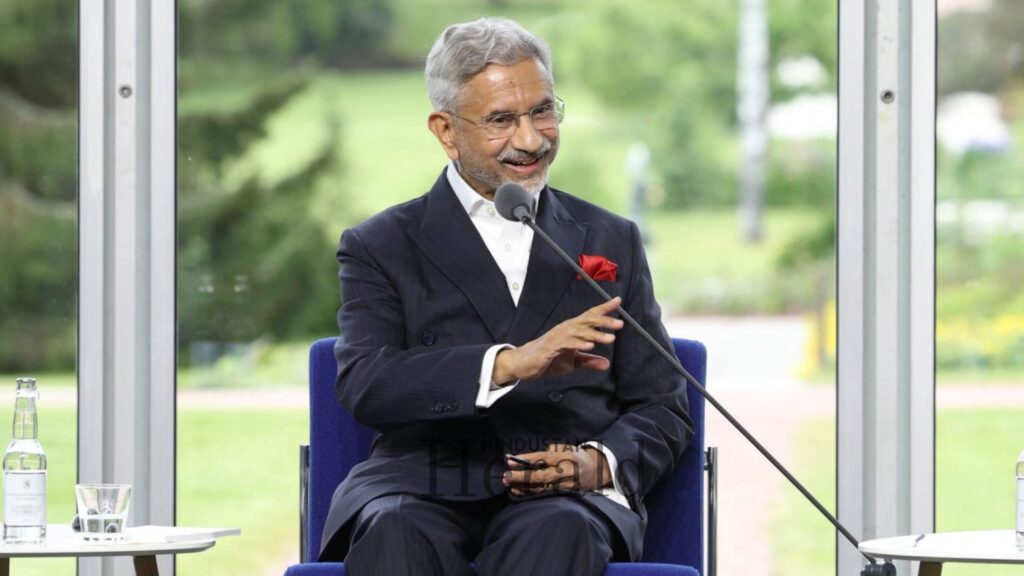
Helsinki / New Delhi, June 12: The India Russian oil tariffs dispute has one defining moment and it came from a Finnish conference hall on June 11, 2026. The question was directed at a man who has spent three years being asked some version of it. Was India “too sympathetic to Russia”? Too “willing to buy oil” from a country at war? External Affairs Minister S. Jaishankar had heard this framing before at Moscow press conferences, at Indian business forums, at multilateral summits where the expectation was either a careful non answer or a defensive apology. He gave neither.
“At that time,” he said at the 14th Kultaranta Talks in Naantali, Finland on June 11, 2026, “the US directly asked India to buy Russian oil to stabilise the oil market. We buy oil based on cost and availability.” Then he added something sharper. “Right now, if you see, after having first put tariffs on us for buying Russian oil, the US then again lifted its sanctions. So let’s not pretend that there is some great principle involved here. We are all adults in the room. We know what the game is.”
That is not diplomatic language. That is a man, on the record, at an official government forum, saying that Washington changed the rules after India played by them and that he intends to say so clearly, in public, until it is part of the permanent record.
Quick Summary
- S. Jaishankar stated at the Kultaranta Talks, Finland, June 11, 2026, that the US “directly asked India to buy Russian oil to stabilise the oil market” in 2022 the same purchases for which the US later imposed tariffs on India. (Source: ANI; confirmed via EAM Jaishankar’s verified post on X, June 11, 2026)
- Russia’s share of India’s total oil imports rose from 1.7% in 2019-20 to 35.1% in 2024-25, making it India’s single largest crude supplier. (Source: MEA cited official data, confirmed by Deccan Herald citing MEA, August 2025)
- The US imposed a cumulative 50% tariff on Indian goods a 25% reciprocal tariff under Executive Order 14326 (signed July 31, 2025), plus a 25% additional penalty under Executive Order 14329 (signed August 6, 2025) specifically for Indian purchases of Russian crude. (Source: White House executive orders; confirmed by EY, KPMG, Congressional Research Service)
- The MEA formally called the tariff action “unfair, unjustified and unreasonable” and stated India “will take all necessary measures to safeguard its national interests and economic security.” (Source: MEA official statement, August 4–6, 2025, confirmed by ANI and All India Radio)
- India is not the largest buyer of Russian oil China holds that position. The EU is the largest buyer of Russian LNG. (Source: Jaishankar, joint press conference with FM Lavrov, Moscow, August 21, 2025)
- A February 6, 2026 India-US interim trade framework reduced tariffs on Indian goods from 50% to 18%, removing the oil linked penalty though India made no public commitment to end Russian oil imports. (Source: White House Executive Order; confirmed by Prasar Bharati / All India Radio, February 7, 2026)
The Statement That Has Now Been Made Three Times
Jaishankar did not arrive at the Kultaranta Talks to make news about Russia. He was there as part of an official visit to Bulgaria and Finland from June 10-11, 2026, confirmed by the Ministry of External Affairs. He met Finnish Foreign Minister Elina Valtonen, reviewed progress on the India Finland Strategic Partnership on Digitalisation and Sustainability, and noted that India and the EU had in 2026 alone concluded Free Trade Agreement negotiations, signed a Strategic and Defence Partnership, and a Comprehensive Mobility Cooperation Framework.

The panel, titled ‘Emerging Powers and the New Geopolitical Competition’, also featured Valtonen and UAE Assistant Foreign Minister Lana Nusseibeh. It was a formal diplomatic setting for a multilateral conversation about global stability and the role of non Western powers.
Then the question came. And Jaishankar answered it the way he has answered every time this has come up in an official forum with a direct account of the sequence of events, starting in February 2022.
His remarks were reported by ANI, the official pool agency for government engagements, and confirmed through Jaishankar’s own verified post on X, the official social media record of his ministerial engagements. The core of what he said: “I’ll make two observations. I buy oil based on cost and availability. So at that point of time, much of the oil available in the market was Russian because Europeans were essentially buying oil from the Middle East, which was India’s traditional supplier. Circumstances pushed us in a certain direction.”
That is the factual account. Not a justification, not a political argument a description of what happened in global energy markets in 2022. One that, notably, Washington has never formally disputed.
India Russian Oil Tariffs: The 1.7% That Grew to 35.1% and Started a Trade War
Before Russia launched military operations in Ukraine in February 2022, India bought almost no Russian crude. Official data cited by the Ministry of External Affairs places Russia’s share of India’s total oil imports at just 1.7 per cent in 2019-20 the baseline from which the India Russian oil tariffs dispute would eventually emerge. India’s primary suppliers were the Gulf states Saudi Arabia, Iraq, and the UAE which had supplied Indian refineries for decades.
What changed everything was not a decision made in New Delhi. It was a market dislocation created in Brussels and Washington. As Western nations imposed sweeping sanctions on Russia and began urgently unwinding their dependence on Russian energy, European countries turned to the same Middle Eastern suppliers India had relied on for generations. Demand from Europe flooded into those markets. Russian oil, meanwhile, became available at a significant discount precisely because the buyers who had previously taken it were no longer there.
India pivoted. Not as an ideological statement, but as a procurement decision driven by cost, availability, and the obligation to keep fuel affordable for 1.4 billion people.
By 2024-25, Russia’s share of India’s oil imports stood at 35.1 per cent, making it India’s largest single crude oil supplier up from 1.7 per cent five years earlier. Both figures are drawn from official data cited in MEA communications and reported by Deccan Herald in August 2025. This is the trajectory that Washington cited when imposing the India Russian oil tariffs a 25% penalty on top of the existing 25% reciprocal tariff through Executive Order 14329 on August 6, 2025.
The Council on Foreign Relations, citing government data, places Russia’s share slightly differently at 35.8% in 2024-25, while The Diplomat puts it at 35% rounding varies by source, but all credible analyses confirm the broad trajectory. Russia went from a negligible supplier before 2022 to India’s top crude source by 2024.
Crucially, Jaishankar has made clear on the record that in 2022, American officials communicated to India that this shift was acceptable more than that, that buying Russian oil would help stabilise global prices and prevent inflationary spirals in vulnerable economies. The Jaishankar Russian oil argument has been made on the record at three separate official forums, as detailed below. It has not been formally denied by Washington.
The MEA Statement: Every Word Matters
The US tariff escalation came in two documented, legally published stages. On July 31, 2025, President Donald Trump signed Executive Order 14326 “Further Modifying the Reciprocal Tariff Rates” imposing a 25 per cent reciprocal tariff on all goods exported by India to the United States. The stated reasons included trade imbalances and India’s purchase of Russian oil and defence equipment.
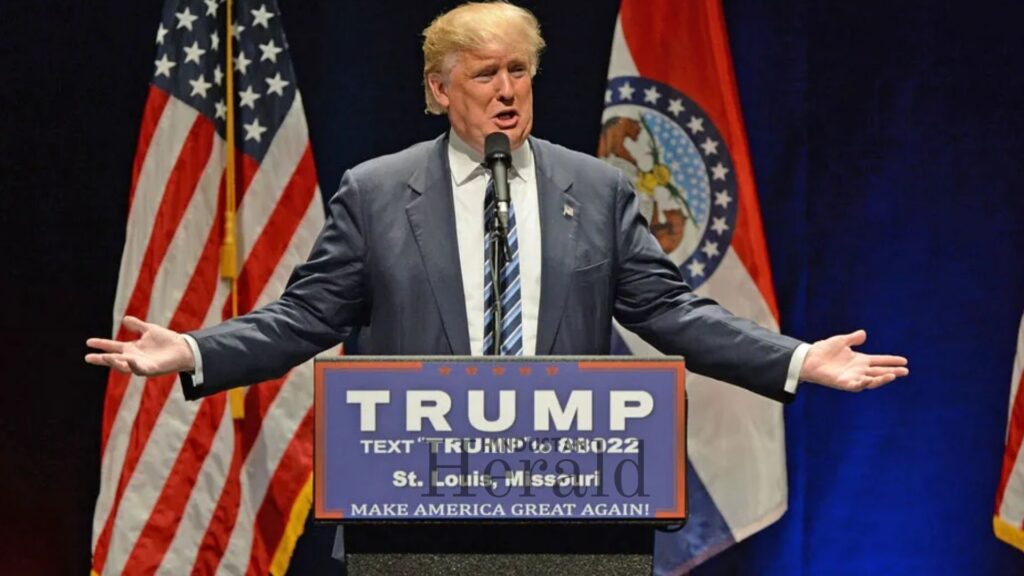
On August 6, 2025, Trump signed Executive Order 14329 “Addressing Threats to the United States by the Government of the Russian Federation” imposing an additional 25 per cent tariff specifically because India was buying Russian crude, bringing the total tariff burden to 50 per cent, effective August 27, 2025. This is confirmed by the White House Fact Sheet of August 6, 2025, the Congressional Research Service tariff timeline, and tax and trade advisory firms EY and KPMG, which published analysis of the executive order the same week.
The Ministry of External Affairs responded with a formal and unusually direct rebuttal. The official MEA statement, issued between August 4-6, 2025, read: “The targeting of India is unjustified and unreasonable. Like any major economy, India will take all necessary measures to safeguard its national interests and economic security.”
MEA Spokesperson Randhir Jaiswal went further in the same statement: “India began importing from Russia because traditional supplies were diverted to Europe after the outbreak of the conflict. The United States at that time actively encouraged such imports by India for strengthening global energy market stability.”
That line from the official MEA statement is the government’s formal, on the record position not just a minister’s spoken remark but written into an official press communication. It is available on Prasar Bharati / All India Radio (newsonair.gov.in) and confirmed by ANI, Tribune India, and BBC.
The MEA also noted that the EU’s own trade with Russia in 2024 encompassed not just energy but fertilisers, mining products, chemicals, iron and steel, machinery, and transport equipment. It pointed out that the US continued importing uranium hexafluoride, palladium, fertilisers, and chemicals from Russia during the same period a charge the US has not formally refuted.
Moscow, August 2025: The First Time on the Record
The Kultaranta remarks were not Jaishankar’s first time making this argument officially. He laid it out in full nearly ten months earlier, in Moscow. The Ministry of External Affairs announced that Jaishankar undertook an official three day visit to Russia from August 19-21, 2025, at the invitation of Russia’s First Deputy Prime Minister Denis Manturov.
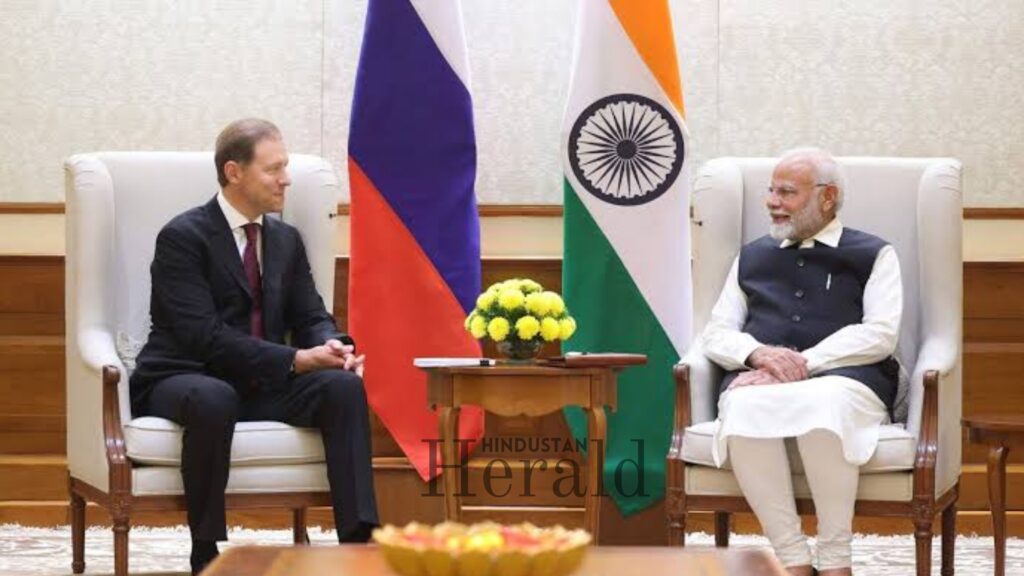
During the visit, he co-chaired the 26th Session of the India-Russia Inter Governmental Commission on Trade, Economic, Scientific, Technological and Cultural Cooperation (IRIGC-TEC) alongside Manturov, scheduled for August 20, 2025. He addressed the India-Russia Business Forum and held bilateral talks with Foreign Minister Sergey Lavrov on August 21.
He called on President Vladimir Putin at the Kremlin and conveyed the greetings of President Droupadi Murmu and Prime Minister Narendra Modi. The MEA confirmed all of this through official press releases, reported by Prasar Bharati / All India Radio and DD News (Doordarshan).
At the joint press conference with Lavrov on August 21, Jaishankar directly addressed the tariff question. His full statement, as reported by Tribune India and ANI: “We are not the biggest purchasers of Russian oil, that is China. We are not the biggest purchasers of LNG, that is the European Union. We are not the country which has the biggest trade surge with Russia after 2022; I think there are some countries to the South.
We are a country where the Americans have said for the last few years that we should do everything to stabilise the world energy market, including buying oil from Russia. Incidentally, we also buy oil from the US, and that amount has increased. So honestly, we are very perplexed at the logic of the argument.”
The two ministers reaffirmed the India-Russia Special and Privileged Strategic Partnership and discussed preparations for Putin’s planned visit to India for the Annual Leaders Summit. The visit’s conclusion was confirmed by the MEA in a press release carried by DD News and ANI.
Three Arguments India Has Made, Consistently
Across every official forum, the Government of India has articulated its energy position through three consistent, documented lines. The first is procurement logic India’s oil companies make commercial decisions based on cost, availability, and risk. Jaishankar stated this at the Economic Times World Leaders Forum in August 2025: “Where the energy issues are concerned, this is today a complex market.
Oil companies in India as in Europe, as probably in other parts of the world look at availability, cost and risks and take the decisions that they feel is in their best interests. If you have a problem buying oil or refined products from India, don’t buy it. Nobody forces you to buy it.”
The second is energy security as a sovereign national obligation. The MEA’s August 2025 statement places this directly on the record: “India’s imports are based on market factors and done with the overall objective of ensuring the energy security of 1.4 billion people of India.” For a country of India’s scale, this is framed not as a policy preference but as a government’s primary obligation to its population.
The third and most diplomatically pointed is the 2022 US position. The MEA’s written statement explicitly says the US “actively encouraged such imports by India for strengthening global energy market stability.” Jaishankar has repeated this on the record at three separate official forums: Moscow in August 2025, the ET World Leaders Forum in August 2025, and Kultaranta in June 2026. It has not been formally contradicted.
The European Weapons Remark: Context and Credibility
Alongside his energy remarks, Jaishankar made a second statement at Kultaranta that drew attention from diplomatic observers. When European participants pressed India on its stance toward the Russia-Ukraine conflict, he said as reported by ANI and Business Standard from the pool report: “Europe sells weapons, which are used to attack India. Not just now but for many years. We Indians have never done anything to endanger Europe.”
This remark is understood as a reference to arms sales by European nations to Pakistan, which India says have been used in attacks against it. Jaishankar’s argument is that the moral lens being applied to India’s energy procurement does not apply to European weapons sales with direct consequences for Indian security.
The broader diplomatic context is important to note alongside this. At the same Kultaranta forum, Jaishankar confirmed that the India-EU relationship had in 2026 alone concluded FTA negotiations, signed a Strategic and Defence Partnership, and a Comprehensive Mobility Cooperation Framework. The bilateral relationship was deepening even as the sharp diplomatic exchange continued.
India’s position, as stated through official MEA communications, is that it condemns the violation of Ukraine’s territorial sovereignty and supports a return to the principles of the UN Charter. The government has stated this consistently since February 2022. What it has not done is treat the conflict with the same geopolitical urgency that Western nations expect and Jaishankar has been explicit on the record about that distinction as well.
The 2026 Trade Framework: What Actually Changed
By February 6, 2026, a new India-US interim trade framework had been announced following a phone call between President Trump and Prime Minister Modi. The framework reduced tariffs on Indian goods from 50 per cent to 18 per cent confirmed by PM Modi on X, by Commerce Minister Piyush Goyal in a media briefing, and by Prasar Bharati / All India Radio, which reported Goyal’s statement on February 7, 2026.
The White House Executive Order of February 6, 2026 formally suspended EO 14329 the August 6, 2025 order that had imposed the 25% oil linked penalty effective February 7, 2026. This is confirmed by trade law analysis from Clark Hill PLC and SmarTrade (Thompson Hine), both of which published analysis of the executive order the same week.
One important nuance: a subsequent US Supreme Court ruling on tariffs led the White House to clarify in February 2026 that India would temporarily face a 10 per cent tariff rate. This was confirmed by Prasar Bharati. The trade situation therefore remains in active development, and the 18 per cent figure reflects the negotiated interim agreement, not necessarily the final settled rate.
India has made no public commitment to end or reduce Russian oil imports as a condition of any of these agreements. Jaishankar, speaking at the Munich Security Conference on February 15, 2026, stated: “If the bottomline of your question is would I remain independent minded and make my decisions and would I make choices which may not agree with your thinking yes, it can happen.” This is confirmed by Business Today’s report dated February 15, 2026.
The Thing Worth Understanding About All of This
The Jaishankar at Kultaranta moment is easy to read as a sharp diplomatic one liner. It is more useful to read it as a compressed history of how great powers use smaller powers and what happens when those smaller powers refuse to let the record be rewritten.
In 2022, India was useful. Oil prices were dangerously high. A supply vacuum had opened. India, with its scale and its non aligned posture, could absorb Russian barrels without triggering the political backlash that a NATO aligned nation doing the same would have caused. Washington did not object and the MEA’s own August 2025 statement confirms the US “actively encouraged such imports.” India was solving a global problem that Western policy had created.
By 2025, the calculus had changed. The conflict in Ukraine had hardened into a long term geopolitical contest. Restricting Russia’s oil revenues became an explicit US policy goal, codified in Executive Order 14329. India’s purchases now at 35.1 per cent of its total imports made New Delhi visible and targetable. And so the tariffs arrived.
What Jaishankar is doing consistently, in official settings, across three forums spanning nearly two years is refusing to let the 2022 context be erased. He is not mounting an anti American argument. He is mounting an argument against selective memory and shifting goalposts. His core point is this: India made a decision when Washington said it was the right one to make, and is now being asked to justify it by the same government that requested it. The MEA has put that same point in writing.
What bothers me about how this story usually gets told is that it gets framed as India being obstinate. Not a reliable partner. Too close to Moscow. That framing conveniently deletes the 2022 chapter the chapter where India was explicitly useful and explicitly told so. Jaishankar keeps putting that chapter back in. Every time, in public, with specifics, at official forums, with statements that go into the documentary record.
The deeper question for Indian readers is what this episode demonstrates about strategic autonomy when it is actually tested. The answer, reading the last three years closely, is this: India held its position, defended it with documented evidence, absorbed a 50 per cent tariff for the better part of a year, and negotiated that tariff down to 18 per cent without surrendering its energy policy. The Russian oil purchases continued throughout.
That is not a complete victory. The trade situation remains live, the 18 per cent rate may still shift, and the underlying disagreement over how to treat Russia has not been resolved only deferred. But for a country navigating a world that increasingly demands binary alignment, extracting a trade deal improvement without abandoning a sovereign policy is the definition of a workable outcome.
The last thing worth noting is what this episode reveals about the global energy order. When Europe pivoted away from Russian energy in 2022, the disruption did not stay in Europe. It cascaded through global supply chains, through price levels, through the procurement decisions of governments trying to keep fuel affordable for populations that did not cause and are not party to the conflict in Ukraine.
Jaishankar’s point at Kultaranta that India was “pushed in a certain direction by circumstances” is not an excuse. It is a description of how energy markets actually work. Decisions made in Washington and Brussels carry consequences that extend far beyond the borders of the Western world. That is not a geopolitical argument. It is arithmetic.
Stay ahead with Hindustan Herald — bringing you trusted news, sharp analysis, and stories that matter across Politics, Business, Technology, Sports, Entertainment, Lifestyle, and more.
Connect with us on Facebook, Instagram, X (Twitter), LinkedIn, YouTube, and join our Telegram community @hindustanherald for real-time updates.

Tracking world politics, global markets, trade movements, policy decisions, and the changing balance of economic power.
- Shelesh Joshi

- Shelesh Joshi
- Shelesh Joshi
- Shelesh Joshi




Specializes in South Asian geopolitics and global diplomacy, bringing in-depth analysis on international relations.
- Rajiv Menon
- Rajiv Menon
- Rajiv Menon
- Rajiv Menon