
 By Ananya Sharma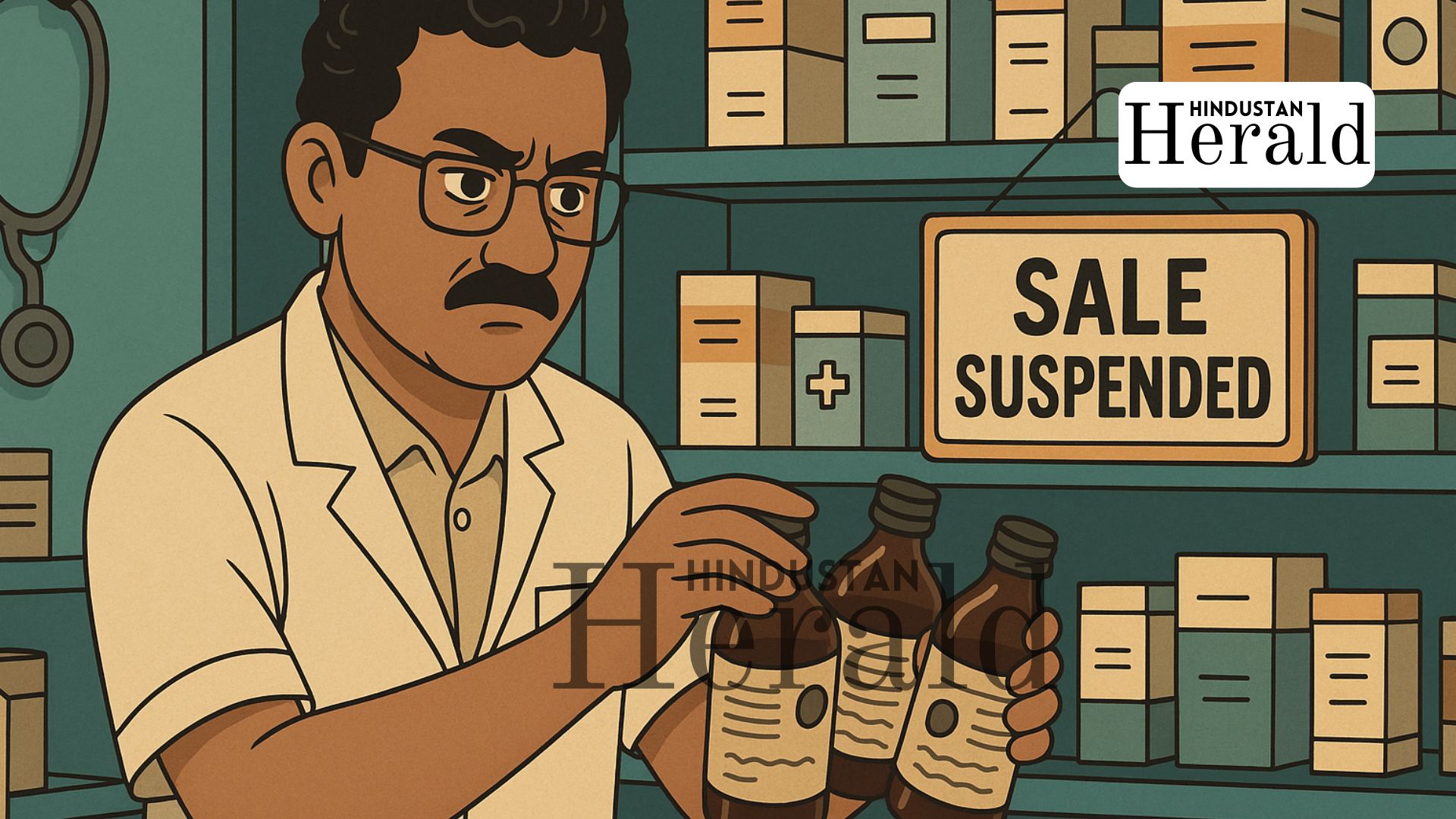
Thiruvananthapuram, October 5: The Kerala government has stopped the sale of Cold Rif cough syrup across the state after reports linked the medicine to child deaths in Madhya Pradesh and Rajasthan. Officials say the decision is purely a safety measure, even though the contaminated batch never officially reached Kerala.
“Better to act before something goes wrong,” said a senior health officer. “Once lives are lost, bans don’t matter anymore.”
Precaution Over Panic
Late Friday evening, the State Drugs Control Department sent out an order asking all distributors and pharmacies to pull Cold rif from shelves immediately. Inspections began the same night. By Saturday morning, drug inspectors were seen visiting medical shops in Ernakulam, Kozhikode, and Thiruvananthapuram, checking invoices and collecting samples.
Health Minister Veena George said the move was a “preventive step,” taken after studying reports from other states. “We haven’t detected the batch in Kerala, but that doesn’t mean it can’t enter the market through other routes,” she said.
Kerala’s medical community has also been told to avoid prescribing cough syrups to children under two years, a guideline that had existed but was often ignored. Pharmacies are now being reminded not to dispense them even if doctors prescribe them in those cases.
What Happened In Other States
The trouble began far from Kerala in Chhindwara district, Madhya Pradesh. Over a dozen children died after developing acute kidney failure. Their families told investigators the children had been given Cold rif syrup to treat cough and fever.
Samples of the syrup were sent to a Tamil Nadu government laboratory, which confirmed contamination. The lab found the syrup contained 48.6% diethylene glycol, a highly toxic industrial solvent often used in brake fluid and antifreeze. Even a few millilitres can destroy internal organs.
Once the results came in, the Tamil Nadu government sealed the Sresan Pharmaceuticals unit in Kancheepuram, which had manufactured the syrup. The state banned sales from October 1. Madhya Pradesh followed suit the same day.
Soon, Telangana and Rajasthan issued public warnings and asked chemists to withdraw the product.
Initially, the Union Health Ministry dismissed claims of contamination, saying it found “no abnormality” in early tests. But when Tamil Nadu’s lab results were submitted, the ministry withdrew its earlier statement and confirmed the presence of diethylene glycol in the syrup.
The Centre Steps In
The Central Drugs Standard Control Organisation (CDSCO) has now ordered nationwide inspections. Teams are visiting factories that make cough syrups, antibiotics, and fever medicines for children. The Drug Controller General of India (DCGI) has asked for a detailed report from Sresan Pharmaceuticals and warned that “strict action” will follow if violations are confirmed.
A meeting between the Health Secretary and all state drug controllers is planned in Delhi this week to discuss gaps in oversight and the need for faster recall mechanisms. Officials are also revisiting the idea of a central tracking system for drug batches, which would allow regulators to trace faulty medicines quickly.
Why Kerala’s Move Stands Out
Kerala’s decision to act before a crisis hits is being praised by many in the public health community. The state has a record of responding early, whether it was Nipah, COVID, or now, a drug safety alert.
“Kerala’s approach is not about panic,” said a senior drug inspector in Kochi. “It’s about not being the next headline.”
For pharmacists, though, the sudden suspension has been confusing. Many were unaware of the brand until the alert came. “It’s not a common brand here,” said Anil Raj, who runs a pharmacy in Thiruvananthapuram. “But people often buy whatever syrup is cheapest. That’s the real danger.”
Doctors, too, are rethinking old habits. Pediatricians say this should start a wider conversation about the unnecessary use of cough syrups for small children. “Most coughs don’t need medicine at all,” said Dr. Maya Kumar. “We’ve been overprescribing for years because parents expect a bottle.”
The Bigger Problem
This isn’t the first time India has faced diethylene glycol poisoning. The first known case dates back to 1937 in Bengal. Later, similar incidents occurred in Delhi (1998) and Jammu (2020). Each tragedy triggered outrage, temporary bans, and promises of reform, but little changed.
India’s drug regulation system remains fragmented, with each state responsible for its own testing and enforcement. That often means slow communication and uneven vigilance. Experts say the Cold rif case once again exposes this weak link.
“Quality control in small and mid-sized drug units is inconsistent,” said a senior scientist familiar with the investigation. “A single error like substituting a cheaper solvent can turn medicine into poison.”
What Lies Ahead
The Kerala Drugs Control Department will continue to test all Cold rif samples found in the state. If the syrup tests clean, officials say the ban could be lifted. But that’s unlikely to happen soon.
Parents have been advised to discard any remaining bottles of Cold Rif syrup and to report suspicious or unlabelled medicines to health authorities. Meanwhile, the Central team has sealed the Sresan plant, and an FIR has been filed against its owners.
In Madhya Pradesh, police have arrested a local doctor accused of prescribing the contaminated syrup. The investigation there continues.
For now, Kerala’s shelves are empty of the drug, and for many parents, that emptiness is a small relief.
Because, as one mother waiting outside a children’s clinic in Kochi put it, “If the medicine itself can kill, who do we trust anymore?”
Stay ahead with Hindustan Herald — bringing you trusted news, sharp analysis, and stories that matter across Politics, Business, Technology, Sports, Entertainment, Lifestyle, and more.
Connect with us on Facebook, Instagram, X (Twitter), LinkedIn, YouTube, and join our Telegram community @hindustanherald for real-time updates.

Covers Indian politics, governance, and policy developments with over a decade of experience in political reporting.
- Ananya Sharma

- Ananya Sharma
- Ananya Sharma
- Ananya Sharma