
 By Ananya Sharma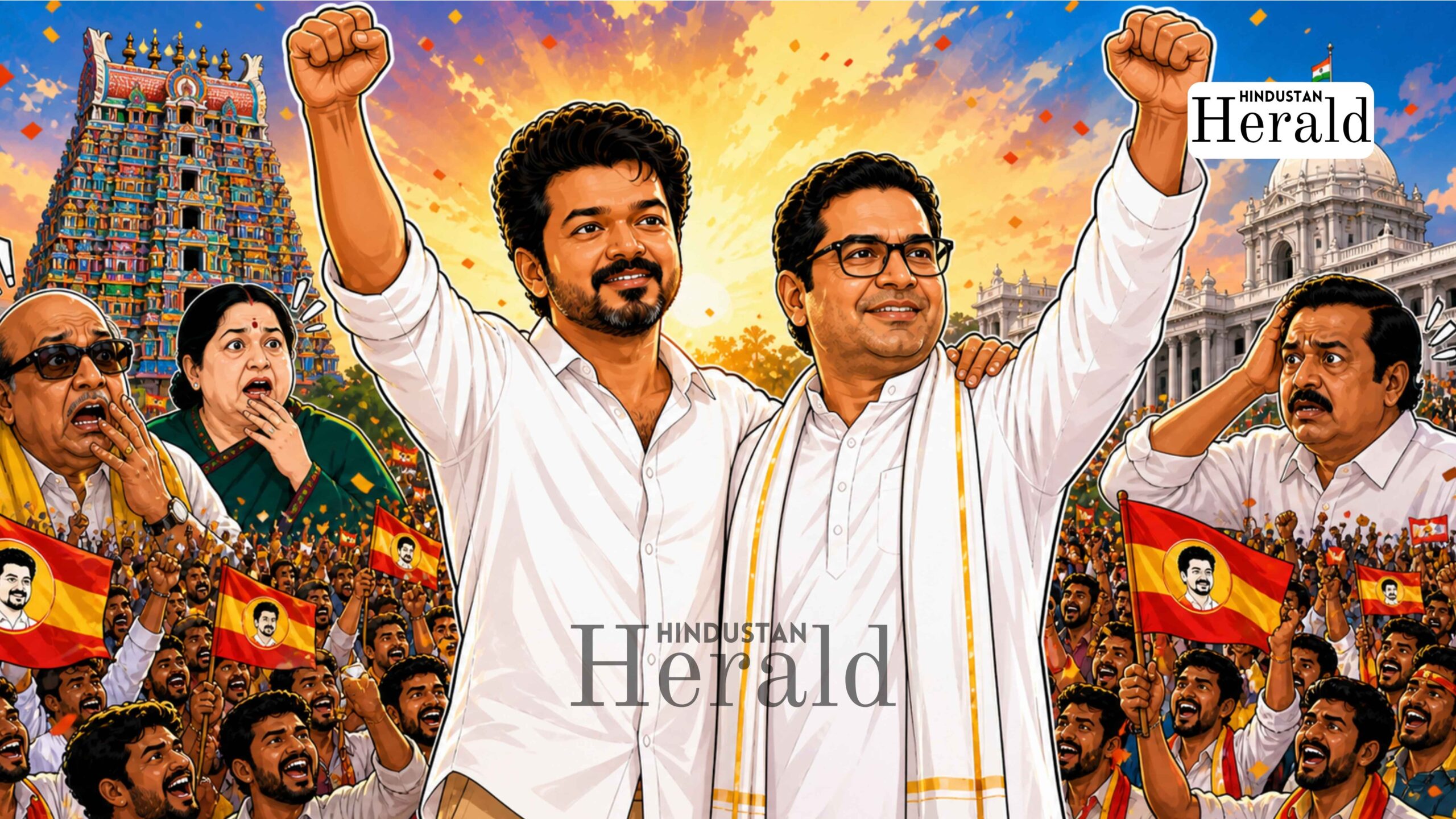
Chennai, May 4: Nobody really saw it coming. Or maybe they did, and just refused to believe it until the numbers made denial impossible.
By mid-morning on Sunday, as counting halls across Tamil Nadu lit up with trends that upended every assumption about this election, one thing became undeniable: Thalapathy Vijay had done something that veteran politicians, career strategists, and lifelong Dravidian loyalists had quietly agreed was impossible. He had walked into his first election and, by every indication, won it outright.
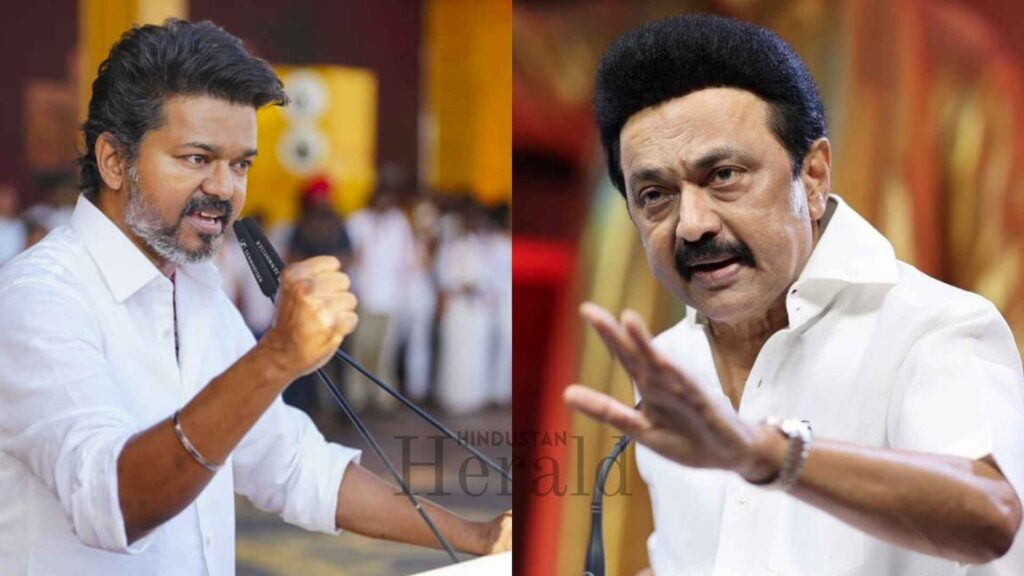
Tamilaga Vettri Kazhagam (TVK), a party that did not exist two years ago, was leading in over 100 of the state’s 234 assembly seats. The ruling DMK was in third place. MK Stalin, the Chief Minister, was trailing in his own constituency of Kolathur, where TVK’s VS Babu had secured 68,419 votes to topple him.
Third place. In his own seat. Let that sit for a moment.
The Morning The Old Order Broke
Tamil Nadu had gone to the polls with a voter turnout of over 85 per cent, which should have been a clue. When an electorate turns out in those numbers, it is not voting out of habit. It is voting with intent.
Celebrations had already erupted outside TVK’s headquarters in Chennai, with supporters waving party flags, distributing sweets, and dancing to campaign songs while the DMK’s offices stayed quiet and the post-mortems had not yet begun. The energy gap between the two camps told a story well before the final tallies did.
By the time trends consolidated, TVK was pushing 112 seats. The AIADMK had around 58. The DMK, the party that has governed this state, shaped its cultural identity, and produced some of its most consequential leaders, was sitting at roughly 47.
There is no diplomatic way to say what that is. It is a rout.
A Party That Was Never Supposed to Be Here
When Vijay launched TVK, the political class treated it with the particular kind of polite condescension reserved for celebrity-driven vanity projects. Maybe a dozen seats. Maybe a decent showing in a few urban pockets. Certainly nothing that would threaten the Dravidian duopoly that has run this state for six decades.
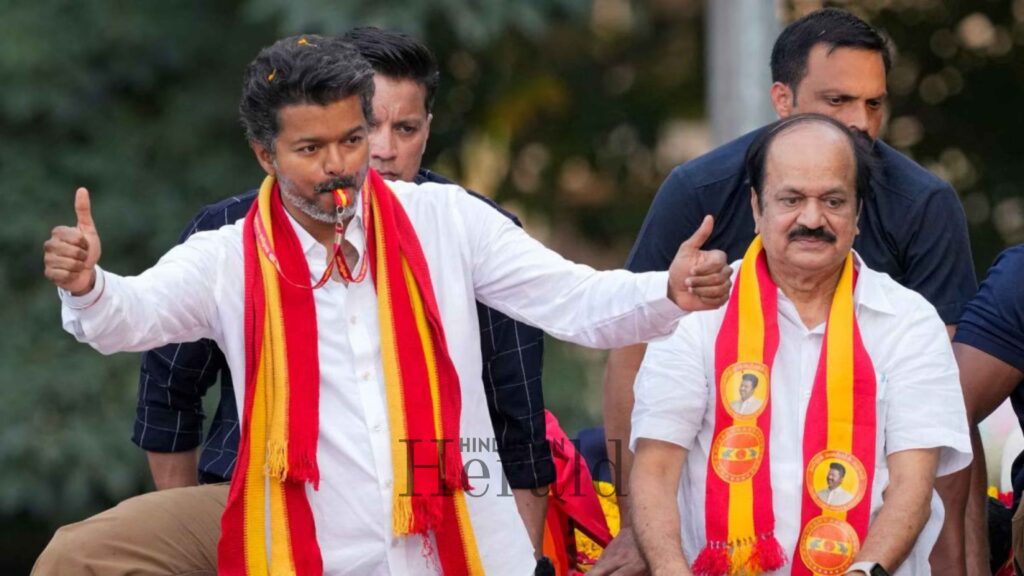
That was the consensus. And the consensus was wrong.
What TVK offered was not a new ideology in the strict sense. It was a different emotional register entirely. While the DMK kept leaning into its Dravidian legacy and the AIADMK kept invoking the ghost of Jayalalithaa, TVK spoke about jobs, dignity, and a politics that did not require voters to be grateful for being governed. It was less of a manifesto and more of a mood, and the mood turned out to be exactly what Tamil Nadu’s electorate was carrying.
Still, nobody wins 100-plus seats on mood alone. There was strategy here, and one name that keeps coming up in any serious account of this campaign is Prashant Kishor’s.
Prashant Kishor, the Biharis, and the Statement That Would Not Die
The interview was from before the election. But after Sunday’s results, it started circulating again with a velocity that post-victory vindication tends to generate.
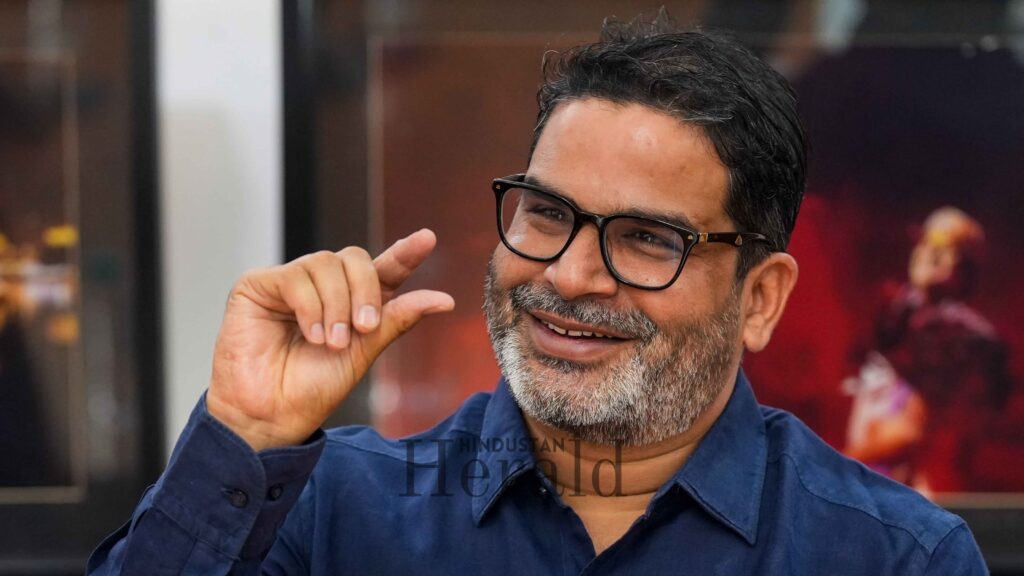
In the run-up to the Tamil Nadu polls, Prashant Kishor had said publicly: “The remarks they have made about Biharis, god willing, the records will be set straight during the elections. The person who abuses people of Bihar, we will not advise him, we will settle the score this time.”
Read those words now, after the results, and the weight of them shifts entirely.
Prashant Kishor is himself a Bihari. He had, in 2021, been the architect of the DMK’s landslide. He knew the machine from the inside, knew its strengths, and apparently knew its vulnerabilities too. Commentators have since pointed out that the DMK reportedly paid Kishor’s firm around Rs 350 crore for their 2021 campaign work. The relationship between Prashant Kishor and the DMK, in other words, was not abstract. It was professional, close, and well-compensated.
Which makes his public break from the DMK and his pointed comments about the party’s conduct all the more significant.
What the DMK Actually Said
To understand why the Bihari remarks became such a live wire in this election, it helps to go back to what DMK leaders had actually put on record.
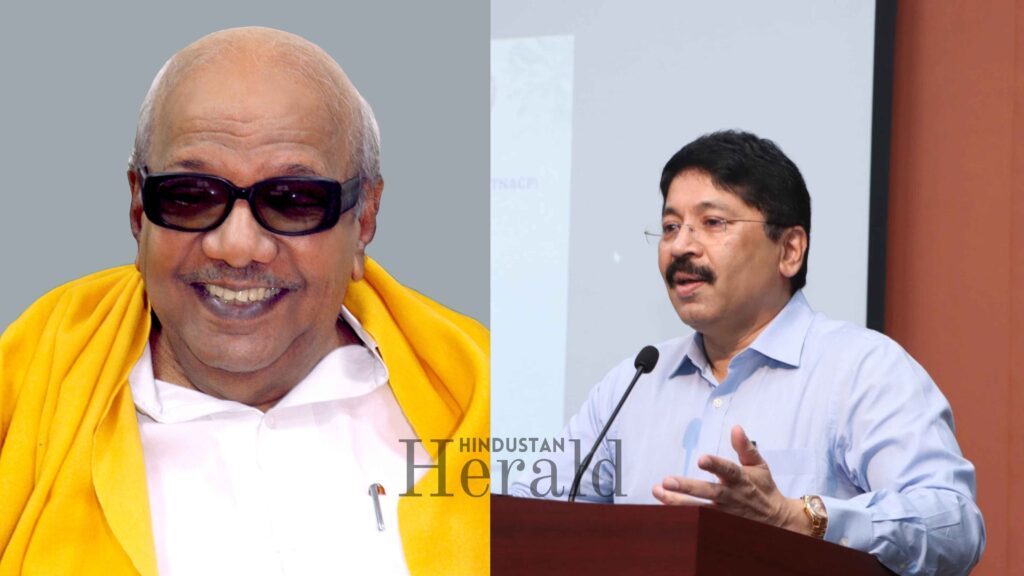
Dayanidhi Maran, senior DMK MP, made a speech in June 2019 at an event marking the 96th birth anniversary of M Karunanidhi, in which he argued that while English-educated Tamils became software engineers and reached the top of global corporations, people from Bihar and Uttar Pradesh who “only learn Hindi” end up in Tamil Nadu as construction workers, “cleaning toilets.” The speech sat quietly for years. Then a clip of it went viral, and the outrage that followed was significant enough to draw condemnation from across the political spectrum.
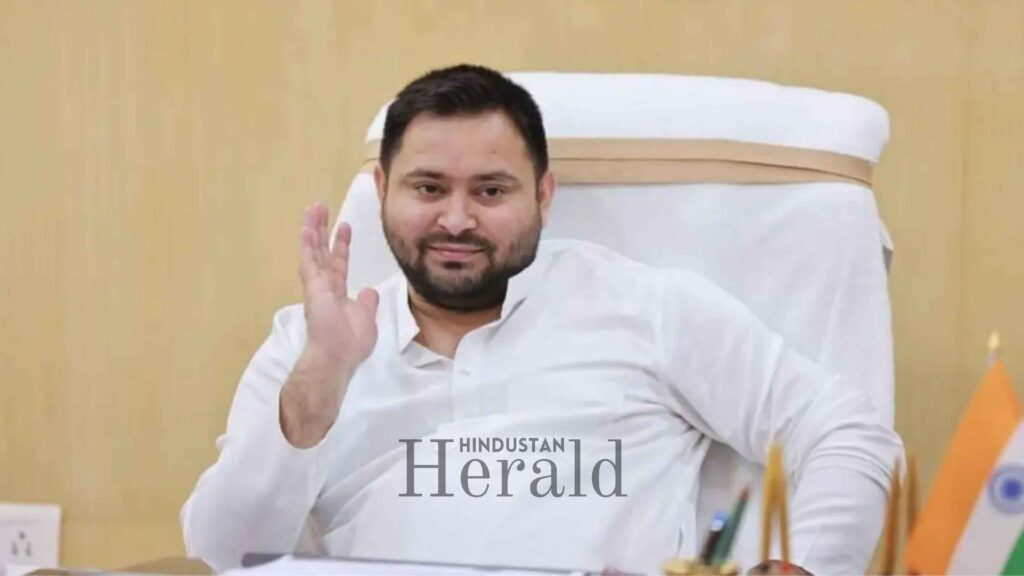
Tejashwi Yadav, then Bihar Deputy Chief Minister and leader of the RJD, a party allied with the DMK in the national INDIA bloc, said the remarks were “reprehensible” and that “people should be respectful towards those coming from other parts of the country.”
That was not a BJP critic speaking. That was an ally.
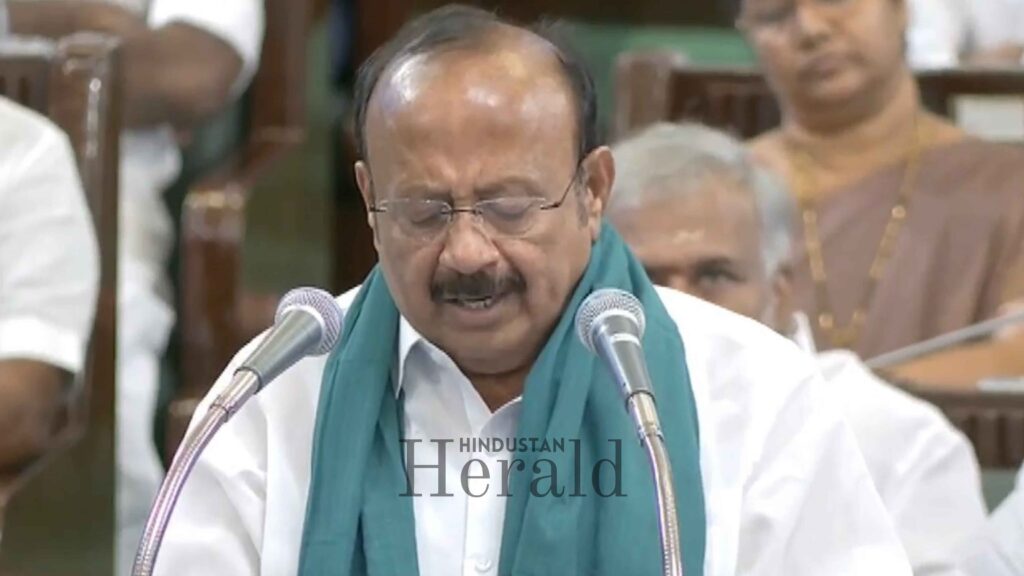
The issue did not stop with Maran. DMK Minister MRK Panneerselvam later sparked a fresh round of anger at a public meeting in Chengalpattu, where he allegedly described North Indians as coming to Tamil Nadu for menial work because they lacked the political awareness and education that the Dravidian model had supposedly produced.
Each time one of these remarks surfaced, the DMK treated it as a news cycle problem. Apologise, clarify, move on. As it turns out, the voters were keeping their own count.
The Strategist Who Read the Room
Prashant Kishor, during the TVK campaign, did something more sophisticated than simply criticise the DMK’s remarks. He framed the party’s anti-Bihari posture as an expression of what he called “Dravidian Arrogance,” arguing that the same contempt directed at North Indians would eventually be turned against ordinary Tamils too.
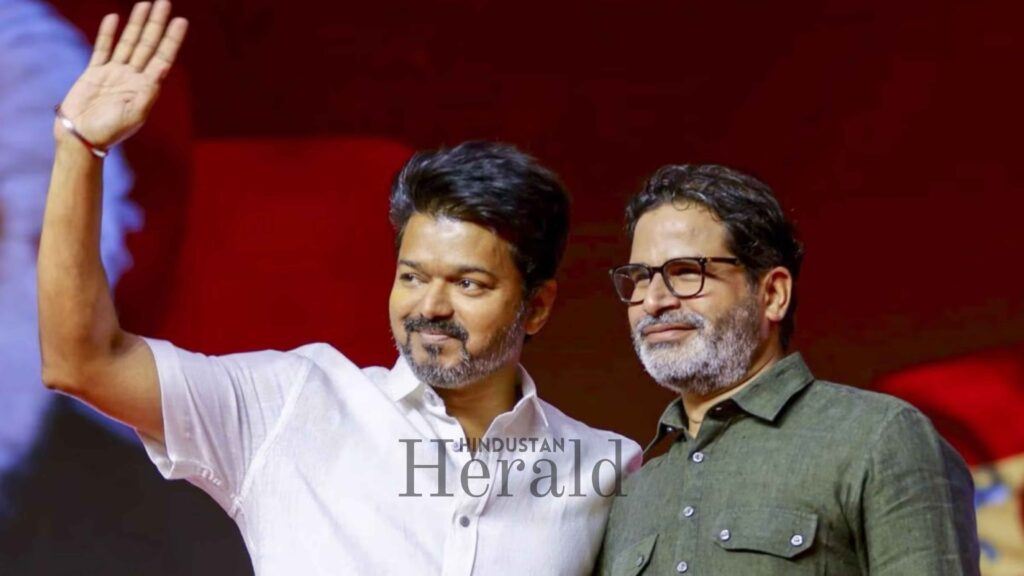
That framing was smart. It took a regional grievance and made it a local warning. It told Tamil voters: this arrogance is not just their problem, it is a symptom of how this party thinks about people who are not them.
Whether or not Prashant Kishor was formally advising TVK, his predictions about the party’s performance proved strikingly accurate, and speculation about his indirect involvement in the campaign has intensified since the results came in.
The man the DMK paid crores to put Stalin in power appears to have spent this election quietly ensuring that the lesson stuck in the other direction.
What Vijay Inherits
None of this diminishes what Vijay has actually pulled off, though. TVK, contesting its very first election, led in well over 100 constituencies across a state with 234 assembly seats, in a political landscape where entrenched cadre networks, caste arithmetic, and decade-old loyalties are supposed to make that kind of debut impossible.
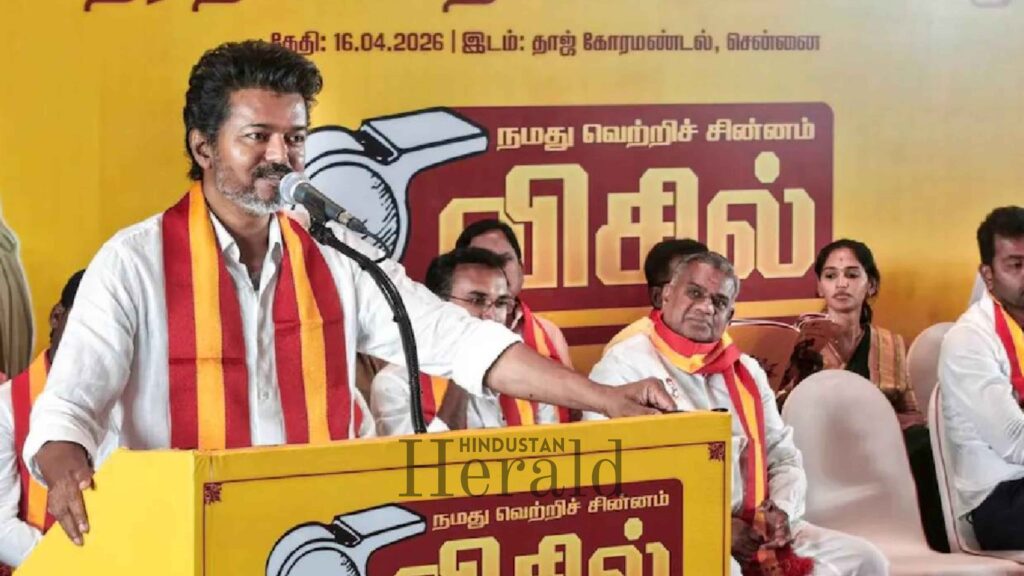
Now he has to govern.
And that is where the questions begin in earnest. TVK has no administrative record. Its leadership is drawn heavily from the world of cinema and civil society, neither of which necessarily prepares anyone for the daily grind of running a state bureaucracy, managing federal transfers, handling farmers in distress, or navigating labour disputes in industrial corridors. Tamil Nadu is not a small state. It is a $300 billion-plus economy, a manufacturing hub, a state with one of India’s most demanding and politically literate electorates.
Vijay has their mandate. The harder question is whether his party has the institutional depth to honour it.
For now, that is tomorrow’s problem.
The DMK Will Not Process This Quietly
Within the DMK, the reckoning will be brutal and prolonged. The party did not just lose an election. It lost its ideological primacy, the claim that the Dravidian project remains the default grammar of Tamil politics. For a party that has built its entire identity around that claim, a third-place finish is not a setback. It is an identity crisis.
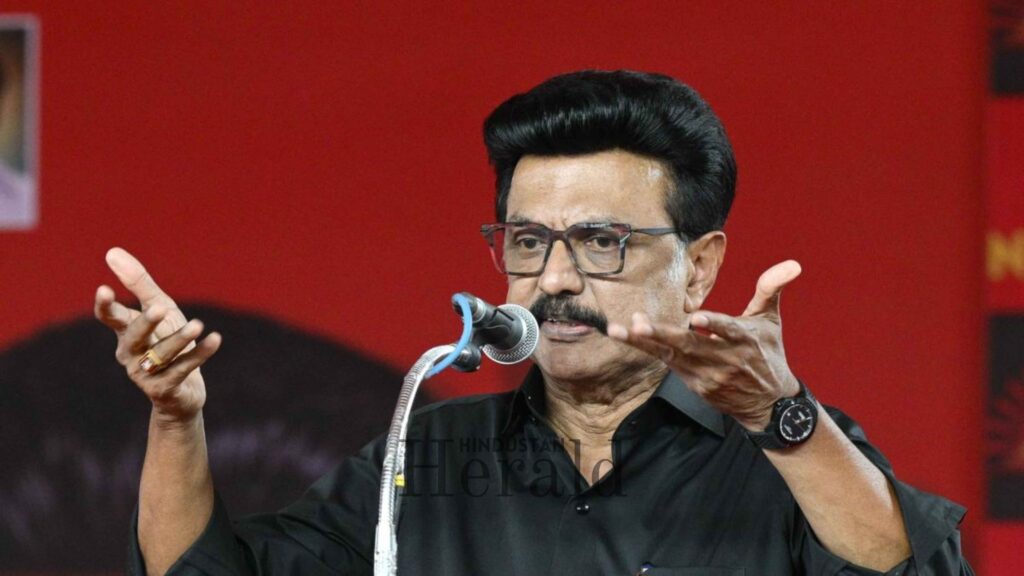
Some inside the DMK will argue that the anti-Bihari remarks were a symptom of a broader communication failure, that the policy record was strong but the messaging tone was fatally off. Others will go further and argue that the party’s leadership has grown distant and entitled, that Stalin’s inability to hold even Kolathur reflects something deeper than a bad campaign cycle.
Both arguments are probably right. And neither of them will be easy to hear inside a party that is accustomed to being in charge.
The Score Has Been Settled
When Prashant Kishor said, months before the results, that scores would be settled over the remarks made about Biharis, he was speaking in the language of electoral payback. He presumably meant it in a strategic sense: that the comments had alienated voters, that they reflected a political arrogance that could be exploited, and that TVK’s campaign could channel that sentiment productively.
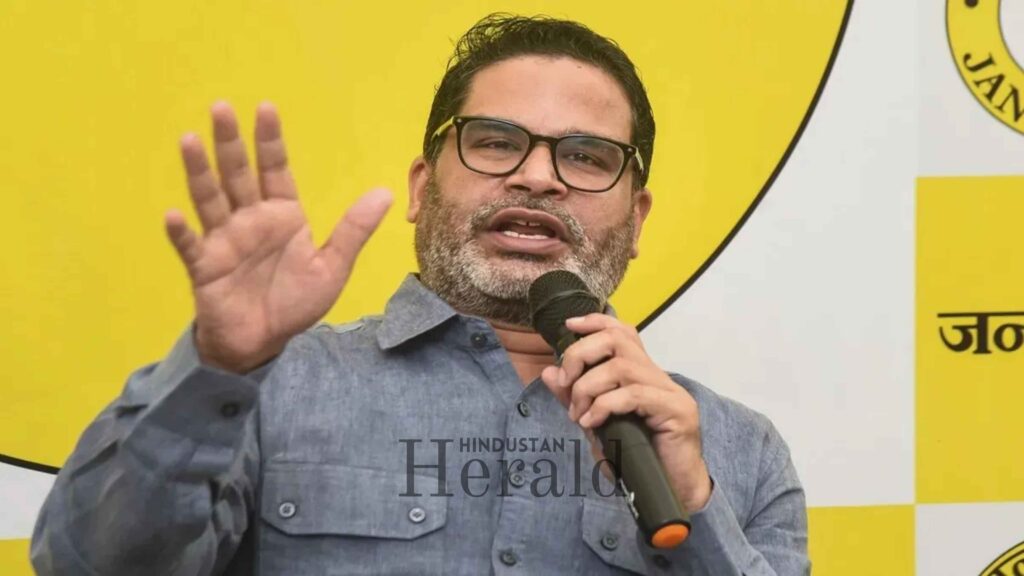
What he got was something larger.
The people the DMK had dismissed as “panipuri sellers” and toilet cleaners, the migrant workers from the Hindi heartland who move to Tamil Nadu in search of a living, became part of a national conversation about dignity and contempt in Indian politics. And the state’s own voters, apparently more unsettled by their own leaders’ arrogance than anyone had correctly predicted, delivered a verdict that went far beyond what any strategist could have engineered on their own.
By successfully navigating TVK’s campaign, Kishor proved that the very people the DMK had mocked could outmanoeuvre the state’s most powerful political machine.
Tamil Nadu has spoken. The era it has just ended is one its new government will spend years trying to understand, even as it scrambles to build something in its place.
Stay ahead with Hindustan Herald — bringing you trusted news, sharp analysis, and stories that matter across Politics, Business, Technology, Sports, Entertainment, Lifestyle, and more.
Connect with us on Facebook, Instagram, X (Twitter), LinkedIn, YouTube, and join our Telegram community @hindustanherald for real-time updates.

Covers Indian politics, governance, and policy developments with over a decade of experience in political reporting.
- Ananya Sharma

- Ananya Sharma
- Ananya Sharma
- Ananya Sharma



 Ayesha Khan and Ananya Sharma