
 By Kavita Iyer and Ananya Sharma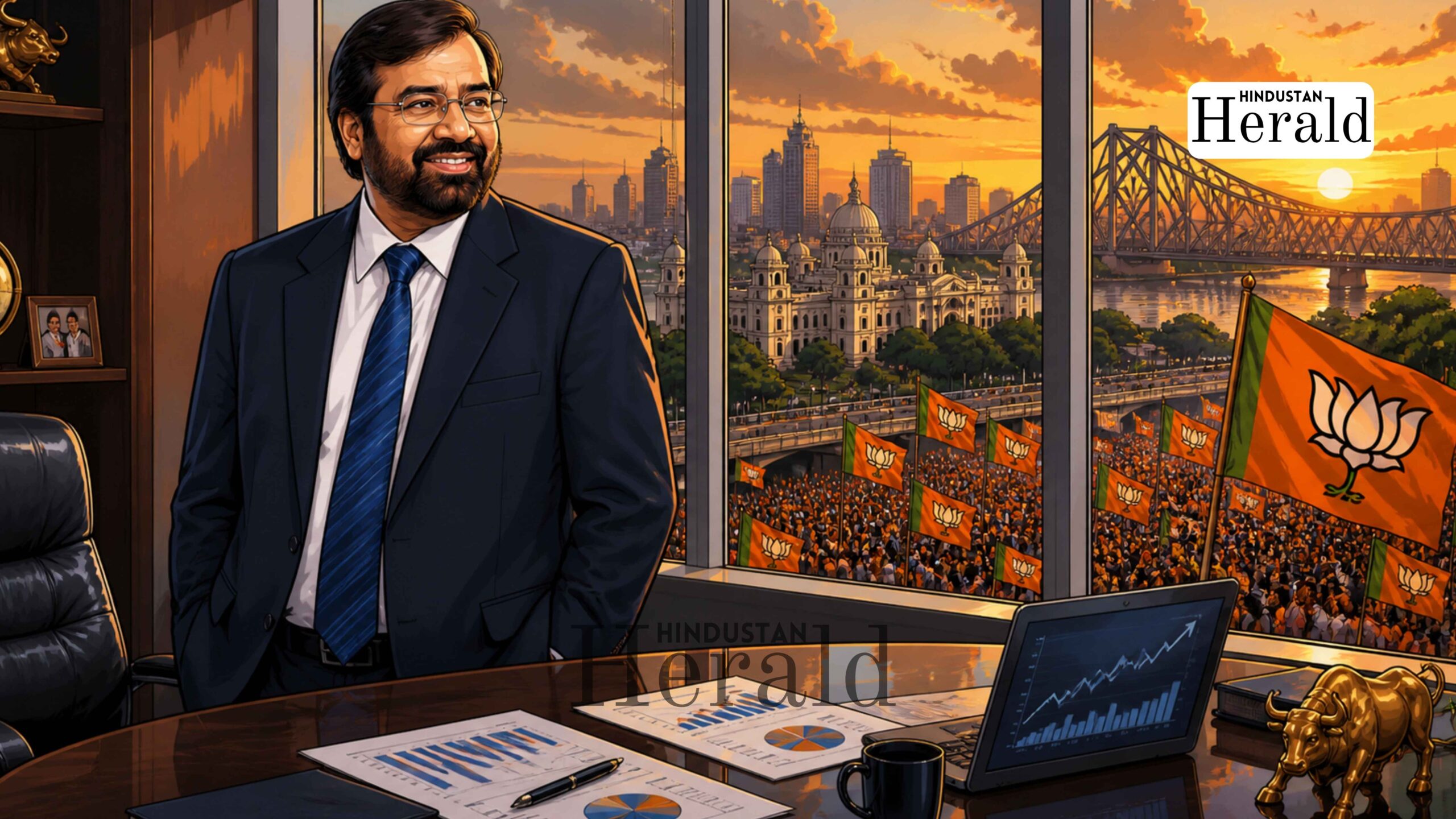
Kolkata, May 4: The numbers started coming in around mid-morning and they told a story that West Bengal’s political establishment had spent fifteen years refusing to believe was possible. The Bharatiya Janata Party was leading by more than 90 seats. Then past 100. Projections that had seemed optimistic just weeks ago were beginning to look, if anything, conservative. In Nabanna, the seat of state power that Mamata Banerjee has occupied since 2011, the mood, as per sources close to the administration, was grim.
Across town, in corporate offices and on group chats running among Kolkata’s old trading families, the atmosphere was something else entirely.
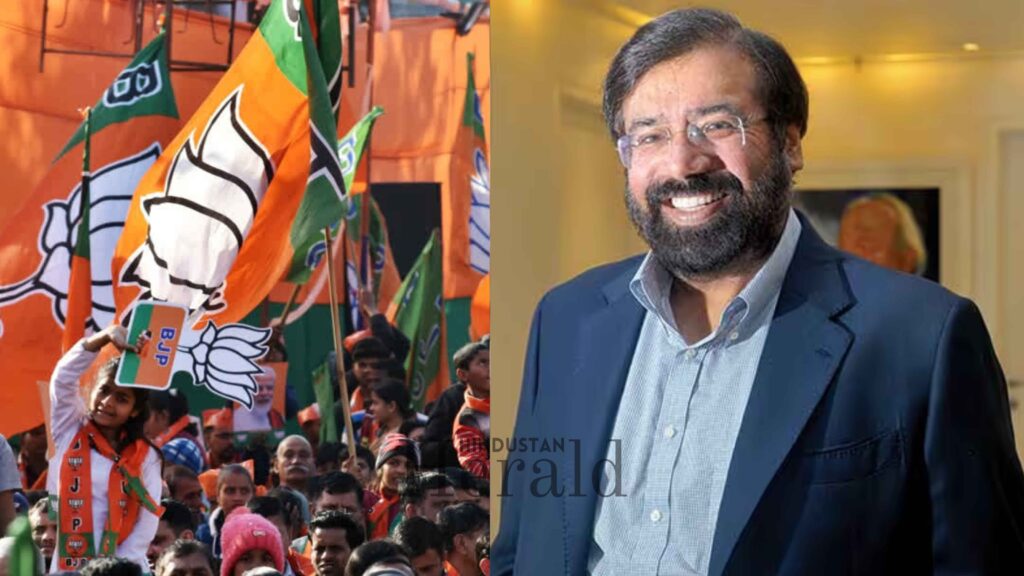
Harsh Goenka, Chairman of RPG Enterprises and one of the country’s most publicly outspoken industrialists, had seen this coming. The Kolkata-born billionaire had posted on X just two days before results day, sharing an argument a friend had put to him, one that he said “made sense.” The BJP, he wrote, stands tall alone on the right side of politics, largely owning the space of Hindu identity and nationalism, which resonates with roughly half the population, while parties like the Congress, SP, AAP, TMC and CPM jostle for what remains. His conclusion, drawing on his friend’s framing: the BJP juggernaut was bound to keep rolling. As it turned out, Bengal was the next stop.
A City That Remembers Its Industrial Past
There is something particular about the way Kolkata’s business community watches elections, something different from the clinical market-watching that happens in Mumbai or Delhi. This is a city that once housed the commercial nerve centre of British India, where the Harsh Goenkas, the Birlas, and dozens of other Marwari trading families built empires that stretched across the subcontinent. The wounds of watching that legacy erode, slowly and then all at once, over the decades of the Left Front and then the TMC, run genuinely deep.
The RPG Group’s own story in Bengal goes back nearly two centuries, to a Ramdutt Goenka who arrived in Kolkata from Dundlod in Rajasthan in the early 1800s, starting out as a banker before becoming an agent for British business houses. Harsh Goenka himself was born into that Marwari family in Kolkata and studied Economics at St. Xavier’s College before heading to IMD Lausanne for his MBA. The RPG headquarters may be in Mumbai now, but the family’s connection to Bengal is not sentimental; it is historical, structural, and personal.
When Harsh Goenka speaks about Bengal’s political and economic future, he is not speaking as a distant observer running the numbers. He is speaking as someone whose family watched the state’s industrial trajectory up close for generations.
Fifteen Years of Frustrated Waiting
To understand why the BJP’s apparent breakthrough matters so much to business, you have to understand what the last fifteen years actually felt like for industry in this state.
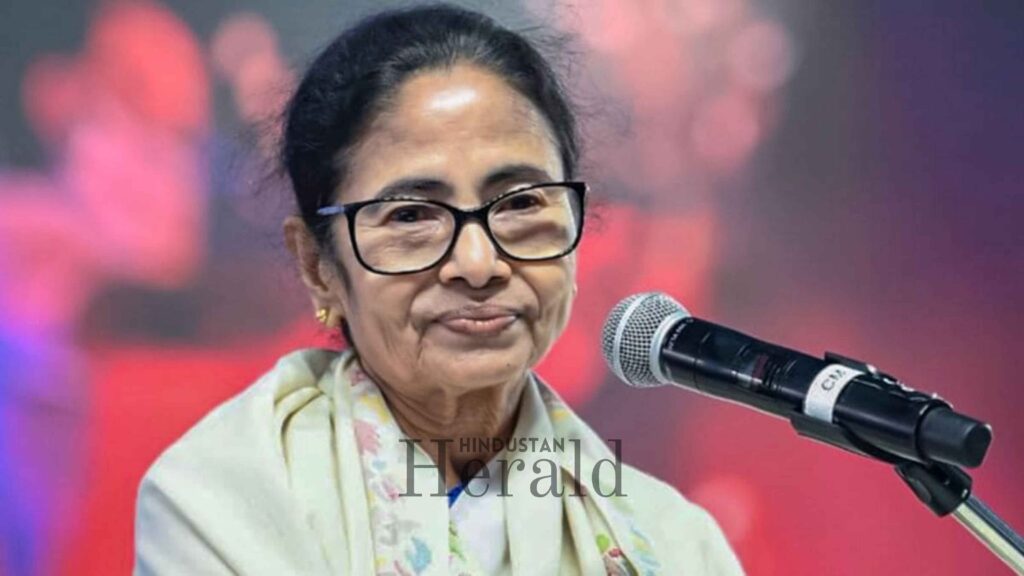
Mamata Banerjee came to power in 2011 on the back of genuine popular anger, much of it directed at the Left Front’s disastrous handling of Singur and Nandigram, two land acquisition battles that became national symbols of the tension between industrial ambition and agrarian rights. The TMC’s victory was real and earned. And in the years that followed, Mamata did build a welfare architecture that reached deep into rural Bengal, genuinely changing material conditions for millions.
But industry never quite got what it came for. Industries had been moving out of West Bengal for quite some time, as Ambareesh Baliga, an independent market expert, put it plainly ahead of results day. The Bengal Global Business Summit, Mamata’s annual investment showcase in Kolkata, reliably generated enormous headline numbers around investment intentions, but the private sector remained privately sceptical about what actually got built.
Employment, industrial development, and public recruitment became prominent issues in the 2026 campaign, particularly among younger and urban voters, with concerns about job creation and delayed recruitment examinations featuring across constituencies. That last part matters. Recruitment scams. Jobs that were promised and did not arrive. Young people who watched peers in Pune or Bengaluru build careers while Bengal’s economy sat in a kind of holding pattern. The frustration was real, and it showed in the turnout.
The Numbers That Signalled Something Different
The Election Commission’s data showed a voter turnout of 91.57% in the second phase of polling, pushing the overall estimated turnout to approximately 92%, among the highest ever recorded in any Indian state election. That is not normal. A turnout in that range does not happen because people feel comfortable with the status quo. It happens when an electorate has something it urgently wants to say.
The second and final phase of voting concluded on April 29, with the Election Commission deploying over 350,000 security personnel statewide, including the National Investigation Agency, for the first time ever in a state election, amid reports of localised violence in Howrah and Hooghly districts. The NIA’s deployment alone underlined how charged the atmosphere had become.
Exit polls ahead of counting had suggested record voter turnout particularly in West Bengal, Tamil Nadu, and Puducherry. Multiple pollsters pointed toward a BJP majority. JM Financial projected the BJP at 159 seats in the 294-member assembly, with the TMC tailing at 127. Even allowing for the well-documented gap between Bengal exit polls and actual results, the directional signal was hard to ignore.
What the Markets Were Already Saying
By the time counting began on Sunday morning, the financial markets had already started doing their math. According to Kotak Institutional Equities, Indian equities were likely to react positively in the near term if the BJP’s projected breakthrough in West Bengal was validated on May 4.
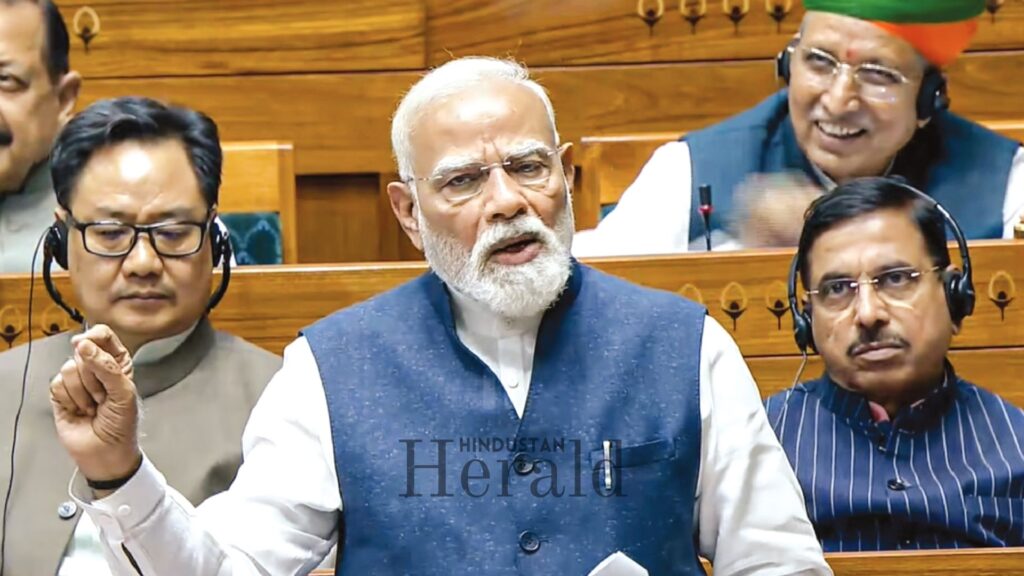
The reasoning was not complicated. A BJP government in Nabanna would mean, for the first time since Narendra Modi came to power at the Centre in 2014, that Bengal’s state administration and the Union government would be pulling in the same direction. That alignment, in practical terms, means faster clearances, smoother central fund flows, fewer political friction points over land and labour. For a state that has watched its neighbours accelerate past it on industrial investment, even a partial unlocking of that logjam would matter enormously.
G Chokkalingam of Equinomics Research was direct about the scale of the opportunity: West Bengal was lagging in industrial growth, and that should change if BJP were to win, with more corporate capital likely to find its way into the state as economic policies became investor-friendly. He pointed to what had happened in Maharashtra and Uttar Pradesh, both states that had set ambitious trillion-rupee economy targets after BJP governments came to power, and suggested Bengal could be next.
Baliga identified specific sectors likely to benefit: real estate first, given pent-up demand in Kolkata and its suburbs, and then the auto sector, with manufacturers likely to scout locations in the state if the political and policy environment genuinely shifted.
Still, not everyone in the room was purely celebratory. Kotak cautioned that the durability of any post-election market rally would be tested quickly, with crude oil prices remaining the single largest short-term risk variable, and that election enthusiasm would fade as attention reverted to earnings delivery and the government’s willingness to make difficult policy adjustments. The election is the beginning of a story, not the end of one.
The BJP’s Promise and the Weight of Execution
The BJP’s 2026 campaign foregrounded jobs and industrial revival in its criticism of the incumbent government. Its manifesto included a commitment to implement the 7th Pay Commission and the Uniform Civil Code within six months of taking office. These are specific, time-bound promises in a state where voters have seen enough vague commitments to be deeply sceptical of new ones.
The BJP’s task, if it does form the government, will be one of the hardest governance challenges in the country. Bengal’s industrial ecology is not broken in a way that any single policy can repair quickly. Land acquisition remains politically explosive, the state’s relationship with organised labour carries decades of ideological baggage, and building the kind of infrastructure corridor that could genuinely attract Tata, Mahindra, or a mid-size electronics manufacturer requires sustained capital commitment over years, not quarters.
Gains at the state level could strengthen legislative positioning and potentially ease the passage of key reforms, as analysts noted. But the Bihar comparison that some market watchers offered is instructive only to a point. The NDA scored a massive victory in Bihar’s 2025 assembly elections, securing 201 out of 243 seats, and that state’s economic momentum has been real. Bengal’s situation is more complicated, its urban-rural divide sharper, its political traditions more contested, its identity politics more layered.
Harsh Goenka’s Larger Reading
What Goenka said two days before the results was not, on the surface, a statement about Bengal’s economy. It was a statement about why the BJP keeps winning. But in the context of what was about to unfold in Kolkata on May 4, it reads as something more than political observation.
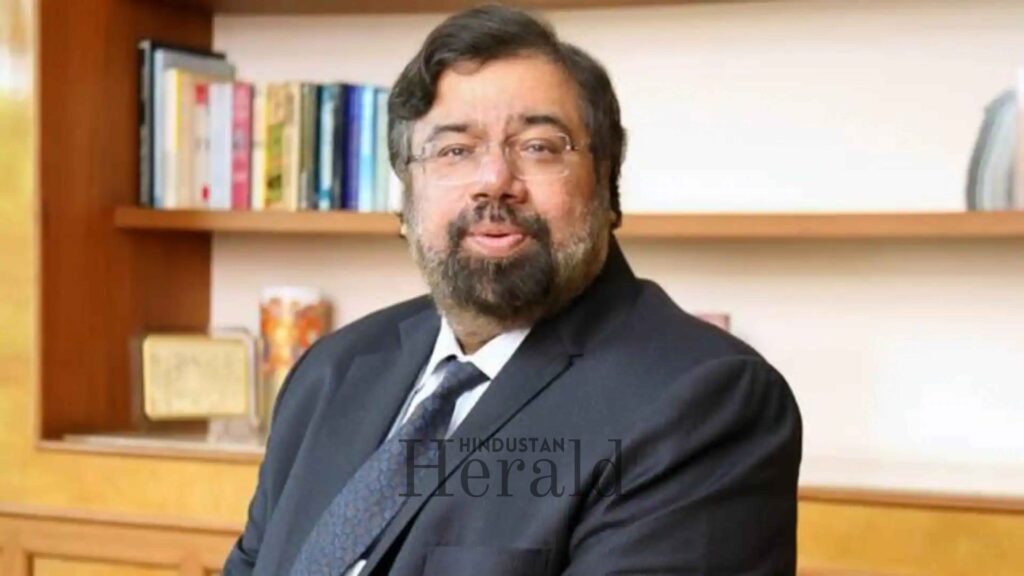
Goenka is a fifth-generation entrepreneur from one of India’s most well-known business families, a man who has watched Indian politics from a vantage point that most corporate leaders either do not have or do not choose to voice publicly. His willingness to say plainly that the BJP’s dominance makes structural sense, not because he is endorsing every policy but because he is reading the political landscape accurately, reflects the mood of a significant part of Indian industry right now.
The corporate establishment in this country has spent a decade recalibrating its expectations around the BJP’s political durability. What Bengal’s apparent result adds to that picture is geographic reach. The Northeast has been consolidating toward the BJP for years. Odisha fell in 2024. And now, if the counting holds, the last great redoubt of non-BJP governance in eastern India has shifted too.
For Kolkata’s old business families, many of whom never really left the city even as their operations migrated west and south, that is not just a political fact. It is the opening of a door that has been shut, with varying degrees of firmness, for the better part of five decades.
Whether jobs actually come, whether investment flows, whether the promises made in the campaign survive contact with the ground reality of governing a complex and turbulent state: those answers are months and years away. For now, the verdict from the counting centres was still settling, and the business community that Harsh Goenka speaks for, and in many ways represents, was cautiously, quietly, allowing itself to believe that something had changed.
Stay ahead with Hindustan Herald — bringing you trusted news, sharp analysis, and stories that matter across Politics, Business, Technology, Sports, Entertainment, Lifestyle, and more.
Connect with us on Facebook, Instagram, X (Twitter), LinkedIn, YouTube, and join our Telegram community @hindustanherald for real-time updates.

Former financial consultant turned journalist, reporting on markets, industry trends, and economic policy.
- Kavita Iyer

- Kavita Iyer
- Kavita Iyer
- Kavita Iyer





Covers Indian politics, governance, and policy developments with over a decade of experience in political reporting.
- Ananya Sharma
- Ananya Sharma
- Ananya Sharma
- Ananya Sharma




 Ayesha Khan and Ananya Sharma
  Ananya Sharma
  Sandeep Verma