
 By Ananya Sharma
Kolkata, May 4: By mid-morning on Monday, the numbers coming out of West Bengal’s counting centres had stopped being a close race and started becoming something else entirely. A statement. The Bharatiya Janata Party was leading in over 200 seats. Mamata Banerjee’s Trinamool Congress had collapsed to somewhere around 90. The majority mark in this 294-seat assembly is 148. BJP had blown past it before lunch.
In 2021, TMC won 213 seats. Let that sink in for a moment.
The Numbers That Changed Everything
The morning started with enough ambiguity to keep TMC workers hopeful. Early trends were close. Then, around 9 AM, the leads started widening. BJP crossed 162 seats in leads, then 171, then touched the 200-mark, while TMC was trailing on just 90 seats at one point.
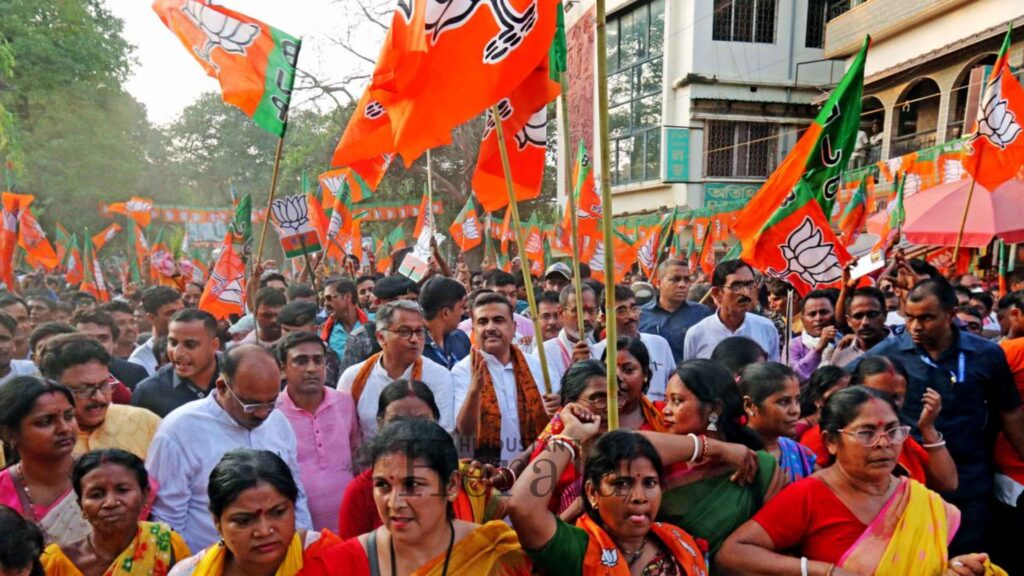
The vote share gap tells its own story: BJP at 44.81 per cent to TMC’s 41.89 per cent. That might not sound like a chasm on paper, but in Bengal’s tightly packed constituency arithmetic, a swing of that size translates into a landslide on the seat map.
Congress and the Left had not opened their accounts at the time of writing. Adhir Ranjan Chowdhury, still one of Congress’s most recognisable faces in the state, was trailing in Baharampur. The opposition landscape in Bengal, already battered in 2021, looks like it may not recover from this for years.
Bhabanipur: Mamata Wins Her Seat, Loses Her State
There is something almost Shakespearean about the Bhabanipur count on Monday morning. Mamata Banerjee was leading in her own Bhabanipur constituency by over 19,000 votes even as her party was being routed across Bengal. She will likely hold her seat. The state, though, has made a different call.
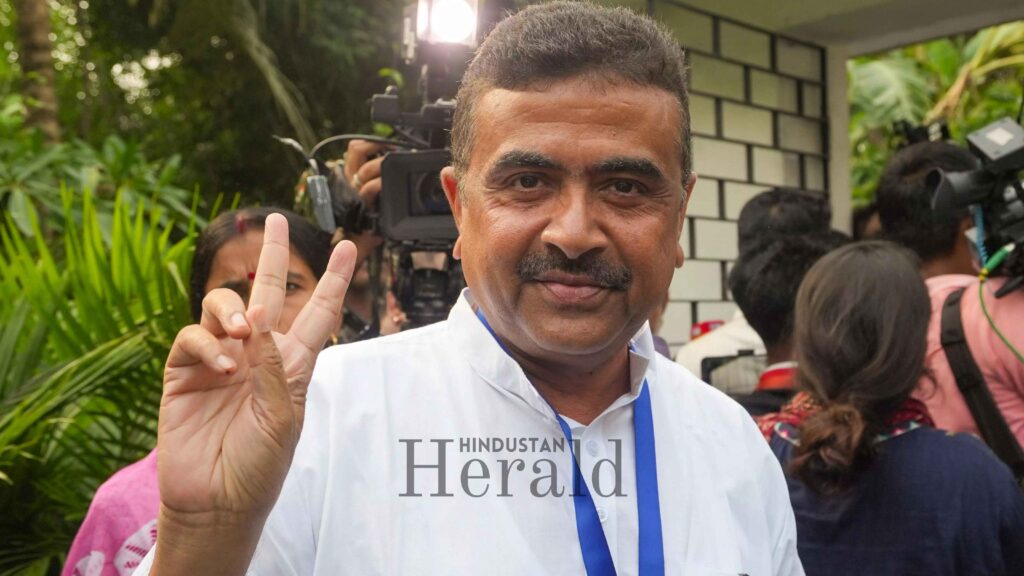
Suvendu Adhikari, the man TMC built and BJP inherited, chose to contest from his Nandigram bastion rather than Bhabanipur this time. He held a strong lead there. But it was his public commentary through the morning that made headlines.
As BJP crossed the majority mark, Adhikari told ANI that “there has been a Hindu consolidation” in West Bengal, pointing to how Muslim voters, who had historically delivered 90-95 per cent of their votes to TMC, had fractured this cycle. He said some of those votes went to smaller pro-Muslim parties, and that the BJP’s gains in Hindu-majority booths had more than compensated.
He specifically flagged Malda, Murshidabad and Uttar Dinajpur as districts where the Muslim vote split, adding that “anti-incumbency, plus Hindu consolidation in favour of the Lotus” were the two forces driving the BJP’s surge.
Whether or not that framing holds up to deeper psephological scrutiny, the booth-level data from Bhabanipur itself seems to support at least part of the argument. Of 14 booths in Bhabanipur in the first round of counting, six were Muslim-majority. In previous elections, TMC used to get 90-95 per cent of those votes. This time, there was a visible crack.
RG Kar: The Wound That Did Not Close
If there is a single moment that explains how the ground shifted under Mamata’s feet, most political observers in Bengal will point to the night of August 9, 2024. A young trainee doctor was raped and murdered inside RG Kar Medical College and Hospital in Kolkata. The case exploded nationally. Doctors protested. Students marched. The anger was real, sustained, and very specifically directed at the law-and-order record of the TMC government.
Women’s safety was a recurring issue throughout the 2026 campaign, with the RG Kar case drawing national attention and forming part of the wider debate on governance and institutional credibility under TMC.
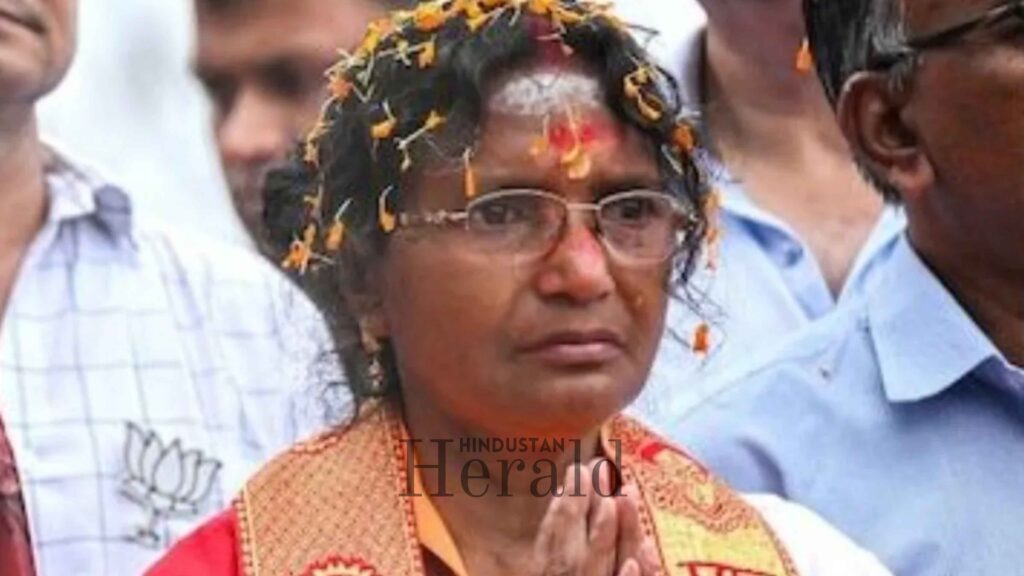
BJP found a way to make that grief into a ballot. Ratna Debnath, the mother of the RG Kar victim, was fielded as the BJP candidate from Panihati. She was leading by over 5,000 votes after the second round of counting. It was a deliberate, pointed choice by the party. And early trends suggest it landed
That said, RG Kar was not the only thing working against TMC. The school recruitment scam, with its ongoing investigations by central agencies, had become a sustained line of attack on the government’s record in public administration and institutional accountability. These are not abstract issues for middle-class Bengali families who spent years waiting for government jobs that apparently went to the well-connected.
Fifteen years is a long time. Anti-incumbency in Bengal had been building quietly for a while. In 2021, BJP came close but could not convert. This time, it did.
Record Turnout, and a Controversy Over Who Got to Vote
One number from this election will be discussed for years: the voter turnout. West Bengal recorded the highest-ever voter turnout since independence, with 93.19 per cent participation in Phase 1 and 91.66 per cent in Phase 2, combining to an overall figure of 92.47 per cent.
The sheer volume of people who came out to vote is remarkable by any measure. But the election was also shadowed by a significant row over who was on the rolls in the first place. The Special Intensive Revision of electoral rolls removed around nine million names from West Bengal’s voter lists, roughly 12 per cent of the total electorate. Over six million were listed as absentee or deceased, while the status of another 2.7 million remained pending before tribunals. Observers noted that around 65 per cent of the undecided category were Muslim voters, and that Dalit Hindus from the Matua community were also disproportionately affected in certain districts.
TMC went into the campaign calling this a targeted disenfranchisement exercise. BJP called it electoral housekeeping. The Election Commission held its ground. But whatever happened to those nine million names, the electorate that remained voted in historic numbers, and they appear to have voted decisively against the party that had governed them for over a decade.
Mamata Pushes Back, Arrives at Strongroom
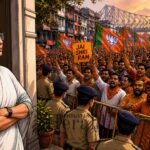
When the trends turned unmistakably against her party around late morning, Mamata Banerjee did not sit quietly in her party office. She arrived at Sakhawat Memorial High School in Bhabanipur, where her constituency’s strongroom is located, raising allegations of EVM tampering by the BJP.
TMC posted a video on its official X account claiming CTV footage showed ballot boxes being opened without the presence of party representatives. The party’s post called it “the murder of democracy in broad daylight” and alleged that BJP, “in active collusion with the Election Commission,” was committing gross electoral fraud.
These are strong words. The Election Commission had not formally responded to the specific allegations as counting continued. TMC has made similar charges in past elections when trends turned against it, and courts have not generally found merit in such claims. Still, the optics of a sitting chief minister driving to a strongroom on counting day, with her government on the edge of collapse, was a stark image.
She had also asked party workers to “wait and watch.” There was not much left to wait for by then.
North Bengal, Nandigram, and BJP’s Map
The regional breakdown of BJP’s performance is worth looking at carefully. North Bengal, historically a pocket where BJP had gained earlier than elsewhere in the state, came through strongly on Monday. In Mekliganj, BJP’s Dadiram Ray led by 4,103 votes. In Dinhata, Ajay Ray had a 6,259-vote advantage. Dhupguri and Sitalkuchi also saw BJP candidates ahead early.
BJP leads were also registered in Mathabhanga, Tufanganj, Madarihat and Kaliaganj, while constituencies like Diamond Harbour, Sonarpur Dakshin and Jadavpur, all in and around south Kolkata, also showed saffron leads. Diamond Harbour is the Lok Sabha constituency of Abhishek Banerjee, Mamata’s nephew and TMC’s second most prominent face. The symbolism of BJP showing strength in his backyard will not go unnoticed.
What Comes Next for Bengal, and for India
A BJP government in West Bengal would not just be a state-level event. This is India’s third most populous state. It sends 42 members to the Lok Sabha. It shares a long and sensitive border with Bangladesh. For decades, it was a state where organised Left politics gave way to a different kind of organised regional politics. Both had kept BJP out.
If that wall finally comes down on May 4, 2026, the consequences ripple outward. Andhra Pradesh Chief Minister N Chandrababu Naidu was already congratulating NDA leadership, calling the results a reflection of the people’s growing confidence in Prime Minister Narendra Modi’s vision for Viksit Bharat. Within the NDA ecosystem, this will be framed as the completion of a political project that started with the 2019 general elections.
For Mamata Banerjee, the math is brutal. She has won from Bhabanipur before. She has fought back before. But going into opposition after 15 years, at this stage of her political life, is a different proposition entirely.
The campaign itself was fought on Bengali identity, women’s safety, the school recruitment scam, the RG Kar case, and deep questions about 15 years of TMC governance. TMC had tried to position itself as the defender of Bengali pride against outsiders. BJP tied identity to citizenship, migration and Hindu consolidation in select constituencies. Ultimately, voters appear to have decided that identity alone was not enough to outweigh the accumulated weight of governance failures.
The final numbers will settle over the next few hours. But the shape of the result is already clear. Bengal has changed its mind. And it has done so in the most emphatic terms available to it.
Stay ahead with Hindustan Herald — bringing you trusted news, sharp analysis, and stories that matter across Politics, Business, Technology, Sports, Entertainment, Lifestyle, and more.
Connect with us on Facebook, Instagram, X (Twitter), LinkedIn, YouTube, and join our Telegram community @hindustanherald for real-time updates.

Covers Indian politics, governance, and policy developments with over a decade of experience in political reporting.
- Ananya Sharma

- Ananya Sharma
- Ananya Sharma
- Ananya Sharma



 Sandeep Verma