
 By Rajiv Menon and Ananya Sharma
New Delhi, March 16: Let’s start with something that landed in thousands of Indian WhatsApp groups last week. A grainy screenshot. A headline that said Bill Gates wants to block out the sun using solar geoengineering. And underneath it, someone had typed in all caps: “IS THIS WHY IT RAINED SO HARD LAST WEEK?”
People laughed. Some forwarded it. A few actually believed it.
Here is the strange part, though. The laughter is understandable. But the belief, however exaggerated, is not entirely without basis. Something real is happening here. Something that the English-language press in India has mostly ignored, that politicians have not touched, and that the average person has had no honest explanation of.
So let us try.
The Man, The Money, and The Idea That Won’t Go Away

Bill Gates has been putting his personal money into a very unusual kind of science since 2007. Not vaccines this time. Not sanitation. He has been funding research into whether human beings can deliberately cool the planet by spraying chemicals into the sky.
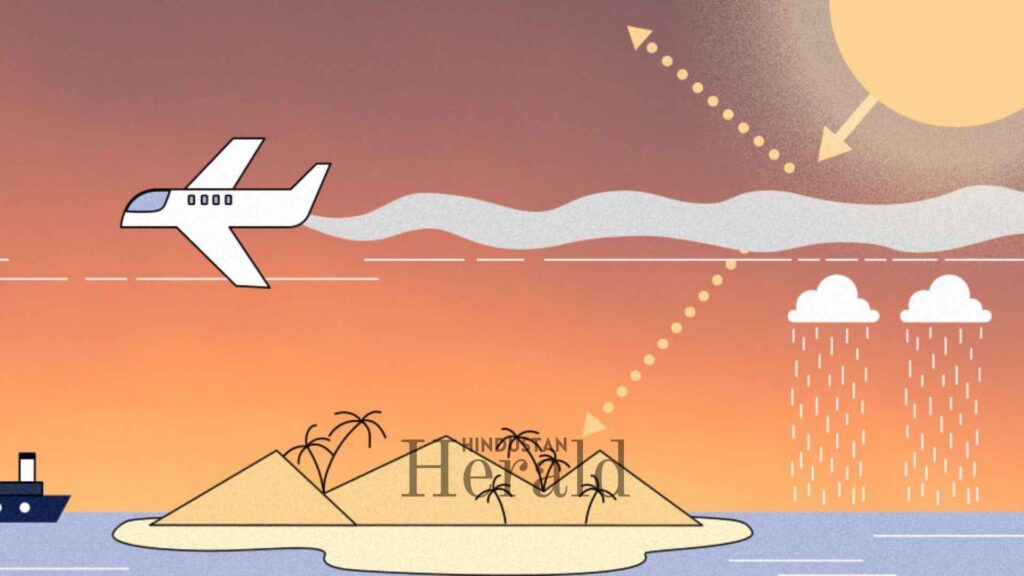
The technical name is Stratospheric Aerosol Injection. Scientists call it SAI. You can call it what it is: an attempt to dim the sun.

Over a span of three years, Gates provided at least $4.5 million of his own money toward studies on altering the stratosphere, pulling carbon dioxide directly from the air, and brightening clouds over the ocean. The main project was based at Harvard University. It was called SCoPEx, which stands for Stratospheric Controlled Perturbation Experiment.
Now before your mind goes to chemtrails and secret government plots, here is what the experiment actually was. Scientists planned to release roughly 4.4 pounds of calcium carbonate, a powder not unlike chalk dust, from a weather balloon flying 12 miles above the Arctic, creating a small diffuse cloud in the upper atmosphere. They wanted to study how particles behave up there. That is it. No global dimming. No weather control. Just chalk dust and a balloon.
It never even happened. Harvard shut down the project in early 2024, after the research team had already suspended it the previous year. Indigenous communities in Sweden, where the balloon launch was to happen, objected. The politics became too messy. The experiment died before it started.
Gates himself has said directly that he is not pushing the world toward geoengineering. He described the knowledge as potentially valuable, but distanced himself from any push for deployment.
So no, Bill Gates did not make it rain in your city last week. He funded a balloon experiment that never flew. That is the actual story.
But the broader story behind it, the idea itself, where it stands today, who is actually doing it now without asking anyone’s permission, and what it could mean for India’s monsoon and your food prices, that story is worth your full attention.
Why Anyone Is Even Thinking About This
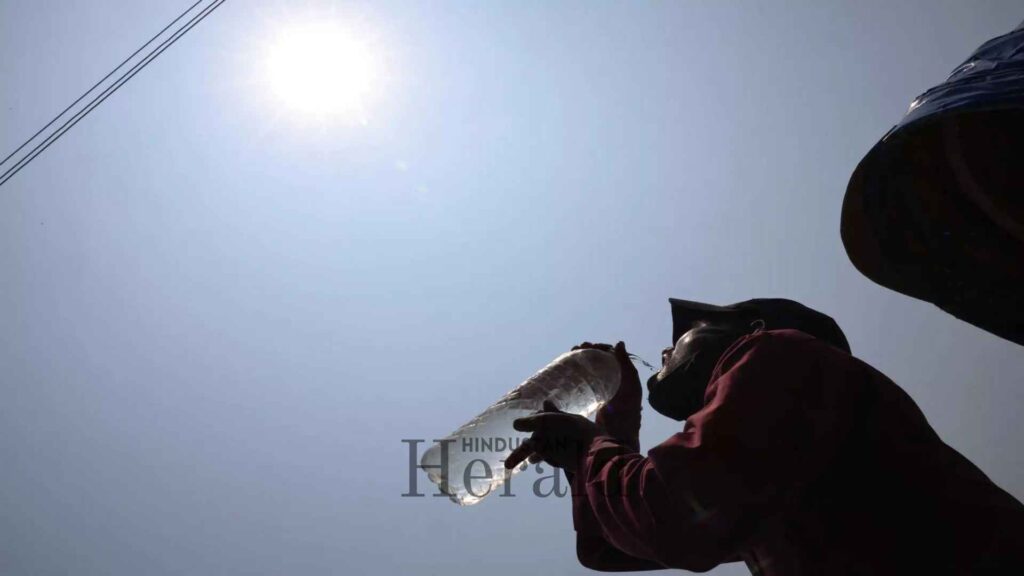
The planet is warming. That much is not seriously disputed anymore by anyone working in climate science. The last few Indian summers have felt different and most people who are old enough can feel it even if they cannot name it. Heatwaves that used to come once a decade now come every other year. Rainfall that used to be predictable now arrives in brutal bursts or not at all.
The world has been trying to fix this by cutting carbon emissions. That is the right solution. Everyone agrees on that in theory. In practice, it is going extremely slowly. Coal plants are still being built. Oil consumption is still rising globally. The gap between what countries have promised and what they are actually doing is enormous.
So some scientists, not all of them, started asking an uncomfortable question. What if we also tried to cool the planet directly, while the emissions fight continues? What if we could buy time?
The inspiration came from a volcano.
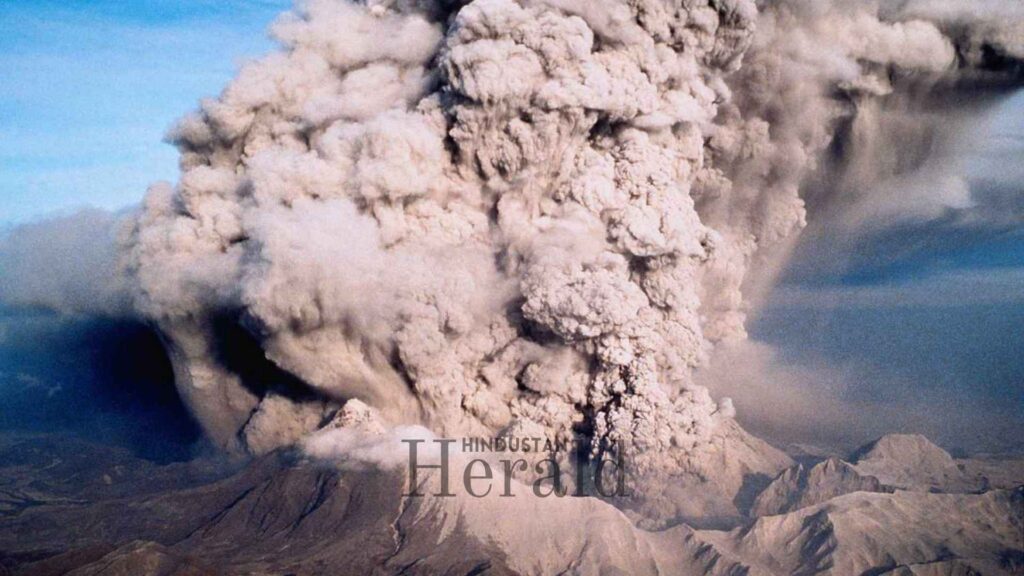
When Mount Pinatubo erupted in the Philippines in 1991, it was one of the largest eruptions of the twentieth century. It threw millions of tonnes of sulphur dioxide high into the atmosphere. The Earth’s average temperature dropped by roughly half a degree Celsius in the following year. Crops were affected. Sunsets turned strange colours across the world. But the cooling was real and measurable.
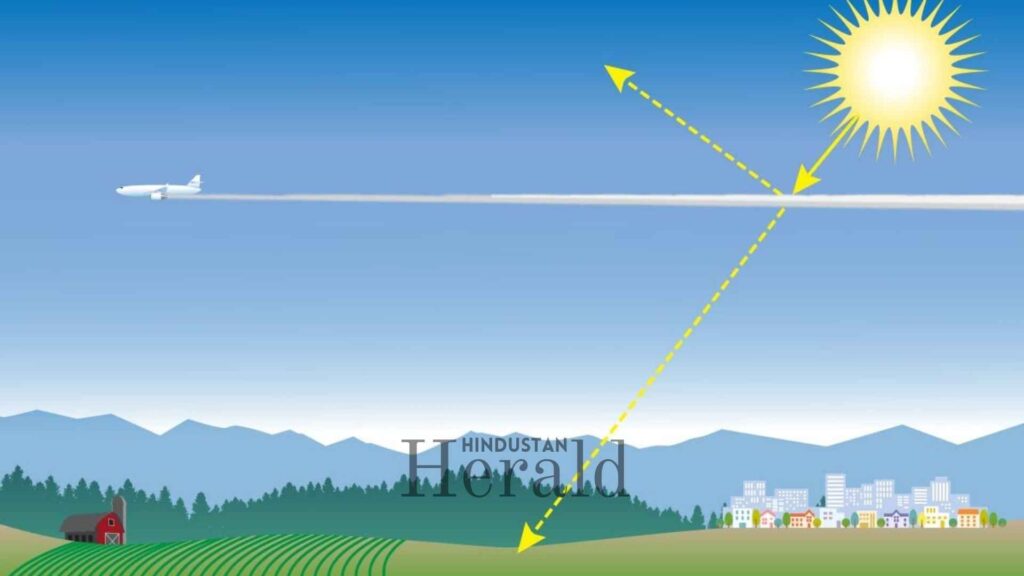
The idea behind SAI is to recreate that effect deliberately, but gently, gradually, using aircraft or balloons. Spray reflective particles into the stratosphere. Sunlight bounces back into space. Planet cools slightly. The temperature crisis slows down.
Simple enough idea. The consequences, however, are not simple at all.
The Part That Should Make Every Indian Sit Up
Here is where this stops being a distant Western science story and becomes something that could affect the food on your plate and the water in your fields.
India runs on the monsoon. Everyone knows this, but it is worth saying plainly. About 600 million people in this country depend directly or indirectly on what happens when the southwest monsoon arrives every June. Farmers in Vidarbha, in Bundelkhand, in Rajasthan, in Bihar, in every rain-fed agricultural pocket of this country, their entire year, their loans, their children’s school fees, their decision about whether to plant or not, all of it hinges on those rains.
Now, here is what the climate models are showing about what SAI could do to those rains.

Research has projected that large-scale aerosol injection, in a world still running on high emissions, could result in 5 to 7 per cent less rainfall annually across parts of the tropics. One set of projections found that if SAI were applied unevenly, cooling one hemisphere more than another, the impact on the Indian Summer Monsoon could be severe enough that a Columbia University researcher described it as effectively switching the monsoon off.
A study using seven different global climate models found that under solar geoengineering conditions, a dry bias develops over most of the Indian landmass, even as precipitation near the Arabian Sea coast sees some increase.
Think about what that means in plain language. The coasts might be fine. The interior of the country, where the bulk of India’s farmers live, could get significantly drier. The people who can least afford a failed harvest would be the ones bearing the cost of a technology designed primarily to protect wealthy, high-emitting nations from the consequences of their own industrial history.
And there is another risk that seldom gets explained in accessible terms: what researchers call termination shock.
Imagine you start spraying aerosols every year. The planet cools slightly. Countries relax. Emissions don’t fall as fast as they should because, well, the temperature seems manageable. Then something happens. A war, a financial crisis, a political breakdown. The spraying stops. All the warming that was being masked by the aerosol shield hits at once, rapidly, with a speed and intensity that gradual warming would never have produced.
You have essentially been borrowing time from the future. And the interest payment, when it comes, is enormous.
Other Things Worth Knowing
The risks go beyond rainfall. A few others that deserve mention in plain terms.

Ozone damage. Sulphate particles in the stratosphere can interfere with the ozone layer, which is what shields us from ultraviolet radiation. More UV reaching the surface means higher skin cancer risk, damaged crops, and disrupted marine ecosystems.
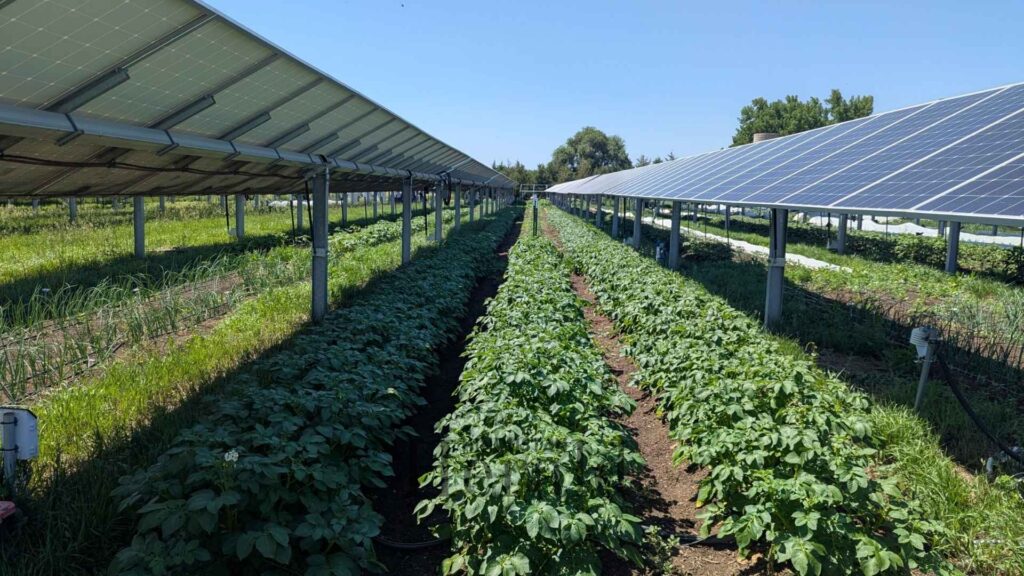
Less sunlight for plants and panels. A slightly dimmer sky sounds harmless. For farmers who depend on sunlight for photosynthesis and for the rapidly growing solar energy sector in India, the math changes. Atmospheric aerosols affect not just temperature but photochemical processes in ways that researchers are still working to fully quantify.

Vitamin D. Hundreds of millions of Indians already have low vitamin D levels. A consistently hazier sky is not going to help.
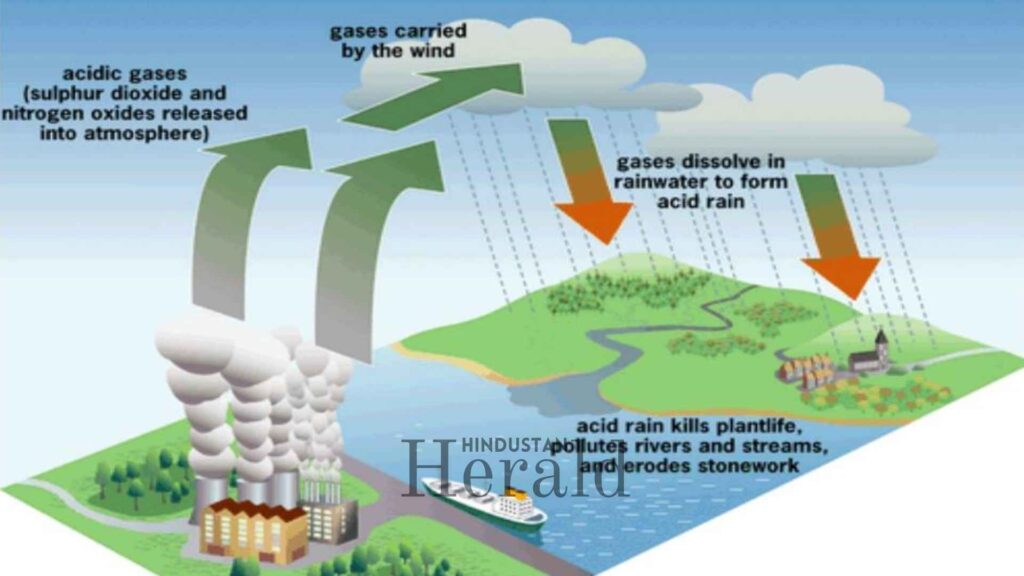
Acid deposition. Sulphur dioxide in the atmosphere eventually comes down. Some of it as acid rain. What that does to soil quality, to crops, to drinking water sources over years and decades is not fully understood.
Indian Scientists Are Working on This. Indian Diplomats Are Not.
Govindasamy Bala at the Indian Institute of Science in Bengaluru has been researching solar geoengineering since 2000 and is among the most cited scientists globally in this field. His group’s recent work has consistently found that, regardless of how carefully aerosols are deployed, tropical rainfall, including India, declines in virtually every modelled scenario.
India’s Department of Science and Technology set up a dedicated programme in 2017 specifically to understand how geoengineering would affect the South Asian monsoon, based at the Indian Institute of Science.
So Indian scientists are engaged. Indian science is producing real findings. But at the level of international diplomacy, of foreign policy, of shaping the rules before they get set by others, India is largely absent from the room.
At a UN Environment Assembly in early 2024, the United States blocked even the basic step of forming an expert group to study these technologies internationally. The European Union’s own science advisors have called for a moratorium and a global non-deployment agreement. India’s position in all of this? Quiet. Formally opposed through the Convention on Biological Diversity, but not visibly or loudly pushing its case in the spaces that matter.
Here Is the Part That Should Genuinely Alarm You
Forget Gates for a moment. He funded a balloon experiment that never launched. The actors that deserve attention now are different, smaller, less famous, and far less cautious.
A US startup called Make Sunsets is already doing this commercially. Not as a research project. As a business. It launches weather balloons carrying sulphur dioxide into the stratosphere and sells what it calls “cooling credits” to clients who want to offset their carbon footprint. No regulatory approval. No international oversight. No mechanism for India to say: stop, we need to study what this does to our rainfall first.
In late 2025, an Israel-based company called Stardust Solutions raised $60 million, positioning itself to sell geoengineering capabilities directly to governments. Think of it like a weapons contractor, except the product is not a missile. The product is a modified sky.
A 2025 study from Columbia University raised doubts about whether large-scale deployment is even physically workable, finding that the particles most often proposed have properties that make proper aerosolisation at altitude genuinely difficult. The engineering may not work. But that has not stopped commercial actors from selling the idea.
There is no international treaty governing any of this. No enforcement body. No agreed definition of what constitutes an illegal deployment. A company can legally, right now, modify the shared atmosphere of the entire planet from a launch site in a country with no relevant laws, and no one else has any binding recourse.
What We Are Really Talking About
Dhanashree Jayaram, who teaches geopolitics at Manipal Academy of Higher Education and is part of the Solar Geoengineering Non Use Agreement, has put the core problem clearly: this is a solution that could let the world’s biggest polluters off the hook while making countries like India permanently dependent on technology they do not own, cannot afford to stop, and had no real say in deploying.
That is the political economy of this situation in one sentence.
The countries that burned coal and oil for two hundred years to build their wealth are now funding research into a fix that would let them continue avoiding the full cost of that choice. The countries that are most vulnerable to both climate change and to the side effects of the fix are the ones with the least power in the conversation.
India sits squarely in that second group.
Still, some researchers will tell you that opposition to SAI research is itself a form of dangerous ignorance. They argue that some government somewhere, desperate enough, may attempt unilateral geoengineering regardless. Better to understand what it does than to be caught completely unprepared.
That is a fair point. Research and deployment are not the same thing. Understanding a risk is not the same as endorsing it.
But there is a difference between funding careful international research with shared governance and a startup in California selling cooling credits to corporations while launching sulphur dioxide into a sky that belongs to all of us.
One is science. The other is something else entirely.
The Answer to the WhatsApp Question

Bill Gates did not make it rain in your city. He funded some research. The research got shut down. He has said he is not pushing for deployment.
But the technology he helped bring into mainstream conversation is now in the hands of private companies that are considerably less careful and considerably less accountable. And the world has no agreed-upon rules about any of it.
India has 600 million people whose lives depend on the monsoon arriving on time and in the right amounts. That monsoon could, according to multiple credible scientific studies, be disrupted by technologies being developed and in some cases already deployed, with no Indian voice in the room where it matters.
That is the real story.
Sources:
Science/AAAS | Axios | Mongabay India | Columbia Climate School | CEPA | PMC / Scientific Reports
Stay ahead with Hindustan Herald — bringing you trusted news, sharp analysis, and stories that matter across Politics, Business, Technology, Sports, Entertainment, Lifestyle, and more.
Connect with us on Facebook, Instagram, X (Twitter), LinkedIn, YouTube, and join our Telegram community @hindustanherald for real-time updates.

Specializes in South Asian geopolitics and global diplomacy, bringing in-depth analysis on international relations.
- Rajiv Menon

- Rajiv Menon
- Rajiv Menon
- Rajiv Menon





Covers Indian politics, governance, and policy developments with over a decade of experience in political reporting.
- Ananya Sharma
- Ananya Sharma
- Ananya Sharma
- Ananya Sharma



 Ananya Sharma
  Arun Upadhayay