
 By Ananya Sharma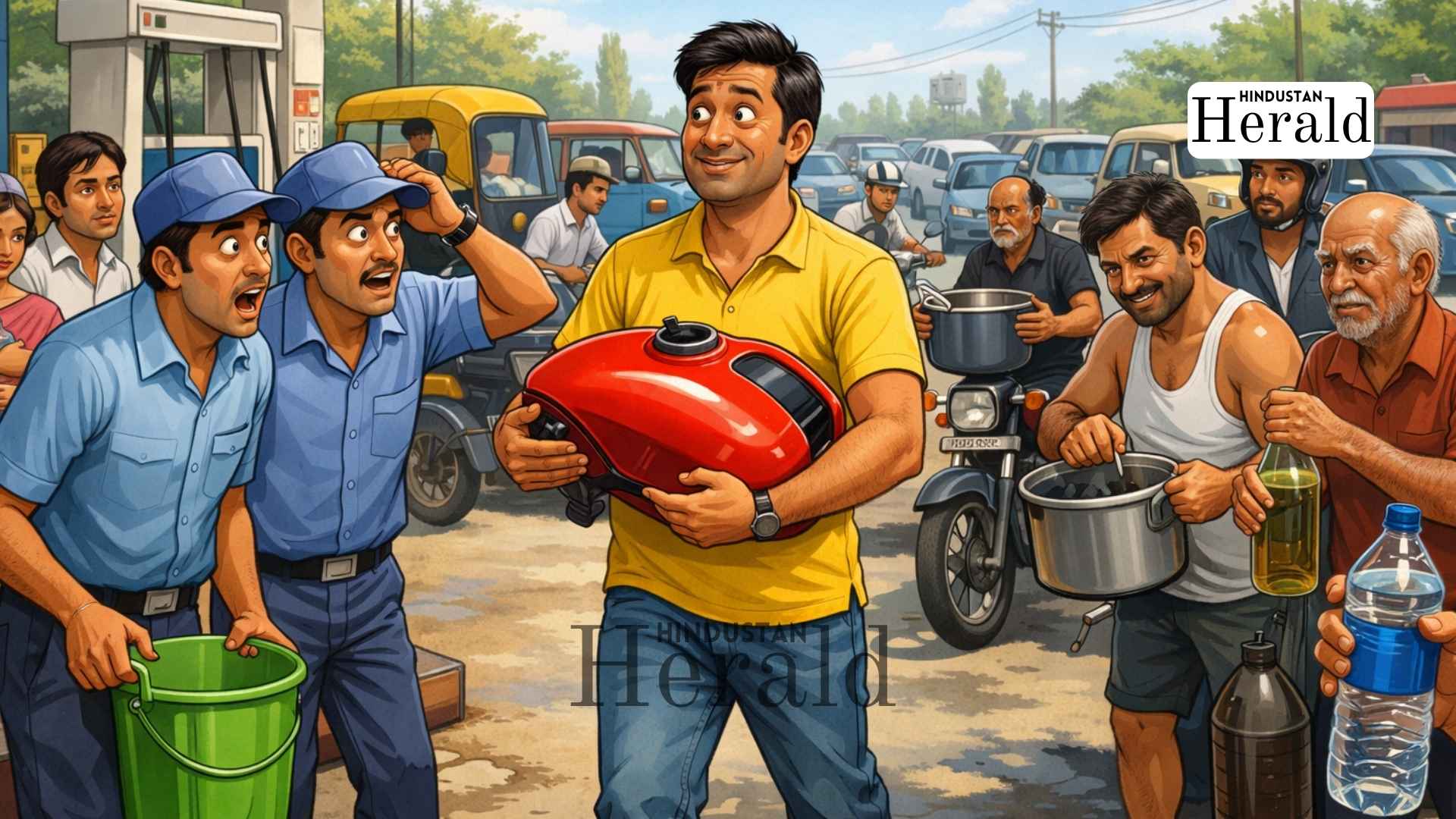
New Delhi, March 27: There is a petrol pump somewhere in India, location unconfirmed, and a man is walking up to the counter. He is not on a motorcycle. He is carrying a motorcycle’s fuel tank in his hands, the way you might carry a large watermelon home from the market. The attendant stares. A uniformed official nearby stares. Then, after a pause that probably lasted three seconds but felt considerably longer, somebody picks up the nozzle and fills the thing up.
The clip hit social media sometime Thursday and has not slowed down since.
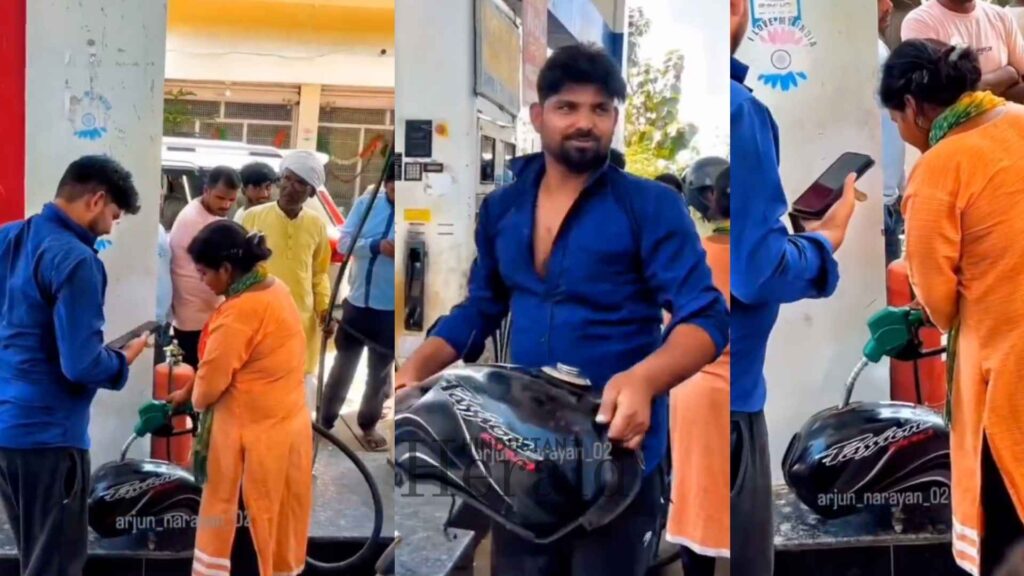
It is funny, genuinely. But it is also the most honest photograph this week has produced of what fear, routed through WhatsApp, actually looks like when it arrives at a petrol pump counter.
When a Rumour Gets Physical
India has been gripped for the better part of this week by a fuel panic that the government insists is entirely manufactured. The Ministry of Petroleum and Natural Gas, in a statement issued March 26, called the panic “deliberately spread” and said the country’s fuel ecosystem remains robust, well-supplied, and fully capable of meeting domestic demand without interruption. Strong words. Firm denial. Completely true, by all available evidence.
And yet the queues happened. The cookers and milk cans and water buckets happened. In parts of Gujarat, people reportedly brought kitchen jars, water tankers, and even buckets to petrol stations to stock up on petrol and diesel. In Punjab, a separate viral clip showed what appeared to be a large water tanker being filled with approximately 1,000 litres of diesel by a man reportedly driven by fears of a price surge linked to the ongoing conflict in West Asia. And now, in a location that hardly matters anymore because it has already become representative of everywhere, one man decided the way around the ban on loose containers was to simply carry his tank in his arms.
The caption that has latched onto this video and refuses to let go: “India is not for beginners.”
It tracks.
The Law, the Tank, and the Gap Between Them
A brief note on why this workaround has a certain twisted logic to it. Under regulations enforced by PESO, the Petroleum and Explosives Safety Organisation, and the broader framework of the Petroleum Act, 1934, fuel stations are prohibited from dispensing petrol into loose plastic containers, bottles, or jerry cans. The rule exists for real reasons: vapour build-up, spillage risk, the general chaos of fuel sloshing around in something never designed to hold it.
The man in the video read the rule literally. No bottle. No plastic can. A proper metal fuel tank, the exact vessel petrol is meant to go into. The attendant, visibly unsure what the rulebook says about this particular situation, eventually filled it up.
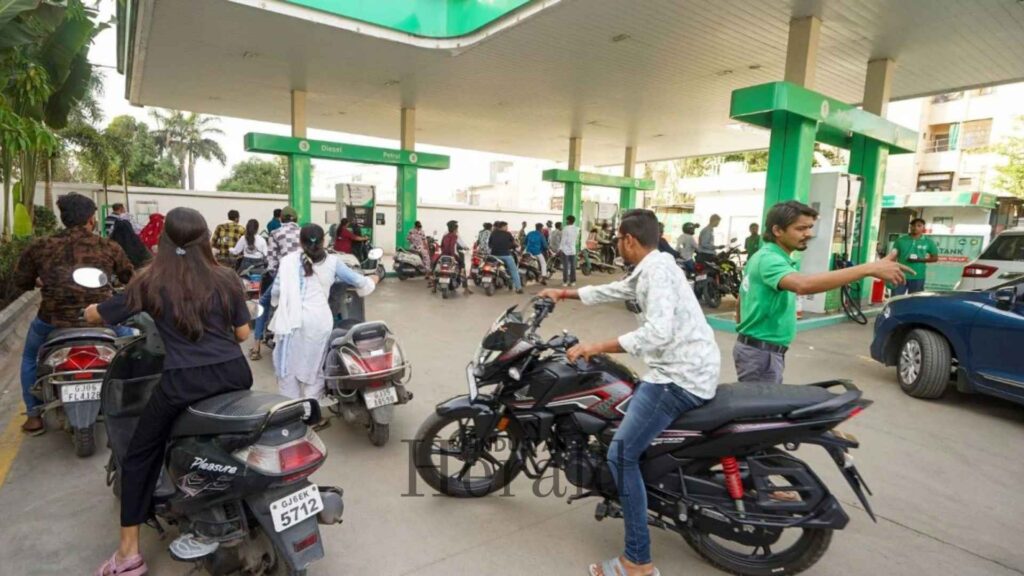
Whether the attendant had grounds to refuse is a question that has been running through comment sections since the video dropped. Some online observers called for stricter enforcement against both customers who bend the rules and stations that let them. Others, more practically, just asked why the man did not push his bike to the pump instead. It is a reasonable question. The answer probably involves a combination of distance, a dead battery, and a queue situation that made the mathematics of walking with a tank look better than the alternatives.
That said, there are real safety concerns here that the laughter tends to drown out. A detached tank being carried by hand is not grounded the way a vehicle body normally is. Static electricity is not a hypothetical when fuel and open air are involved. Pump nozzles are engineered with vapour control for tanks fixed in place on a vehicle, not for metal containers held at waist height by a man in a blue shirt. Authorities have repeatedly warned this week that storing fuel in non-standard conditions, whether a kitchen jar or a carried tank, creates fire hazards that ingenuity alone cannot offset.
What Actually Happened to the Fuel Supply
Nothing, essentially.
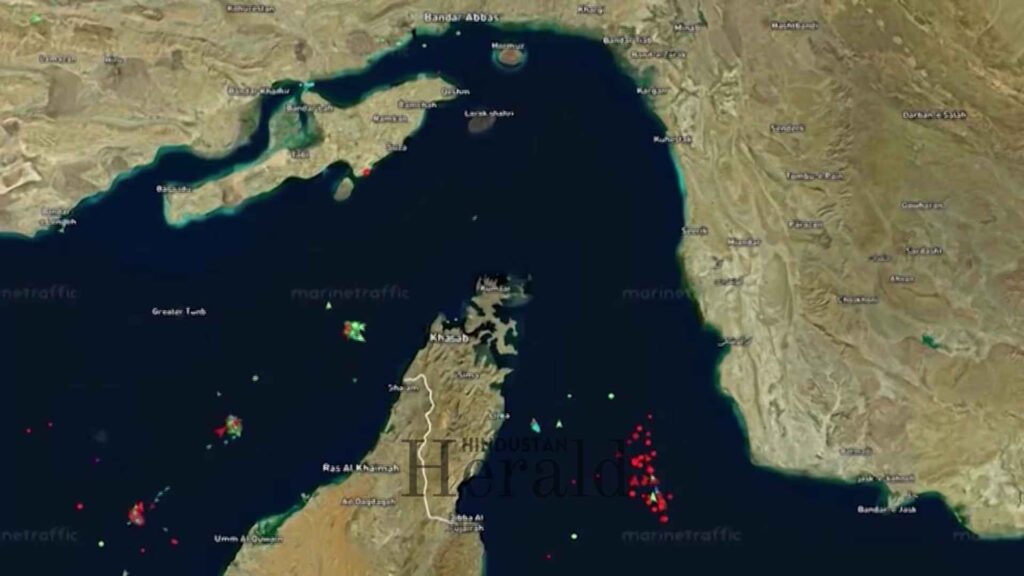
India currently holds about 60 days of fuel stock cover, spanning crude oil, refined products, and strategic petroleum reserves. Every refinery in the country is running at over 100 percent utilisation, and crude supplies for the next 60 days have already been secured by Indian oil companies.
India is the world’s fourth-largest oil refiner and the fifth-largest exporter of petroleum products, supplying refined fuels to over 150 countries.This is not a country that runs short of petrol because of a WhatsApp forward about the Strait of Hormuz.
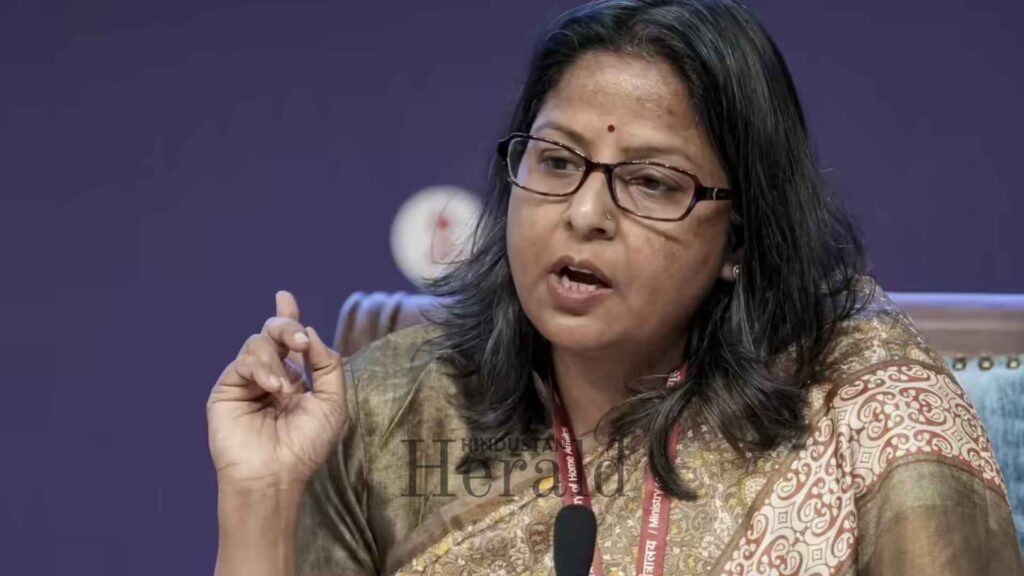
At an inter-ministerial briefing earlier this week, Sujata Sharma, Joint Secretary at the Ministry of Petroleum and Natural Gas, was direct: “Don’t believe in rumours. We have adequate fuel stocks and the government is making all efforts to reach them to consumers.” The heads of IOC, BPCL, and HPCL all issued similar statements within hours, each one insisting their outlets were stocked, functional, and operating without rationing of any kind.
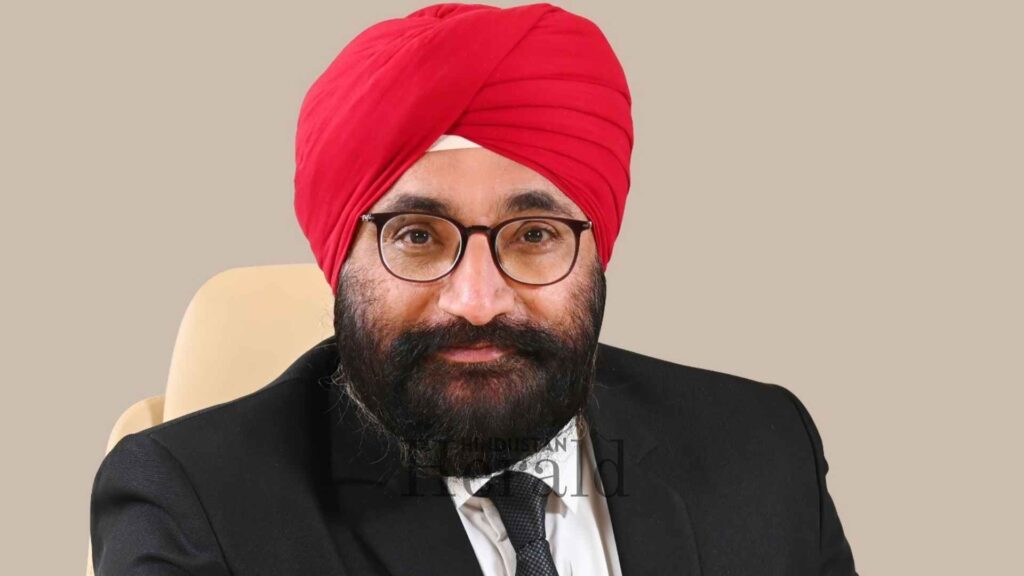
IOC chairman A S Sahney put it plainly: “Unverified rumours can lead to unnecessary panic and supply disruptions. Please avoid panic buying and trust only official sources.”
All of this is correct. And none of it stopped the queues from forming.
The Shortage That Panic Built
Here is the uncomfortable part. In Ujjain, despite sufficient stock, 40,000 litres of diesel and 16,000 litres of petrol ran dry at outlets, not because supply had failed, but because demand had multiplied so fast that replenishment could not keep up. Pumps put up “No Stock” signs. People saw those signs and panicked harder. More people rushed to other pumps. Those pumps started running low too.
Fuel sales in several regions reportedly surged to 2.5 to 3 times normal levels at the peak of the panic. Supply chains are built around predictable consumption. When overnight demand triples, the system does not break, but it stumbles. And a stumble, caught on a phone camera outside a petrol pump, looks exactly like a shortage to everyone who drives past it.
This is the self-inflicted quality of the whole episode. The rumour created the behaviour that created the visible evidence that confirmed the rumour. The man carrying the detached tank was not behaving irrationally, not entirely. He was responding to an information environment that had already been badly distorted, doing what a practical person does when they genuinely believe supply is about to become constrained: securing what he could, in whatever way the rules technically permitted.
The war in West Asia has caused real disruption to LNG and LPG supply chains, though India’s diversified crude sourcing from West Africa, Latin America, and the United States has absorbed the pressure on petrol and diesel. LPG is the one area with some genuine strain. Domestic LPG production has been ramped up by roughly 40 percent, now meeting over 60 percent of daily requirements, while approximately 800,000 metric tonnes have been secured as imports from the US, Russia, and Australia.
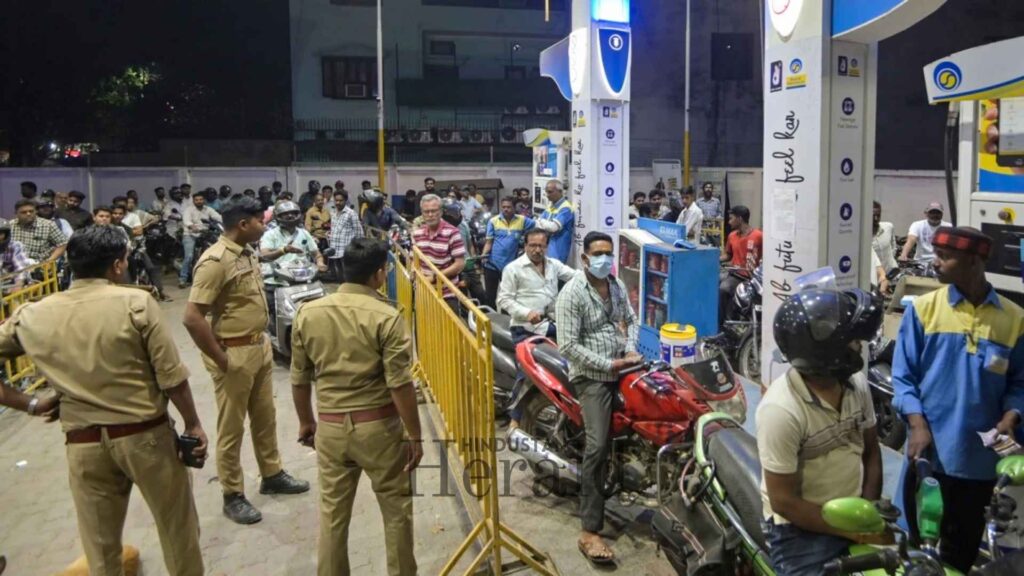
The government has also moved on enforcement. Over 2,700 raids have been conducted targeting hoarding and black marketing, with more than 650 FIRs registered and 155 arrests made. Police have been stationed at petrol pumps in Gujarat, and similar deployments have been reported in Hyderabad, Prayagraj, and Indore.
What the Man with the Tank Actually Represents
He is being made into a meme, and fair enough. The image earns it. But if you step back from the joke for a moment, the video is actually a document of something worth paying attention to.
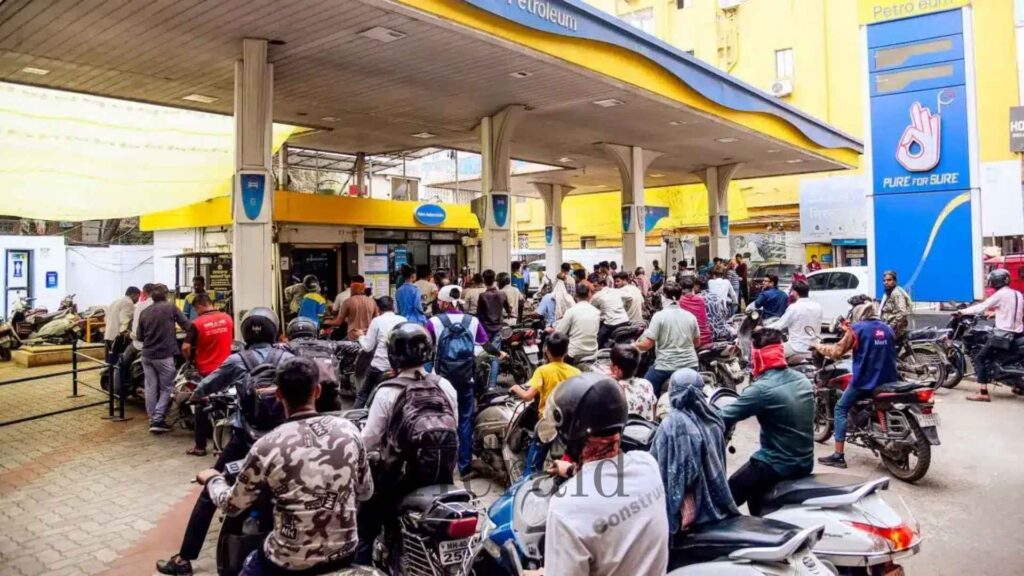
India has the fuel. The refineries are running above capacity. The reserves exist. The supply chain is intact. And still, within the space of a few days, people were filling pressure cookers with petrol and a man was walking down a road carrying a motorcycle tank in his arms. The distance between those two realities, between the official truth and the street-level behaviour, was created entirely by unverified information moving faster than verified information could catch up to it.
The Ministry has since warned that misleading videos and posts falsely portrayed routine administrative orders as emergency measures, and flagged that spreading false information about essential commodities is a punishable offence. Whether that warning lands, or whether the next geopolitical flare-up produces another round of cookers at petrol pumps, remains to be seen.
For now, the man has his petrol. The meme has its caption. And somewhere on a road that the video never quite shows, the rest of his motorcycle is presumably waiting.
Stay ahead with Hindustan Herald — bringing you trusted news, sharp analysis, and stories that matter across Politics, Business, Technology, Sports, Entertainment, Lifestyle, and more.
Connect with us on Facebook, Instagram, X (Twitter), LinkedIn, YouTube, and join our Telegram community @hindustanherald for real-time updates.

Covers Indian politics, governance, and policy developments with over a decade of experience in political reporting.
- Ananya Sharma

- Ananya Sharma
- Ananya Sharma
- Ananya Sharma



 Sandeep Verma