
 By Ananya Sharma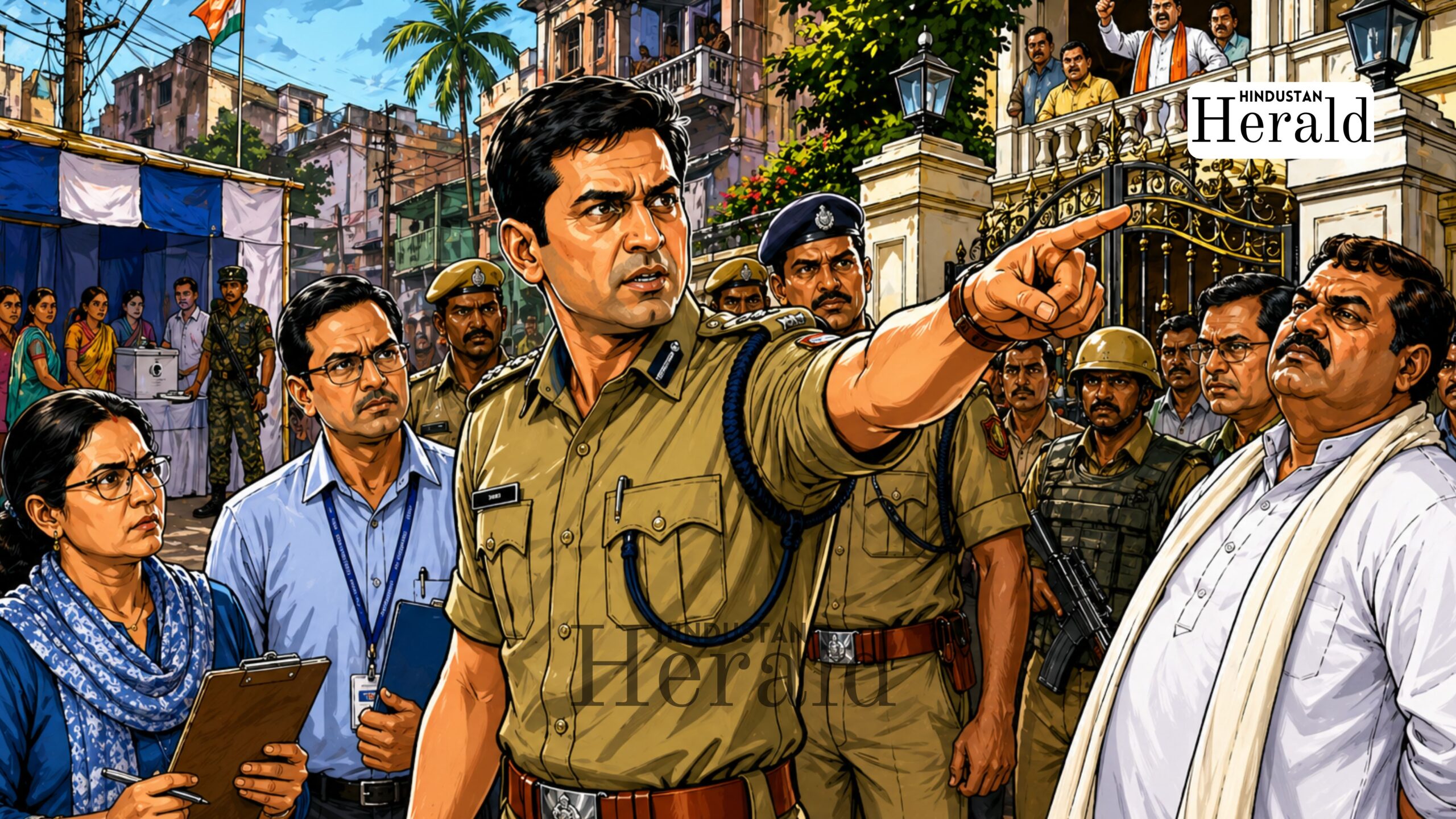
Kolkata, April 28: Nobody sent an official notice. Nobody scheduled a press conference. An IPS officer simply showed up at a TMC candidate’s door in South 24 Parganas, found the man himself conveniently absent, and said what he had to say to whoever was standing inside. By the time the video reached social media, the damage, if you can call it that, was already done.
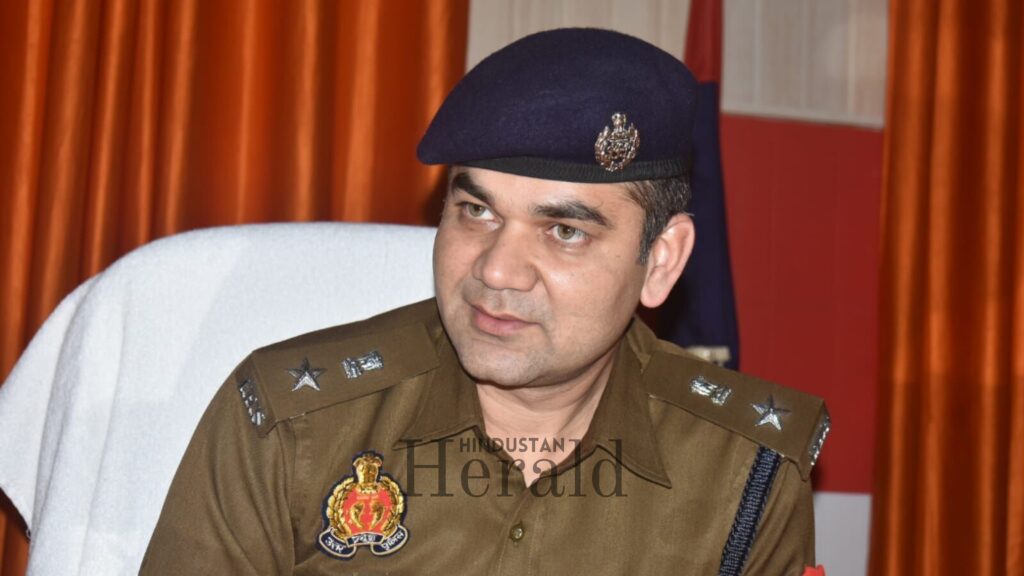
Ajay Pal Sharma did not look like he was performing for the cameras. That, perhaps, is exactly what made the clip travel so far so fast.
Sharma is a 2011-batch IPS officer from the Uttar Pradesh cadre, currently posted as Additional Commissioner of Police in Prayagraj. The Election Commission of India had sent him to West Bengal as a police observer for South 24 Parganas, one of the more politically charged districts in the state, ahead of the second phase of the 2026 Assembly Elections. Voting is scheduled for April 29. His job, broadly, was to make sure things stayed clean. In Falta, they apparently were not.
The Complaints That Brought Him to the Door
Multiple residents from the Falta assembly constituency had been reaching out to Sharma with the same complaint: Jahangir Khan, the Trinamool Congress candidate from the seat, was threatening voters. Not once. Repeatedly. The complaints were specific enough that Sharma decided not to wait.
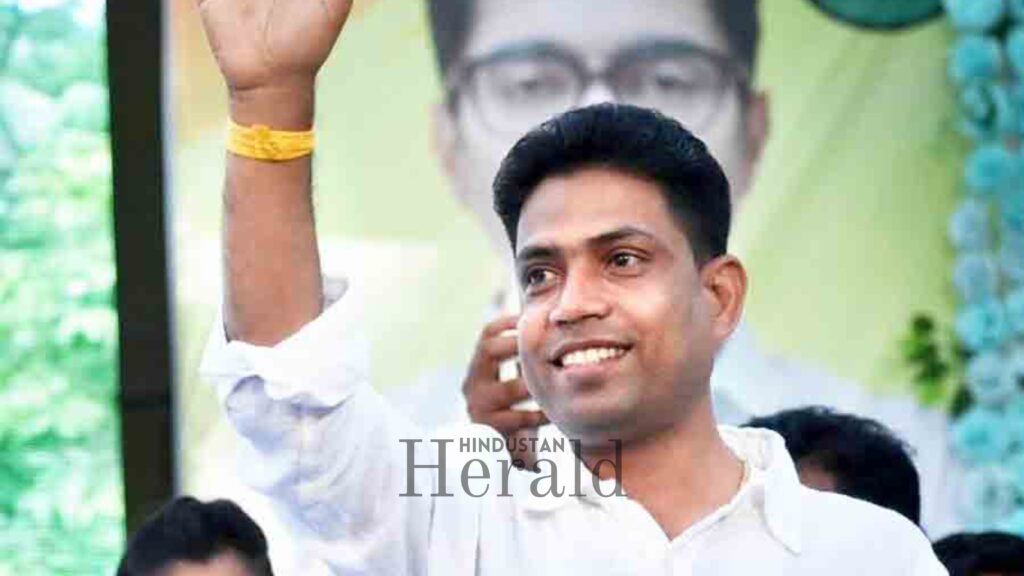
He went himself.
As it turned out, finding the house was harder than it should have been. Local residents gave vague answers. The local police, according to DNA India, were not exactly forthcoming with the address either. Sharma’s team eventually had to conduct what amounted to a search operation just to locate where a sitting candidate lived. That detail alone says something about the ground reality in Falta.
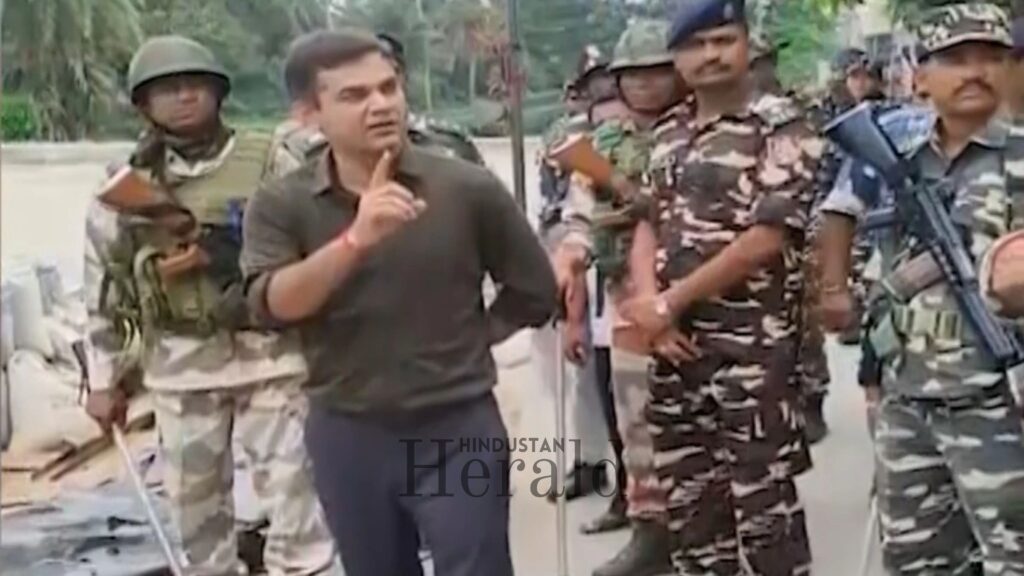
When they got there, Khan was not home. Sharma spoke to the family and supporters gathered inside. The words he used were not diplomatic. “Repeated reports are coming in that you are putting pressure on the public,” he said, as captured in the now-viral clip. “If I receive another complaint that any voter has been intimidated or threatened, I will take direct action. There will be no opportunity to regret it later.”
In a second clip that spread even faster on X, he widened the warning: “Don’t even dare to issue threats to people. I am warning goons like Jahangir. I will not spare even the biggest of goons if I receive a complaint.”
Still, the visit had another dimension that went largely unreported in the initial wave of coverage.
Fourteen Policemen Where Ten Were Allowed
When Sharma’s team arrived at Jahangir Khan’s residence, they counted the security personnel posted there. Official records showed that Khan held Y-category protection, which entitles a person to a maximum of 10 policemen. There were 14. Sharma, on the spot, sought a formal explanation from the district’s Superintendent of Police about why four additional armed personnel had been deployed beyond what protocol permitted.
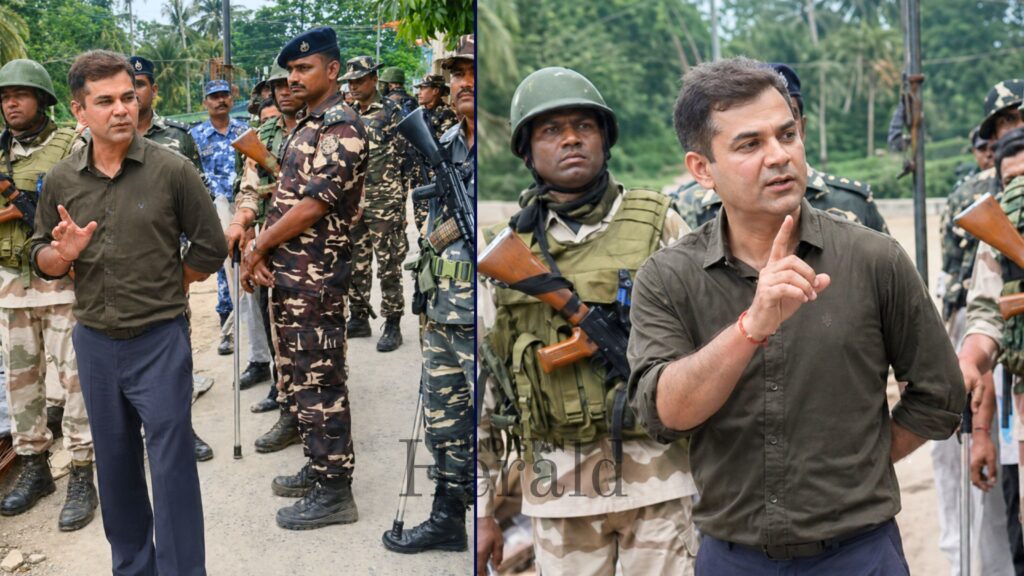
It is the kind of violation that gets overlooked in the everyday machinery of state politics, especially when a ruling party candidate is involved. Sharma did not overlook it.
Whether that explanation was ever satisfactorily given is not yet on record. What is on record is that a visiting observer from another state caught it, called it out, and did not leave without making his point.
The Man Behind the Image
Sharma’s presence in Bengal was always going to draw attention, regardless of what he did there. He has cultivated or perhaps earned, depending on who you ask a reputation as an encounter specialist within the UP police establishment. The informal “dabang” label follows him the way such labels tend to, attached to officers who operate with a certain bluntness that the system usually tolerates as long as the results hold up.
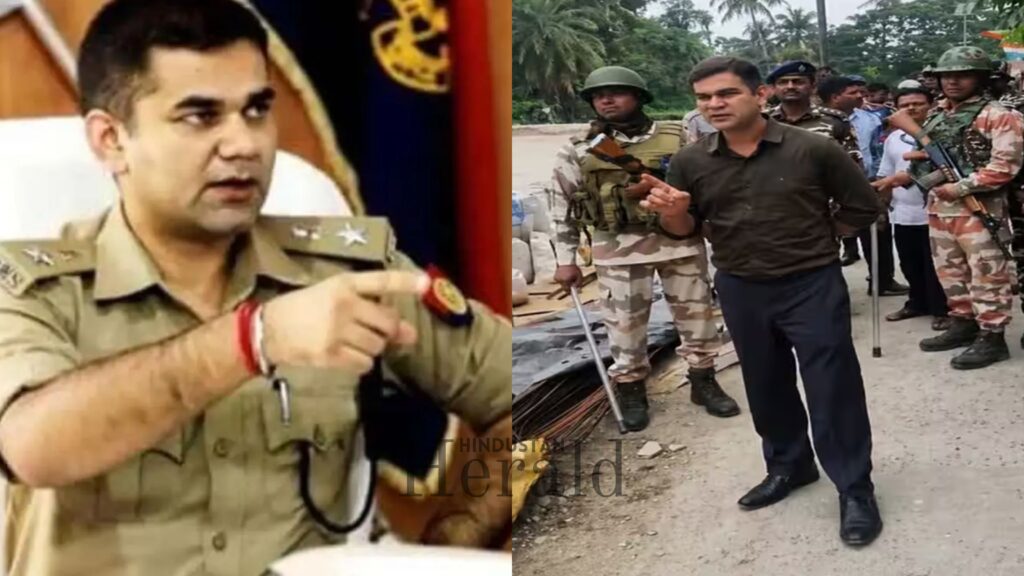
He is originally from Ludhiana and, unusually for a frontline officer, trained as a doctor before entering the IPS. That background does not quite fit the image that precedes him, which is part of what makes him a complicated figure to reduce to a headline.
The Election Commission placed his name at the top of the list of 11 additional police observers deployed specifically for the second phase of West Bengal polling. His posting to South 24 Parganas was deliberate. The Commission does not send its most visible names to quiet districts.
As reported by The Statesman, political analysts have noted that an officer with Sharma’s public image functions as a signal as much as an appointment. The message being sent to candidates, to local administrations, to police officers who might be inclined to look the other way is that oversight this cycle has teeth. That said, the same analysts noted that every move he makes will be read politically in a state where elections generate their own interpretive industry.
Two Parties, Two Versions of the Same Video
The BJP’s West Bengal unit did not waste time. They shared the clip on X with language that leaned hard into the drama, calling Sharma an “encounter specialist,” saying he had “read the riot act” to the family of a local strongman, and declaring that “nobody can stop this election from being the most free and fair in 50 years.” It was, in its way, a campaign post dressed up as election coverage.
Trinamool Congress went the other direction entirely. Party functionaries dismissed the video as a deliberate plant, alleging it was being circulated to manufacture confusion ahead of polling. They argue that the clip is opposition theatre, not genuine enforcement. They have not, at least publicly, addressed the specific complaints that led Sharma to Falta in the first place, or the question of the excess security detail.
Opposition parties, predictably, took the episode and ran with it. The incident handed them something they rarely get this cleanly: a senior central observer, on camera, telling a ruling party candidate’s household to fall in line. That is not easy to spin away.
Why the ECI Is Treating Phase Two Differently
Sharma’s visit does not exist in isolation. It is one visible piece of a much larger and more deliberate enforcement effort the Election Commission has been building toward the April 29 vote.
Phase one, which took place on April 23, was not a disaster. But it was not clean either. As confirmed by sources within the office of the Chief Electoral Officer of West Bengal and reported by Telangana Today, there were stray incidents of tension and violence on polling day despite what the Commission described as an “effective security mechanism.” The ECI made clear, internally and through its actions, that phase two would be different.
The Commission had initially deployed 84 police observers across West Bengal for these elections, already a higher number than in previous cycles. After phase one, it added 11 more, all brought in from other states, taking the total to 95 observers. Five police officers were suspended for dereliction of duty connected to the first phase. A senior official received a formal warning over supervision failures.
“The commission is trying to eliminate the possibility of the slightest tension in the second phase,” a source from the CEO’s office told reporters, adding that sensitive areas had been specifically identified and flagged for additional attention.
South 24 Parganas is, without question, one of those areas.
Falta and the Larger Pattern
Falta is not a constituency that usually makes national news. It sits within South 24 Parganas, a large and historically TMC-dominant district that shares its southern edge with Bangladesh. The area has returned Trinamool candidates through multiple cycles. This time, the political temperature going into voting was noticeably higher than usual, with local sources pointing to sustained tensions between ruling party workers and the opposition in the weeks leading up to phase two.

The security arrangement at Jahangir Khan’s residence, with four policemen over the limit, in a house that Sharma’s team had to search for because nobody would give them the address, fits a pattern that opposition parties have been raising for years in Bengal. The ruling machinery, they argue, has become comfortable enough with its local dominance that basic procedural compliance feels optional.
Sharma’s visit disrupted that comfort, at least for one evening in one constituency.
The Remaining Question
It is now less than 24 hours before polling begins in Falta. Whether a single visit, a viral video, and a public warning are enough to genuinely change voter experience on the ground is a different question from whether the gesture was warranted. Most observers would say it was.
The more pointed question is whether the complaints that reached Sharma represent the full picture or just the fraction that made it through. In constituencies where the local administration and the ruling party operate in close orbit, not every threatened voter files a complaint. Many never say a word.
For now, the video has done what such moments rarely accomplish on their own: it has made one IPS officer from Prayagraj the most-talked-about figure in Bengal’s election coverage the night before lakhs of people vote. Whether Jahangir Khan’s constituents feel safer walking to the booth tomorrow is something no camera has captured yet.
Stay ahead with Hindustan Herald — bringing you trusted news, sharp analysis, and stories that matter across Politics, Business, Technology, Sports, Entertainment, Lifestyle, and more.
Connect with us on Facebook, Instagram, X (Twitter), LinkedIn, YouTube, and join our Telegram community @hindustanherald for real-time updates.

Covers Indian politics, governance, and policy developments with over a decade of experience in political reporting.
- Ananya Sharma

- Ananya Sharma
- Ananya Sharma
- Ananya Sharma




 Arun Upadhayay