
 By Sandeep Verma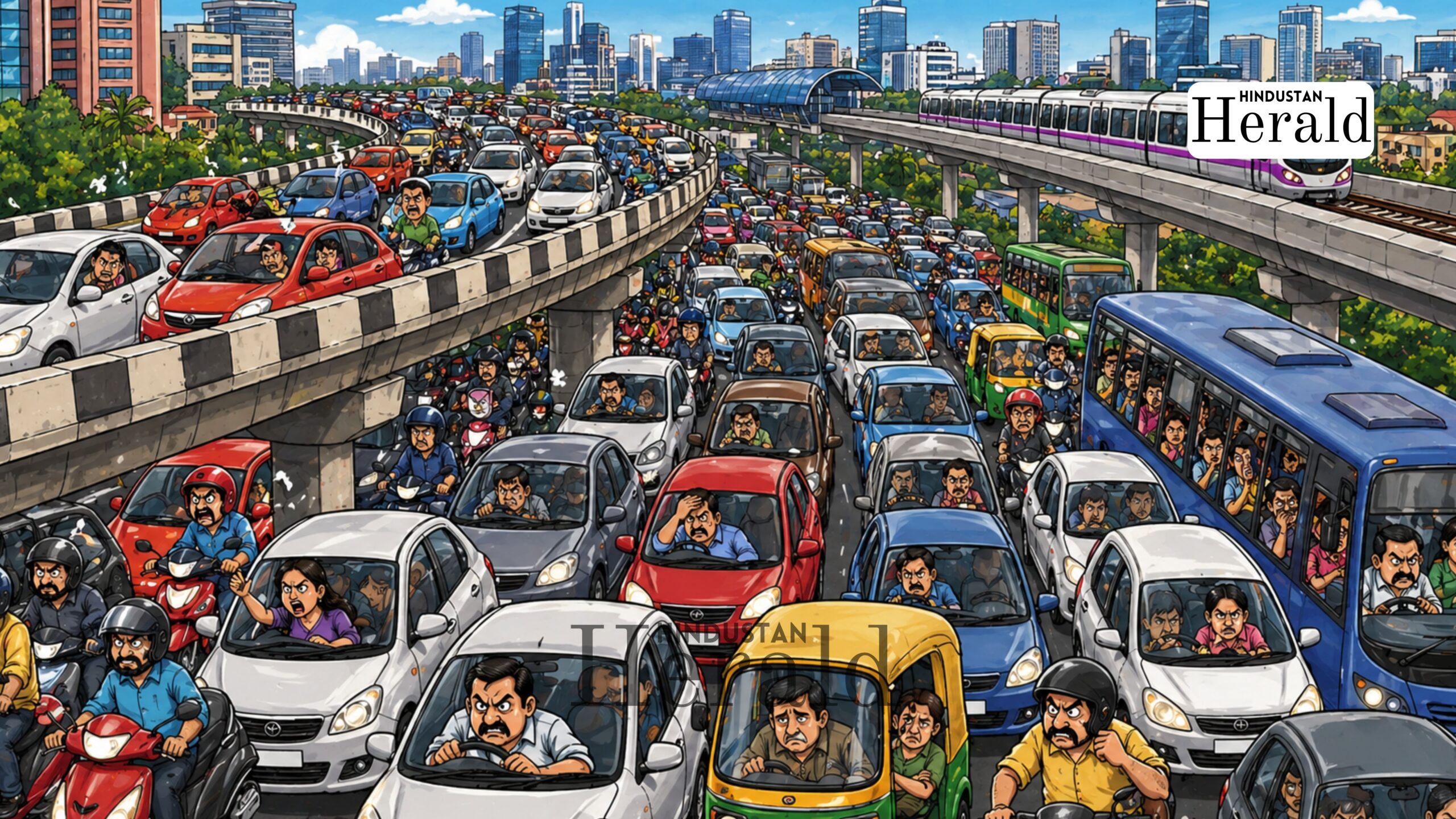
Bengaluru, April 27: Ask anyone who lives here what the worst part of the city is, and most of them will not say the rent. They will not say the heat. They will say the traffic. Without hesitating. Without needing to think about it.
And honestly, can you blame them?
Every single day, 2,866 new vehicles are added to Bengaluru’s roads. That is not a weekly figure or a monthly average. That is daily. While you were sleeping last night, somewhere in the city, people were taking delivery of new bikes and cars that will join the same roads you use every morning. Nearly 1,910 of those are two-wheelers. Around 564 are cars. And this has been happening, day after day, for years.
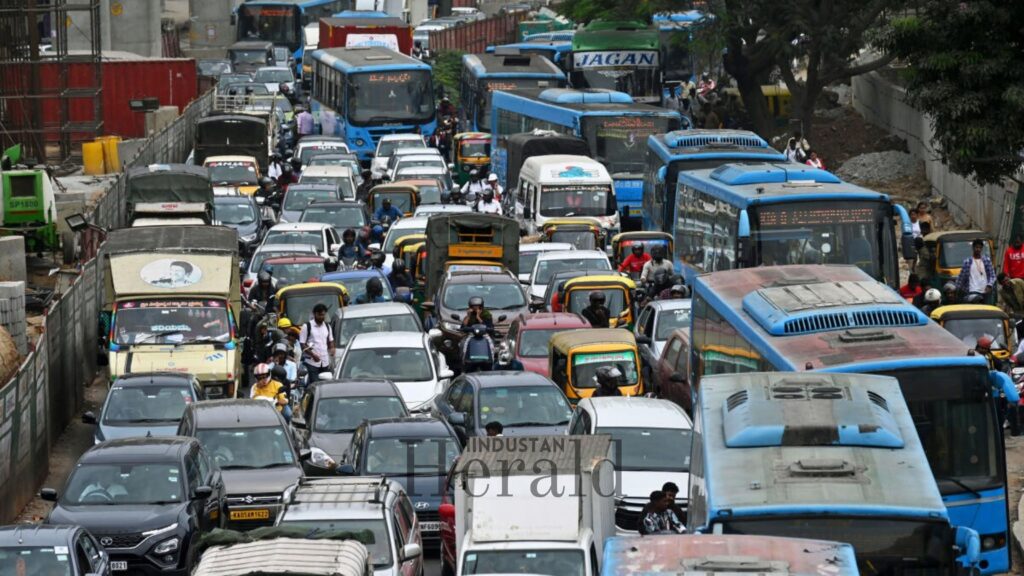
In just the last seven months, over five lakh new vehicles have joined the city’s traffic. Five lakh. In seven months. If that number does not immediately land, think of it this way: that is more vehicles than most Indian cities have in total, added to one city’s roads in less than a year.
So What Does the Road Actually Look Like
Across Karnataka, there are roughly 3.4 crore registered vehicles. Of those, 1.22 crore are in Bengaluru alone. When you add the vehicles coming in daily from neighbouring districts, and the trucks and transporters passing through from other states, on any normal weekday, close to 1.5 crore vehicles are somewhere on Bengaluru’s roads at the same time.
The roads themselves have not changed much. Not in proportion to this. The same stretches that handled a few thousand vehicles twenty years ago are now being asked to handle lakhs. Nobody widened them by ten times. Nobody built ten times the number of lanes. The city just kept growing, and the roads kept quietly absorbing the pressure until they could not anymore.
Silk Board Junction. Say those three words to anyone who commutes in this city and watch their face. It is almost funny how universally understood that pain is. Hebbal, Whitefield, Electronic City flyover, Outer Ring Road near Marathahalli these are not just traffic jams. They are part of daily life in a way that has become completely normalised, and that normalisation is itself a problem. People have stopped expecting better. They have built their entire day around the assumption that the roads will fail them.
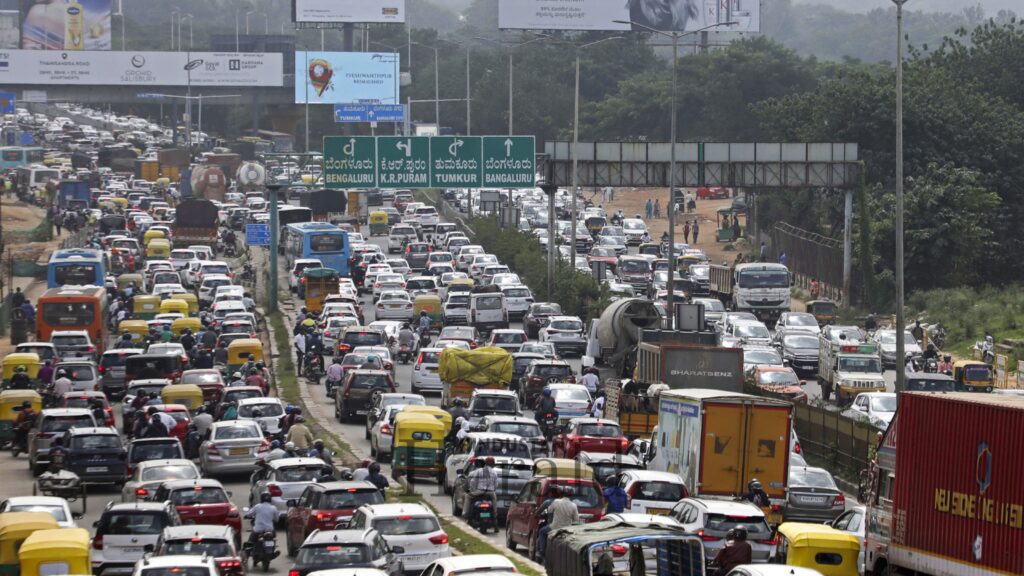
A commute that should take 30 minutes takes 90. On a bad day it takes two hours. For a lot of people in this city, two to four hours every single day are spent inside a vehicle that is barely moving. That is your morning gone. That is your evening gone. That is anywhere between 10 and 20 hours every week that you are not spending with your family, not resting, not doing anything useful. Just sitting. Waiting. Inching forward.
The Cost Nobody Talks About Out Loud
People talk about productivity losses and economic impact, and all of that is true and worth discussing. But strip it back to something simpler. What does it feel like to spend two hours in traffic before you have even started your workday?
You arrive tired. Not the kind of tired that coffee fixes. The kind that sits behind your eyes and makes everything slightly harder to deal with. You are irritable before the first meeting. You are already watching the clock and dreading the ride home. The work suffers quietly. Relationships suffer quietly. Nobody writes that in a report.
Businesses feel it too. Delivery services that cannot guarantee time windows. Employees who are physically present but mentally already halfway through the commute home. Logistics companies that have quietly built extra time into every estimate because Bengaluru traffic has made punctuality impossible to promise.
The city’s reputation as India’s technology capital is real and earned. But there is a growing conversation among companies, especially those with offices elsewhere, about whether Bengaluru’s infrastructure can keep up with its ambition. That conversation is happening. It is just not happening loudly yet.
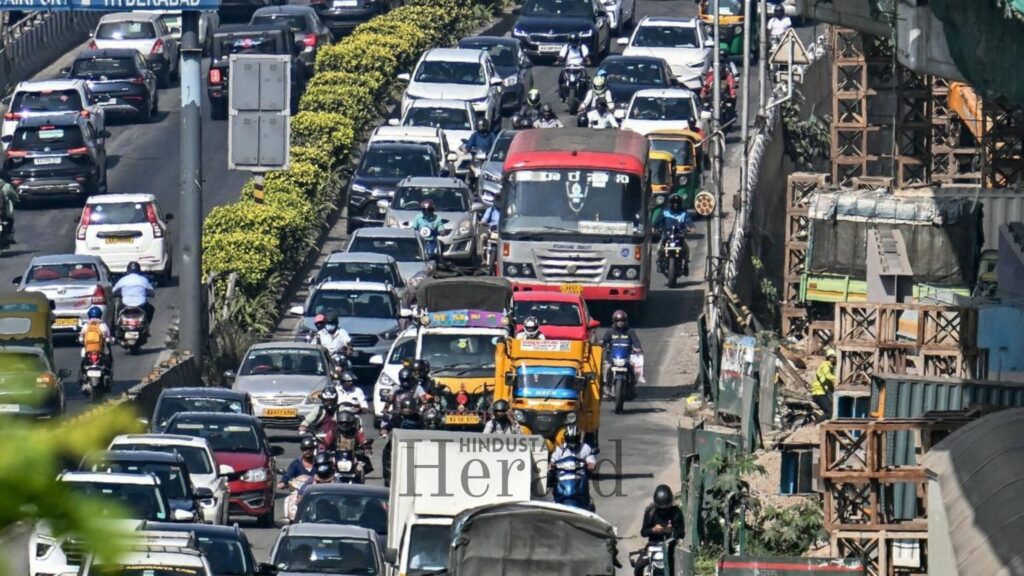
And then there is the air. Vehicles stuck in traffic are not just frustrating. They are burning fuel while stationary, pumping out pollutants at higher rates than vehicles in motion. The air quality across the city has worsened over the years, and a significant reason for that is simply the sheer volume of engines running at near-zero speed for extended periods every day.
Why People Do Not Just Take the Bus
This is the part where the obvious solution gets suggested. Take the metro. Take the bus. Leave the car at home.
And look, Namma Metro is expanding. BMTC runs a large network. These things exist and they matter. But ask someone who switched from their bike to the metro why they went back, and you will hear the same few answers every time.
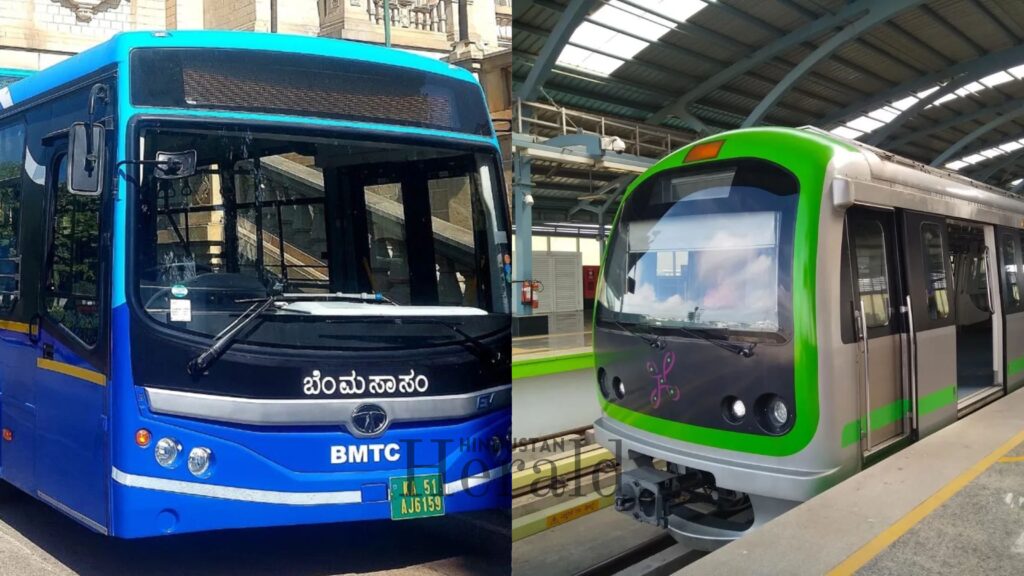
The bus is overcrowded and the schedule is unreliable. The metro does not go where I need it to go. And even when it does, the last stretch from the station to my office is a problem nobody has solved. That last kilometre, in the heat, with no reliable auto or cab and no footpath to speak of, is the reason the two-wheeler wins every morning.
This is what planners call the last-mile connectivity problem, and it sounds technical but it is actually very simple. Public transport works when it takes you from your door to your destination. When it takes you 80% of the way and leaves you to figure out the rest, people stop using it. They get back on their bikes. Every day.
Until that gap is genuinely closed, telling people to leave their vehicles at home is good advice that most of them cannot actually follow.
Building More Roads Is Not the Answer Either
The political instinct when traffic gets bad is to build. Flyovers, underpasses, wider roads, and new signal-free corridors. And these things help, briefly. Then they fill up. Researchers have a name for this: induced demand. When you add road capacity, you attract more vehicles to fill it. The relief lasts a few years at most. Then you are back where you started, but with a bigger flyover and the same jam underneath it.
Bengaluru has watched this happen multiple times. The road gets built, there is some relief, and then the vehicles come and fill it and you are back to square one with a higher baseline of congestion than before.
What experts have been saying for years, and what keeps not quite happening, is a package of changes that work together. Congestion pricing in the busiest commercial zones means that driving into the city centre during peak hours costs something. Stricter parking rules, so you cannot park anywhere and everywhere for free. Real incentives for carpooling. Cycling lanes that are actually usable. Land use planning that stops placing affordable housing 25 kilometres from where people work.
None of this is new thinking. All of it is hard. Some of it is politically uncomfortable because it asks people to change habits and pay costs they are not used to paying. That is why it keeps appearing in planning documents and not quite materialising on the ground.
The Bigger Picture
Bengaluru has grown faster than almost any city in the country. People came here for opportunity and many of them found it. The city produced real wealth, real innovation, real careers. That story is genuine.
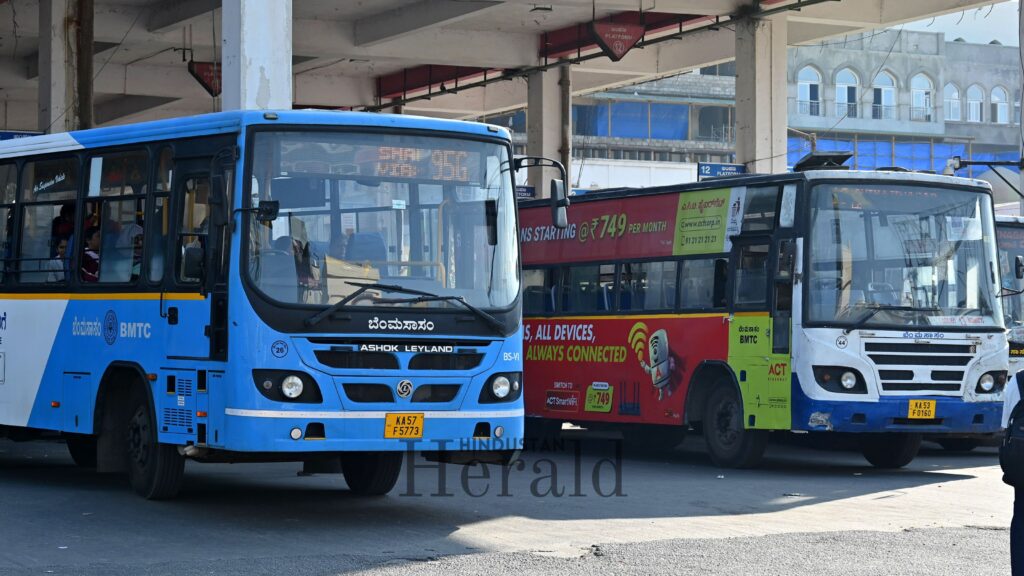
But cities that grow this fast without managing the growth tend to hit walls. The wall Bengaluru is hitting right now is a mobility wall. The movement of people and goods is becoming genuinely difficult in ways that compound every other problem. When emergency services get slowed down, when schoolchildren cannot get to class on time, when a delivery cannot be scheduled because traffic makes timing impossible, the city is not just inconvenient. It is starting to function poorly.
A traffic researcher tracking vehicle registration trends recently noted that at the current rate, Bengaluru could cross one crore two-wheelers alone within three years. One crore two-wheelers. In one city. That number should be alarming to anyone thinking about what the roads look like at that point.
Where This Leaves the Ordinary Commuter
For most people reading this, none of this is news. You know the traffic is bad. You have known for years. You have adjusted your life around it in ways you probably do not even notice anymore. You leave earlier than you need to. You schedule calls during the commute. You have made peace with arriving late sometimes.
But making peace with something is not the same as it being acceptable. The hours being lost to Bengaluru’s roads every single day belong to real people who could be doing something else with them. Time with children. Time sleeping. Time doing the things that make a city worth living in.
2,866 vehicles are being added today. Another 2,866 will be added tomorrow. The roads are not getting wider overnight. And the question that the city’s planners, politicians, and residents all need to sit with is a straightforward one.
How much longer can this continue before it cannot continue at all.
Stay ahead with Hindustan Herald — bringing you trusted news, sharp analysis, and stories that matter across Politics, Business, Technology, Sports, Entertainment, Lifestyle, and more.
Connect with us on Facebook, Instagram, X (Twitter), LinkedIn, YouTube, and join our Telegram community @hindustanherald for real-time updates.

Regional journalist bringing grassroots perspectives and stories from towns and cities across India.
- Sandeep Verma

- Sandeep Verma
- Sandeep Verma
- Sandeep Verma