
 By Sandeep Verma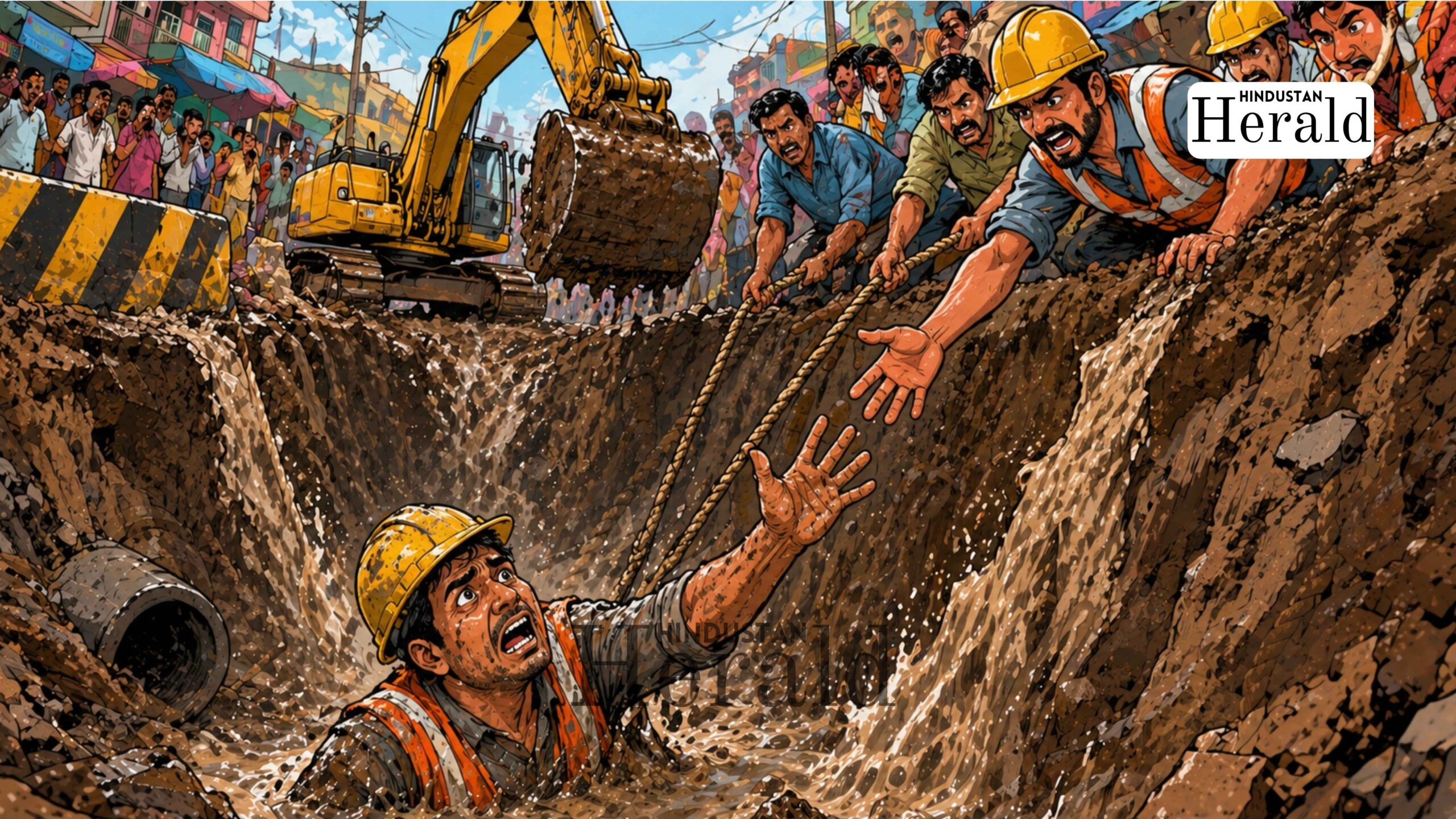
Aligarh, April 26: Nobody came to save him in time. That is the part that stays with you after you watch the footage. Mahendra Singh, a labourer in his early thirties, was at the bottom of a trench on Railway Road last Saturday when the earth around him just collapsed. His coworkers were right there. An excavator was right there. And still, nobody could reach him in time.
He was working on a water pipeline under a government project. Doing what he was paid to do. And the ground buried him alive.
The CCTV clip is 130 seconds long. People have been sharing it since Sunday morning, and the reaction has been something between horror and fury. You can see the men above trying everything. Hands, machines, shouting. Water fills the pit from below. And the market street around them is just continuing. Auto-rickshaws. Shopkeepers. People walking. A man is dying underground, and life is just going on around it like nothing.
He did not make it. His body was brought out and sent for a post-mortem. His family is sitting at home right now waiting for someone to show up with answers.
Saturday Afternoon On Railway Road
Railway Road near Apsara Cinema is not some quiet back lane. It is a busy market area, the kind of place that is always full of people, traffic, and noise. The trench Mahendra Singh was working in was part of the CM Grid Scheme, a state government project to upgrade water pipelines across urban areas in Uttar Pradesh.
Work like this happens all over the city. You have seen it. Roads dug up, mud piled on the side, workers at the bottom with shovels. Most people walk past without a second thought.
What most people do not think about is how dangerous that hole actually is.
A deep trench is not like digging in your backyard. The deeper you go, the more the soil around you is pressing against the walls. If the ground is wet, if there is water seeping in from below, if the walls have not been properly supported with shoring or reinforcement, the whole thing can come down in an instant. There is no warning. There is no time.
That is what happened to Mahendra Singh on Saturday. The walls gave. Water was already in the pit. And he was at the bottom of it with no way out.
Who Sends A Man Into A Hole Like That
This is the question nobody in power wants to answer directly.
The CM Grid Scheme is a government scheme. Government money, government approval, government name on the project board. But the actual work gets handed to a private contractor. That contractor brings in labourers. Daily-wage workers. Often no written contract. Often no safety equipment worth the name. Often no one on site whose actual job it is to look at the trench and ask whether it is safe to put a human being inside it.
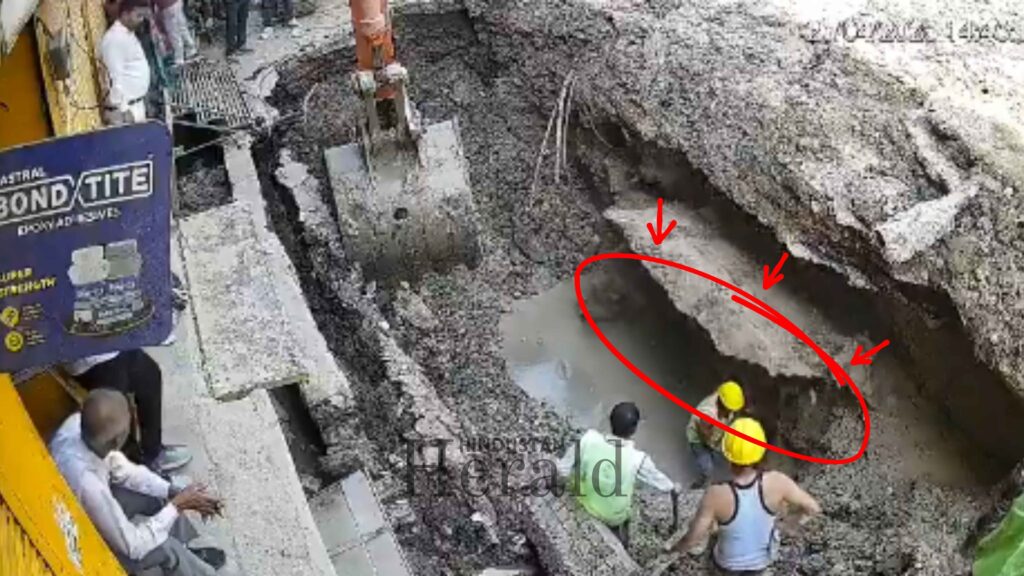
Mahendra Singh was one of those workers. Hired for the job, sent down into the trench, and that was that. Nobody has yet explained publicly who checked the site conditions that morning. Nobody has said who decided the trench was safe to work in despite the water accumulating inside. Nobody has confirmed whether Mahendra Singh even had the kind of basic protective gear that is legally required on a construction site.
Residents near the area told reporters that workers at this site had been at it for days without proper gear. That was when some of them raised concerns, but nothing was done. Looking at the footage, looking at the water in that pit, it is hard to argue that everything was fine before the collapse.
The Response From Above
By Sunday, the politicians and officials had their responses ready.
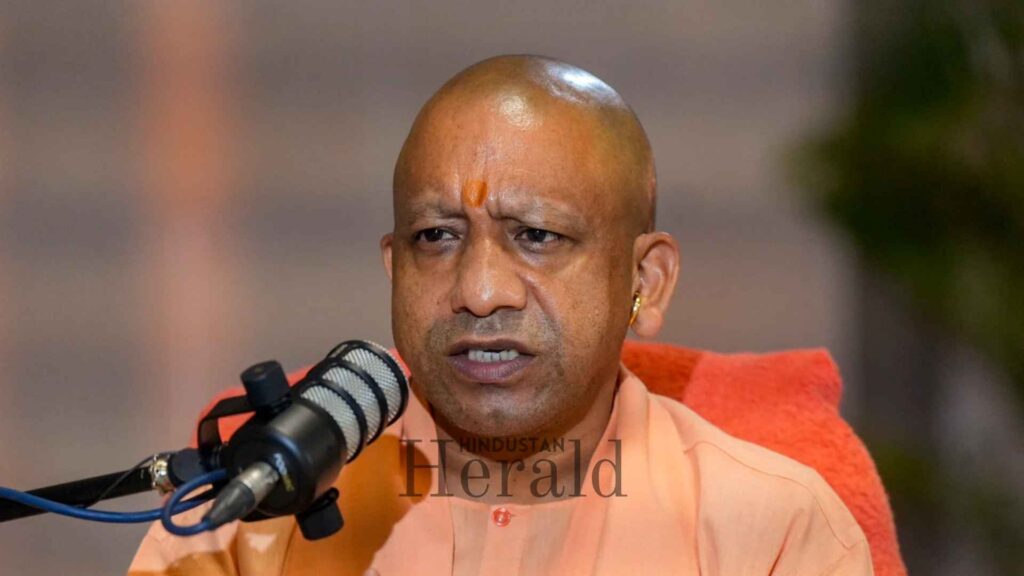
Chief Minister Yogi Adityanath said he had taken cognisance of the incident. He expressed grief. He directed officials to help the family. These are the standard phrases, and they arrived on schedule.
The state government announced Rs 5 lakh as ex gratia for the family. Local officials also said the private contractor might add some money on top of that, though nothing has been confirmed from the contractor’s end.
A three-member inquiry committee has been set up, led by the Additional Municipal Commissioner. Three days to investigate. Three days to figure out how a man died on a government project site in the middle of a busy city market.
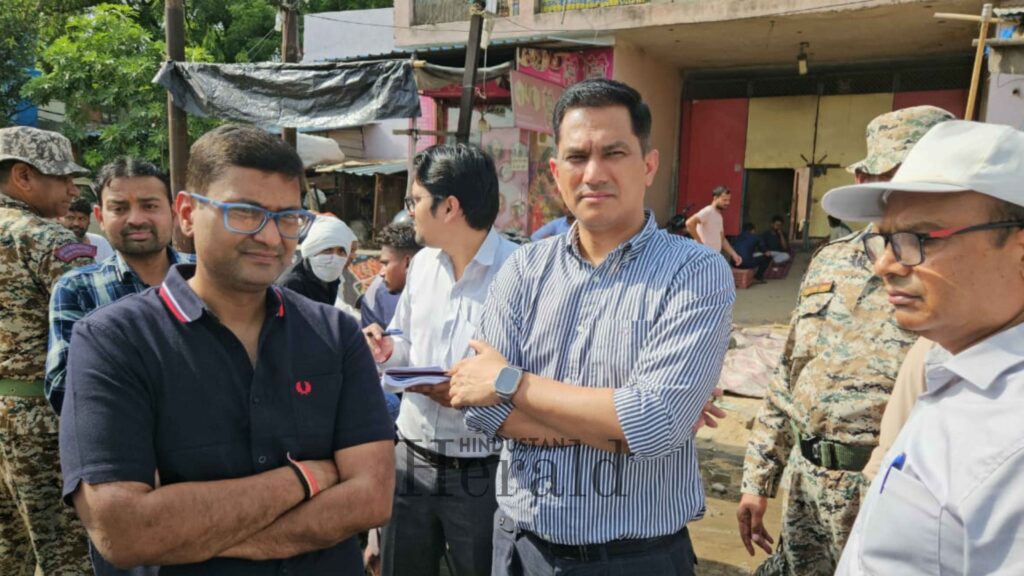
Aligarh Municipal Commissioner Prem Prakash Meena told the press that all safety protocols were followed. Barricading was in place. Warning signs were up. He called the collapse “extremely unfortunate” and left it there.
The family of Mahendra Singh used a different word. Negligence. They said it clearly, and they are not backing down from it.
Both of these things cannot be equally true. Either the site was properly managed, and this was a tragic accident, or it was not, and a man died because corners were cut on a government contract. The inquiry committee is supposed to find out which. Whether it actually does, and whether anyone faces real consequences either way, is something this country does not have a great track record on.
What Rs 5 Lakh And A Committee Report Actually Mean
Think about what the family of Mahendra Singh is dealing with right now.
A man went to work Saturday afternoon and did not come home. Now officials are visiting, cameras outside, people asking questions, a post-mortem process to navigate, and the slow realisation that the fight to get even basic accountability is going to be long, exhausting, and probably lonely.
Rs 5 lakh sounds like a number. For a family that has just lost its earning member, it is not enough to secure their future. It is a gesture. A way for the government to show it responded without actually fixing anything that caused the death in the first place.
The inquiry committee will file a report. Maybe it will name someone. Maybe it will recommend action against the contractor. Maybe it will suggest stronger safety protocols for similar projects. But none of that brings Mahendra Singh back. And unless someone actually loses something meaningful, a licence, a contract, a job, the next contractor on the next government scheme has no real reason to do things differently.
The Bigger Problem Nobody Talks About Enough
This is not a one-off. That is the hard thing to say, but it has to be said.
Every few months in Uttar Pradesh, sometimes more often, a labourer dies on an infrastructure project. Trench collapses. Building accidents. Falls. The names change. The locations change. The project name changes. But the story is always basically the same. Daily-wage worker. Private contractor. Government scheme in the background. Death. Ex gratia announced. Committee formed. News cycle moves on.
These workers are at the bottom of every chain. No union to represent them. No insurance in most cases. No permanent employment status to give them legal standing. When they die, the system that employed them closes around the gap they leave and continues forward. The contractor moves to the next site. The municipal body processes the paperwork. The government scheme continues.
Mahendra Singh was a man with a family, a life, and responsibilities. He climbed into a trench on a Saturday to earn his wages for a project bearing the Chief Minister’s name. He died in that trench while water rose around him and his colleagues tried to dig him out with their hands.
His family will get Rs 5 lakh. A committee has three days to write a report. The CM Grid Scheme will carry on.
Somewhere in this city, right now, other men are working in other trenches on other contracts. Same conditions. Same risks. Same distance between them and anyone with the power to make sure they come home safe.
That is the story. And it did not begin with Mahendra Singh, and it will not end with him either. Not unless something actually changes.
Stay ahead with Hindustan Herald — bringing you trusted news, sharp analysis, and stories that matter across Politics, Business, Technology, Sports, Entertainment, Lifestyle, and more.
Connect with us on Facebook, Instagram, X (Twitter), LinkedIn, YouTube, and join our Telegram community @hindustanherald for real-time updates.

Regional journalist bringing grassroots perspectives and stories from towns and cities across India.
- Sandeep Verma

- Sandeep Verma
- Sandeep Verma
- Sandeep Verma




 Ananya Sharma and Rajiv Menon