
 By Ananya Sharma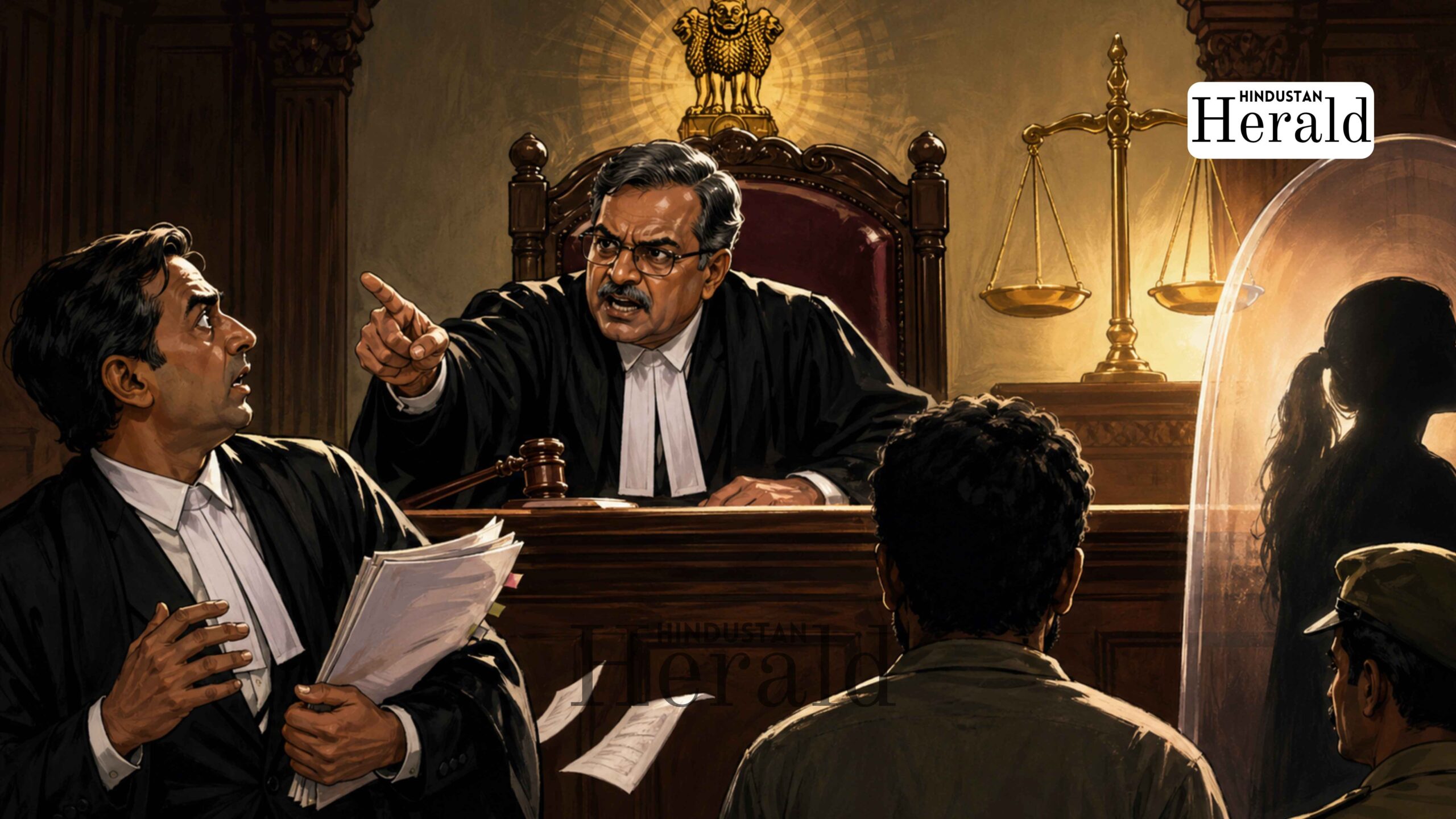
Prayagraj, April 29: There is a particular kind of audacity that occasionally walks into a courtroom and mistakes itself for legal strategy. Last week, one such moment unfolded before a bench of the Allahabad High Court, and the judge sitting that day made certain it would not pass without consequence.
A defence lawyer, appearing for a rape accused from Jhansi, filed a bail application with an affidavit. Attached to that affidavit were objectionable photographs of the victim. Private photographs. The argument, barely concealed, was that the images proved intimacy, and intimacy, by the defence’s logic, meant consent. The court’s response was swift and unsparing: bail rejected, lawyer fined.
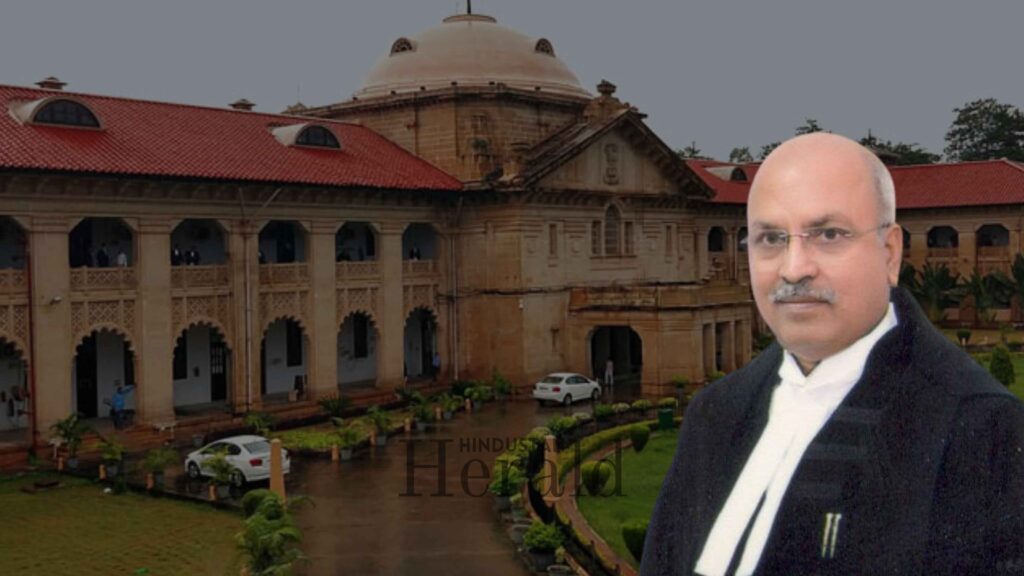
The accused, Faiyaz Qureshi, has been in jail since June 2025. The bail plea has now been thrown out by Justice Krishan Pahal of the Allahabad High Court. The fine of Rs 5,000 is to be paid by the defence advocate to the High Court Legal Services Authority within ten days. The order was passed on April 26, 2026.
A Move the Court Called an Admission of Guilt
The defence’s pitch was fairly standard. Qureshi had no criminal antecedents. He had spent nearly eleven months in custody. The relationship, his lawyers argued, was consensual. These are the kinds of arguments courts hear in rape bail matters regularly. What was not standard was what came attached to the affidavit.
The prosecution saw the photographs and immediately objected. So did the complainant’s counsel. Their argument cut through: the very documents the defence submitted, far from helping the accused, demonstrated the nature of the crime and the callousness with which the accused had treated the victim. The court agreed.
Justice Krishan Pahal observed that placing such photographs on the record without any authorization from the court was not a legal manoeuvre. It was, in the court’s own characterization, something close to an admission of guilt. The act of filing private, compromising images of a rape survivor in open court proceedings was itself a violation. Not a technicality. Not a procedural misstep. A violation.
The bail was denied. The lawyer was fined. The trial court in Jhansi was directed to take up and complete the case without unnecessary delay.
Rs 5,000 Is Not the Point
The amount of the fine is not large. Anyone looking at that number and measuring it against the gravity of what happened in that courtroom will find the arithmetic unsatisfying. But the fine is not really about the money. It rarely is, when courts do something like this.
What Justice Krishan Pahal did by imposing the penalty directly on the advocate was deliberate. Courts in India are generally careful about penalizing lawyers for what they file, partly because counsel often act on client instructions and partly because the bar-bench relationship functions on a certain understood deference. Stepping out of that is not a routine thing. When a court does it, it is saying something specific to the legal fraternity: that there are limits to what advocacy permits, and that exceeding those limits in a case involving a rape survivor will be treated as a serious matter.
For the victim in this case, the message is perhaps less about the fine and more about the refusal. Her photographs were filed without her consent, in a court of law, to make the argument that she had consented to something. The court looked at that and said no.
This Has Happened Before. That Is the Problem.
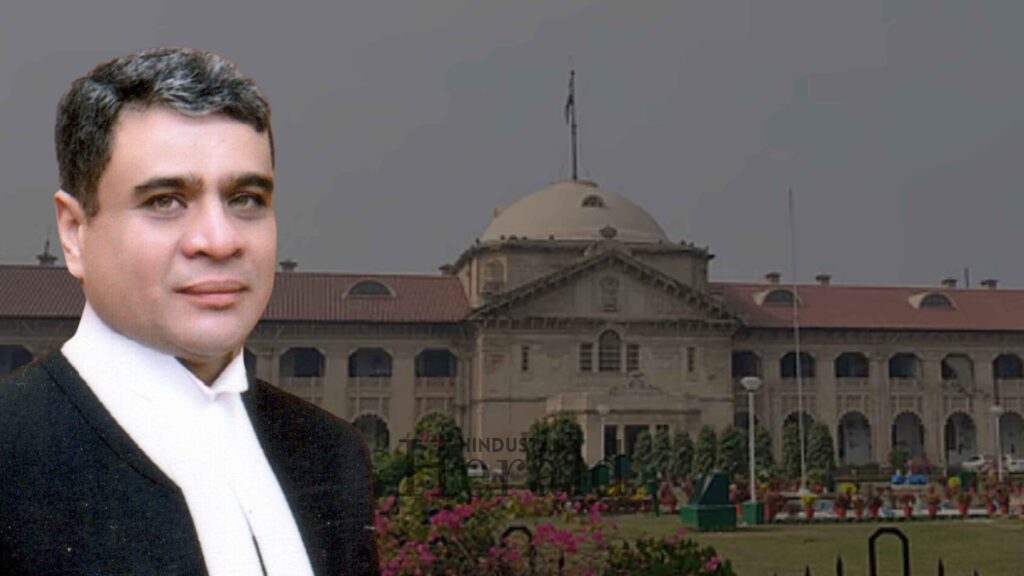
The unsettling truth is that this is not the first time the Allahabad High Court has had to deal with exactly this kind of situation. In 2024, Justice Ajay Bhanot directed the court’s registry to stop accepting private or objectionable photographs without prior leave of the court. That order came after a similar incident in a different rape bail case, where intimate photographs were attached to a rejoinder affidavit in the same fashion. The registry was told to act as a filter, not just a filing counter.
That order existed. The Faiyaz Qureshi case happened anyway.
It is worth sitting with that for a moment. A court directive requiring the registry to screen such material before accepting it was already on record. A different bench, a different case, a year and a half later, and here we are again. Either the 2024 direction was not implemented consistently, or the legal profession simply did not take it seriously enough. Possibly both.
The Allahabad High Court has also, in a separate matter, rejected bail for an accused who had allegedly circulated a victim’s intimate photographs via WhatsApp, with the court noting plainly that digital crimes of this nature have the power to destroy lives. That ruling was made under provisions of the Bharatiya Nyaya Sanhita and Section 67A of the IT Act. The message was the same then as it is now. The courts are paying attention. The question is whether those outside the courtroom are.
What the Law Says, and Where the Gap Is
India’s legal framework for cases involving non-consensual sharing or seizure of intimate images is not nothing. Section 67A of the IT Act addresses the transmission of sexually explicit content. The BNS carries provisions on voyeurism and related offences. Parliament, when it replaced the Indian Penal Code, signalled an awareness that crimes involving intimate images occupy a specific and serious category of harm.
Still, enforcement has been uneven at best. Bail applications in such cases land on court dockets constantly. The playbook barely varies: claim consent, produce material suggesting intimacy, argue that eleven months in jail is punishment enough. Victims, meanwhile, find themselves relitigating the most private parts of their lives in front of strangers wearing black robes.
The Allahabad High Court, to its credit, has been trying to build a more principled position on this over time. The 2024 registry directive, the WhatsApp circulation bail rejection, and now the Jhansi case ruling taken together do suggest a court that is growing less patient with the way defence lawyers sometimes treat survivors’ dignity as a liability to be neutralized.
The Advocate and the Profession
Justice Krishan Pahal was elevated to the Allahabad bench as an Additional Judge in October 2021, after a career that included serving as Additional Advocate General for Uttar Pradesh and appearing for several major institutional clients. He knows the courtroom from both sides. Which may be part of why his order in this case reads as it does: not angry exactly, but unambiguous. Measured language carrying an unmeasured rebuke.
For the defence lawyer who filed those photographs, the Rs 5,000 fine will sting less than the public record of having received it. Bar Council rules on professional conduct exist. The question of whether any further disciplinary inquiry follows will be watched by those within the profession who believe the legal fraternity polices itself with insufficient rigour when it comes to crimes against women.
Where Things Stand Now
Faiyaz Qureshi remains in custody in Jhansi, approaching a year behind bars. His bail is gone. His lawyers will have to decide what comes next, whether that is another application on different grounds or waiting for the trial to begin. The trial court has been told not to delay. Whether that instruction translates into actual pace on the ground, as anyone familiar with the backlog in Uttar Pradesh’s district courts knows, is a separate question entirely.
The victim in this case, whose name and photographs were placed in a court record without her authorization, has had a small measure of institutional recognition delivered to her. It is not closure. It is not justice in the fullest sense. But a court looked at what was done to her dignity inside its own halls and refused to ignore it.
That, in a country where rape survivors are routinely expected to absorb fresh humiliations at every stage of the legal process, is worth noting. Not as a celebration. Just as a fact.
Stay ahead with Hindustan Herald — bringing you trusted news, sharp analysis, and stories that matter across Politics, Business, Technology, Sports, Entertainment, Lifestyle, and more.
Connect with us on Facebook, Instagram, X (Twitter), LinkedIn, YouTube, and join our Telegram community @hindustanherald for real-time updates.

Covers Indian politics, governance, and policy developments with over a decade of experience in political reporting.
- Ananya Sharma

- Ananya Sharma
- Ananya Sharma
- Ananya Sharma




 Arun Upadhayay
  Neeraj Kapoor