
 By Ayesha Khan
Kochi, April 29: There is something almost mundane about how it starts. A young woman posts a photo from a party. She is wearing a navy-blue dress, sitting with a friend, smiling. Normal stuff. The kind of thing millions of people post every day without incident.
But Esther Anil is not just anyone. She is the actress who played Mohanlal’s younger daughter in Drishyam, one of the most beloved Malayalam films of the last two decades. And that, apparently, makes her outfit everybody’s business.

Within hours of her posting those pictures from a party she attended in Bengaluru, an Instagram user had already weighed in. Not on her work. Not on the upcoming Drishyam 3. On her dress. The comment read: “Now you are qualified to act in Hindi cinema. You should also show the skill to act in English films.”
Take a moment with that. Someone looked at a party photo and decided that the appropriate response was a career assessment based on hemline length. And they said it with the full confidence of someone who believed they were making a point.
Esther’s reply came with a smiling emoticon: “Who are you, sir, to decide my qualifications?”
That was all. And it was enough.
One Line, and the Whole Room Shifted
What made the response land the way it did was precisely what it did not do. There was no lengthy rebuttal. No tearful video. No formal statement with a publicist’s fingerprints all over it. She asked one question, placed a smiley face next to it, and left the comment sitting there.
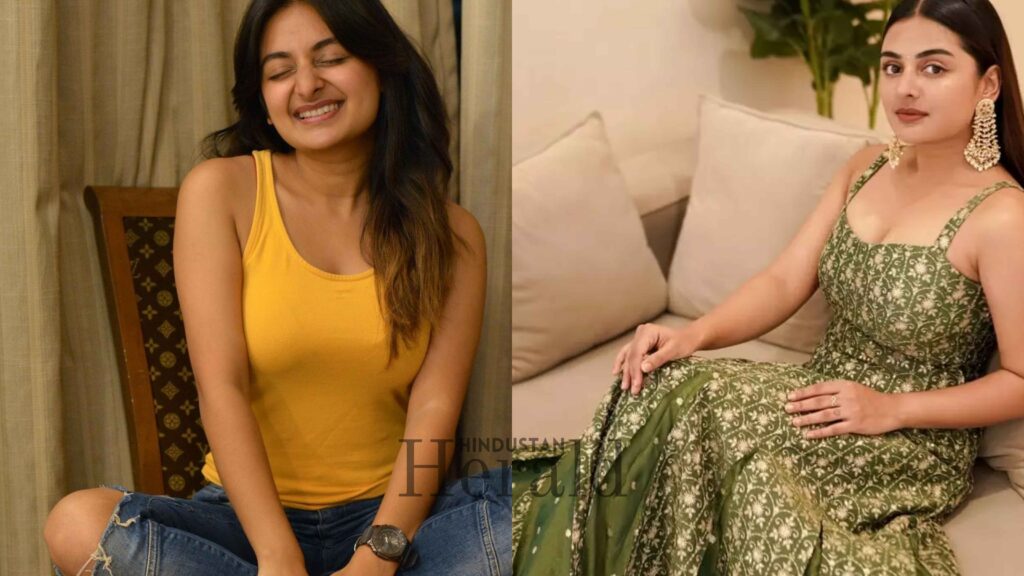
The internet, which is normally pretty good at making things worse, actually came through this time. As reported by The News Minute, other users flooded in with appreciation. The troll’s comment, meant to humiliate, ended up being a setup for something that resonated far beyond Esther’s immediate following.
It resonated because everyone who has ever been told that their appearance determines their worth recognised the situation instantly. The comment was not really about Bollywood or English films. It was the standard-issue implication that a woman’s clothing choices are a moral report card. And Esther’s response was a refusal to sit the exam.
This Keeps Happening
Here is what needs to be said plainly: this was not unusual. Not even close.
Young women in Indian cinema, particularly those who grew up as child actors and are now adults living publicly, deal with this constantly. Their comment sections are not fan spaces so much as open forums where a certain kind of person feels licensed to supervise their choices.

Anikha Surendran, who became famous as a child in Tamil films like Yennai Arindhaal and Viswasam, has faced comments ranging from complaints about her makeup to commentary on whether what she wears is “age-appropriate.” As reported by The News Minute, some users have questioned her clothing, told her to post “original” photos without makeup, and worse. She has more than a million followers on Instagram. Many of them are wonderful. Some of them are not.
Anaswara Rajan, well-known to Mollywood audiences for Thaneer Mathan Dinangal, dealt with a very similar pile-on after posting a photo in shorts. The comments told her to stop posting without clothes, questioned her values, suggested she was heading somewhere bad. She posted two more photos in the same outfit and told people to worry less about what she is doing and more about why they are so worried about it.
That response, like Esther’s, worked because it declined to accept the premise. It did not explain. It did not justify. It just held its ground.
The Logic Behind the Comment
What is actually going on when someone looks at a party dress and immediately reaches for a Bollywood insult?
There is a whole architecture of assumption underneath that kind of comment. It treats Hindi cinema and English films not as career paths but as moral zip codes. It says: dress like this and you belong to that world, and that world is beneath you. Or beneath us. Or beneath what we have decided you should be.
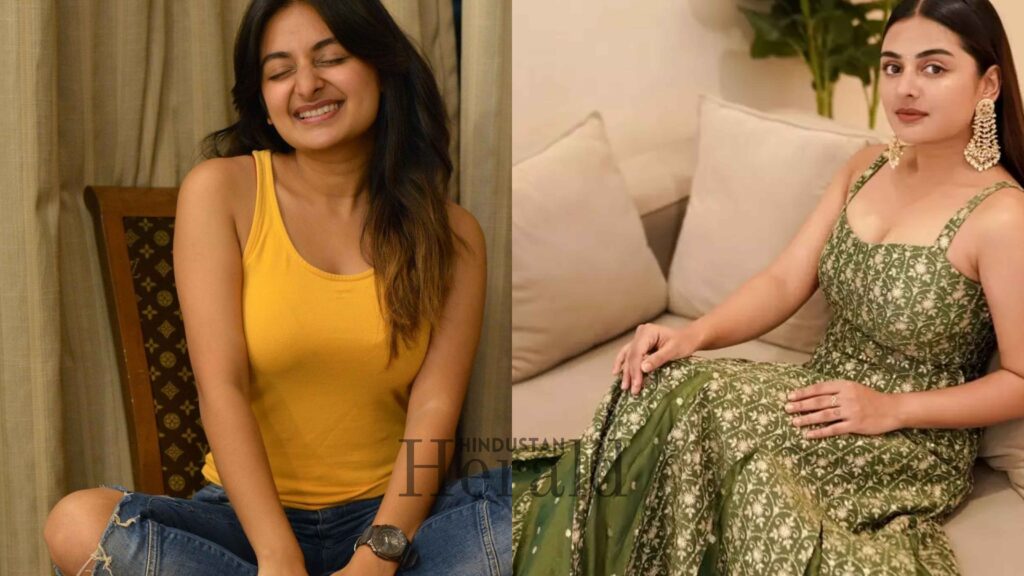
It is incoherent, honestly. Bollywood has produced some of the most celebrated cinema in the world. English-language films from India have won international acclaim. But the troll was not making a film criticism point. He was using an industry reference as a weapon, and the weapon was aimed at making Esther feel that her choices had pushed her outside the boundaries of respectability.
This is not new thinking. It does not even require social media to survive. As recently as April 15, 2026, the Vice-Chancellor of a law university in Tamil Nadu reportedly told students at a Class Representatives’ meeting that women wearing shorts “invite sexual harassment” and “distract” faculty and fellow students. A Vice-Chancellor. At a law university. In 2026.
Professor Dr. Sumit Baudh of O.P. Jindal Global University wrote in response that calling women’s clothing a “distraction” is not a neutral observation but a claim about who bears responsibility, and that it locates the problem in the body being seen rather than in the gaze doing the seeing.
That is the exact same logic behind the comment on Esther’s post. The dress was not the problem. The problem was the certainty that the dress was a problem.
A Career That Needs No Defence
Here is the thing about Esther Anil’s qualifications. They are not in any danger.
She has been working in Malayalam cinema since she debuted as a child artist in Nallavan in 2010. She played Anu George across Drishyam and Drishyam 2, and then reprised the same character in the Telugu and Tamil remakes, Drushyam and Papanasam, because the role was that good and she was that good in it. She has won awards. She has a career that spans more than fifteen years and multiple industries.
And now, she is returning as part of the cast of Drishyam 3, produced by Antony Perumbavoor under Aashirvad Cinemas, once again directed by Jeethu Joseph, alongside Mohanlal, Meena, and Ansiba Hassan. The film is set for theatrical release on May 21, 2026. It is one of the most anticipated Malayalam releases of the year.
None of that was negotiated based on what she wore to a party. Not a single frame of it.
What the Reply Actually Did
Esther’s response was not just witty. It was structurally correct. It identified the real absurdity in the comment, which was not the insult itself but the assumption of authority behind it. The troll believed, on some level, that his opinion of her dress entitled him to assess her professional worth. Her question dismantled that belief in nine words.
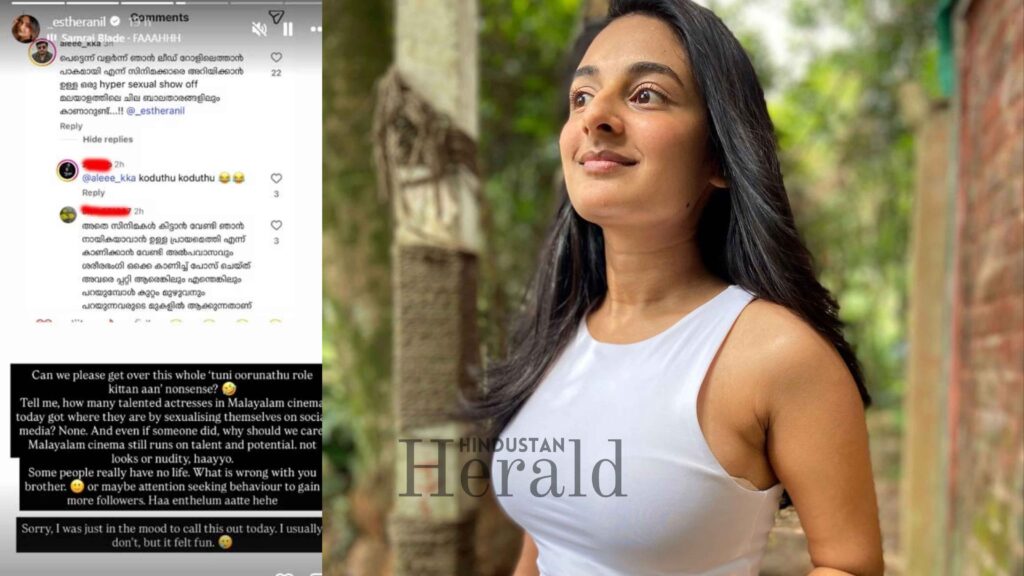
And that matters, especially in a moment when young women in the public eye are expected to respond to this kind of commentary with either wounded silence or performative outrage. Both responses validate the troll’s premise that his comment was worth a significant reaction. Esther’s reply did something different. It was dismissive in the best possible way. Calm, sharp, and then done.
There will be more comments. There always are. The pipeline of strangers convinced that a woman’s clothing is a matter requiring their public opinion is, unfortunately, not running dry anytime soon. What changes, slowly, is how the target of those comments responds. And what changes even more slowly, but still changes, is how the audience around them responds.
This time, at least, the audience was on the right side of it.
Esther Anil has a film coming out in May. She has a career she has built since she was a child. She went to a party in Bengaluru, wore a dress she liked, and posted a photo. A stranger on the internet decided that was a problem. She asked him who gave him that authority.
He did not have a good answer. He never does.
Stay ahead with Hindustan Herald — bringing you trusted news, sharp analysis, and stories that matter across Politics, Business, Technology, Sports, Entertainment, Lifestyle, and more.
Connect with us on Facebook, Instagram, X (Twitter), LinkedIn, YouTube, and join our Telegram community @hindustanherald for real-time updates.

Covers films, television, streaming, and celebrity culture with a focus on storytelling trends.
- Ayesha Khan

- Ayesha Khan
- Ayesha Khan
- Ayesha Khan




 Arun Upadhayay