
 By Ananya Sharma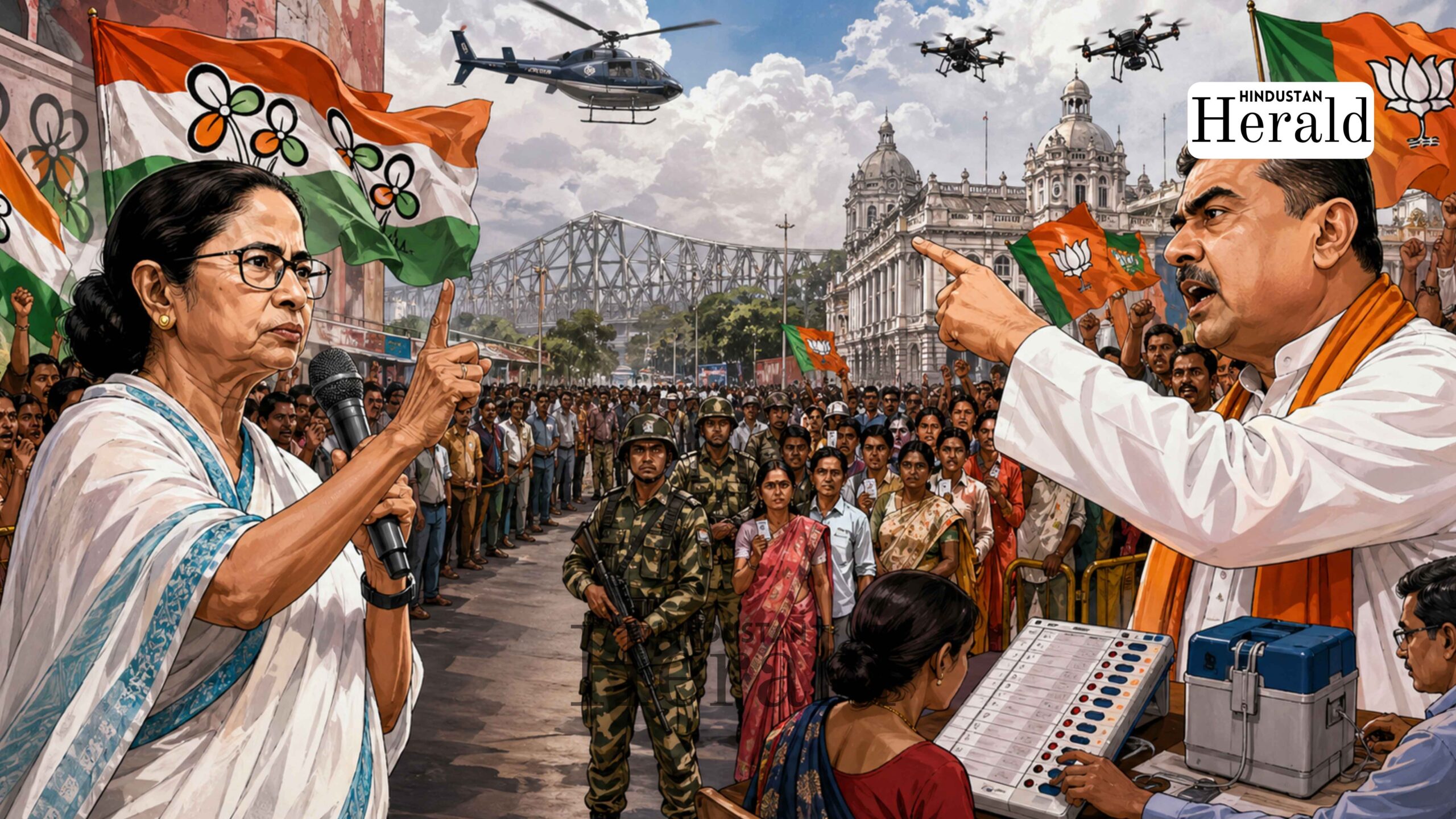
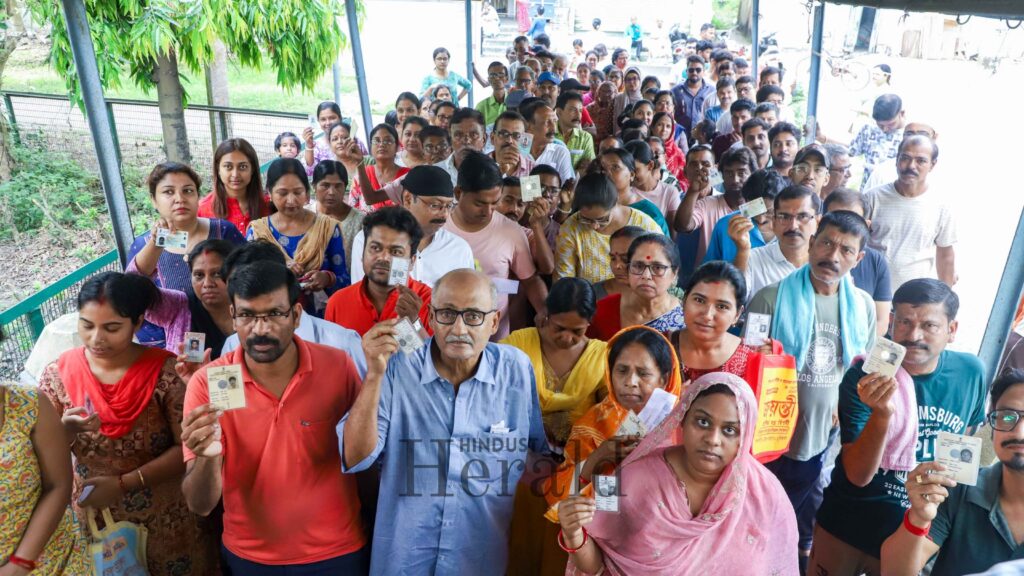
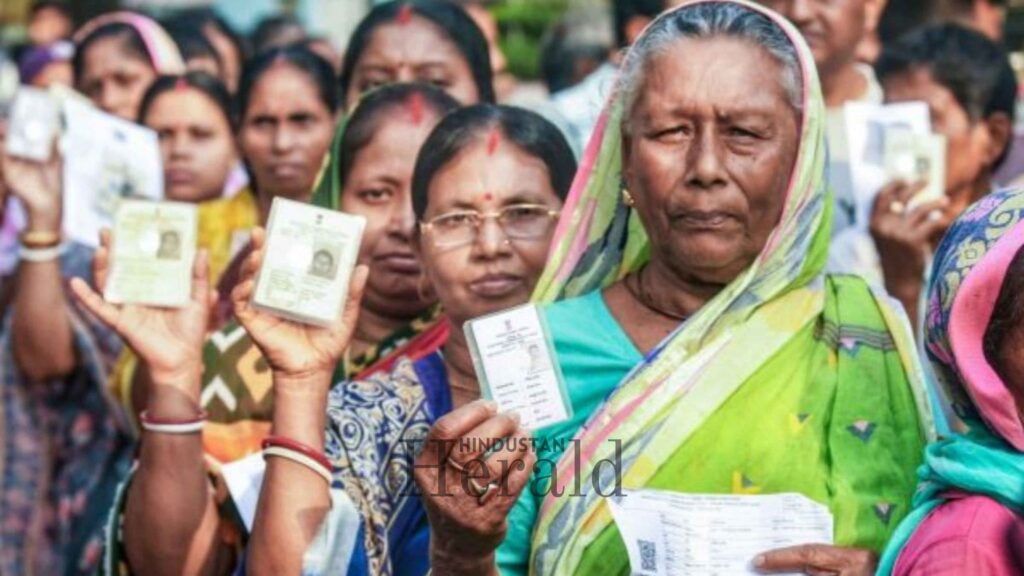
Kolkata, April 29: Something was different about Wednesday morning in Bengal. By the time most people in Kolkata had finished their morning tea, queues outside polling booths were already snaking down streets in Bhabanipur, Chetla, Howrah and a dozen other neighbourhoods. By 1 in the afternoon, the Election Commission was reporting that 61.11 per cent of voters across 142 constituencies had already voted. That is not a small number. That is people showing up in force, in the April heat, to say something.
What exactly they are saying that is what everyone will find out on May 4.
The One Seat Everybody Is Talking About
Before anything else, let’s get the big one out of the way.
Bhabanipur. Again.
Five years ago, Suvendu Adhikari defeated Mamata Banerjee in Nandigram. It was one of the most shocking results in Bengal’s recent political history. Mamata’s party, the Trinamool Congress, still swept the state that year and she became chief minister again. But that personal defeat in Nandigram stayed. It was the kind of loss that does not let you sleep easy.
This time, Adhikari is contesting from Bhabanipur Mamata’s home ground, the seat she has held for years, the place she considers her own. And he is not being quiet about his chances either. He walked out of a polling booth in Bhabanipur on Wednesday morning with CAPF jawans trying to manage the crowd around him, while TMC supporters raised slogans against him. His response was to chant “Jai Shri Ram” right back at them. According to ANI, central forces had to step in to control the situation.
Later, he told reporters that Mamata would lose Bhabanipur by at least 30,000 votes. Whether that number is realistic or pure theatre is a separate debate. The point is he said it out loud, in public, on polling day.
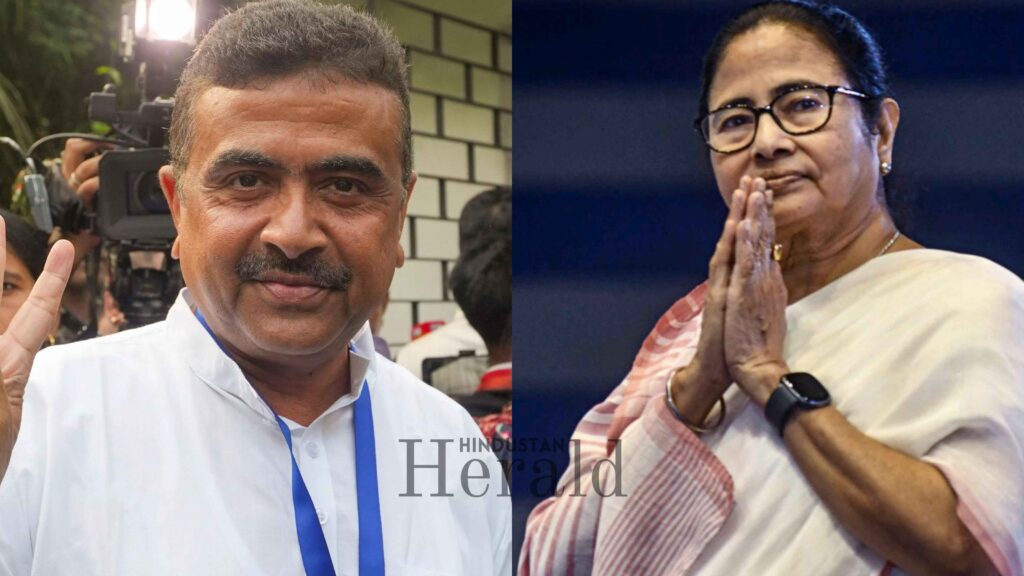
Mamata, for her part, was out early. Much earlier than usual. She normally casts her own vote in the afternoon but on Wednesday she was visiting booths in the Chetla area before 8 in the morning. She stopped outside a polling station in Chakraberia, sat with reporters and said what she has been saying for weeks now that the central forces and election observers deployed here are not neutral, that they are working to benefit the BJP. “Several observers have come from outside and are acting as per the BJP’s directions,” she told reporters, as covered by ETV Bharat.
Adhikari’s response was plain. “She is scared. Her own police have been replaced by CAPF and that is why she is scared,” he said, as quoted by Outlook India.
Two politicians. Two very different versions of the same day. That is Bengal for you.
There Was Trouble Too, Let’s Not Pretend Otherwise
By mid-morning, reports of clashes and complaints were already coming in from several districts.
In Khanakul in Hooghly district, TMC and ISF workers got into a confrontation at polling booths over allegations that fake polling agents had been placed inside, as reported by Outlook India. In Bally, Howrah, an EVM machine malfunctioned and that alone was enough to set off a clash. CRPF personnel detained two people after the situation turned ugly the whole thing was caught on camera and circulated by PTI.
In Nadia, a BJP booth agent was allegedly attacked by TMC workers. The BJP filed a complaint. In North 24 Parganas, BJP leader Arjun Singh told reporters that a fake EVM had been set up near a booth in Mayapally and that people were being told which button to press before they went in to vote. He said he was filing a complaint with the Election Commission.
Over in Falta, the allegation was the other way that Hindu voters were being stopped from entering booths. Again, complaints were filed.
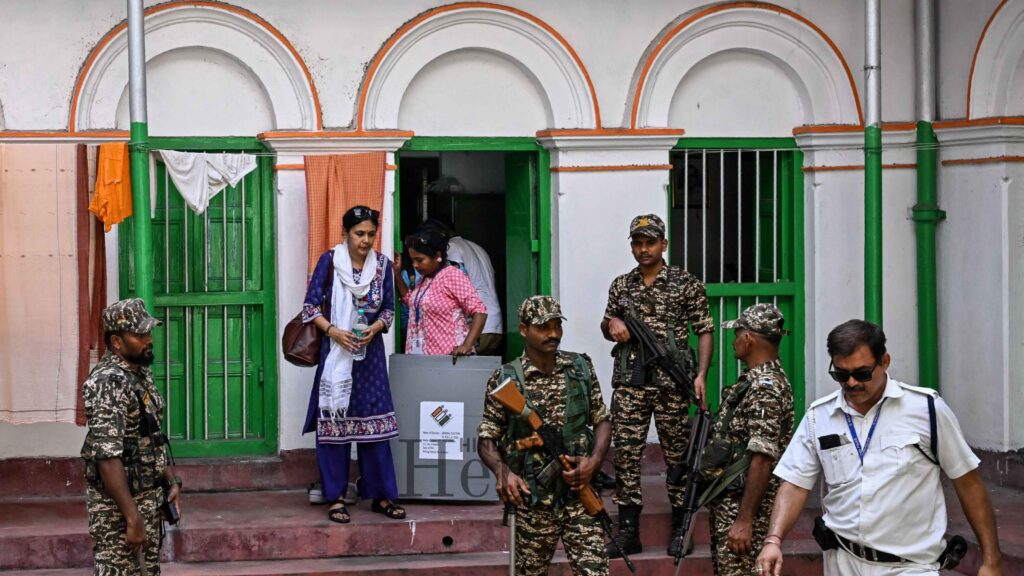
This is the reality of voting day in Bengal. It has been this way for years, across governments, across parties. The specific allegations change. The pattern does not. Central forces were deployed extensively precisely because of this history 2,321 companies across seven districts, with Kolkata alone getting 274 companies, plus drones overhead and webcams inside every one of the 41,001 polling stations, according to The Federal and India TV News.
Worth noting: for the first time in these elections, the National Investigation Agency was on standby to respond to serious violence. That is not a routine deployment. It tells you something about how seriously the security establishment is taking the situation.
One image from earlier in the week stays in the mind. TMC MP Mitali Bag of Arambagh arrived at her booth on Wednesday in a wheelchair, having been injured during a clash between TMC and BJP supporters just two days earlier on Monday. She voted. And left. No drama, no statement. Just voted.
Who Is Voting and Where
Let’s talk about the actual numbers for a moment, because they matter.
This phase covers seven districts Kolkata, Howrah, Nadia, North 24 Parganas, South 24 Parganas, Hooghly and Purba Bardhaman. Together, these districts have about 3.21 crore eligible voters. That includes 1.57 crore women and 792 transgender voters. In total, 1,448 candidates are competing across the 142 seats.
By 11 in the morning, the overall turnout was sitting at just under 40 per cent. Purba Bardhaman was leading at 44.50 per cent, followed by Hooghly at 43.12 per cent and Nadia at 40.34 per cent, as reported by Outlook India. The Kolkata segments were lagging behind North Kolkata at 38.39 per cent and South Kolkata at 36.78 per cent. Urban voters have always been more unpredictable, more reluctant, harder to read.
Then came that mid-day jump. By 1 PM, the number was at 61.11 per cent. That kind of surge in a short window usually means working-class localities are voting people who finish their morning work and then head to the booth. In Bengal’s political geography, that is largely TMC territory. Whether that translates into actual votes is, of course, a different matter.
Sourav Ganguly showed up at a booth in Behala with his wife Dona and voted quietly. When reporters asked him about the turnout, he said what only Sourav Ganguly would say “In the previous phase it was over 90 per cent. We will know by evening.” Not a word about parties or candidates. Just the numbers. Classic.
Eight Ministers. One Big Question.
Here is something that does not get said enough about today’s phase. Eight sitting ministers from the Mamata government are contesting seats today. That is not incidental. It means that the outcome of this phase will not just decide how many seats the TMC wins it will decide whether several of its most senior leaders survive politically at all.
In 2021, the TMC had won 123 out of these same 142 seats. That dominance is the baseline the party is defending. For the BJP, the goal is to chip away at that number significantly enough to reduce the TMC’s overall majority or, in the most optimistic scenario, deny it one altogether.
The BJP’s focus in this phase has been on two groups: the urban educated voter in Kolkata who might be tired of fifteen years of TMC rule, and the Matua community in districts like North 24 Parganas and Nadia, where the BJP had made real inroads in 2021. Whether that strategy is working is something nobody honestly knows yet.
What people do know is that Prime Minister Narendra Modi is confident. Speaking at the Ganga Expressway inauguration in Hardoi on Wednesday, he told the crowd that Bengal voters were casting their ballots in a “fearless atmosphere” something he called unimaginable over the last several decades. He predicted a BJP win and called it the third victory in a hat-trick, after local body results in Bihar and Gujarat, as quoted by Republic World. He also said the results on May 4 would “infuse new energy in the pace of development of the country.”
Strong words. The voters in Bengal will decide if they match reality.
What the Evening Might Look Like
Booths close at 6 PM. After that, the waiting begins.
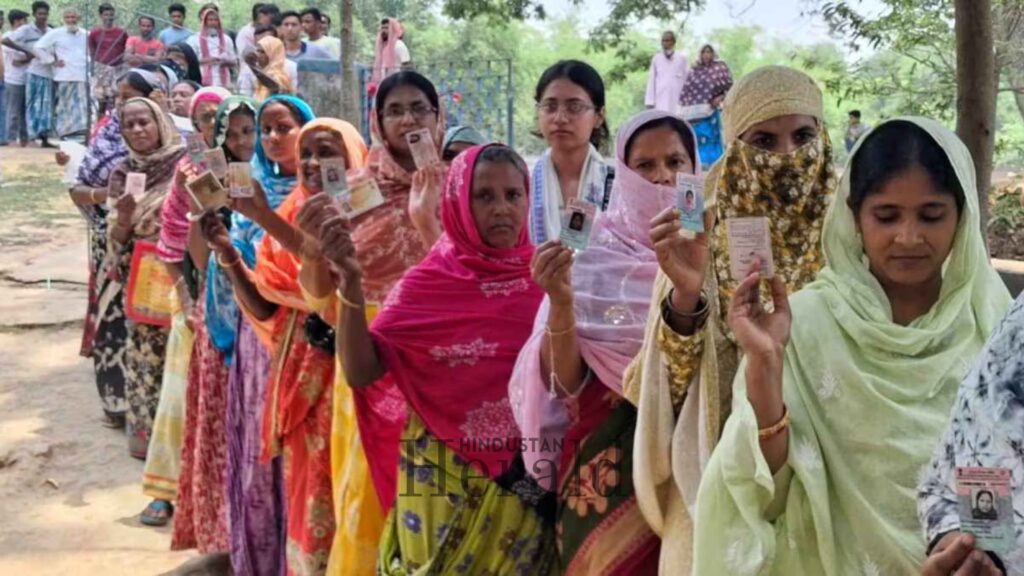
The final turnout figure, whenever it is officially declared, will become the first piece of evidence people reach for to predict the outcome. High turnout in South Bengal and Kolkata traditionally favours the TMC these are its people, its streets, its networks. But elections are not always traditional. Anti-incumbency is real. Fifteen years is a long time to be in power anywhere.
Counting happens on May 4. Until then, Bengal sits with whatever it decided today inside those booths quietly, privately, away from the slogans and the cameras and the politicians predicting margins of 30,000.
The most important thing about a democracy is what happens in that small, curtained space where a voter stands alone with a ballot. Everything else the rallies, the clashes, the speeches, the noise is just the world outside. In the end, it always comes down to what people actually do when nobody is watching.
Bengal voted on Wednesday. The rest of the country will find out what it decided on Friday.
Stay ahead with Hindustan Herald — bringing you trusted news, sharp analysis, and stories that matter across Politics, Business, Technology, Sports, Entertainment, Lifestyle, and more.
Connect with us on Facebook, Instagram, X (Twitter), LinkedIn, YouTube, and join our Telegram community @hindustanherald for real-time updates.

Covers Indian politics, governance, and policy developments with over a decade of experience in political reporting.
- Ananya Sharma

- Ananya Sharma
- Ananya Sharma
- Ananya Sharma


 Sandeep Verma