
 By Ananya Sharma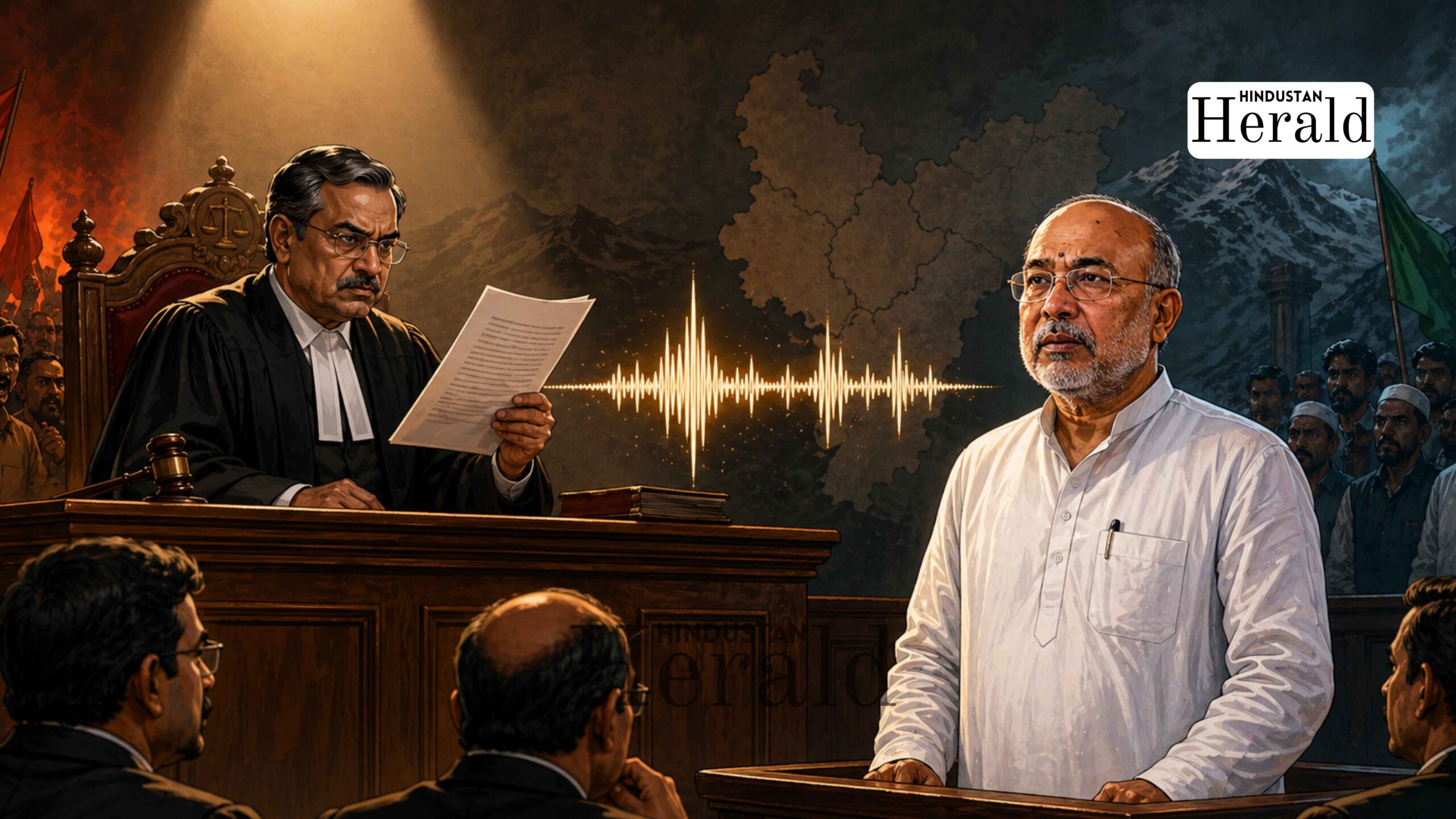
New Delhi, April 30: The Supreme Court did not mince words on Wednesday. It wants the original recording. Not a copy forwarded on WhatsApp, not something compressed and re-sent across three devices. The first generation copy, direct from whoever has been sitting on it, of the audio clip that allegedly features Manipur Chief Minister N. Biren Singh saying things he would very much prefer remained unheard.
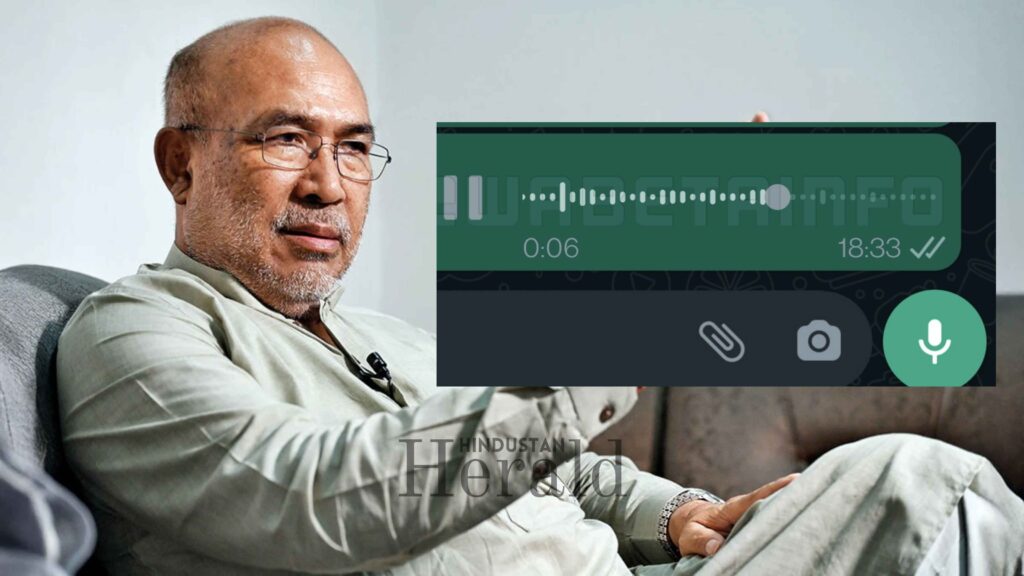
The bench also told the State of Manipur to hand over the admitted voice samples of the Chief Minister so they can be compared. The direction was clinical, procedural on the surface. But in the context of what has been happening in Manipur for the last three years, it was anything but routine.
The Recording That Refuses to Go Away
These audio clips have been floating in the public domain since late 2023. Opposition leaders flagged them. Civil society groups demanded action. Petitioners before the court cited them. And through all of it, the Manipur government and the BJP did what they do best in situations like this: said very little, denied the obvious, and waited for the noise to die down.
It has not died down.
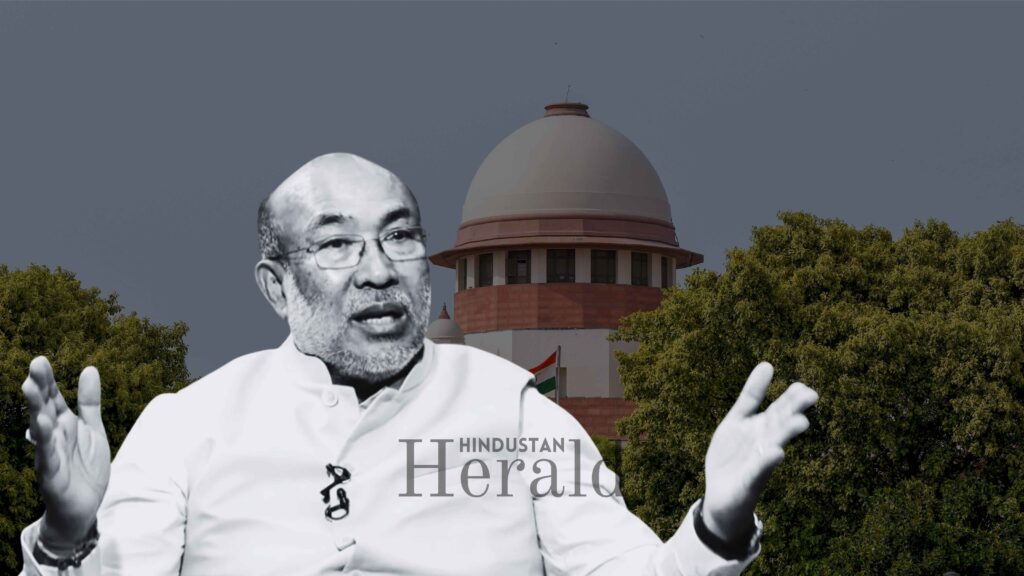
The whistleblower, whose name has not been disclosed in the proceedings, reportedly claims to have preserved these recordings in their original, unaltered state. That claim is now going to be tested. The Supreme Court wants the source file, the first generation audio, because forensic voice analysis only works when the recording is acoustically clean. A clip that has been passed through five hands and re-encoded twice is useless for any serious examination.
By asking for exactly that, the bench has signalled it is not treating this as background noise to the larger Manipur hearings. It is treating it as evidence.
Three Years of Burning
To understand why any of this matters, you have to go back to May 2023. The conflict between the Meitei community of the valley and the Kuki-Zo communities of the hills did not come from nowhere, but when it exploded, it exploded fast. What started as a dispute over Scheduled Tribe classification turned, within days, into something that had no clean name. Villages were set on fire. Women were attacked. Churches burned. The state police, by multiple accounts, did not stand between the communities. In some instances, according to testimony submitted before various courts and committees, they stood with one side.
More than 250 people have died. Tens of thousands are still in relief camps. Hundreds of homes are gone. And Biren Singh is still the Chief Minister.
The Supreme Court has been in this from early on. It appointed committees. It pulled up the state government for slow FIR registration in cases of sexual violence. It expressed what can only be described as visible frustration at how little was being done for how many people. That frustration has not eased.
What the Whistleblower’s Position Now Means
There is something worth noting in how the bench has handled the person described as the whistleblower. By directing them to produce the first generation copy and treating that submission as a legitimate procedural step, the court has, at least implicitly, acknowledged this person’s standing. That is not nothing.
Whistleblower protections in India are inconsistent at best. They depend heavily on which court is involved, which judge is reading the room, and how much political heat surrounds the matter. In Manipur, where journalists covering the conflict have faced threats and where access to the hill districts has been tightly controlled, the willingness of anyone to come forward with sensitive material and remain in the legal arena is not something to take lightly.
As it turns out, the court seems to understand that. The proceedings on Wednesday did not treat the whistleblower as a suspect or as someone to be managed. They treated them as a source to be heard.
The Chief Minister and the Silence Around Him
Biren Singh has not addressed the substance of these recordings in any forum. Not in the assembly, not at a press conference, not in any statement to the media. The party line has been that the clips are fabricated, politically motivated, being used by the opposition to destabilise a state that is already fragile. The argument has a certain convenience to it.
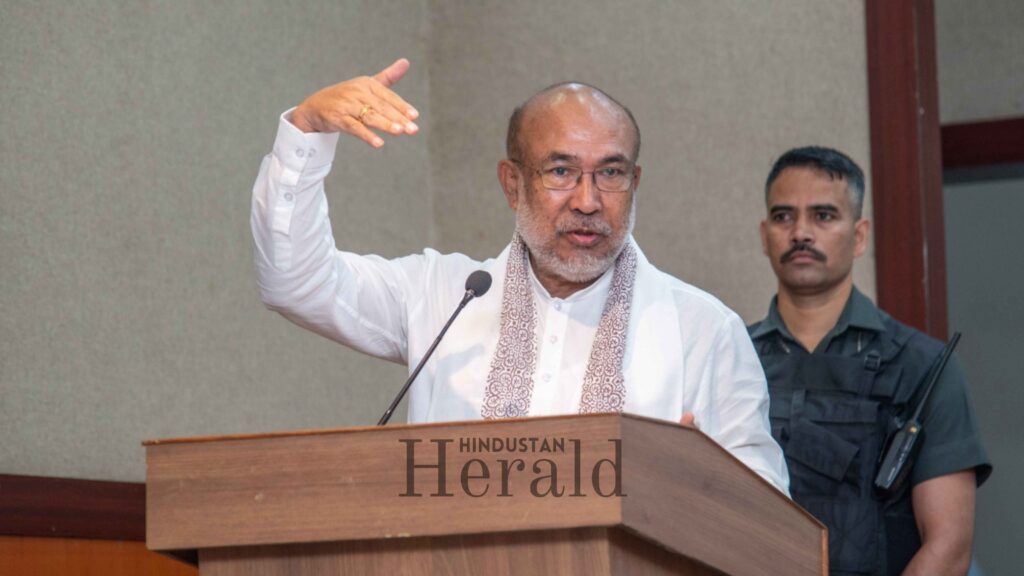
The BJP’s central leadership has consistently backed him. Sources suggest the calculation is partly political and partly about optics: removing a Chief Minister mid-crisis in the northeast, from a community that provides the party its core support base in the valley, carries risks the high command has not been willing to take.
But Wednesday’s direction is a different kind of pressure. It is not an opposition rally or a protest outside Raj Bhavan. It is the Supreme Court of India actively setting up the conditions for a forensic examination of whether the Chief Minister’s voice is on an audio recording that, if authenticated, could become one of the most damaging pieces of evidence in a political crisis in recent Indian history.
That is a different conversation entirely.
What Forensics Will Actually Determine
Once the first generation copy is submitted and the admitted voice samples are on record, the bench will likely direct a forensic examination, most probably through the Central Forensic Science Laboratory network. Voice comparison analysis, when done on clean source audio, can establish with reasonable scientific confidence whether two recordings carry the same vocal signature.
It is not infallible. Courts in India have grappled with the evidentiary weight of forensic audio analysis before, and there are procedural questions about admissibility that will almost certainly be raised. Still, a clean forensic report establishing a match would be very difficult to explain away. And a report establishing no match would, depending on its credibility, give the Chief Minister’s defenders something more substantial than denial to work with.
Either way, the court has decided it wants to know.
The Ground That Has Not Recovered
While the legal process moves at its own pace, in the relief camps of Churachandpur, Kangpokpi, and the outskirts of Imphal, people are still waiting. Not for a forensic report. For something more basic: the ability to go home, or at least to know whether home still exists.
The Kuki-Zo legislators, who have been boycotting the state assembly and demanding a separate administration, have not changed their position. The Meitei political groups have not moved either. The two communities are, in most practical terms, still living in separate states within the same state. Buffer zones remain. Armed groups are still active. The normalcy that official statements occasionally gesture toward is not visible on the ground.
The Supreme Court cannot fix any of that with a forensic report. But what it can do, and what it has been trying to do through months of hearings, is establish that no one is above the process. Not a Chief Minister. Not a state government. Not a party that controls the centre.
Wednesday was one step in that direction.
For now, the whistleblower has been asked to come forward with whatever they have preserved. The state has been asked to stop treating this as someone else’s problem. And the court has made clear, in the quiet but unambiguous language of judicial directions, that it intends to find out what actually happened.
Stay ahead with Hindustan Herald — bringing you trusted news, sharp analysis, and stories that matter across Politics, Business, Technology, Sports, Entertainment, Lifestyle, and more.
Connect with us on Facebook, Instagram, X (Twitter), LinkedIn, YouTube, and join our Telegram community @hindustanherald for real-time updates.

Covers Indian politics, governance, and policy developments with over a decade of experience in political reporting.
- Ananya Sharma

- Ananya Sharma
- Ananya Sharma
- Ananya Sharma



 Arun Upadhayay