 By Sandeep Verma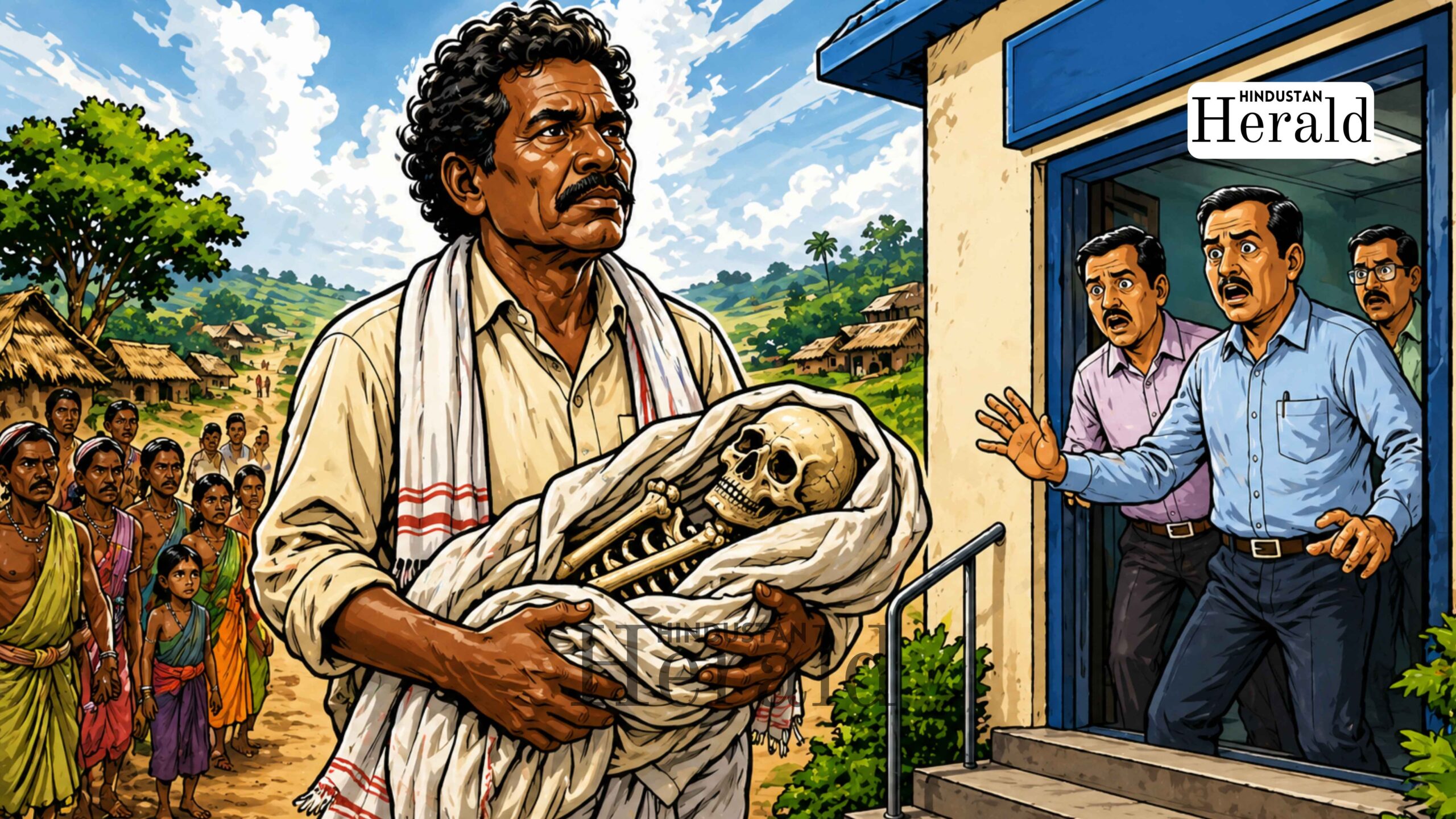
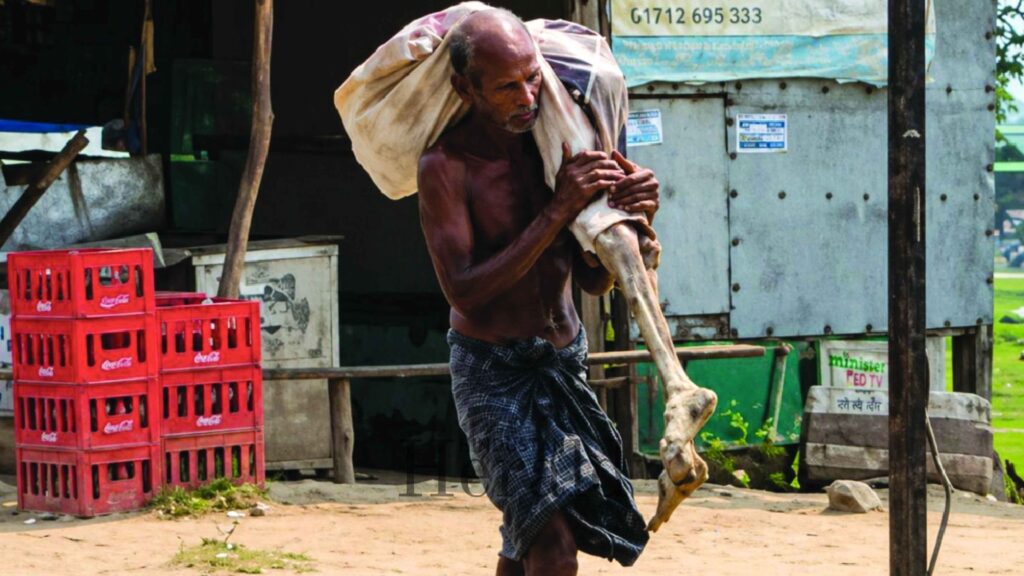
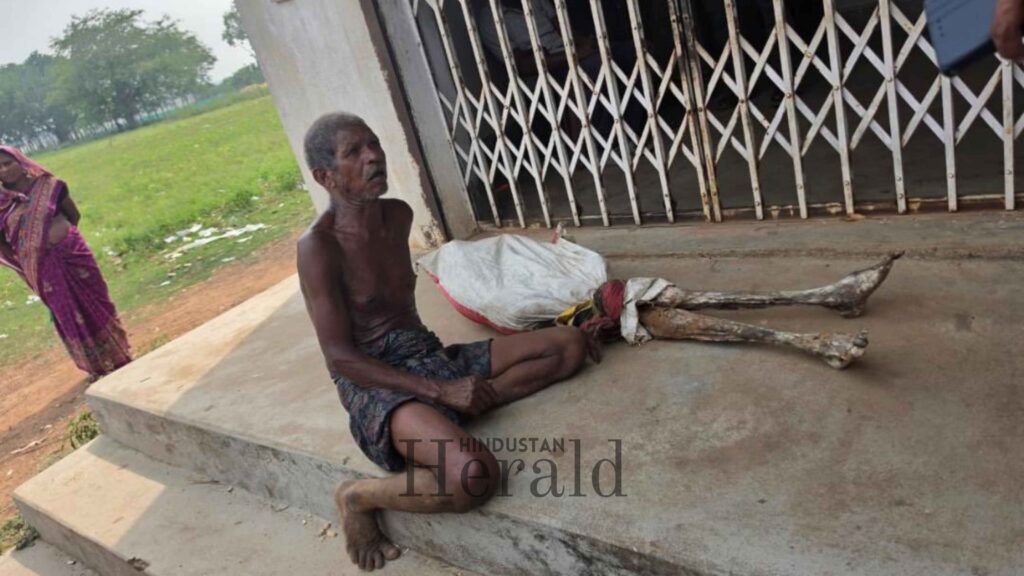
Keonjhar (Odisha), April 29: When Jitu Munda walked three kilometres on the morning of April 27 through the dusty backroads of Keonjhar district, he was not carrying firewood. He was not carrying grain. He was carrying the skeletal remains of his dead sister, exhumed from her grave, because a bank told him she needed to be present in person to release her savings.
That amount, sitting untouched in an account at the Malliposi branch of Odisha Grameen Bank in Patana block, was Rs 19,300. Less than twenty thousand rupees. A sum that most urban Indians would barely notice missing. For Jitu Munda, 59, an illiterate tribal man from Dianali village, it was everything his late sister Kalara Munda had left behind. And getting it, it turned out, required an act so desperate and so shocking that it has now rattled Parliament, prompted the Odisha Chief Minister to personally intervene, and forced a national conversation about what financial inclusion actually means on the ground.
The Days Before the Breaking Point
Kalara Munda died on January 26, 2026. She was 62 years old. According to sources familiar with the matter, Jitu was her only surviving close kin. In the weeks after her death, he began visiting the Malliposi branch to try and withdraw the money from her account. Each time, he says, bank officials turned him away. Each time, he told them she was dead. And each time, as per his account to reporters, the response was the same: bring the account holder.
“I have run several times to the bank, and the people there told me to bring the account holder to withdraw money deposited in her name. Though I told them that she had died, they did not listen to me and insisted on bringing her to the bank. Therefore, out of frustration, I dug the grave and brought out her skeleton as proof of her death,” Munda told reporters at the scene, according to reporting by PTI and multiple national outlets.
He had been visiting the bank for days. He had explained the situation repeatedly. He received no guidance on how to obtain a death certificate, no information about nominee procedures, no referral to a local official who could help. What he received, it appears, was a wall of procedure delivered to a man who had no idea how to navigate it.
April 27: The Image That Stopped the Country
On the morning of April 27, Jitu Munda dug up his sister’s grave, lifted her skeletal remains, and walked three kilometres to the bank branch. He placed the remains outside the premises. Bank staff, reportedly caught completely off guard, panicked and immediately contacted the police.
As reported by The Week and Onmanorama, Patna Police Station Inspector-in-Charge Kiran Prasad Sahu, who responded to the incident, did not frame it as a law-and-order problem. He framed it as a failure of communication. “Jitu is an illiterate tribal man,” Sahu told journalists, adding that the bank had failed to properly explain the procedure for withdrawing money from a deceased person’s account to him.
A resident, Subrat Mohanty, put it plainly: “This is an unfortunate incident. The bank authorities should have properly explained the procedure to him. Being from a tribal background, he may not have understood the formalities. Such situations must be handled more sensitively.”
Images and video of the incident spread rapidly across social media on April 28, triggering a wave of outrage that cut across political lines and drew reactions from ordinary citizens, politicians, and civil society groups alike.
The Bank’s Version
By April 28, Indian Overseas Bank (IOB), which sponsors Odisha Grameen Bank as the parent institution, issued an official clarification on X, the social media platform. The bank stated that its staff had not demanded the physical presence of the deceased woman. According to IOB, when Jitu Munda visited the branch for the first time, he requested a third-party withdrawal, which banking regulations do not permit without proper authorisation. The branch manager, as per the bank’s account, informed Munda that he would need to submit a death certificate and legal heir documents to initiate the death claim process.
The bank further stated, as reported by Onmanorama, that Munda returned to the branch in an inebriated condition, became disruptive, and placed the exhumed remains outside the building while demanding the money. Police were called, and the situation was brought under control.
“The incident appears to have arisen due to a lack of awareness of the claim settlement process and the individual’s unwillingness to accept the procedures explained by the Branch Manager,” the IOB statement said. “The bank intended to protect the interest of the poor tribal woman’s money in the account. There is no case of any harassment.”
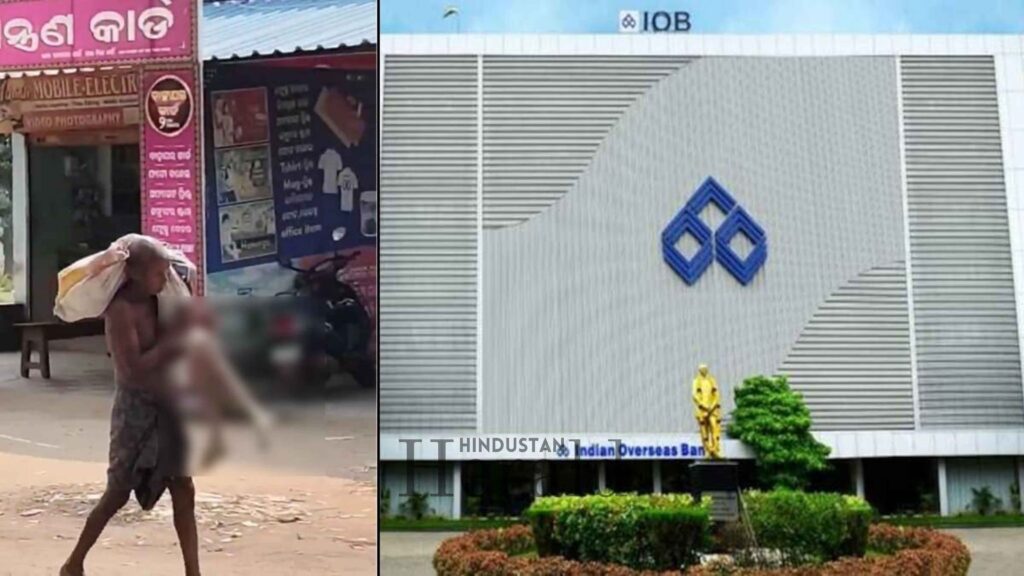
The bank’s clarification, while technically plausible, did little to address the central question: Why did no bank official, across Munda’s multiple visits over several weeks, take the thirty minutes required to sit with him, explain the process in simple terms, and help him take the first step toward obtaining a death certificate? Rules are rules. But rules do not exist in a vacuum separate from the human beings they are meant to serve.
What Happened Next: Swift, If Belated, Action
Once the story went national, the machinery of government moved with a speed that stood in sharp contrast to the weeks of inaction that preceded it.
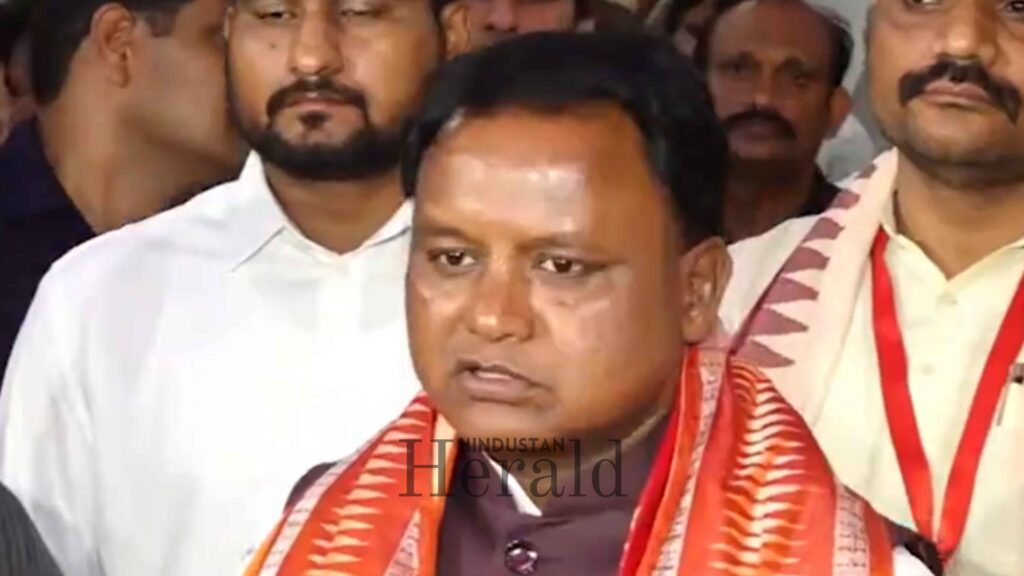
Odisha Chief Minister Mohan Charan Majhi expressed deep sorrow over the incident and ordered a probe by the Northern Revenue Divisional Commissioner (RDC) to determine how it happened and how to ensure it is never repeated, according to reporting by SocialNews.XYZ and Pragativadi. The Northern RDC was scheduled to begin the inquiry on Wednesday, April 29.
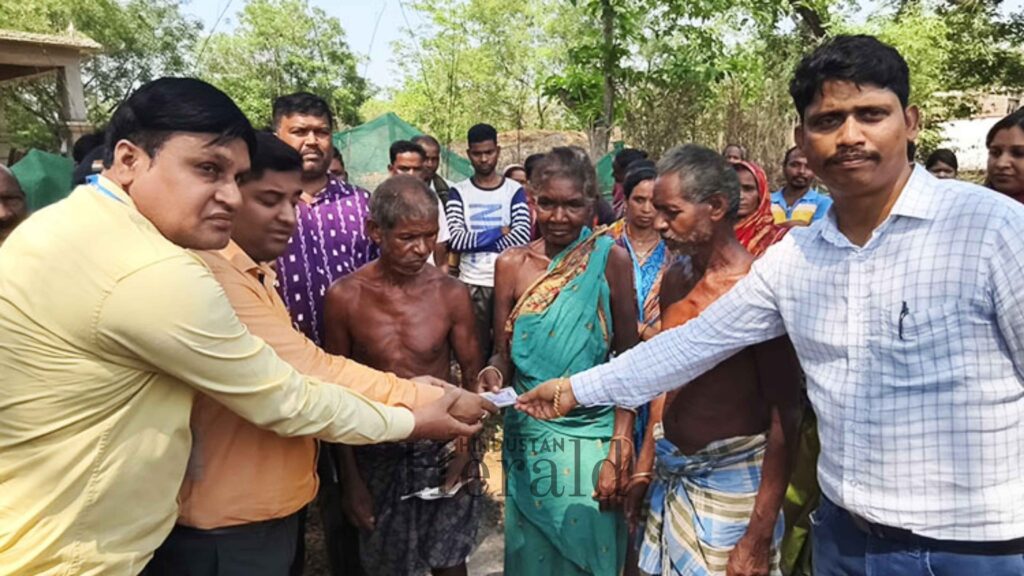
The Keonjhar district administration, acting in line with what it described as the Chief Minister’s ‘Lok Seva’ approach, provided immediate financial assistance of Rs 30,000 to Jitu Munda from the District Red Cross Fund. The Tahsildar personally coordinated with Odisha Grameen Bank to release the funds from Kalara Munda’s account. By Tuesday, April 28, Jitu Munda had received Rs 19,402 in total — the original Rs 19,300 principal along with accrued interest. Administration officials also assisted him in applying for both the death certificate and the legal heir certificate that had been at the centre of the entire ordeal.
“Protecting the rights, entitlements, and dignity of the public is the fundamental objective of the District Administration,” the administration said in a formal statement, as reported by Pragativadi. The skeletal remains of Kalara Munda were later reburied under police supervision, according to Lokmattimes.com.
Parliament Takes Note
The political fallout reached New Delhi by April 28. BJD Rajya Sabha leader and Member of Parliament Manas Ranjan Mangaraj wrote directly to Union Finance Minister Nirmala Sitharaman, demanding urgent intervention to simplify banking procedures and protect the dignity of poor and marginalized communities trying to access their deceased relatives’ savings.
Mangaraj described the incident as proof of “harsh insensitivity of rural banking systems,” as reported by Onmanorama, and argued that flagship government schemes such as Jan Dhan and Direct Benefit Transfer (DBT) have failed to bridge the enormous gap between urban policy design and rural ground reality.
The BJD’s social media post called the sight of a man carrying his sister’s skeleton in the Chief Minister’s own Keonjhar constituency “unimaginable, crossing all limits of cruelty.” The state Congress unit also weighed in, calling the incident “truly unfortunate” and demanding that harassment by bank officials must stop.
Odisha Minister Suresh Pujari acknowledged a “lack of humanitarian approach” and stated that the government would ensure strict action against the officials concerned.
The Larger Failure: Financial Inclusion on Paper
This is not, in any meaningful sense, an isolated incident. It is an extreme version of a story that plays out in quieter, less visible ways across hundreds of villages in India’s tribal belts every single month.
India has made genuine, measurable strides in expanding banking access. The Pradhan Mantri Jan Dhan Yojana, launched in 2014, has connected hundreds of millions of previously unbanked Indians to the formal financial system. The Reserve Bank of India and NABARD have both pushed hard on financial literacy campaigns and Business Correspondent networks designed to bring banking services within reach of remote communities.
And yet the Jitu Munda case reveals exactly where those efforts stop. Opening an account is one thing. Knowing what to do when the account holder dies, how to get a death certificate in a village where administrative access is limited, how to navigate nominee rules and legal heir provisions, and most importantly having a bank official who will sit with you and walk you through the process step by step — that is a fundamentally different challenge. It is the challenge that financial inclusion policy has not yet solved.
Jitu Munda is illiterate. He lives in a remote tribal village. He has, by all accounts, no familiarity with formal documentation systems. When his sister died, he did what felt logical: he went to the bank and told them she was dead. When they asked for papers he did not know how to get, and no one helped him get them, he kept coming back. And then, in a moment of grief and total exhaustion, he did the only thing left that he could think of.
The bank’s regulations were not wrong. Death certificates and legal heir documents exist to protect account holders, including poor tribal women, from fraudulent withdrawals. The rules, in the abstract, are reasonable. What was wrong was the gap between the rule and the human being standing in front of the counter. No one bridged it. Not in one visit. Not in several.
What Needs to Change
The Keonjhar incident points toward a set of reforms that banking regulators, rural banks, and state governments all have the power to implement. Branch-level staff in rural and semi-urban areas serving tribal and low-literacy populations need mandatory sensitisation training, not as a checkbox exercise but as a genuine shift in how frontline banking is practiced.
Business Correspondents and bank mitras, who are meant to serve as the last-mile link between banks and underserved communities, need to be empowered and equipped to guide families through exactly this kind of claim process. Simplified, plain-language brochures in local languages explaining what to do when an account holder dies should be available at every rural branch. And when an illiterate tribal man comes in and says his sister is dead, someone at the branch has a basic human obligation to ask: can we help you figure out the next step?
The RDC inquiry ordered by Chief Minister Majhi is a necessary start. Whether it produces systemic change or becomes yet another report that sits in a drawer depends on what Odisha’s government, and the banking regulator, choose to do with it.
For Now, One Family Has Some Relief
Jitu Munda has the money. He has Rs 19,402, plus an additional Rs 30,000 from the District Red Cross Fund. His sister’s remains are back in the ground. District officials have told him he can reach out for further assistance.
That is something. But it took a act of almost unimaginable desperation, viral outrage, national media coverage, a Rajya Sabha MP writing to the Finance Minister, and a Chief Minister ordering an inquiry to get a 59-year-old illiterate tribal man from Dianali village what was rightfully his from the beginning. The system did not work for Jitu Munda. It worked only after Jitu Munda forced the country to look at what the system was doing to him.
Rules, ultimately, are written by people, for people. When a rule stops serving the person it was meant to protect, the problem is not the person. The problem is a system that forgot who it exists for.
Stay ahead with Hindustan Herald — bringing you trusted news, sharp analysis, and stories that matter across Politics, Business, Technology, Sports, Entertainment, Lifestyle, and more.
Connect with us on Facebook, Instagram, X (Twitter), LinkedIn, YouTube, and join our Telegram community @hindustanherald for real-time updates.
Regional journalist bringing grassroots perspectives and stories from towns and cities across India.
- Sandeep Verma

- Sandeep Verma
- Sandeep Verma
- Sandeep Verma