
 By Ananya Sharma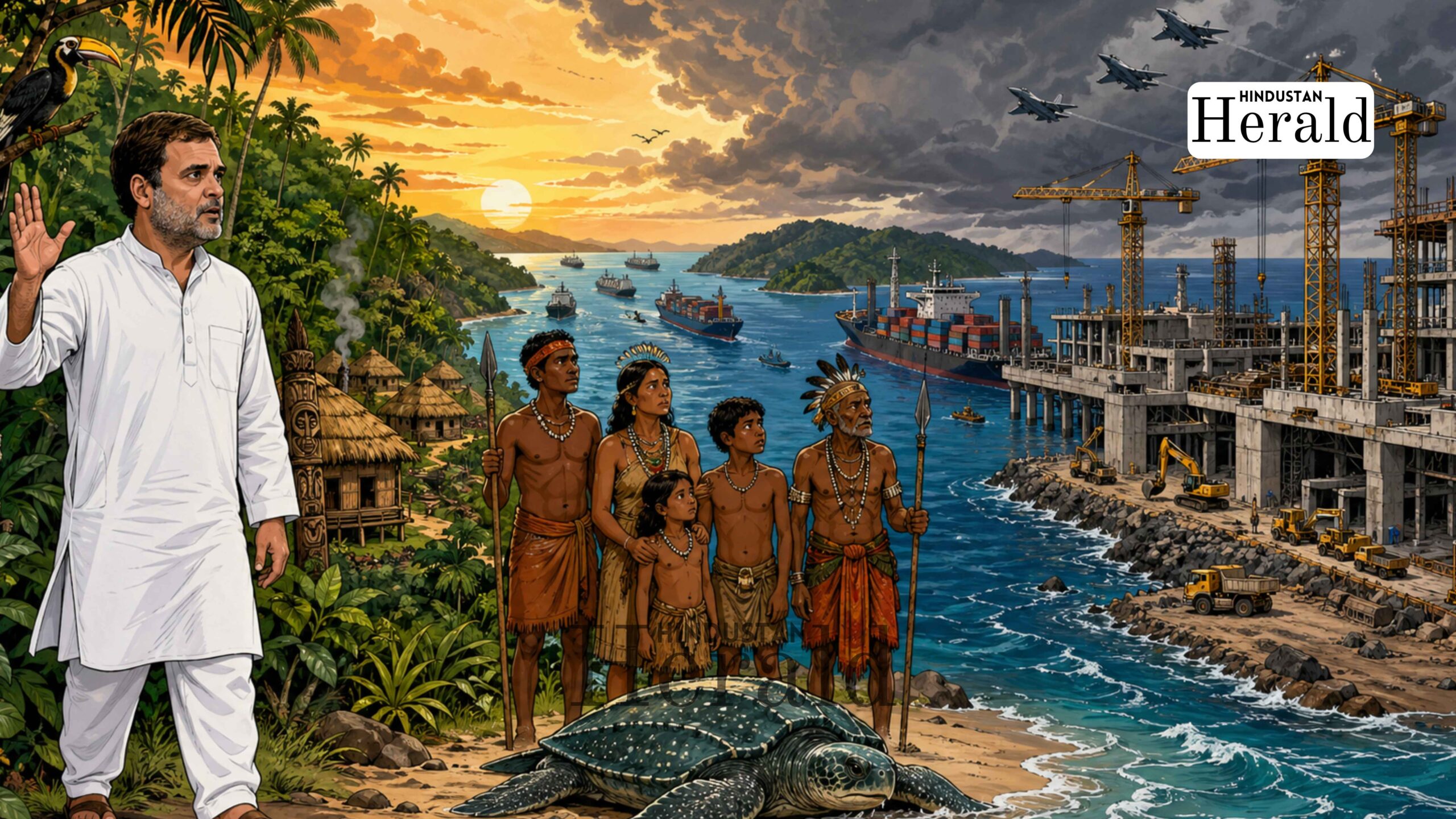
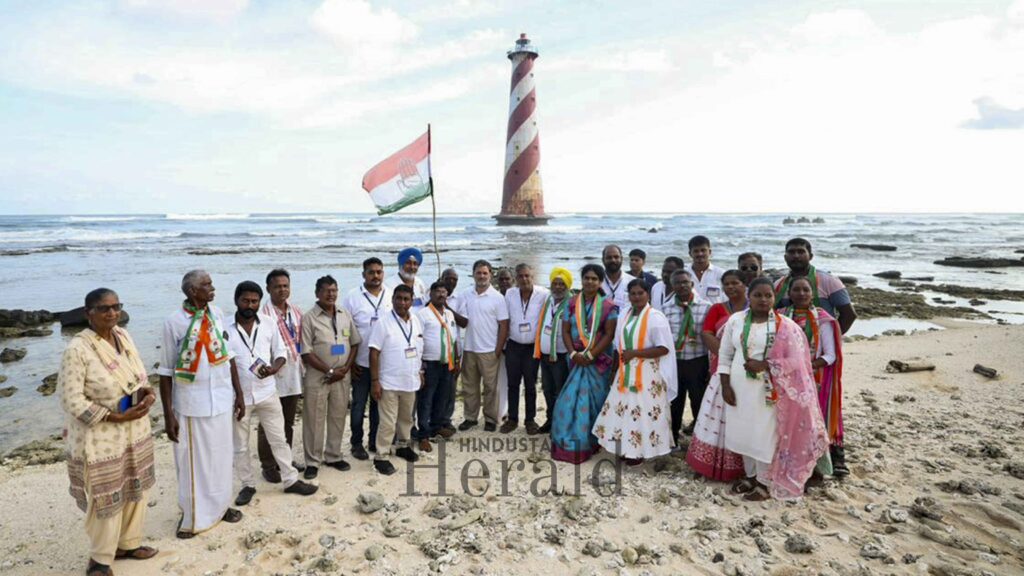
New Delhi, April 30: Three days. That is how long Rahul Gandhi spent in the Andaman and Nicobar Islands last weekend. He came, he walked through some forests, called a Rs 81,000 crore government project “one of the biggest scams in this country’s history,” and left.
The BJP called it a China-funded drama. Environmental groups called it long overdue. Tribal representatives said no politician had bothered to show up for years, so at least someone came.
Nobody is entirely wrong. And nobody is entirely right either.
But the real story here is not about Rahul Gandhi. It is about a small island at the bottom of India that most people cannot find on a map, and what is about to happen to it.
The Island Nobody Talked About Until Now
Great Nicobar Island is roughly the size of Delhi. It sits at the southern tip of the Andaman and Nicobar chain, closer to Singapore than to the Indian mainland. It rains heavily, the forests are thick, and the beaches are the kind that tourists have never touched because getting there requires serious effort.
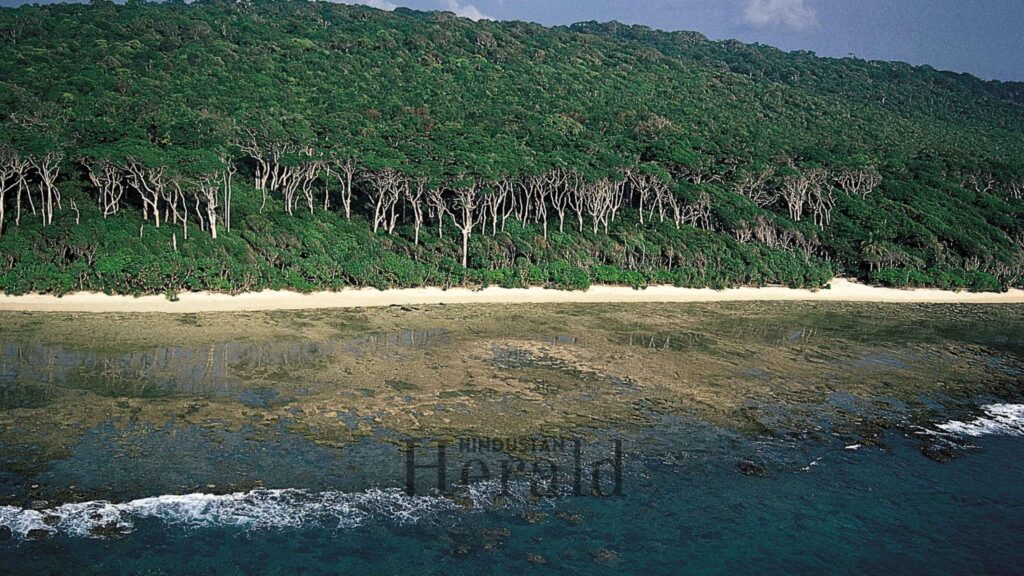
Around 8,000 people live there. Most are Nicobarese, a tribal community who have farmed and fished these islands for generations. And then there are the Shompen, roughly 300 of them, living deep inside the forest, who have, for centuries, wanted nothing to do with the outside world. No hospitals. No government schemes. No mobile phones. They chose this. It has kept them alive.
The island also has something else that nobody talks about openly: geography. And geography, in this case, is worth more than almost anything.
The Waterway That Runs China’s Economy
Picture a narrow strip of water between Malaysia and Indonesia. At its tightest point, it is less than three kilometres wide. Ships squeeze through it day and night, in both directions, carrying oil, electronics, grain, and machinery. This is the Strait of Malacca, and it is, without exaggeration, one of the most important stretches of water on the planet.
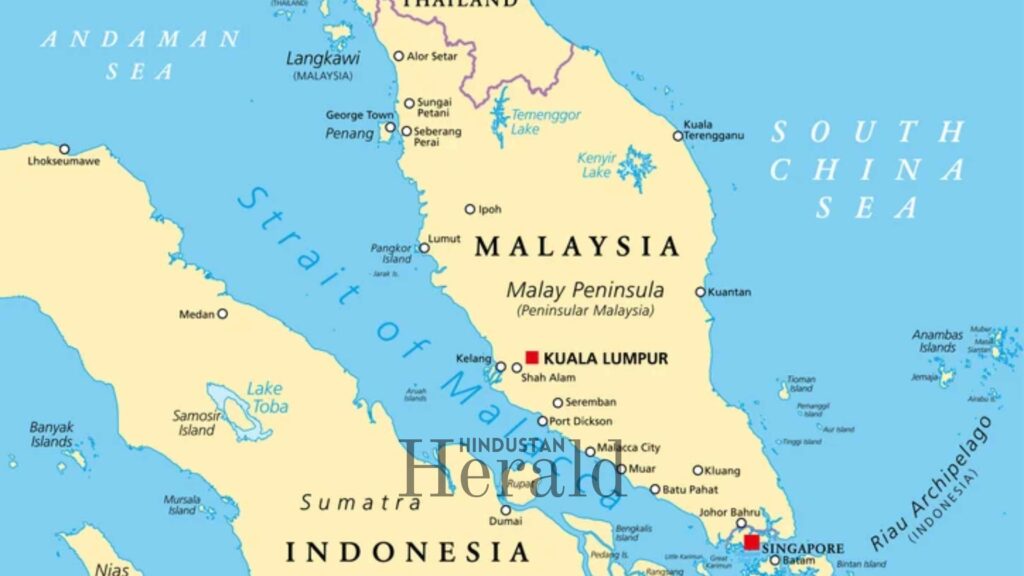
More than 80 percent of China’s oil imports pass through this strait every year, valued at roughly $312 billion. Every tanker bringing fuel to Shanghai or Beijing passes through this narrow corridor. China’s own leadership has worried about this for decades. Former President Hu Jintao had a term for it internally, the “Malacca Dilemma,” the fear of being choked off from its own fuel supply by a country that controls these waters.
Great Nicobar Island sits right at the western entrance of this route. Which means if India builds a serious military and naval presence there, it is, in plain terms, sitting at the throat of China’s economy.
That is not an exaggeration. That is just the map.
So What Exactly Is Being Built
The Modi government, through NITI Aayog and a corporation called ANIIDCO, has planned four things for the southern end of Great Nicobar: a massive international container port at Galathea Bay, a greenfield airport that will handle both passenger flights and military aircraft, a power plant, and a township.
Not a small township. The plan is to grow the island’s population from its current 8,000 to eventually 6,50,000 people. That is a jump of more than 8,000 percent. Think of it this way, the government essentially wants to build a city the size of Lucknow on an island the size of Delhi, surrounded by some of the most sensitive forests and coastlines in Asia.
The cost is officially Rs 81,000 crore and rising.
The government’s case for this is straightforward. Currently, around 25% of India’s cargo gets routed through foreign ports, with Colombo in Sri Lanka handling nearly 40% of India’s transhipment traffic alone. Every time an Indian container ship docks in Colombo or Singapore instead of an Indian port, India loses money and influence. Galathea Bay, with its natural depth of 18 to 20 metres, could change that.
Add the military airport and a naval base, and you have something that makes Beijing very uncomfortable, which is either a feature or a problem depending on where you are sitting.
One Million Trees
Here is the part that environmentalists have been screaming about, largely to empty rooms, for the past three years.
Building this project will require clearing roughly 130 sq km of primary rainforest. By activists’ estimates, that means felling close to one million trees. Not secondary growth. Not plantations. Old forest, the kind that takes centuries to develop and cannot simply be replanted somewhere else.
Galathea Bay, where the port will come up, is the single most important nesting site in India for the giant leatherback turtle. These are massive, ancient creatures. The females return to the same beach where they were born, every year, to lay eggs. Once the beach is gone, they do not adapt. They just stop coming.
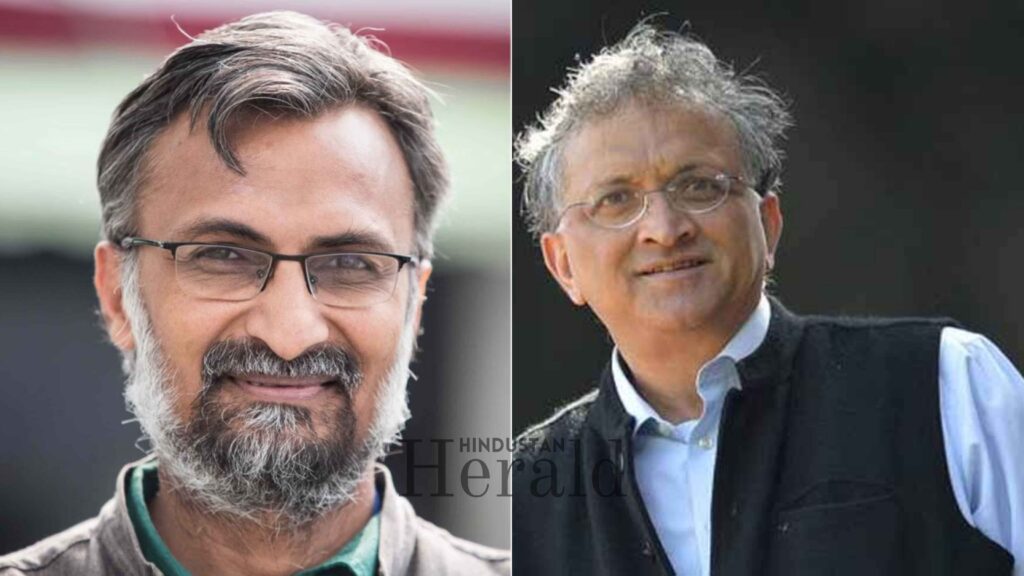
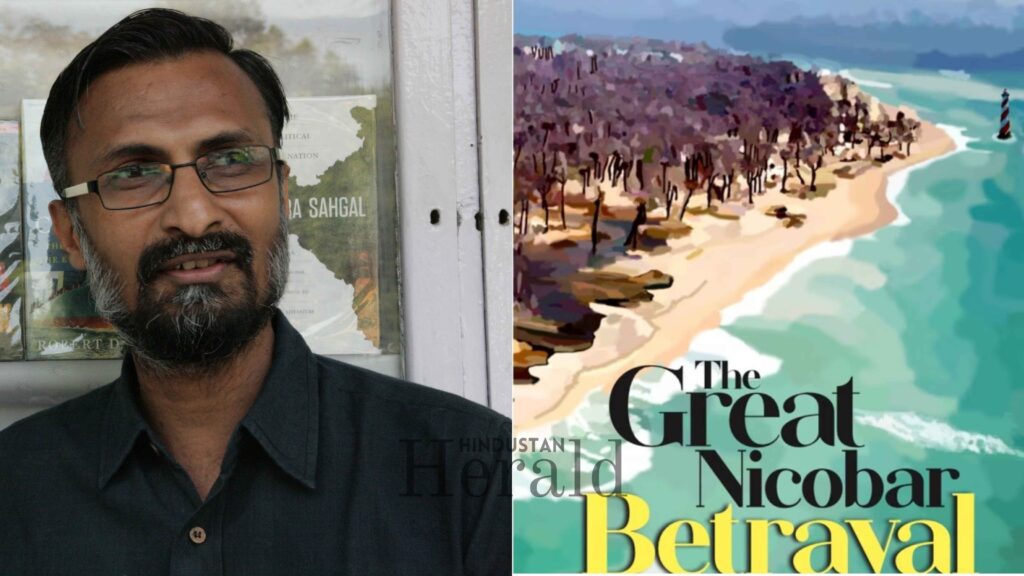
Pankaj Sekhsaria, a researcher at IIT Bombay who has spent thirty years studying these islands, has said the environmental approval process itself was flawed. Historian Ramachandra Guha put it more bluntly, calling the project “imposed by New Delhi with no transparency, no accountability, and no consultation with the Indians most affected.”
Then there is the earthquake problem. Great Nicobar sits directly on a major seismic fault. The 2004 earthquake and tsunami, which killed 230,000 people across the region, caused the southern tip of this very island to sink by around 15 feet in a single day. Most of the coastal settlements were wiped out. As recently as July last year, a geologist flagged that a cluster of smaller earthquakes near the Nicobar Islands could be signalling volcanic activity in the Andaman Sea. The Environmental Impact Assessment for this project has been criticised for not taking these seismic risks seriously enough.
The 300 People Nobody Asked
The Shompen are a community that has survived by staying away from everyone. They number around 300 people and most of them have had no contact with the outside world for centuries. They have little to no immunity to diseases that the rest of us consider routine. A common cold can kill them. This is not an exaggeration. This has happened to isolated communities across history, from the Amazon to the Pacific Islands.
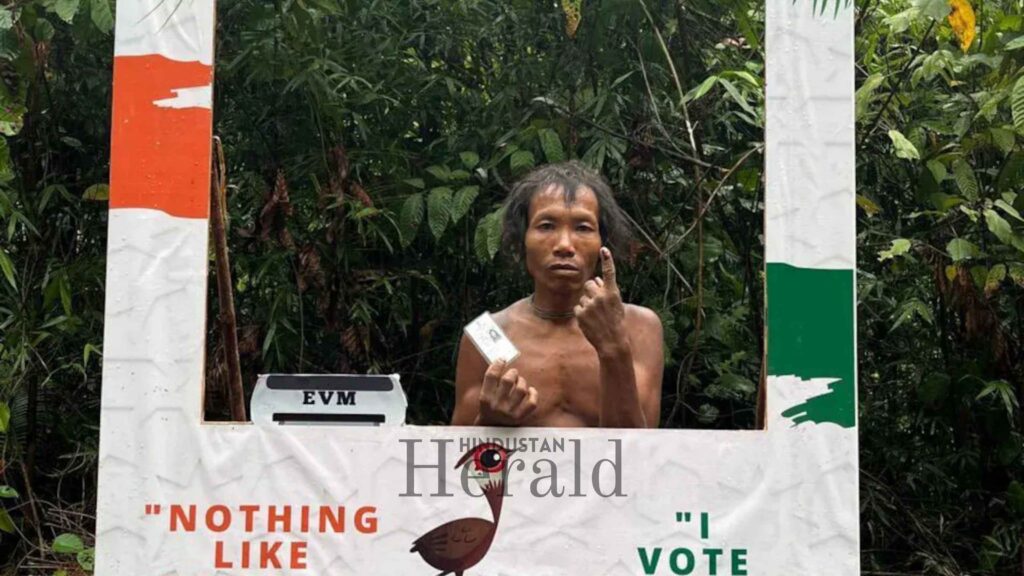
The government’s own Environmental Impact Assessment acknowledges this. It says, in its own words, that contact with outsiders is “undesirable” for the Shompen and that “once infections spread among the tribal community, the whole community may face extinction.”
Having written that, the government then approved the project. The proposed solution is surveillance towers and geo-fencing to keep the Shompen away from the construction zones.
In February 2024, 39 experts on genocide from 13 different countries wrote to the President of India saying the project would be a “death sentence for the Shompen.”
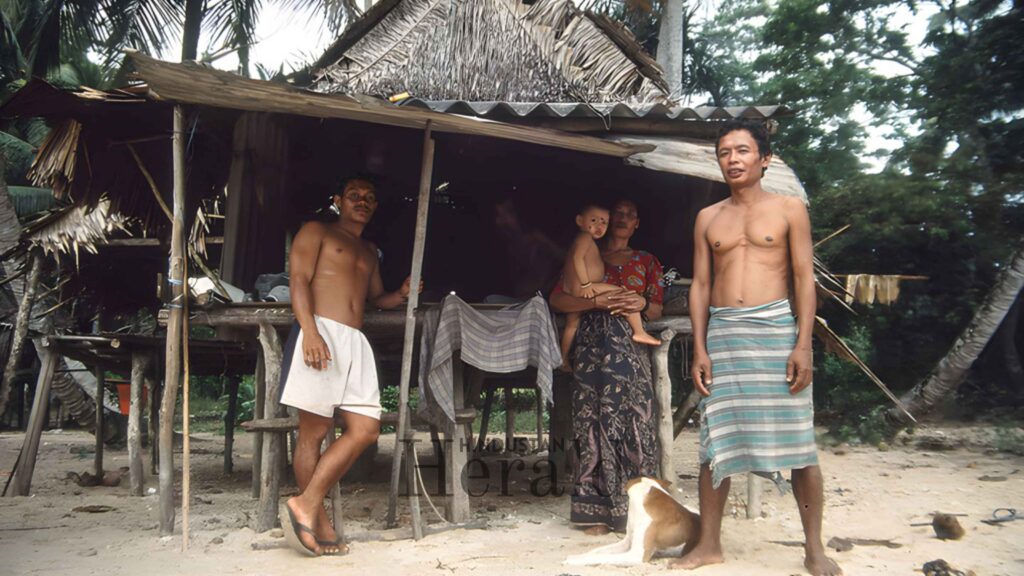
As for the Nicobarese, the government says they gave their NOC. But Barnabas Manju, the Chairman of the Tribal Council of Great Nicobar and Little Nicobar, has said the NOC was obtained without telling communities the full picture of what the project actually involved. He also pointed out that many tribal families displaced by the 2004 tsunami and moved to other islands are still waiting to come home, nearly two decades later.
That is not a community that has been consulted. That is a community that has been managed.
What Gandhi Actually Did, and Did Not Do
Rahul Gandhi walked through parts of the island, spoke to tribal representatives who had been asking for a political face to show up, and held a press conference where he called the project a scam.
He did not propose a revised development plan. He offered no alternative for India’s strategic needs in the Indian Ocean. He said nothing about the military airport or the naval implications. His visit was largely political theatre, timed well, but light on solutions.
That said, the BJP’s response, that Gandhi is essentially doing China’s bidding by opposing this project, is the kind of accusation that sounds sharp on television but does not hold up to any serious examination. Raising questions about a flawed environmental clearance process is not the same as being a foreign agent. The two things should not be confused, even if it is politically convenient to do so.
The Congress, for its part, did nothing on this project during its decade in power. That silence was its own answer.
Where This Goes From Here
The project is moving forward. Bids have been called. Clearances have been granted. Legal challenges at the National Green Tribunal and the Supreme Court are ongoing but have not stopped anything yet.
The whole thing will happen over a 30-year timeline, in phases. Phase one of the port is aimed at completion by 2028. The military components are being developed separately, under classifications that are not publicly disclosed.
India does need to be stronger in the Indian Ocean. That argument is sound. The Quad, the growing Chinese presence in Sri Lanka and Pakistan, the string of ports Beijing has been building across the region, all of this is real and India cannot afford to ignore it.
But there is a difference between building strategic strength and doing it in a way that sweeps inconvenient questions under the carpet. The Shompen did not ask to become a casualty of geopolitics. The leatherback turtles did not ask to lose their beach. The forests did not consent to being cleared.
A government confident in what it is doing would invite scrutiny, not place the project under the Home Ministry and restrict press access to the island. That choice, more than anything Rahul Gandhi said last weekend, is what deserves the most attention.
The island will be transformed. The only question left is whether India will be honest about what it costs.
Stay ahead with Hindustan Herald — bringing you trusted news, sharp analysis, and stories that matter across Politics, Business, Technology, Sports, Entertainment, Lifestyle, and more.
Connect with us on Facebook, Instagram, X (Twitter), LinkedIn, YouTube, and join our Telegram community @hindustanherald for real-time updates.

Covers Indian politics, governance, and policy developments with over a decade of experience in political reporting.
- Ananya Sharma

- Ananya Sharma
- Ananya Sharma
- Ananya Sharma



 Arun Upadhayay