
 By Ananya Sharma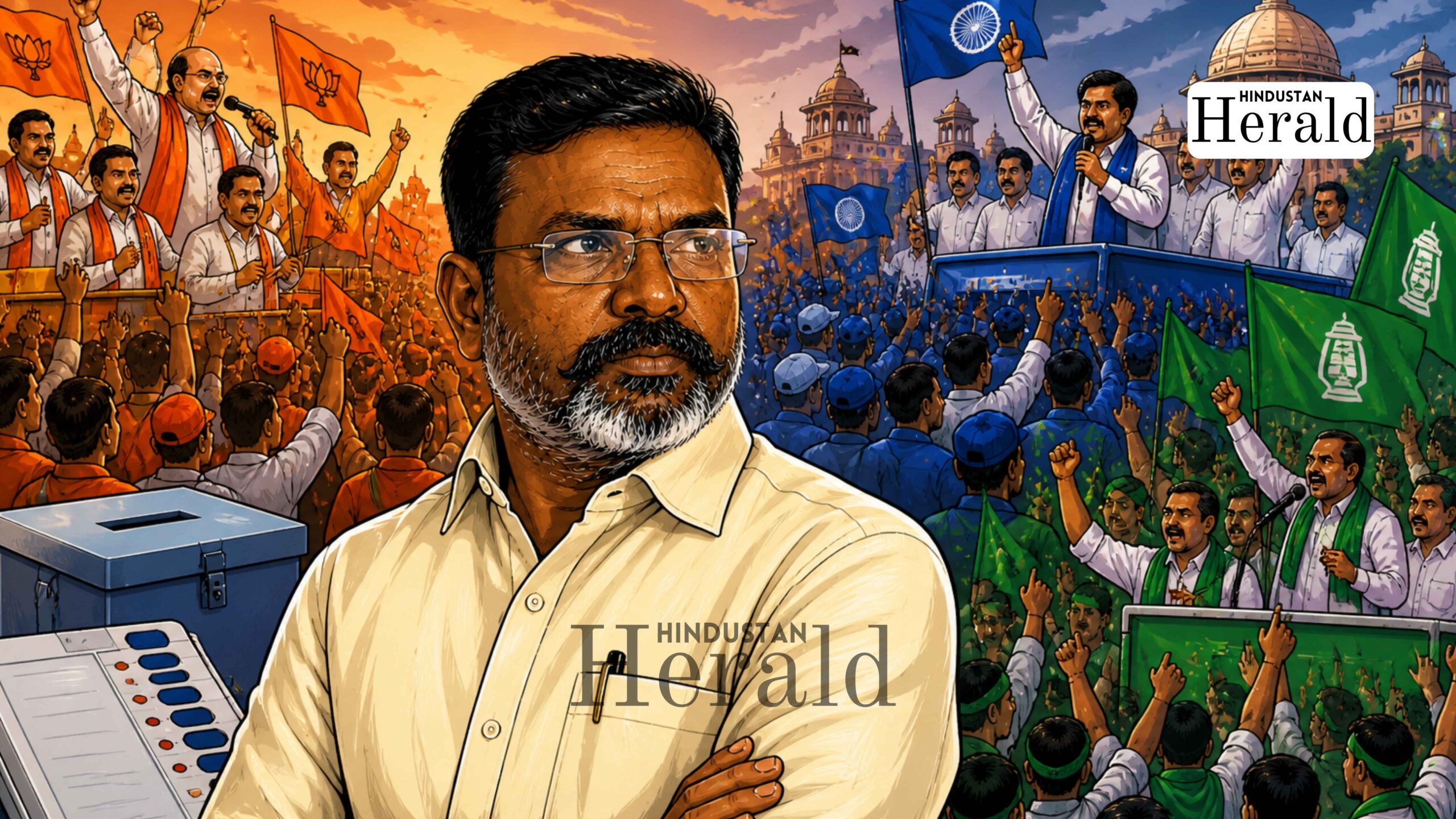
Chennai, May 2: Counting day is still 48 hours away, but nobody in Tamil Nadu’s political circles is really sleeping. The EVMs are locked in strongrooms, security is in place, and the results will not officially be available until Monday morning. Yet the campaign, in every practical sense, is already over. What remains now is the waiting for Thol. Thirumavalavan, waiting has never been a passive act.
The U-Turn That Wasn’t Quite a U-Turn
The single most-discussed moment of Thirumavalavan’s 2026 campaign was something he chose not to do. He did not contest.
That sounds simple. It wasn’t.
Earlier this season, the VCK president had publicly committed to running from Kattumannarkoil, a constituency in the Chidambaram belt he knows well, having won there in 2001. His reasoning was plain enough: Parliament, he said, offered little real room to fight for marginalised communities. The Assembly was closer to the ground, closer to the people he’d spent his political life representing. The announcement made sense on its own terms.
Then it unravelled, fast.
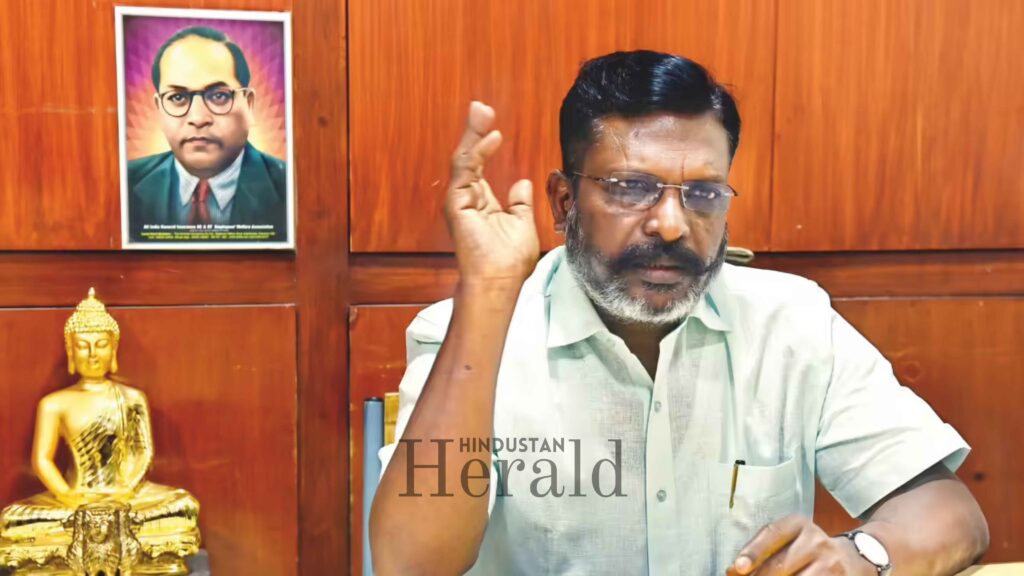
Within days, opponents began circulating the narrative that Thirumavalavan was manoeuvring for future coalition power, moving from Delhi to Chennai not on principle, but out of ambition. The DMK leadership, according to sources close to both parties, was not pleased. They viewed his candidacy as an unnecessary complication, one that risked sending wrong signals about internal unity and power-sharing just weeks before polling day.
On April 4, he reversed course. Addressing the media at VCK’s Chennai office, he said he had changed his mind to ensure unity within the DMK-led alliance, and named Jothimani Illayaperumal, son of the late anti-caste warrior L. Elayaperumal, as the party’s candidate for Kattumannarkoil.
He was direct about the pressure he faced, but equally direct about rejecting it. “I cannot be influenced by anyone. I took this decision independently. To counter the slander aimed at weakening Thirumavalavan and to protect the alliance, I am withdrawing my candidature.”
And then, almost offhandedly: “Retreating in war is also a form of strategy.”
It is the kind of line that sounds rehearsed but lands as genuine coming from him, because his record backs it up. He has pointed to 2004 and 2006 as earlier examples of stepping back when he could have contested, arguing that sacrifice, not ambition, has always driven his decisions. Whether you buy that entirely is another matter. But in Tamil Nadu’s political culture, where caste arithmetic and alliance mathematics are watched with almost forensic intensity, the optics of a Dalit leader yielding ground willingly do carry weight.
The Threat With a Fan Base
Ask anyone inside the VCK about what kept them anxious this election cycle, and the answer comes back quickly: Vijay.
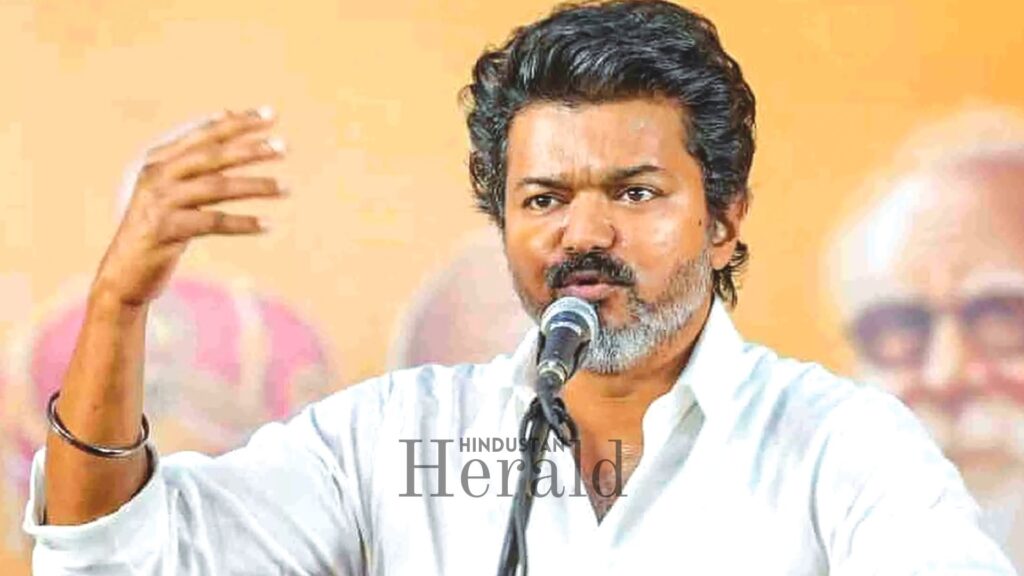
Not the AIADMK. Not the BJP. Vijay.
Actor-turned-politician Vijay launched Tamilaga Vettri Kazhagam in February 2024, announced it would contest all 234 seats solo, and filed his own nomination from Perambur in late March 2026. His manifesto promised drug-free governance, job guarantees, and student financial support the kind of language that travels fast among young, first-time voters.
The problem for Thirumavalavan is that those young voters overlap significantly with VCK’s own base. The party’s core support in northern and central Tamil Nadu, built over three decades of Dalit mobilisation, now faces real fragmentation, because TVK is pulling from the same demographic.
Internal VCK surveys reportedly predicted vote erosion from their base toward TVK, and Thirumavalavan himself, in a closed party discussion, told leaders they could not underestimate the impact of Vijay’s entry. That kind of candour in a private setting matters. It tells you the man was not dismissing the threat the way politicians often do publicly.
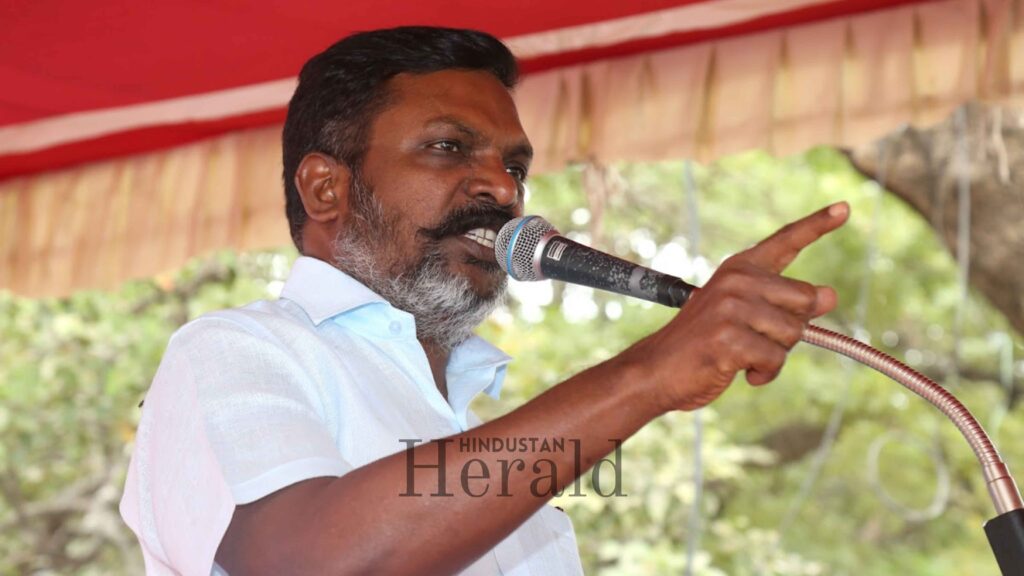
Throughout the campaign, Thirumavalavan’s public position on TVK was sharp and consistent: a vote for Vijay was a vote that split the secular bloc and quietly helped the AIADMK-BJP combine consolidate. He framed it as a constitutional question, not just an electoral one, arguing that new political actors with no anti-caste ideological grounding could not be trusted to protect the foundations that marginalised communities depend on.
He reinforced VCK’s position as the primary Dalit voice within the DMK alliance, and analysts note that part of his original decision to contest personally was precisely to counter TVK’s encroachment into that space. When he stepped back, he needed a different way to hold that ground. Intensive cross-state campaigning became the substitute.
What the Numbers Might Say
Tamil Nadu voted on April 23 with an 85.1 per cent turnout, the highest the state has ever recorded for an assembly election. That number alone tells you this was not a routine exercise. People came out. In large numbers. For reasons that may not fully align with what any single party expected.
Exit polls offer a fragmented picture. Most major surveys project a DMK-led alliance victory. Zeenia AI’s polling model puts the SPA at 140 to 162 seats with a vote share of roughly 43 to 46 per cent, while the AIADMK combine is projected at 52 to 74 seats. TVK, in most of these projections, is expected to win between 13 and 26 seats enough to announce itself, not enough to govern.
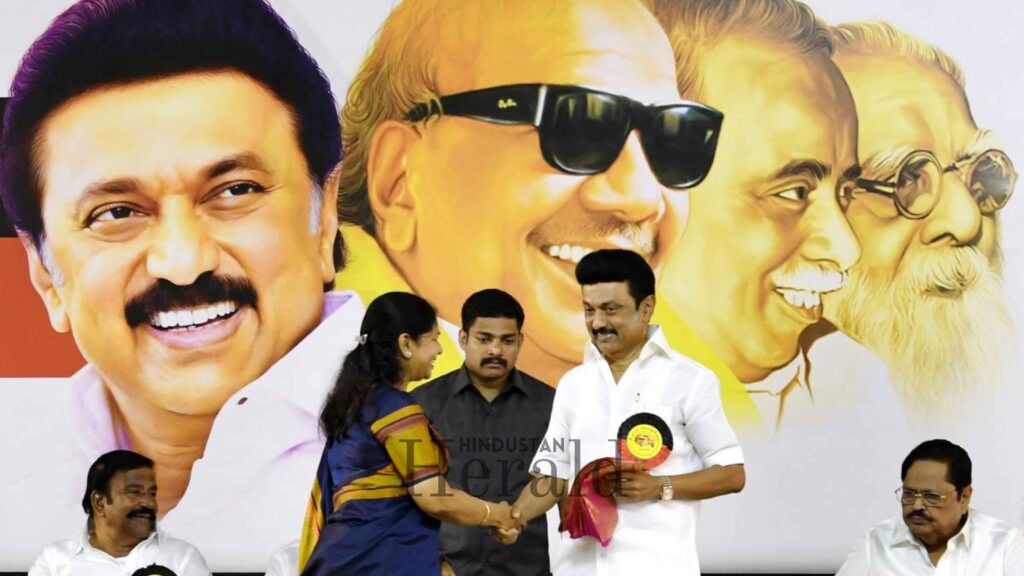
Then there is Axis My India, which stands almost alone in its projection. That agency puts TVK between 98 and 120 seats, the DMK alliance at only 92 to 110, and describes Vijay’s party as having matched the DMK in vote share at roughly 35 per cent each. If that reading is anywhere near correct, Tamil Nadu is headed for a hung assembly and weeks of coalition negotiations that nobody publicly wants to acknowledge are possible.
For Thirumavalavan, a hung assembly is not necessarily a disaster. Professor Lakshmanan of the Dalit Intellectual Collective has argued that in a fractured verdict, Thirumavalavan could emerge as a pivotal coalition figure, with a realistic shot at becoming Deputy Chief Minister. It is a scenario the VCK leader has neither confirmed nor denied entertaining. But stepping back from a contested seat while retaining his status as a sitting MP preserves exactly the kind of flexibility that coalition bargaining requires.
Eight Seats, One Larger Test
VCK is contesting eight seats in this election as part of the DMK alliance. In 2021, the party won four seats when the DMK swept to power. Doubling that tally would represent genuine forward movement. Holding at four, in a higher-stakes environment with a new competitor eating into its base, would still be considered a functional result. Falling below it would be a problem Thirumavalavan would have to answer for.
This cycle also saw a deliberate attempt to expand beyond VCK’s traditional strongholds in Villupuram, Cuddalore, and the northern delta districts. Fielding candidates in constituencies like Periyakulam in the south was a signal of intent, a bid to present the party as a state-wide formation rather than a geographically concentrated bloc. Whether that ambition was matched by resources and ground organisation in those new territories is something the results will expose clearly.
The Frame He Built the Campaign Around
Thirumavalavan has never been a politician who separates electoral strategy from ideology. For him, they are the same thing. And the ideological frame he placed over this entire election was consistent from start to finish: this is a fight between the Constitution and Sanatana Dharma. Between social justice and the forces that would quietly dismantle it.
He described the 2026 election as a decisive battle against right-wing forces and expressed confidence the alliance would return with over 200 seats. That confidence may have been partly performative, the kind of number you throw out to energise your base. But the underlying argument, that this election carries a significance beyond routine power transfer, is one he has made with genuine conviction throughout.
He also, at one point, said something that made his own alliance partners uncomfortable. He declared that even a clear DMK majority may not be safe in these polls, a remark that quickly became a talking point across Tamil Nadu’s political media. It read as a warning. Possibly to the DMK, possibly to voters who might be tempted by TVK. Possibly to both.
48 Hours Left
Today is quiet in a surface way. The rallies are over. The nominations were submitted weeks ago. The ink on 85 per cent of Tamil Nadu’s fingers has long since faded.
But inside the VCK office, inside the homes of candidates who spent the last month crossing villages and attending booth-level meetings, the waiting has a texture to it. Every conversation circles back to the same unknowable question: which way did the vote actually go?
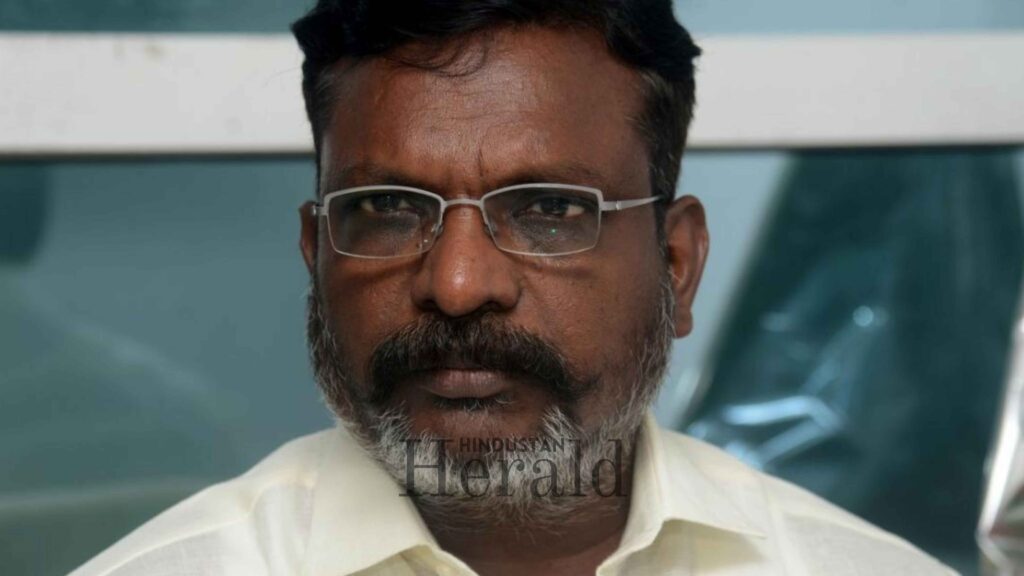
Thirumavalavan will almost certainly be in front of cameras by Monday morning as the first trends emerge. He has spent this entire season operating at the level of alliance architect and ideological anchor rather than individual candidate. That was a bet. A considered one, but a bet nonetheless.
If the DMK alliance clears a comfortable majority, his restraint will look prescient. If the result is hung and coalition talks begin, his calculation will look even smarter. And if the TVK wave turns out to be as real as Axis My India believes, then Tamil Nadu politics is entering territory that nobody not Thirumavalavan, not Stalin, not Vijay himself, has a reliable map for.
For now, the strongrooms are sealed. Monday will settle what months of campaigning could not.
Stay ahead with Hindustan Herald — bringing you trusted news, sharp analysis, and stories that matter across Politics, Business, Technology, Sports, Entertainment, Lifestyle, and more.
Connect with us on Facebook, Instagram, X (Twitter), LinkedIn, YouTube, and join our Telegram community @hindustanherald for real-time updates.

Covers Indian politics, governance, and policy developments with over a decade of experience in political reporting.
- Ananya Sharma

- Ananya Sharma
- Ananya Sharma
- Ananya Sharma


 Sandeep Verma