
 By Arun Upadhayay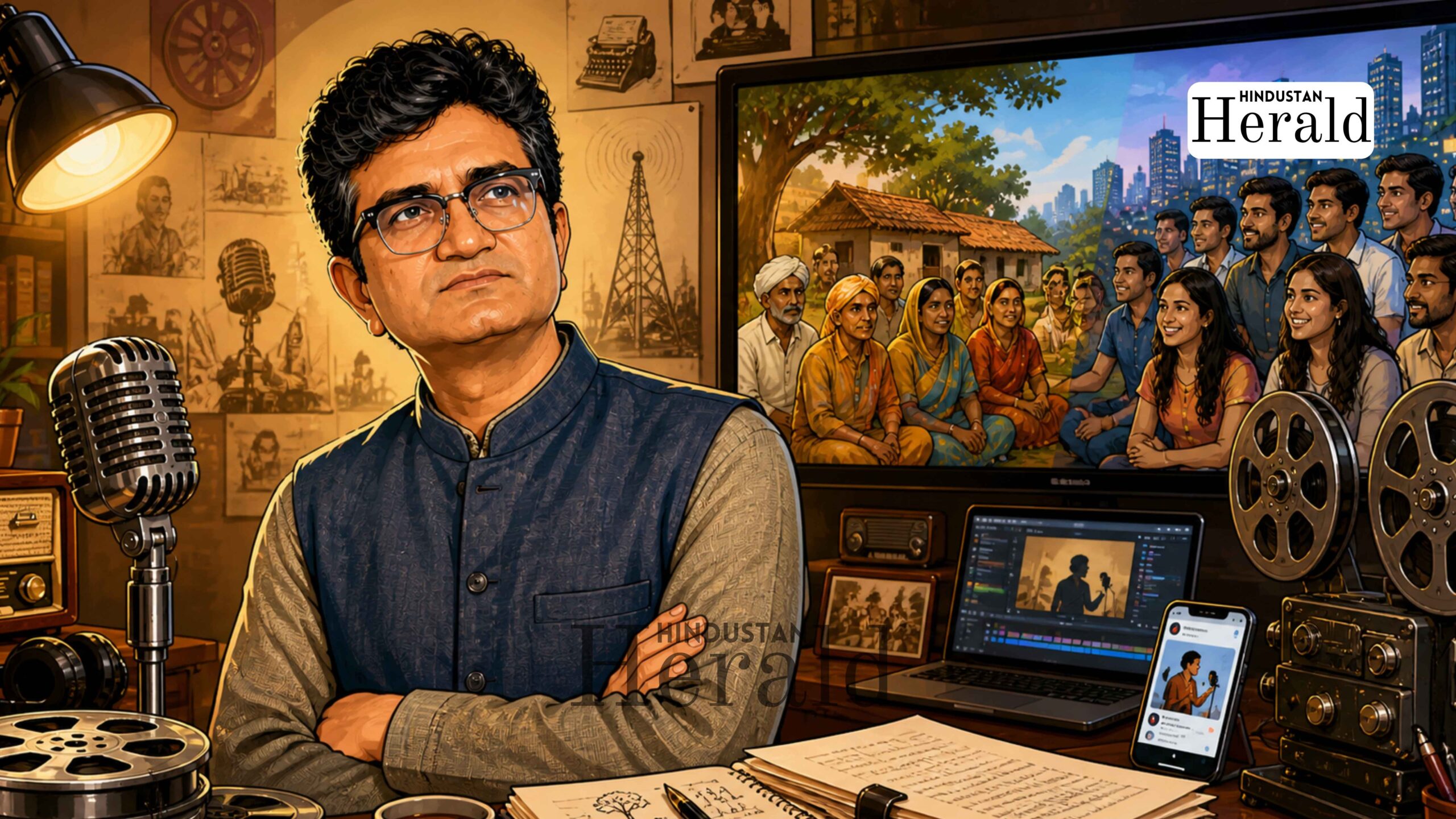
New Delhi, May 2: So the government did something unusual yesterday. Something that, for once, did not feel like it came out of a file pushed across a desk by someone in a beige corridor.
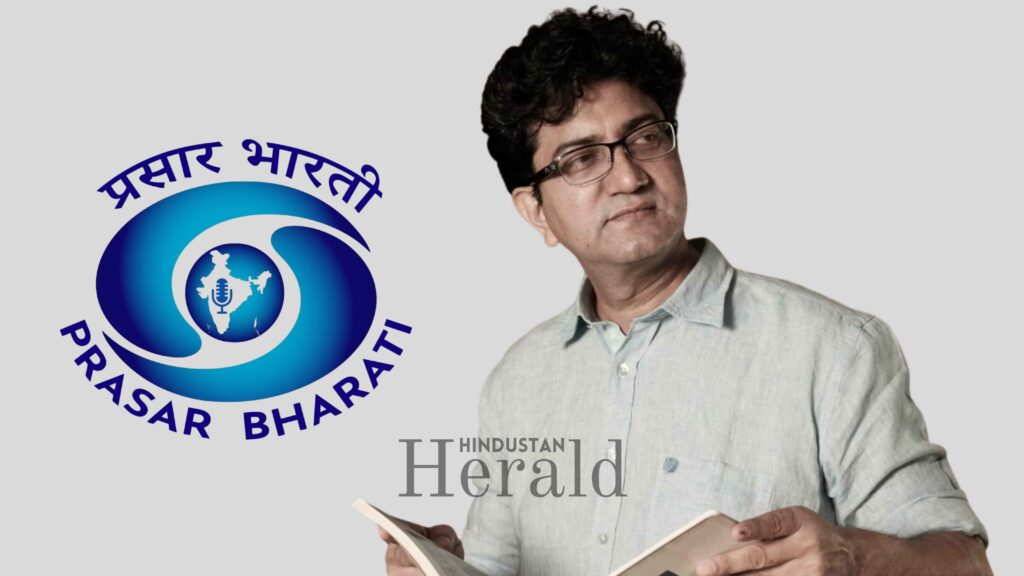
Prasoon Joshi is the new Chairman of Prasar Bharati.
Yes, that Prasoon Joshi. The one who wrote “Maa.” The one behind “Rang De Basanti.” The man whose Coca-Cola ad your father still hums without realising he is humming an advertisement. He is now in charge of Doordarshan and All India Radio. The Ministry of Information and Broadcasting confirmed it on Saturday.
Go figure.
He Did Not Get Here by Sitting Quietly
Let us get one thing straight before anything else. This is not a reward posting. This is not someone’s relative or someone’s college friend being handed a comfortable chair. Prasoon Joshi, 54, has earned every room he has ever walked into.
He was born in Uttarakhand. Grew up moving between Almora, Nainital, Tehri, the kind of small hill towns where life moves slowly and the air smells like pine and old rain. His mother, Sushma Joshi, was a political science lecturer who spent over thirty years performing on All India Radio. His father was an educationist. Home was full of classical music and books and the kind of quiet discipline that shapes people without them realising it.
He studied Physics, got an MBA from IMT Ghaziabad, and then went into advertising. Which, if you know anything about the advertising world of that era, was not exactly a respectable career choice in the eyes of most Indian families. He did not care. He started at Ogilvy and Mather in Delhi, climbed his way up, and within a decade was their Executive Creative Director in Mumbai.
Then McCann Erickson came calling. He joined, rose through the ranks, and eventually became CEO of McCann World Group India and Chairman of their entire Asia Pacific operations. He was running one of the most powerful advertising networks in the region.
But you probably know him from the ads more than the job titles.
“Thanda matlab Coca-Cola.” That campaign with Aamir Khan that somehow turned a soft drink into a cultural reference point. It won at Cannes. The Happydent ad, the one with the village lighting up the harbour with their glowing teeth, was voted by a global Gunn Report poll as one of the 20 best advertisements of the entire 21st century. NDTV India’s “Sach dikhate hain hum.” Dozens more that you have seen so many times they have become wallpaper in your memory.
And then, somewhere in the middle of all this, he started writing film lyrics. As one does.
His first film was Lajja in 2001. From there things moved fast. Fanaa gave him “Chand Sifarish” and his first Filmfare Award for Best Lyricist. Taare Zameen Par gave him “Maa,” another Filmfare, and a National Film Award. Then came Rang De Basanti, Black, Delhi 6, Bhaag Milkha Bhaag, for which he also wrote the screenplay, not just the songs. Three Filmfare Awards total. Two National Film Awards. Padma Shri from the Government of India in 2015. In 2014, he became the first Asian in history to chair the Cannes Titanium Jury.
He also wrote his first book at seventeen because apparently there were still a few hours left in the day.
Doordarshan. Remember That?
For anyone under thirty, Prasar Bharati probably sounds like something from a civics textbook. Fair enough. But it is worth understanding what this organisation actually is before writing it off.
Parliament created it in 1990. It has been running since 1997. It controls two things: Doordarshan, which is national television, and All India Radio, which is genuinely one of the largest radio networks anywhere in the world. Not the largest in India. In the world.
AIR goes places no private broadcaster has ever bothered to go. Deep into rural districts. Into tribal areas. Into border regions and high-altitude villages where broadband internet is something people have heard about but never actually used. For a very large number of Indians, All India Radio is still the primary way they receive broadcast information about what is happening in their country. That is a massive responsibility and it rarely gets talked about in the same breath as Netflix and Instagram.
Doordarshan is the more complicated half of this. If you were alive and watching television in India before 1991, you know exactly what DD was. It was not just a channel. It was the channel. Hum Log. Buniyaad. The Mahabharat and Ramayan that used to empty out entire localities on Sunday mornings, people gathering in whichever house had the biggest set. Chitrahaar on Wednesday. The Sunday film. Cricket, always cricket.
Then satellite television arrived. Then 24-hour news channels. Then the internet ate everything. Doordarshan slowly became the channel your grandmother watches. The organisation tried to adapt. Launched an OTT platform. Reworked content strategies. Some of it worked. Mostly it has been a slow, difficult fight against a structural disadvantage that no amount of good intentions has fully fixed.
That is what Joshi is inheriting.
What the Minister Said, and Why It Matters
Ashwini Vaishnaw, the Information and Broadcasting Minister, put out a statement after the appointment. He called Joshi a rare creative spirit. Said his words carry the fragrance of Indian soil. Talked about renewed energy and a fresh creative voice for Prasar Bharati.
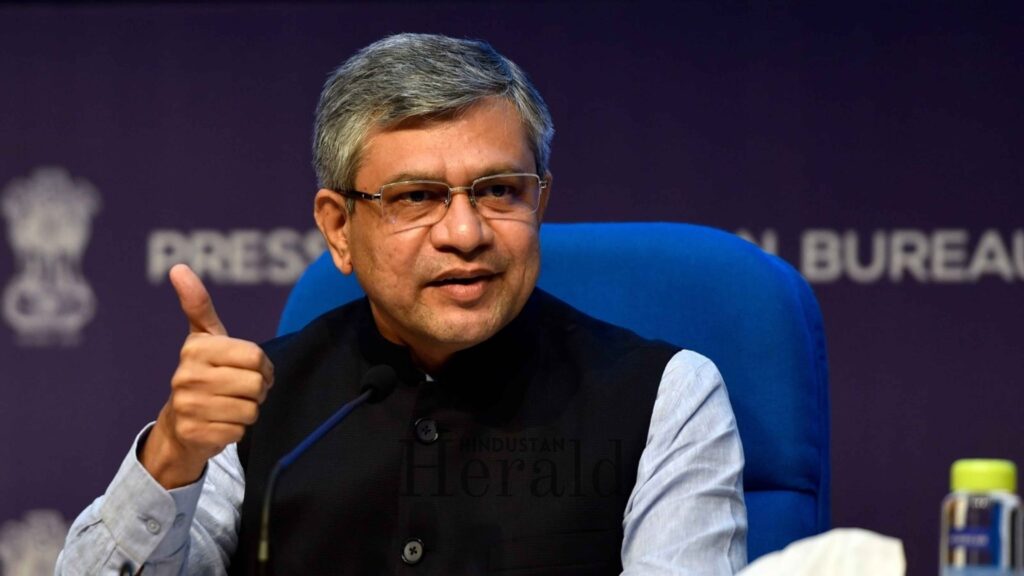
Now ministers say nice things about people all the time. That is part of the job. But read between the lines here and something specific is being communicated. The government is not saying we have appointed a good administrator. They are saying we have appointed someone who understands India emotionally. Someone whose instinct is to connect with people rather than regulate them or manage them from a distance.
That is a particular diagnosis of what Prasar Bharati needs. It may be right. It may be incomplete. But it is clearly a conscious choice, and it tells you something about how the government sees the problem.
The Censor Board Years
From 2017, Joshi ran the Central Board of Film Certification. He came in after Pahlaj Nihalani, whose tenure had turned into a fairly exhausting national controversy, and the film industry was relieved to see a creative person take over.
His approach was different from day one. He preferred conversation over confrontation. He pushed to digitise the board’s internal workings. He oversaw certification of over 25,000 films. When the Padmaavat protest movement was at its peak and there was enormous pressure on the CBFC, his board recommended a handful of modifications, no wholesale cuts, which was more measured than many had expected.
Not everyone was satisfied throughout. Some critics felt he was too close to the ruling establishment. His comments publicly praising Prime Minister Modi brought uncomfortable questions about whether a regulatory chairman should be quite so visibly aligned with the political leadership that appointed him. Those conversations followed him during his CBFC years and they have not entirely disappeared.
Still, what the CBFC chapter shows is a man who prefers dialogue to drama. Who would rather find a workable middle ground than win a fight. Whether that particular temperament serves him well at Prasar Bharati, where the problems are structural and financial rather than simply regulatory, is something the next year or two will show.
The Detail Nobody Is Talking About
Sushma Joshi performed on All India Radio for thirty-plus years. That was her professional life. That organisation, those studios, that signal going out across the country, that was her workplace for three decades.
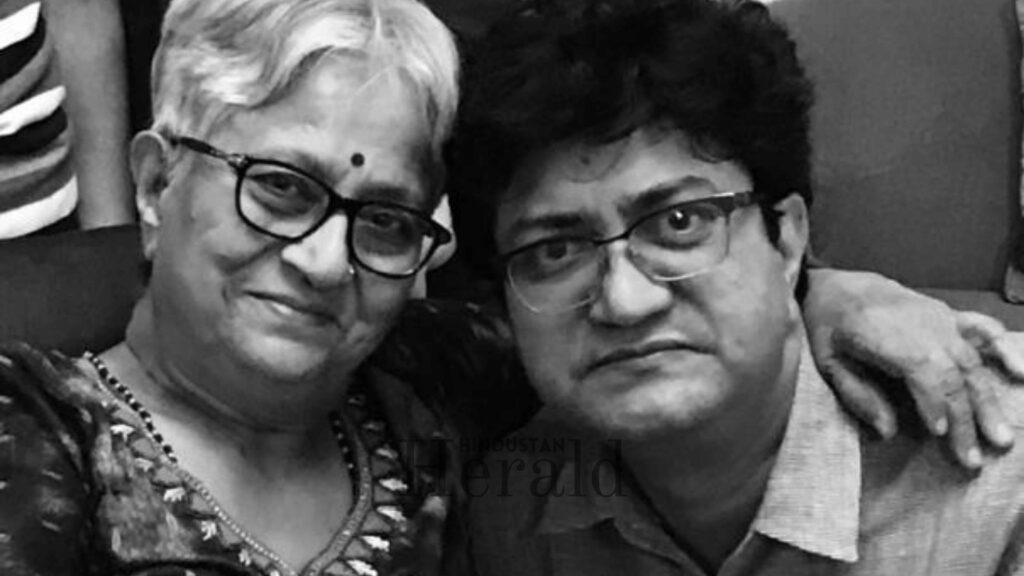
Her son now chairs it.
Nobody in the official press releases mentioned this. Of course they did not. It is not the kind of thing governments put in statements. But if you want to understand why this appointment feels different from most, that detail is worth sitting with. Prasoon Joshi did not grow up distant from public broadcasting. He grew up inside its sound. It was the background noise of his childhood, literally.
That does not mean he will automatically do a good job. Emotional connection to an institution is not the same as knowing how to run it. But it does mean he is not arriving as an outsider who sees Prasar Bharati as an abstract management challenge. He knows, in a way that is personal and old, what this thing is supposed to be.
The Honest Part
Here is what the enthusiastic press coverage will mostly skip over.
Prasar Bharati has problems that a chairman with good instincts and a glittering CV cannot solve on his own. The funding structure is complex. The bureaucratic layers are thick. The question of how much genuine editorial independence a government-funded broadcaster can actually maintain is not a new question and it does not have a clean answer. These are problems that outlast any individual at the top.
Joshi will also face pressure. Anyone in that chair faces pressure. A public broadcaster that the ruling government funds is going to feel the weight of that relationship whether it wants to or not. The BBC has that problem in Britain. Public broadcasters in France and Germany have their own versions of it. India is not unique here, just more openly complicated about it.
What Joshi genuinely can bring, and this is not a small thing, is a different sense of who the audience is. His whole career has been built on understanding what ordinary Indians respond to. Not theoretical Indians in market research documents. Actual people, from the places he grew up in, speaking the languages and carrying the references he grew up with. The risk with Prasar Bharati has always been that it makes content for an imagined audience rather than a real one. Joshi at least knows the difference.
Whether that understanding, combined with whatever political backing he has and whatever team he builds around himself, is enough to shift something real inside Prasar Bharati, that is the question nobody can answer in a press release. Not even the most enthusiastic one.
A Poet Running a Broadcaster
It is a strange sentence when you say it out loud. A poet is now running India’s national broadcaster. The government chose someone whose greatest skill is finding the exact right word to make something land in the human chest.
Maybe that is exactly what Doordarshan and All India Radio need after years of safe, forgettable, institutional content. Maybe the answer to the problem was never another administrator. Maybe it was always someone who actually feels something when they make something.
Or maybe the structural rot goes too deep for feeling to fix. Maybe vision without money and autonomy and an organisation genuinely willing to change is just a nice speech followed by the same slow decline.
Both of those things are possible. Right now, on the day of the appointment, with the ink still drying on the official order, it is impossible to know which one it will be.
What is clear is that Prasoon Joshi has spent his entire life learning how to reach people. He knows how to close the distance between a message and the person it is meant for. He knows, probably better than almost anyone else the government could have chosen, that communication is not about broadcasting. It is about being heard.
Prasar Bharati has been broadcasting for decades. Whether it has truly been heard is the whole question. He has his shot at answering it.
Stay ahead with Hindustan Herald — bringing you trusted news, sharp analysis, and stories that matter across Politics, Business, Technology, Sports, Entertainment, Lifestyle, and more.
Connect with us on Facebook, Instagram, X (Twitter), LinkedIn, YouTube, and join our Telegram community @hindustanherald for real-time updates.

- Arun Upadhayay

- Arun Upadhayay
- Arun Upadhayay
- Arun Upadhayay



 Ananya Sharma
  Sandeep Verma