
 By Sandeep Verma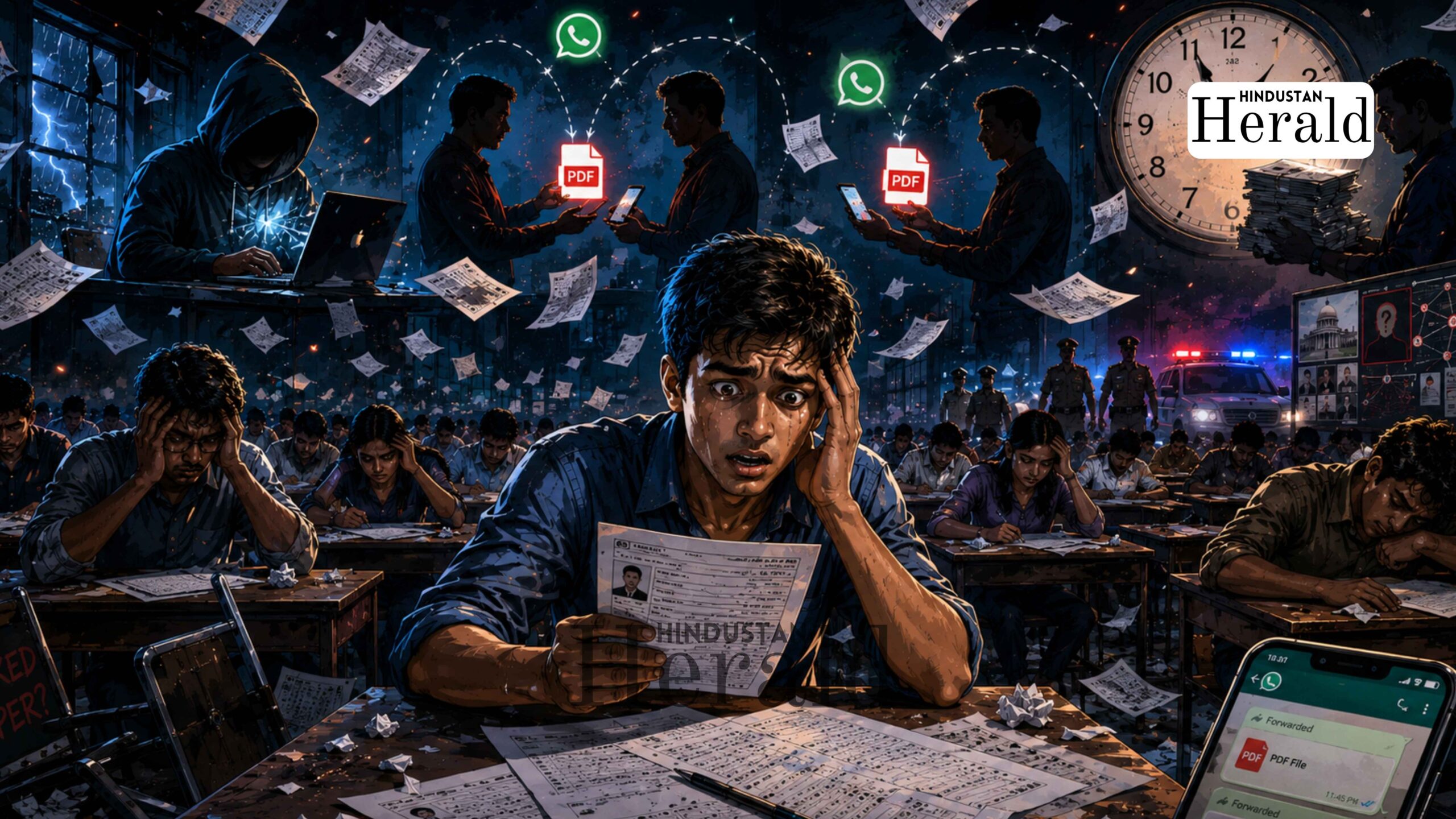
New Delhi, May 15: Twenty-two lakh students. Two years of preparation for many of them, sometimes more. And it all came crashing down because somebody, somewhere, decided that selling a question paper was worth the risk.
On Friday, the National Testing Agency finally told those students when they get their second chance. NEET (UG) 2026 will be re-held on June 21. That is the date. That is all NTA put out a post on X, a couple of helpline numbers, an email address. No press conference, no apology, no explanation of how this was allowed to happen in the first place.
Just a date.
For families who have been running on anxiety since May 12, when the exam got scrapped, even that much is something. But it does not answer the one question that keeps coming back: how did a paper meant to determine the future of lakhs of young people end up on WhatsApp the night before?
It Started With a PDF in Sikar
The short answer is that someone got greedy, and a lot of other people looked the other way.
Here is what investigators have pieced together so far. The original NEET (UG) 2026 exam was held on May 3 across more than 5,400 centres in 551 Indian cities and 14 cities abroad. By all appearances, the day went normally. Students went in, sat through three hours, came out. The usual post-exam debates about difficulty level followed.
Then things started unravelling.
A Sikar-based MBBS student studying in Kerala had, the evening before the exam, sent a PDF to his father. He called it a “guess paper.” The father ran a PG accommodation in Sikar, a city that has become one of India’s biggest coaching hubs, and he passed the document to a couple of teachers in his circle. A chemistry teacher and a biology teacher looked at it. Then they looked at the actual NEET questions after the exam. The similarities were not vague or coincidental. They were too specific to ignore.
That was the beginning of a case that has since pulled in investigators across multiple states.
The Paper’s Journey: Couriers, Photographs, and Cash
What the CBI has found since then reads less like an exam irregularity and more like a supply chain operation.
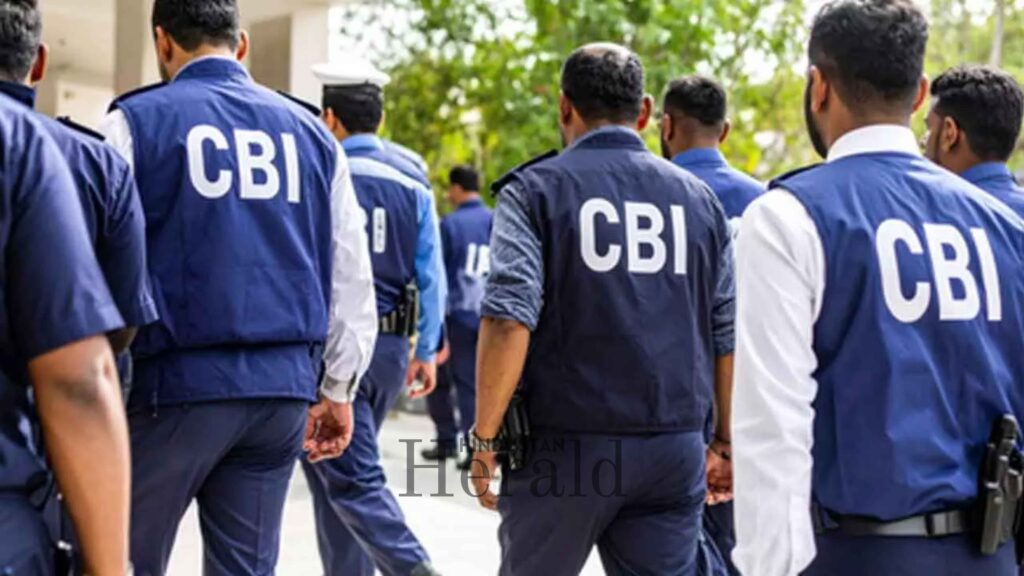
The question paper, according to investigators, first showed up in Pune. An Ayurveda practitioner there allegedly got hold of a hard copy somehow. From Pune, it was sent by courier to a man named Khairnar in Nashik, who took photographs of it and forwarded them to a contact in Gurgaon. Somewhere along the way, the paper was handwritten by someone, then scanned, then converted into PDF files. Those PDFs were then sold to students at coaching centres in Sikar at prices anywhere between Rs 2 lakh and Rs 5 lakh per student.
Two to five lakh rupees. Per student. For a head start that should never have been available.
The paper did not stay in one state. It moved through Haryana, Maharashtra, Bihar, Uttarakhand, Jammu and Kashmir, and several others. It travelled on WhatsApp, through Telegram channels, through coaching networks, through physical couriers. By the time the exam was actually being written by students sitting in centres across the country, an unknown number of them already had the questions in their heads.
Around 15 to 16 people have been arrested so far. Another 45 or so have been questioned or detained. The CBI swept in and picked up five people in one go, three from Jaipur, one from Gurugram, one from Nashik. When those five were produced before a Delhi court, the judge’s observation was blunt. This was not a few students cheating at the margins. What the evidence described, the court said, was an organised gang.
And then there is this detail from Latur in Maharashtra. A parent filed a complaint saying a local coaching institute had held a mock test before the actual exam, and 42 questions from that mock test matched the real NEET paper. Forty-two. If that number is accurate, someone inside that coaching institute knew exactly what was coming.
NTA Cancelled the Exam Nine Days Later
The NTA had referred the matter to central agencies on May 8, five days after the exam. On May 12, it announced the cancellation. In its statement, the agency said the decision was taken after law enforcement agencies shared their investigative findings, and that it was cancelling in the interest of transparency.
Nine days is a long time when you are a student who just sat through a three-hour exam and is now being told it did not count.
The CBI probe was announced alongside the cancellation, framed by the government as a “comprehensive inquiry.” Education Minister Dharmendra Pradhan called a high-level meeting on May 13 with NTA Director General Abhishek Singh and senior secretaries to plan the re-examination. The stated goal was to make sure the next attempt would be held, in the government’s own words, in a “safe, transparent, and credible manner.”
Credible. That word did a lot of heavy lifting in that sentence, given the circumstances.
Students did not sit still through all of this. AISA members were out at Jantar Mantar on May 14, protesting. Young people holding placards, demanding answers. The images looked almost identical to the ones from 2024, when NEET was last engulfed in a similar controversy. That is the part that should alarm policymakers more than anything else. This is not a one-time systems failure. It is starting to look like a pattern.
So What Happens Now for Students
The NTA has at least kept the process simple for candidates. No one needs to register again. The original application data, centre preferences, and candidature details from the May 2026 cycle will be automatically carried over to the June 21 re-exam. The fees already paid will be refunded. No additional charges.
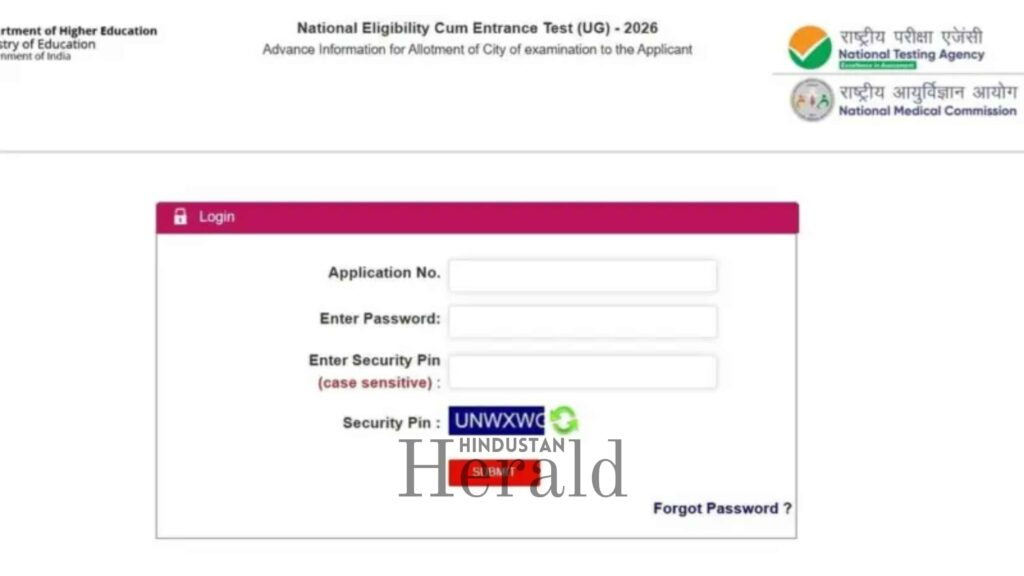
Fresh admit cards will be released on neet.nta.nic.in before the exam. The format remains the same pen and paper. Students have been asked to double-check all details in their application forms carefully before any future payment, since corrections will not be possible after submission.
Helpline: 011-40759000 / 011-69227700
Email: neetug2026@nta.ac.in,
Website: neet.nta.nic.in
The logistics are manageable. The mental weight of it is something else entirely. These are mostly teenagers and young adults in their early twenties. For a lot of them, NEET is not just an exam. It is the singular thing their last two or three years have been pointed toward. Waking up to find it cancelled, then spending two weeks not knowing when or how the re-exam would happen that kind of uncertainty leaves marks that a new date announcement cannot fully erase.
For students close to the upper age limit for NEET attempts, or those who have already given multiple sittings, every cancelled exam is not just an inconvenience. It is a year of their life.
The Bigger Problem Nobody Is Fully Addressing
The CBI is still digging. Among the threads investigators are reportedly following is whether anyone inside the NTA itself may have been involved. That line of inquiry has not yielded public conclusions yet, but the fact that it exists at all says something about how deep the suspicion goes.
The FIR covers a wide range of offences: criminal conspiracy, cheating, breach of trust, destruction of evidence, corruption charges, and violations of the Public Examination (Prevention of Unfair Means) Act, 2024. That last law was passed specifically because of what happened in 2024. It was supposed to be the government’s answer to exactly this problem.
It did not stop it.
That is the uncomfortable truth sitting underneath Friday’s date announcement. Setting June 21 as the new exam date is the right call. It gives students something to prepare for, something concrete to hold on to. But it does not explain how question papers are printed, transported, and stored. It does not tell us how many people had access to the paper before exam day. It does not guarantee that the same network cannot simply regroup and try again.
Those answers need to come from the investigation, and eventually from the government in the form of structural changes. Not just tougher laws, but tighter processes. Independent oversight. Accountability that actually reaches the people responsible, not just the middlemen who got caught.
For now, the date is set. June 21, 2026. The exam will be held, and in centres across the country, lakhs of students will walk in again, answer sheets in front of them, pens in hand, carrying the weight of everything they have sacrificed to get to that room.
They deserve better than what happened on May 3. They deserve an agency, and a system, that actually protects the integrity of that moment.
Whether they get it remains to be seen.
Stay ahead with Hindustan Herald — bringing you trusted news, sharp analysis, and stories that matter across Politics, Business, Technology, Sports, Entertainment, Lifestyle, and more.
Connect with us on Facebook, Instagram, X (Twitter), LinkedIn, YouTube, and join our Telegram community @hindustanherald for real-time updates.

Regional journalist bringing grassroots perspectives and stories from towns and cities across India.
- Sandeep Verma

- Sandeep Verma
- Sandeep Verma
- Sandeep Verma




 Ananya Sharma