 By Shelesh Joshi and Rajiv Menon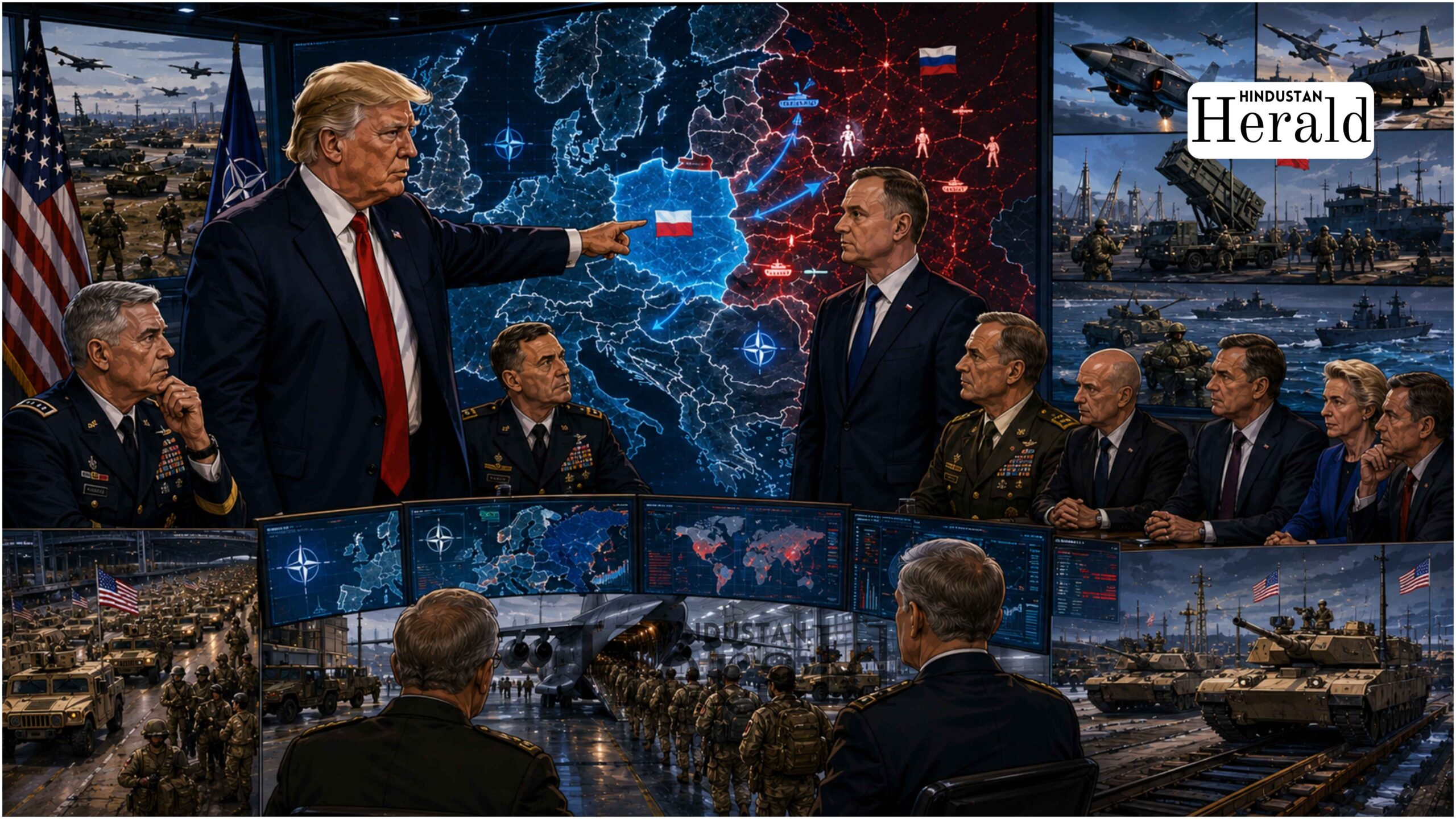
New Delhi, May 22: Nobody in Warsaw expected the phone to ring twice in the same week with opposite news. First, the Pentagon called off a long planned deployment of over 4,000 American troops to Poland. Equipment had already been shipped. Soldiers had packed. Then, within days, President Donald Trump went on Truth Social and announced that 5,000 troops were heading to Poland after all because he liked the country’s president. That, stripped of diplomatic language, is what happened on Thursday.
It is also, in many ways, a perfect summary of how American foreign policy works in 2026 reactive, personal, and capable of full reversal before the previous decision has even been fully processed. For the world, and particularly for India, the implications run far deeper than one brigade’s travel plans.
How a Cancelled Deployment Became a Major Announcement
To understand the significance of Thursday’s announcement, you need to go back just a few days. Last week, the Pentagon quietly cancelled the deployment of the 2nd Armored Brigade Combat Team, 1st Cavalry Division to Poland. It was not a minor administrative decision. As reported by ABC News, the unit had already completed months of mission specific training. Its armoured vehicles and logistics equipment had physically arrived at European ports. The soldiers themselves reportedly learned their orders were scrapped days before they were meant to leave Fort Hood, Texas.
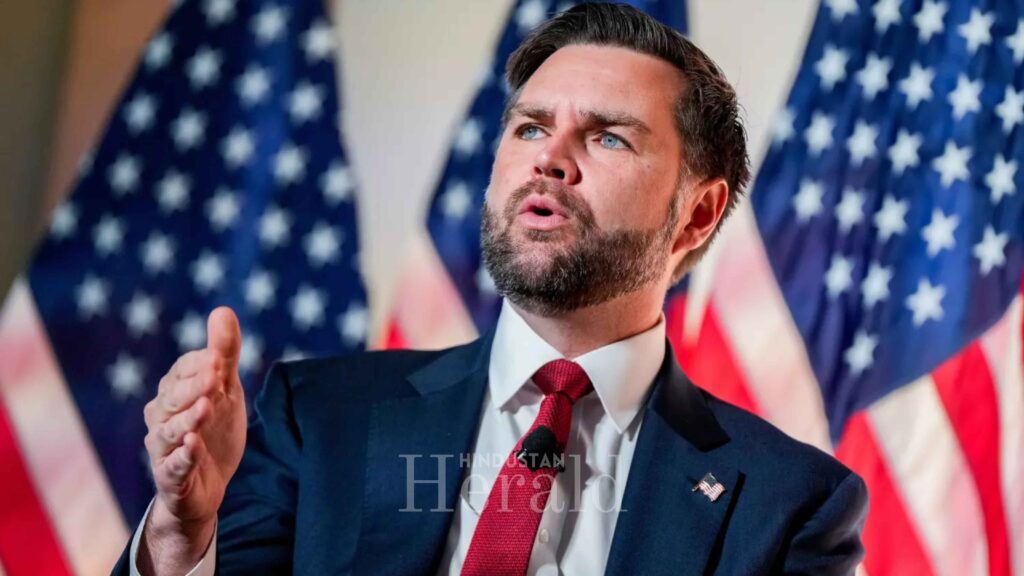
The official reasoning, as relayed by Vice President JD Vance when he defended the cancellation on Tuesday, was straightforward: Europe needs to stand on “its own two feet.” Trump had been pushing this line for months that NATO allies were freeloading on American military muscle while resisting Washington’s priorities elsewhere.
Then, within 48 hours of Vance’s defence of the cancellation, Trump reversed it entirely. As reported by Military Times, the president wrote on Truth Social that he was “pleased to announce” 5,000 troops would be sent to Poland, citing the “successful election” of Polish President Karol Nawrocki a conservative nationalist whom Trump had personally endorsed and their “relationship.”
Nobody in the formal defence establishment had been widely consulted. No detailed operational briefing followed the post. As reported by ABC News, a Polish official admitted that Warsaw itself did not have clarity on which specific troops were being deployed, from where, or on what timeline. Still, Poland welcomed the announcement without hesitation. And given what the alternative looked like, it is hard to blame them.
Why Poland Is Different From Every Other NATO Member Right Now
There is a reason Warsaw fought so hard to reverse the cancellation, and a reason Washington ultimately listened. Poland is, by almost any military metric, the most serious member of NATO right now. Not the most powerful that is still the United States by a wide margin. But the most committed, the most invested, and arguably the most exposed.
According to NATO’s official documentation, Poland’s defence spending rose from 2.7 percent of GDP in 2022 to 4.2 percent in 2024. As reported by the Global Banking and Finance Review, it is targeting 4.8 percent of GDP in 2026 the highest proportion of any NATO member, including the United States. Poland’s defence minister has publicly pushed for NATO’s 5 percent target to be met by 2030, not 2035, saying waiting “may be too late.”
These are not just numbers on a spreadsheet. They translate into real procurement F 35 fighter jets, HIMARS rocket artillery, K2 Black Panther tanks sourced from South Korea, and a steady pipeline of M1 Abrams from the United States. Poland is building an army, not just funding one.
According to the Wilson Center, Poland also facilitated delivery of more than 350 of the roughly 800 tanks that Ukraine received from partner countries as of late 2024. The POLLOGHUB logistics hub in Rzeszow built with American assistance has served as the primary corridor through which an estimated 80 percent of all military aid to Kyiv has flowed.
In short, Poland has been doing the work. It has been spending the money, taking the political risk, hosting the troops, and moving the equipment all while sharing a border with an active war zone.
When Trump cancelled the brigade deployment, it landed in Warsaw not as a policy disagreement but as something closer to abandonment. Polish diplomats, as described by officials to ABC News, launched what they called a “diplomatic offensive” in Washington to push back. That offensive worked.
The Real Reason Behind the Chaos: Iran
To make sense of the contradictions here why Washington cancelled the deployment in the first place, why it reversed the decision, and why Germany is simultaneously losing American troops while Poland gains them you have to look east of Europe entirely.
The fault line running through NATO right now is not Ukraine. It is Iran. As reported by Military Times, Trump has grown deeply frustrated with European NATO members over their refusal to support the joint US Israeli military campaign against Iran. The specific pressure point is the Strait of Hormuz Trump wanted allied support in keeping it open during the conflict. Most European governments declined, saying they had no obligation to join a war they had no part in starting.
Trump did not take that well. Shortly after German Chancellor Friedrich Merz publicly questioned the coherence of American strategy in the Middle East, the Pentagon announced plans to withdraw roughly 5,000 US troops from Germany, as reported by the Eastern Herald. The timing was not coincidental. It was a message.
Poland, by contrast, had said nothing critical about the Iran campaign. It kept its head down, kept spending on defence, and kept its personal relationship with Trump warm. The result was a deployment announcement. Germany got a withdrawal. Poland got reinforcement. As reported by Fox News, Trump told a British newspaper in April 2026 that he was “strongly considering” pulling the United States out of NATO altogether over the alliance’s stance on Iran. Whether he means it or not, the statement has reshaped how every European capital now calculates its relationship with Washington. Criticism of American military decisions comes with a price tag. Silence, apparently, comes with troops.
Moscow Is Watching And So Is Beijing
Russia’s official response has been predictable condemnation, accusations of NATO aggression, warnings about destabilisation. As reported by Reuters, Kremlin spokesperson Dmitry Peskov described the broader pattern of NATO reinforcement along its eastern flank as destabilising. That framing has not changed since 2014 and is unlikely to change now.

What is worth paying attention to, though, is not what Russia says but what it observes. Moscow has watched the United States cancel a deployment, defend the cancellation, and then reverse it all in under two weeks. Beijing has watched too. Both capitals are drawing conclusions about the reliability of American commitments, and those conclusions are not uniformly reassuring to Washington’s allies.
The concern within NATO’s professional military establishment is not that this deployment escalates toward a direct conflict with Russia. Article 5 the collective defence guarantee remains the most powerful deterrent the alliance has. The concern is that erratic decision making at the top of the American government introduces unpredictability that adversaries can exploit and allies cannot plan around.
Poland understands this better than almost anyone. It sits where Kaliningrad the isolated Russian military exclave sits to its north, where Belarus lies to its northeast, and where Ukraine is bleeding to its south. There is no abstract threat assessment in Warsaw. The threat is geographic and immediate.
What India Cannot Afford to Ignore
India has managed a careful balance since February 2022 buying discounted Russian crude, maintaining arms supply lines from Moscow, abstaining at the UN, and avoiding direct alignment with either side of the conflict.
That balance has come under growing pressure, and Thursday’s announcement adds to it. The deployment signals that the United States is not stepping back from Europe in any structural sense even if individual decisions have been chaotic. A sustained and potentially enlarged American military presence in Eastern Europe means the geopolitical pressure on countries supporting Russia economically will not ease. It will intensify.
As reported by The Hindu, American officials have already raised concerns in bilateral conversations about Indian purchases of Russian oil at wartime discounts. With Washington now doubling down on its commitment to Poland, those conversations are likely to become more pointed.
The Iran dimension matters just as directly. India imports a significant share of its crude through the Strait of Hormuz. Any escalation of the US Iran conflict that disrupts that route through military action, insurance withdrawal, or shipping risk hits Indian refiners and Indian consumers at the pump. Warsaw’s relationship with Washington may be getting stronger, but the risks emanating from the Middle East theatre are entirely India’s problem to absorb.
There is also a longer term signal worth reading carefully. The Trump administration is now explicitly rewarding allies who spend heavily on Western defence procurement, say nothing critical about American military decisions, and maintain personal warmth with the president. India has been making progress on the first count defence procurement from the United States has grown substantially over the past decade. On the second and third counts, the relationship is more complex. The Ministry of External Affairs has not commented on the Poland deployment. That silence is a position in itself and a familiar one.
The Bigger Picture: Europe Is Rearming Permanently
Whatever happens with this specific deployment, the broader transformation underway in European security is now irreversible. At NATO’s Foreign Ministers meeting in Brussels in December 2025, members reaffirmed the 5 percent GDP spending target agreed at the Hague Summit that summer, to be achieved by 2035. Poland is pushing to compress that timeline to 2030. Its defence minister has been direct about why: the threat environment does not allow for a leisurely pace.
Finland and Sweden are now full NATO members, adding significant strategic depth to the alliance’s northern flank. The Baltic states Estonia, Latvia, and Lithuania have been operating above NATO spending targets for years. Romania is expanding its hosting capacity for allied forces. The alliance’s centre of gravity has shifted east, toward the nations most directly threatened by Russian aggression and most willing to act on that assessment.
The Poland that exists in 2026 is not the Poland of 2019 a loyal but relatively modest contributor hosting a rotating American presence. It is a country that has made a national decision to become a serious military power, is funding that decision at a rate that embarrasses most of its Western European neighbours, and has now secured a personal relationship with the American president that translates into direct security dividends.
Defence Secretary Pete Hegseth called Poland a “model ally” in recent remarks, as reported by the Eastern Herald. In the context of how other European governments have been treated, those two words carry more freight than they might seem.
A Deployment Built on a Tweet and What Comes Next
The operational picture remains genuinely unclear. As reported by ABC News, neither American nor Polish officials have confirmed exactly which units are deploying, on what schedule, and under which command structure. The announcement was a political declaration, not an operational order. The details will follow they always do but the sequence matters. Policy is being announced before it is planned, and allies are left to fill in the gaps.
What is not unclear is what Thursday’s announcement represents at the level of signal. Poland earned this moment through years of disciplined defence spending, consistent political alignment with Washington, and a willingness to absorb real economic and security costs on behalf of the alliance. It then fought hard, quietly and effectively, to reverse a decision that would have undercut all of that. Other NATO members are watching and recalibrating accordingly.
For the world beyond NATO, including India, the lesson is equally pointed. American security commitments in 2026 are not treaty guarantees in the traditional sense. They are relationship dependent, spending dependent, and if Thursday is any guide reversible and re reversible depending on a given week’s political temperature in Washington.
That is the world India is navigating. And the deployment of 5,000 American troops to Poland however confused the process that produced it is one more reminder of just how quickly the ground beneath that navigation can shift.
Stay ahead with Hindustan Herald — bringing you trusted news, sharp analysis, and stories that matter across Politics, Business, Technology, Sports, Entertainment, Lifestyle, and more.
Connect with us on Facebook, Instagram, X (Twitter), LinkedIn, YouTube, and join our Telegram community @hindustanherald for real-time updates.

Tracking world politics, global markets, trade movements, policy decisions, and the changing balance of economic power.
- Shelesh Joshi

- Shelesh Joshi
- Shelesh Joshi
- Shelesh Joshi





Specializes in South Asian geopolitics and global diplomacy, bringing in-depth analysis on international relations.
- Rajiv Menon
- Rajiv Menon
- Rajiv Menon
- Rajiv Menon