
 By Shelesh Joshi and Kavita Iyer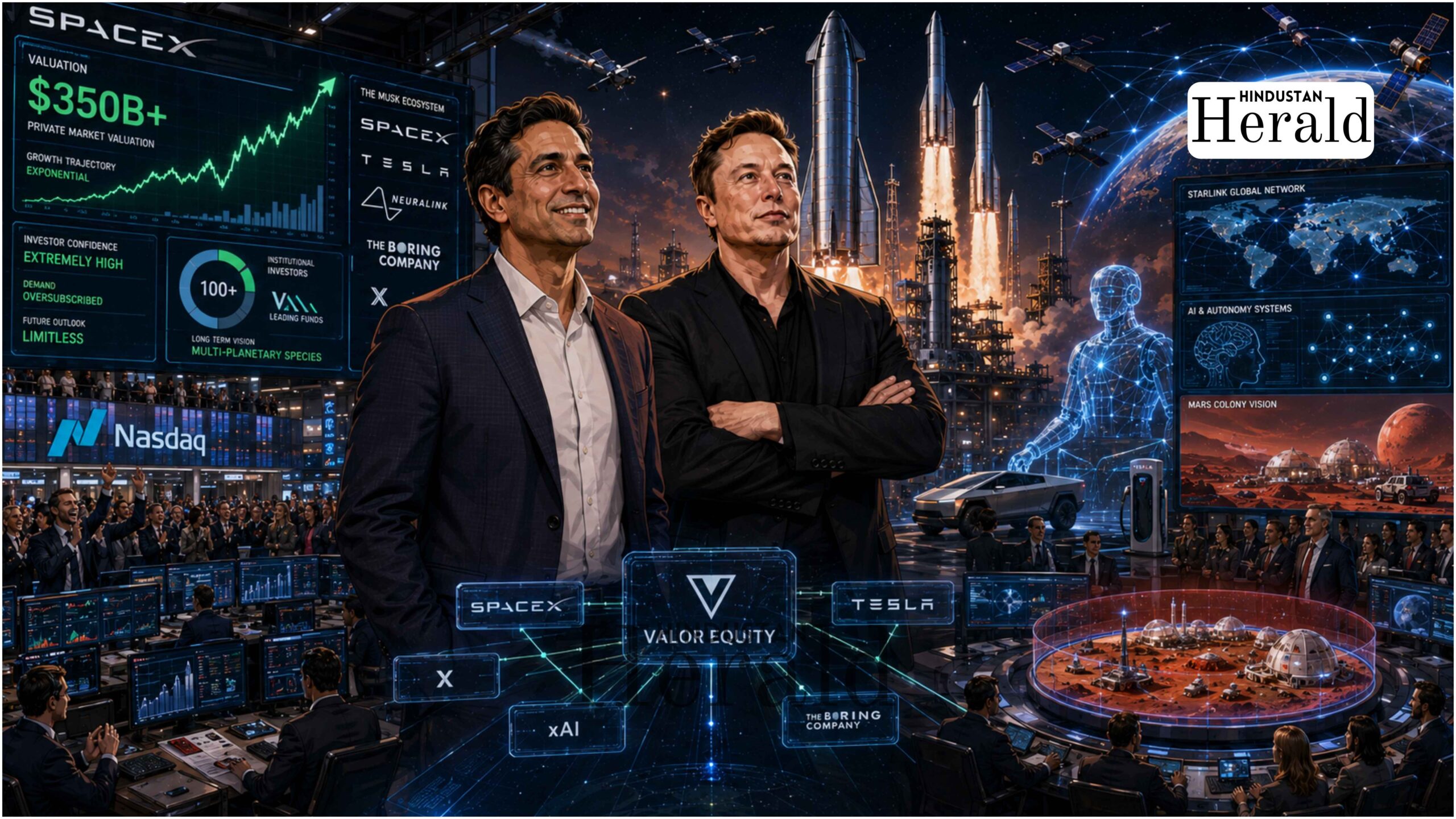
Mumbai, May 22: His father came from Goa. He grew up in Grand Rapids. And in a few weeks, Antonio Gracias may walk away from a single investment with more money than most countries will collect in taxes this year.
Meet Antonio Gracias. The most important investor you have probably never heard of. While the world has spent years watching Elon Musk dominate headlines about rockets, satellites, and Mars colonies, Antonio Gracias has been doing something far quieter and, it turns out, far more lucrative.
He has been backing Musk since before it was cool. Since before it was safe. Since before most serious investors would return Musk’s calls. And now, with SpaceX barreling toward what could be the largest IPO in the history of global capital markets, the bill for all that patience is about to come due.
Antonio Gracias, the founder of Valor Equity Partners and a longtime Musk ally, controls a 4 percent economic stake in SpaceX through various funds, the second largest disclosed position after Musk himself. If SpaceX executes its IPO and public trading pushes the company’s valuation to $2 trillion, the value of Antonio Gracias’s holdings could reach a staggering $128 billion.
Read that again slowly. One hundred and twenty eight billion dollars. From one bet. On one man. Made two decades ago when that man was still considered a long shot.
The Brilliant Man Behind the Number
Before the valuations and the IPO dates and the carry calculations, it is worth spending a moment understanding who Antonio Gracias actually is. Because the story is genuinely worth knowing. Antonio Gracias was born in Detroit, Michigan to immigrant parents. His father was a neurosurgeon from Goa, India. His mother was a pharmacist from Spain.
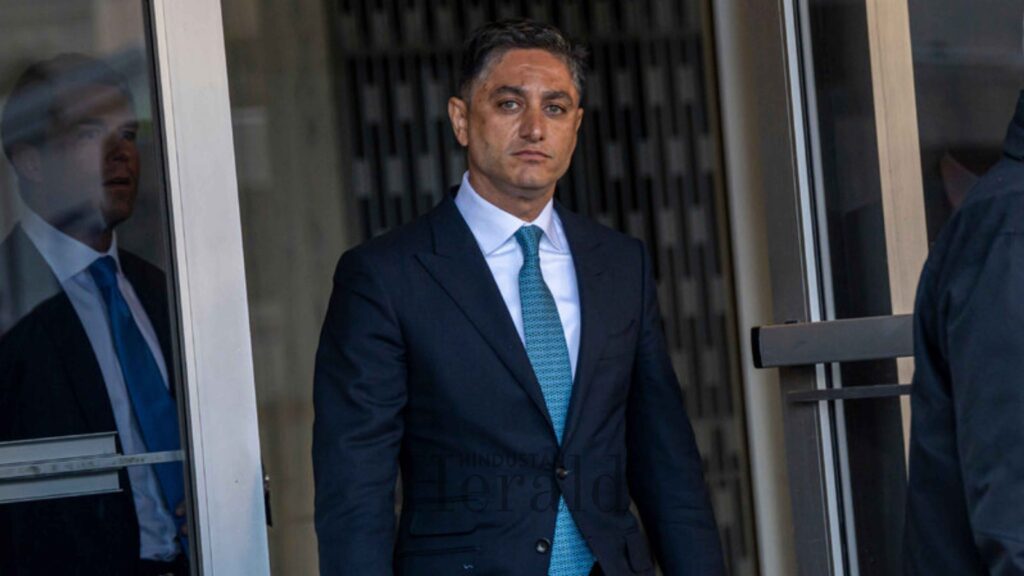
He grew up in Grand Rapids, made his way to Georgetown University, earned a law degree from the University of Chicago, and then did something that most law students do not do while still in school. Antonio Gracias founded his first investment firm, MG Capital, in 1995, putting in $130,000 of his own money alongside $270,000 from outside sources.
He and his partners built it into a $125 million firm, sold it, and Antonio Gracias went on to found Valor Equity Partners in 2001. Valor Equity Partners has since invested in SpaceX, Tesla, The Boring Company, and Neuralink, effectively becoming the quiet financial backbone of the entire Musk business empire.
Antonio Gracias has maintained a close personal and business relationship with Elon Musk spanning more than two decades. He was an early investor in Tesla and served on Tesla’s board from 2007 to 2021. Antonio Gracias continues to serve on the SpaceX board today.
This is not a passive investor who bought shares through a platform and got lucky. Antonio Gracias was in the room during Tesla’s darkest days in 2008 when the company nearly ran out of money. He was at the table when SpaceX was still losing rockets on the launchpad.
The two men have taken multiple personal and family vacations together, and Antonio Gracias was a groomsman at the wedding of Musk’s brother Kimbal. Twenty years of that kind of conviction is what $128 billion looks like when it finally comes back.
The IPO Is Not a Rumour Anymore
For years, a SpaceX public listing felt like a story that kept getting told and never actually happened. That era is over. SpaceX filed a confidential draft S 1 with the US Securities and Exchange Commission on April 1, 2026, targeting a $2 trillion valuation and $75 billion in proceeds.
The company is targeting a June 4 roadshow, with reports pointing to a listing as early as June 12, 2026. SpaceX has reportedly chosen Nasdaq and may list under the ticker SPCX, with share pricing expected on June 11 and trading beginning as early as June 12.
In an unusual move, SpaceX plans to allocate 30 percent of the offering to retail investors, a decision that has already triggered sharp rallies in related space sector stocks. If the valuation holds anywhere near $2 trillion, this would not just be the largest IPO in American history. It would be the largest IPO anywhere in the world. Ever.

Saudi Aramco’s $29.4 billion raise in 2019 was considered extraordinary at the time. SpaceX is reportedly targeting more than double that in a single offering. For Antonio Gracias, who has held his position through every twist of this company’s history, that scale is not a surprise. It is the destination he saw coming long before anyone else did.
Understanding the $128 Billion Calculation
The number deserves some honest unpacking, because it is not as clean as owning four percent of a two trillion dollar company and collecting a single cheque. Antonio Gracias does not personally own the entire stake. Most of the underlying economics belong to Valor’s limited partners, the institutions, endowments, family offices, and wealthy individuals that supplied capital to the funds over the years.
Antonio Gracias’s personal upside would likely come from carried interest, his own direct investments, and his share of Valor’s overall economics. If Valor earned a standard 20 percent carry on a roughly $128 billion SpaceX windfall, that would create a carry pool of about $25.6 billion.
If Antonio Gracias received the majority of that pool as Valor’s founder and chief investment officer, his personal payday could theoretically be around $20 billion, on top of a pre IPO net worth already estimated at $5 billion.
The $128 billion figure refers to the total value of Valor’s SpaceX position at a $2 trillion valuation. The distinction between Valor’s gain and Antonio Gracias’s personal gain matters and deserves to be stated plainly.
But even a personal windfall in the range of $20 billion from carry alone would represent one of the largest individual wealth events in the history of private equity. Valor’s role in the Musk ecosystem has also extended well beyond SpaceX itself.
The IPO filing revealed major xAI related equipment leasing arrangements involving Valor connected entities, suggesting the financial ties between Antonio Gracias and the Musk empire run considerably deeper than what has been publicly known.
What SpaceX Has Actually Built
The valuation only holds up if the business underneath it is real. It is Starlink, with over 9 million users, is projected to generate $15 to $16 billion in revenue in 2025, and it is the primary engine driving the company’s extraordinary valuation.
Starlink currently has nearly 10,300 satellites in orbit, with a long term target of 42,000 satellites. The service is no longer just residential broadband for remote areas. Maritime operators pay for it. Airlines are deploying it. Defence departments are contracting it.
And after its performance in Ukraine, where it kept communications functioning under genuinely hostile wartime conditions, its credibility in government procurement circles is real and lasting in a way that no product launch event could have manufactured. Analysts estimate SpaceX’s revenue could approach $20 billion in 2026, driven by strong demand across both its rocket launch business and the Starlink satellite network.
SpaceX has also completed 18 crewed missions, with 11 conducted specifically for NASA. Earlier this year, the company made a structural move that changed its commercial profile entirely. SpaceX acquired Musk’s AI company xAI, the parent of the digital assistant Grok, in a deal finalised in early February 2026. The transaction placed SpaceX’s valuation at $1 trillion and xAI at $250 billion at the time of closing.
SpaceX is no longer purely an aerospace and satellite company. It now carries artificial intelligence infrastructure at its core, which is exactly the kind of story that public market investors have been paying the highest premiums for in recent years. For Antonio Gracias, who backed this company before it had revenue, watching it become an AI powered global infrastructure business is the full realisation of a thesis he held when almost nobody else did.
The Governance Fight Playing Out Right Now
The road to listing has not been entirely smooth. Major pension funds from New York and California have jointly raised objections ahead of the listing, criticising Musk’s absolute control through a dual class share structure and demanding a one share one vote system with strengthened board independence. The public would receive Class A shares with standard voting rights, while Musk and insiders retain Class B shares carrying significantly more voting power per share. This structure is not unusual for founder led technology companies. Alphabet, Meta, and Snap all operate with similar arrangements.
But at a $2 trillion valuation, concentrating that much voting power in one person is a conversation that institutional investors are not letting pass quietly. Musk will not be selling a single share from his personal account in the IPO, according to current reports.
He is not cashing out. He is taking the company public while keeping his stake intact and his control firmly in place. For Antonio Gracias, who has sat on that board and watched this company grow from scrappy startup to global infrastructure, that consistency from Musk is not a concern. It is the whole point.
Why India Should Be Paying Attention
The Indian origin dimension of this story is not just a headline angle. Antonio Gracias’s father came from Goa. That small coastal state on India’s west coast has quietly produced professionals who built extraordinary careers far from home, often without seeking recognition for it.
The more immediate concern for Indian readers, though, is commercial. Starlink is still waiting on its operating licence from India’s Department of Telecommunications. The delay has been shaped partly by spectrum policy debates and partly by the very visible lobbying interests of Reliance Jio and Bharti Airtel, both of which have satellite broadband ambitions of their own in the same underserved rural and semi urban markets that Starlink would enter.
A publicly listed SpaceX, carrying $75 billion in fresh IPO capital and the full weight of global institutional investor attention, will be a very different presence at that regulatory table than a private company that operated in relative quiet.
For Indian family offices and institutions with offshore exposure to US growth stage assets, the ripple effects of a SpaceX listing at this scale will reshape capital allocation priorities across technology funds in ways that deserve attention now rather than after June 12.
And for the Indian diaspora watching closely, the story of Antonio Gracias carries a meaning that goes well beyond finance. A man whose roots trace back to Goa is about to be at the centre of the most consequential wealth event in the history of global private markets.
Where Everything Stands Right Now
The roadshow is being scheduled. The bankers are in place. The ticker is reportedly SPCX. The largest public market debut in history is, by all current reporting, a matter of weeks away. And at the centre of it, quietly as always, is Antonio Gracias. The son of a doctor from Goa and a pharmacist from Spain. A man who started his first investment firm with $130,000 while still in law school. Who backed Musk when backing Musk meant genuinely risking your reputation and your capital. Who sat in boardrooms through near collapses and historic recoveries, year after year, while the rest of the world slowly came around to what Antonio Gracias had already understood.
The $128 billion figure attached to his name represents Valor’s total SpaceX holdings, not a personal windfall delivered in a single cheque. But the personal gain for Antonio Gracias, by any honest calculation, will be historic. Most people have never heard of Antonio Gracias. By the time SPCX starts trading on Nasdaq in June, that is going to change permanently.
Stay ahead with Hindustan Herald — bringing you trusted news, sharp analysis, and stories that matter across Politics, Business, Technology, Sports, Entertainment, Lifestyle, and more.
Connect with us on Facebook, Instagram, X (Twitter), LinkedIn, YouTube, and join our Telegram community @hindustanherald for real-time updates.

Tracking world politics, global markets, trade movements, policy decisions, and the changing balance of economic power.
- Shelesh Joshi

- Shelesh Joshi
- Shelesh Joshi
- Shelesh Joshi





Former financial consultant turned journalist, reporting on markets, industry trends, and economic policy.
- Kavita Iyer
- Kavita Iyer
- Kavita Iyer
- Kavita Iyer