
 By Ananya Sharma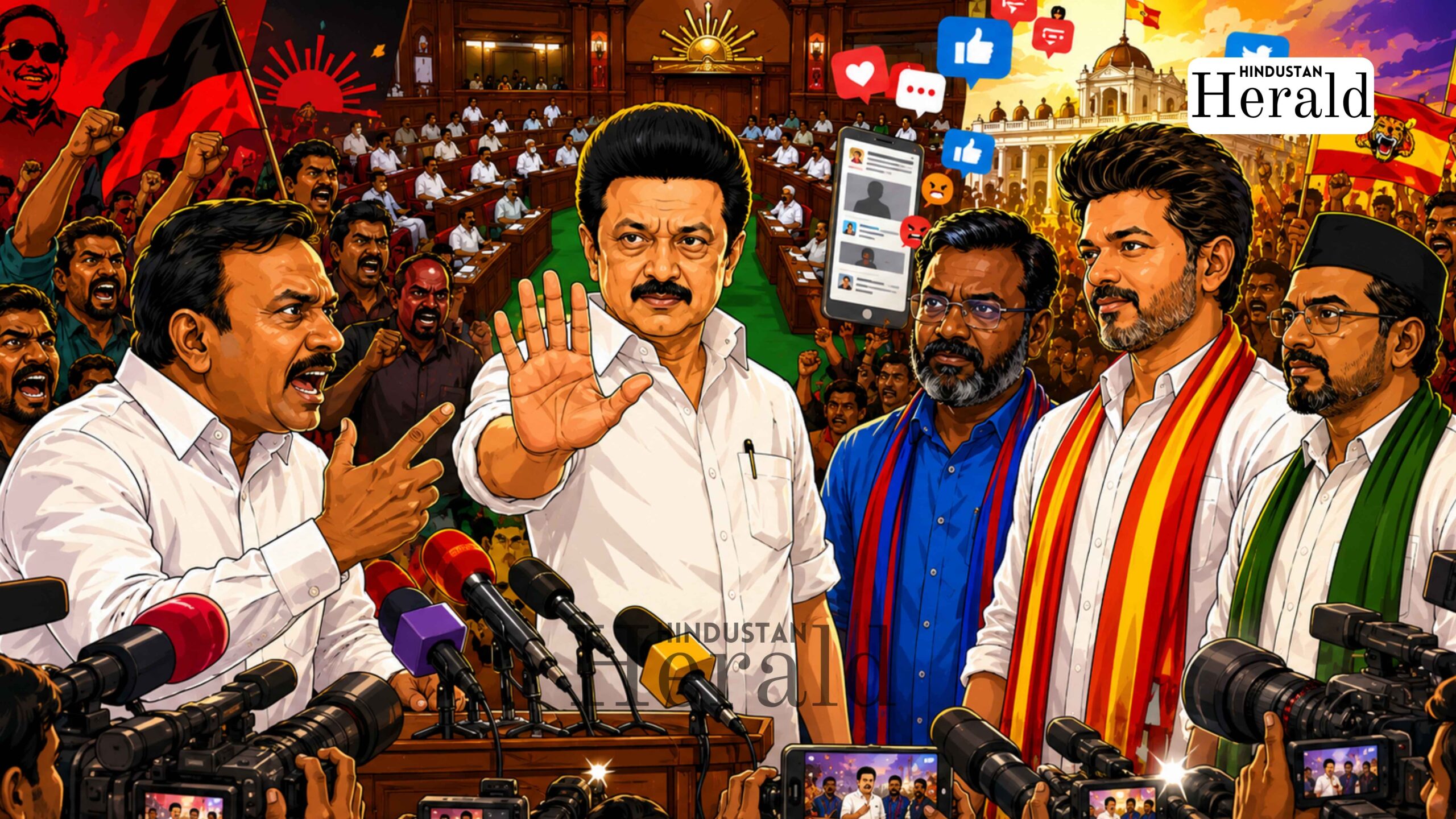
Chennai, May 22: Tamil Nadu woke up to a political storm on Friday morning, and by afternoon, the state’s most prominent Opposition leader was trying to put a lid on it. DMK president and former Chief Minister MK Stalin issued a public appeal for restraint after his own party’s senior MP A Raja fired a thinly veiled literary insult at the VCK and IUML legislators who were sworn into the new Tamilaga Vettri Kazhagam (TVK) government cabinet, triggering a sharp and very public counter-attack from the ruling party.
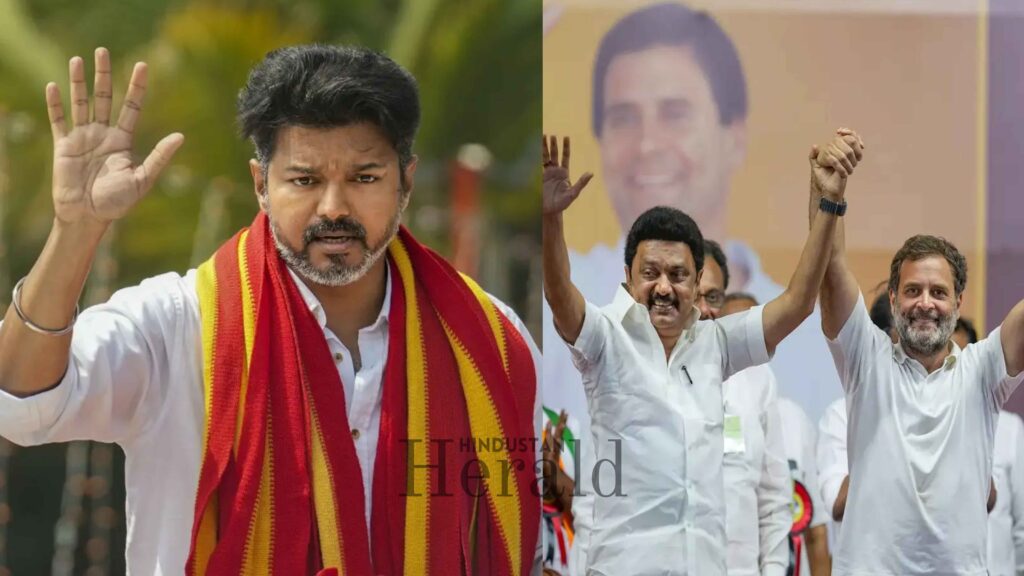
The episode, unfolding entirely on social media through the course of a single morning, laid bare just how raw the wounds of Tamil Nadu’s recent election cycle remain and how difficult it has become for the DMK to manage the anger of its rank and file as former allies drift towards Chief Minister C Joseph Vijay’s government.
The Oath That Lit The Fuse
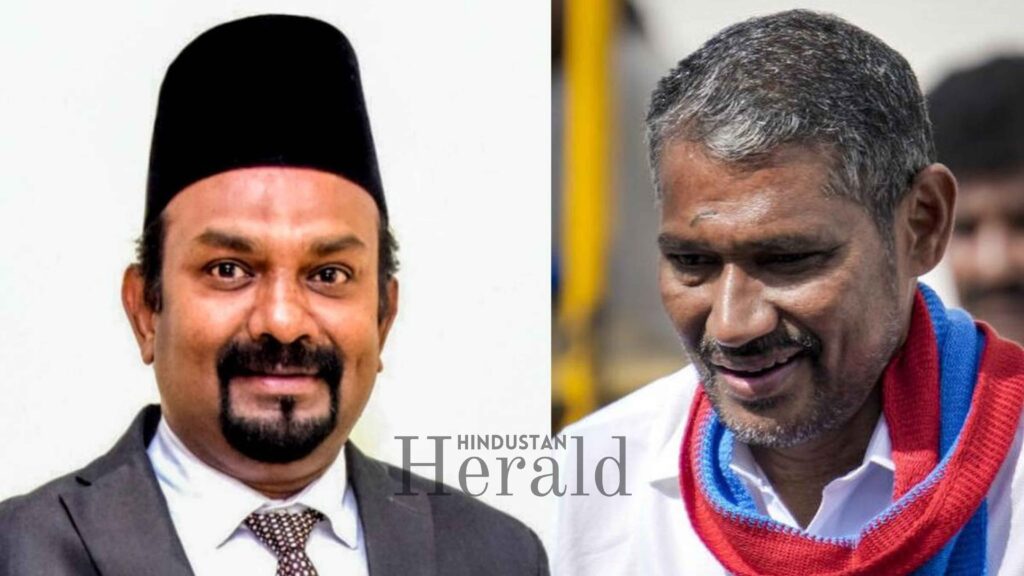
The chain of events began early Friday when Tamil Nadu Governor Rajendra Vishwanath Arlekar administered the oath of office to two legislators at a ceremony held at Lok Bhavan in Chennai. Vanni Arasu of the Viduthalai Chiruthaigal Katchi (VCK), who represents the Tindivanam assembly constituency, and AM Shahjahan of the Indian Union Muslim League (IUML), MLA from the Papanasam constituency, were inducted into the cabinet on the recommendation of Chief Minister Vijay, with the Governor’s approval.
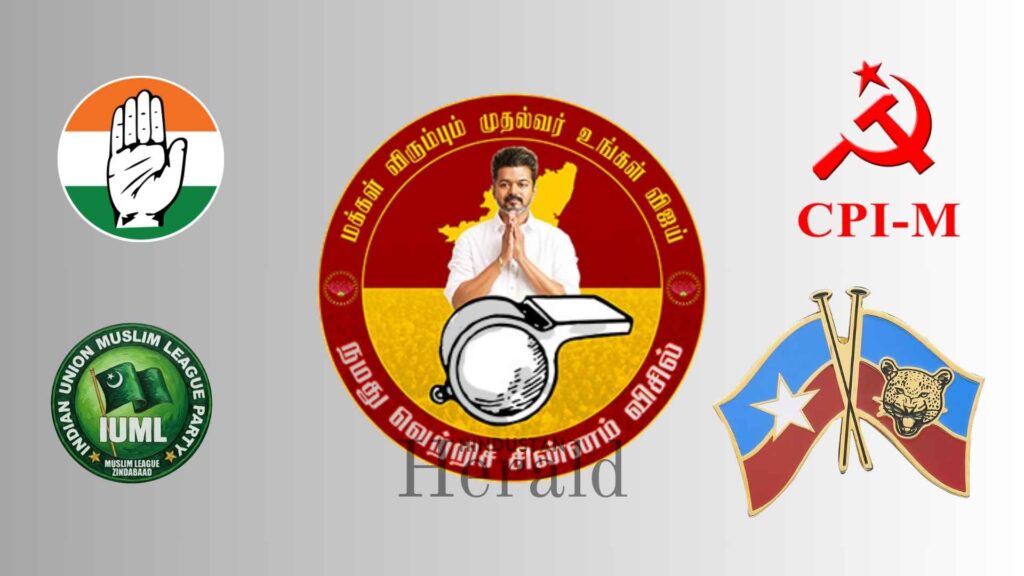
The inductions were significant. Both the VCK and the IUML have been historically considered to be in the DMK’s political orbit. For years, these parties formed part of the Secular Progressive Alliance anchored by the DMK, delivering their voter bases as reliable support in elections across Tamil Nadu. Their decision to now join a rival government one led by an actor-politician who ran his campaign in explicit opposition to the DMK stings in a way that goes beyond ordinary coalition arithmetic.
That said, political realignments of this kind are not unusual in Tamil Nadu’s layered, multi-party landscape. Still, timing matters. The TVK government is young, its floor test barely behind it, and every new addition to the cabinet reads as either consolidation of power or, depending on which side you sit on, poaching.
A Raja’s Literary Barb And What It Really Said
It was against this backdrop that A Raja, the DMK’s deputy general secretary and long-time Lok Sabha MP, chose an unusual register for his discontent. Taking to his official account on X, Raja drew on the classical literary concept of Muttatthengu a term describing a coconut tree planted in one’s own yard that bends over to yield its fruit and water to a neighbour’s house to frame a pointed question about political behaviour. “If the coconut in my home garden bends over and offers tender water to the opposite house, in literature, that would be named ‘muttatthengu’! What name should we give it in politics? Long live Tamil!” he wrote.
The message needed no translation for anyone following Tamil Nadu politics. The “home garden” was the DMK alliance. The coconut tree was the VCK and IUML. The neighbour’s house was the TVK government. It was sharp, culturally loaded, and unmistakably personal in its target.
TVK Fires Back, Hard
The ruling party did not let it pass. In a statement posted on X, the TVK described Raja’s tweet as the “height of incivility” and accused it of trivialising the democratic principle of “Power Sharing” championed by the VCK and IUML, while “completely crossing the boundaries of moral political decency.”
The phrasing was deliberate. By invoking the language of “power sharing” and democratic principle, the TVK was reframing the cabinet inductions not as a betrayal of old loyalties but as a legitimate exercise in coalition governance. It was a defence of both the new ministers and the very concept of smaller parties choosing their own political paths a direct rebuke to the idea that the VCK and IUML owe the DMK permanent allegiance.
As it turns out, this is the deeper argument at stake here. The TVK has been at pains since its formation to position itself as a more inclusive, less dynastic alternative to the DMK. Swearing in leaders from communities traditionally tied to the DMK Dalits through the VCK, Muslims through the IUML carries a clear political signal. The TVK is telling Tamil Nadu’s minority and marginalised communities that they have options now.
Stalin Steps In: Restraint, Respect, And A Reading Between The Lines
Within hours of the TVK’s response, DMK chief MK Stalin chose to step back from the confrontation. His statement was notable as much for what it said as for the fact that it came at all. Directing party cadres to refrain from using harsh or hurtful words against former allies who have crossed over to the TVK-led coalition, Stalin extended his congratulations to the newly sworn-in ministers and defended their democratic right to independent political choices. “My heartfelt congratulations to our policy comrades, Mr Vanni Arasu and Mr Shahjahan, who have taken on the mantle of honourable ministers! Every party has the right to determine its political decisions,” Stalin stated on X.
Adopting a statesman-like stance and distancing the party leadership from the ongoing mudslinging, the DMK president urged the rank and file to remember the civil political legacy of the DMK.
The intervention was calibrated. Stalin did not attack A Raja, who is a senior leader and a man of considerable political standing within the party. He also did not directly criticise the TVK or rebuke Vijay. What he did was draw a clear line: this kind of street-level social media sparring is not how the DMK conducts itself, and the cadre must not embarrass the party by continuing it.
For observers of Dravidian politics, the move also signals something strategically important. The DMK, freshly out of government after years in power, is still recalibrating its role as an Opposition. It cannot afford to look petty. Attacking a Dalit party’s leader and a Muslim League legislator for their individual political choices even through literary metaphor plays poorly with the exact voter segments the DMK needs to consolidate as it prepares for the next election cycle.
The Bigger Picture: Tamil Nadu’s Alliance Map Is Being Redrawn
Friday’s events are a single episode in a much larger story that has been unfolding since the Tamil Nadu elections produced the TVK’s unexpected rise to power. Senior DMK leaders including Tiruchendur MLA Anitha R Radhakrishnan have already made remarks suggesting the Vijay government may not survive for six months, feeding speculation that the Opposition may try to destabilise the administration sooner rather than later.
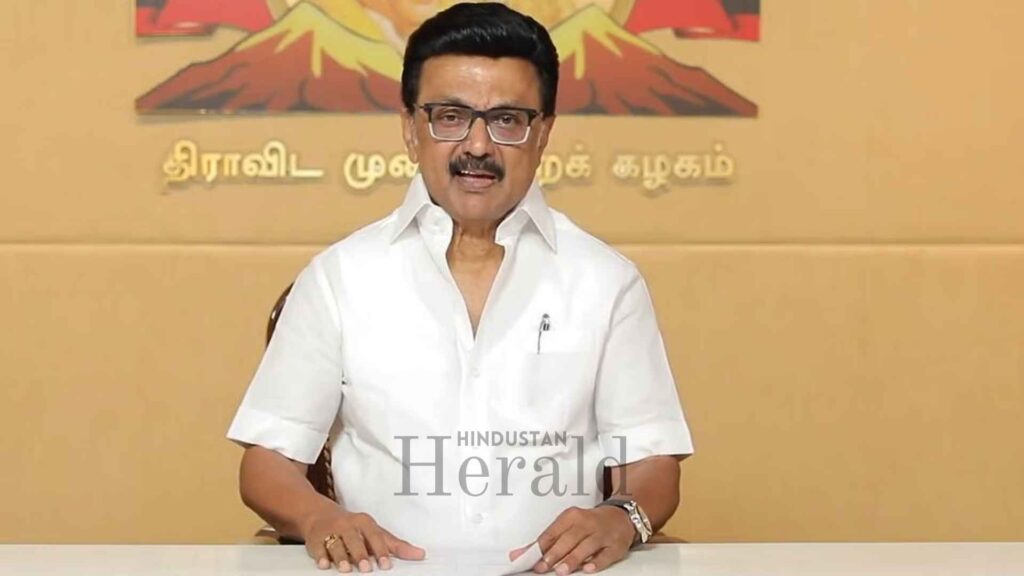
DMK chief Stalin has also told party cadres to always be prepared for elections, a statement that has fuelled speculation about whether the Opposition believes the TVK-led government could be destabilised sooner than expected.
That context matters when reading Friday’s events. A Raja’s tweet, harsh as it was, was not an isolated act of pique. It reflects a frustration that runs through the DMK’s middle and senior leadership that allies they helped build, nurtured through coalition politics, and sustained through electoral cycles are now walking through the door of a rival’s cabinet, and there appears to be little the DMK can do about it.
Stalin’s response, by contrast, reflects the calculation of a party president who knows that the path back to power runs through exactly the kind of communities represented by Arasu and Shahjahan. You do not win back the VCK vote by calling its ministers a bent coconut tree. You win it by being the more dignified party when the cameras are running.
What This Means For The TVK Government
For Chief Minister Vijay, Friday was a good day. The cabinet expansion with the VCK and IUML was completed, the DMK wounded itself on social media, and the ruling party got to play the reasonable adult in the room while DMK cadres fumed online.
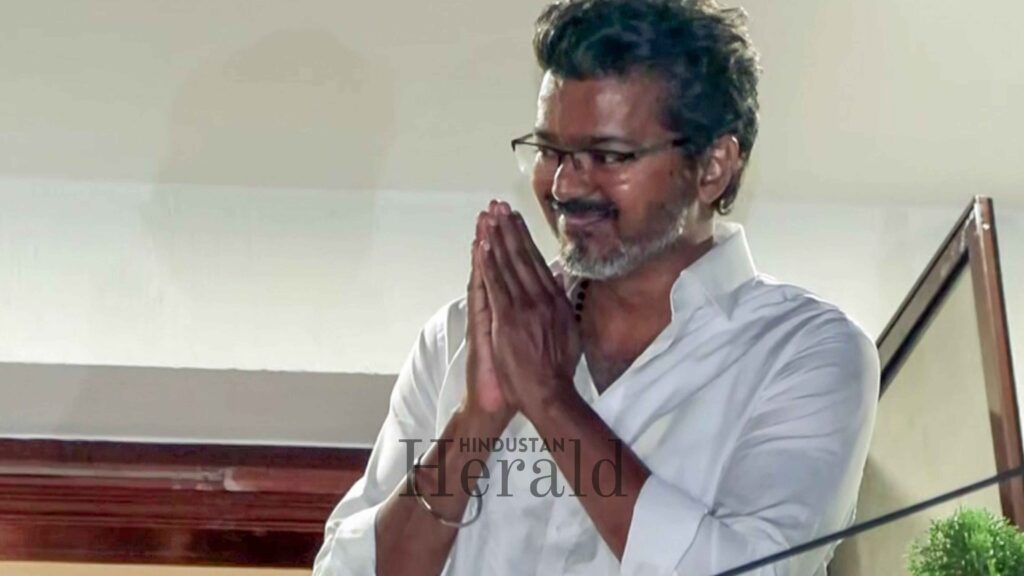
The TVK had already passed its floor test with 144 votes in favour, with 22 MLAs voting against and five abstaining, so the government’s parliamentary position is stable for now. Adding the VCK and IUML to the cabinet broadens the coalition’s social base and gives the government more legislative weight.
Still, the challenges ahead are real. The TVK is running a government for the first time, managing a coalition that includes parties with distinct ideological identities and voter bases, and doing so under the sustained pressure of a determined Opposition. One smooth swearing-in ceremony does not settle the underlying tensions. The DMK’s frustration will not evaporate because Stalin asked nicely.
For now, Tamil Nadu’s political temperature has been turned down a notch. MK Stalin played the long game today, and A Raja’s metaphor has already faded into the afternoon news cycle. But the underlying contest over alliance partners, voter communities, and the shape of Tamil Nadu’s post-election political landscape has barely begun.
Stay ahead with Hindustan Herald — bringing you trusted news, sharp analysis, and stories that matter across Politics, Business, Technology, Sports, Entertainment, Lifestyle, and more.
Connect with us on Facebook, Instagram, X (Twitter), LinkedIn, YouTube, and join our Telegram community @hindustanherald for real-time updates.

Covers Indian politics, governance, and policy developments with over a decade of experience in political reporting.
- Ananya Sharma

- Ananya Sharma
- Ananya Sharma
- Ananya Sharma


 Arun Upadhayay