
 By Ananya Sharma and Ayesha Khan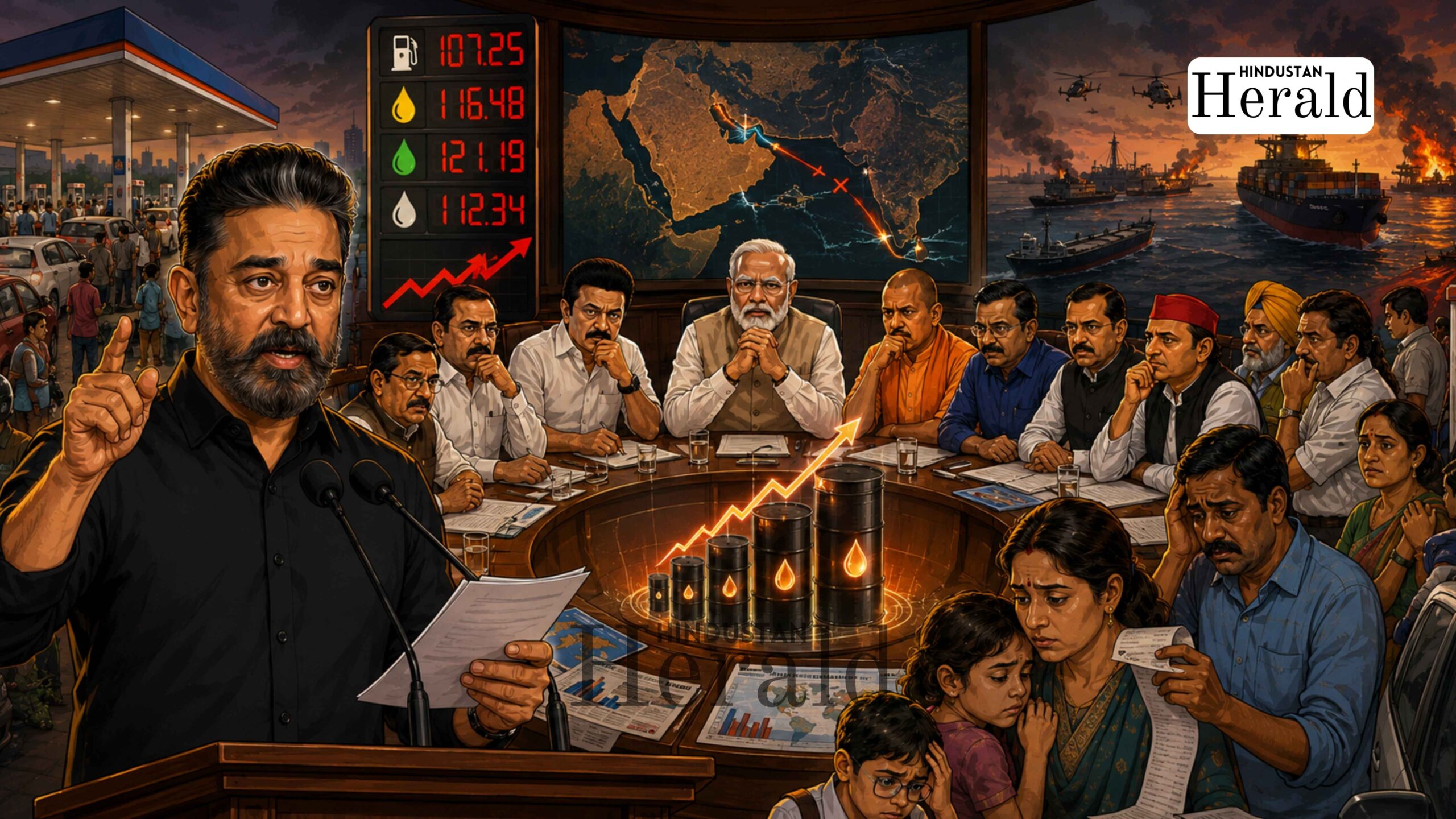
New Delhi, May 22: When a film icon steps into the frame of a national crisis not to promote a project but to demand political accountability, you pay attention. Actor-politician and Makkal Needhi Maiam (MNM) president Kamal Haasan did exactly that on Friday, posting a four-minute video message on X (formerly Twitter) that cut through partisan noise with unusual clarity. His ask: that Prime Minister Narendra Modi convene an emergency national summit of all Chief Ministers to coordinate a unified response to the economic shockwave now rattling Indian households following the US-Israel-Iran conflict.
It was not a political attack. It was, by most accounts, a rare moment of cross-aisle responsibility from a figure who sits in the Rajya Sabha but seldom shies away from uncomfortable truths.
The Crisis at the Door
The backdrop to Haasan’s message is a global oil shock unlike anything India has faced in recent years. The US-Iran war has caused oil prices to rise across the globe, and it has majorly impacted India, with fuel prices increasing almost every week. Sea trade routes are blocked, hitting the prices of oil and fertilisers simultaneously, and roughly 60 countries have already imposed energy-saving measures in response to the conflict.
For India, the numbers paint a sobering picture. India spent nearly 174.9 billion dollars on crude and petroleum products in the financial year ended March 2026, which accounted for 22 percent of its total imports, underlining the economy’s deep dependence on overseas energy. Global brokerage UBS Securities has already revised India’s growth forecast downward, cutting its projection for the financial year ending March 2027 to 6.2 percent from 6.7 percent earlier, calling the Middle East conflict a historically large energy shock with asymmetric macro risks.
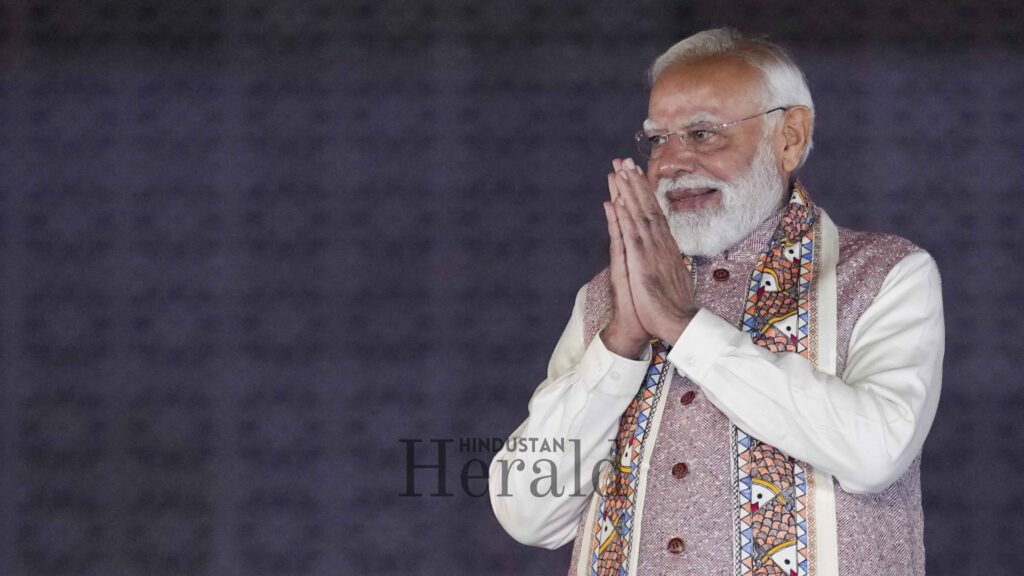
Against this, Prime Minister Modi had in early May appealed to Indians to cut fuel consumption, reduce overseas travel, and limit gold purchases as the country braces for the financial fallout. Haasan, to his credit, did not dismiss that appeal. He endorsed it. But he added a condition that governments rarely welcome hearing from within their own extended political family: that sacrifice must flow in both directions.
“Governments Must Also Share the Burden”
The sharpest line in Haasan’s video was not a call to history. It was a demand addressed squarely at the political class. He stated that sacrifice cannot be expected from citizens alone and that governments should also share the burden, which is why he called on the PM to convene a national summit of all Chief Ministers.
He proposed two immediate measures to ease pressure on ordinary people: first, that state taxes like VAT on petrol and diesel should be reduced; and second, that train, metro, and bus fares should also be cut so that more commuters can shift away from private vehicles.
Both proposals are grounded in economic logic. VAT on fuel is levied by state governments and varies significantly across India. In many states, it accounts for 20 to 30 percent of the pump price. A coordinated reduction, even a temporary one, could meaningfully cushion household budgets. Similarly, subsidised public transport fares in a high-inflation environment could reduce private vehicle usage, cutting both fuel demand and urban commuter costs simultaneously.
The call for a Chief Ministers’ summit is also not mere political theatre. India’s federal structure means that fuel taxation, public distribution, and transport policy are split across Centre and states. Without a coordinated mechanism, states may move at different speeds or in opposing directions, leaving citizens in some regions far more exposed than others.
A Look Back That Carries Weight
Haasan did not arrive at his argument cold. He reached into the country’s historical memory to make the case that collective sacrifice and collective governance have precedent in India.
He recalled that during the 1962 war with China, Indian citizens donated gold from their homes to support soldiers at the border. He also referenced the food shortages during the 1965 war with Pakistan, when former Prime Minister Lal Bahadur Shastri asked the nation to skip one meal a week.
The invocation of Shastri’s “Jai Jawan Jai Kisan” spirit carries particular weight in 2026 because it reminds a younger generation that national hardship has been navigated before, not through government diktat alone but through a social compact between the state and its citizens. Haasan’s point, however, is that today’s India is a far wealthier and more capable country than the one that endured those crises. The ask is proportionally smaller. The institutional capacity is proportionally larger. There is, in his framing, no excuse for inaction.
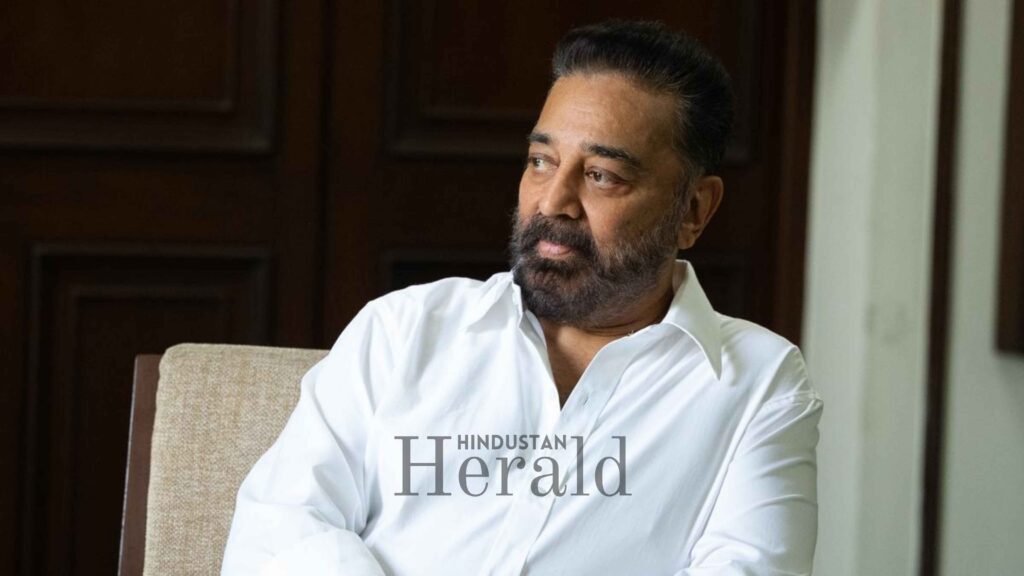
He also backed PM Modi’s call to save energy, with the rider that national responsibility is above party politics. That framing is notable. Haasan sits in the Rajya Sabha as an independent voice, and his MNM is not aligned with either the ruling NDA or the principal opposition. That political distance gives his appeal a credibility that identical words from a Congress spokesperson or a BJP ally would not carry.
Praising the PM While Pressing Him
One of the more striking elements of Haasan’s video was that it combined pressure with acknowledgment, a combination rarely seen in Indian political discourse.
He described himself as a centrist who must acknowledge good work irrespective of political alliances, and credited Prime Minister Modi’s leadership for a decade of growth in India’s solar and wind energy capacity. He also expressed encouragement over recent investments in coal gasification, renewable energy, and nuclear energy.
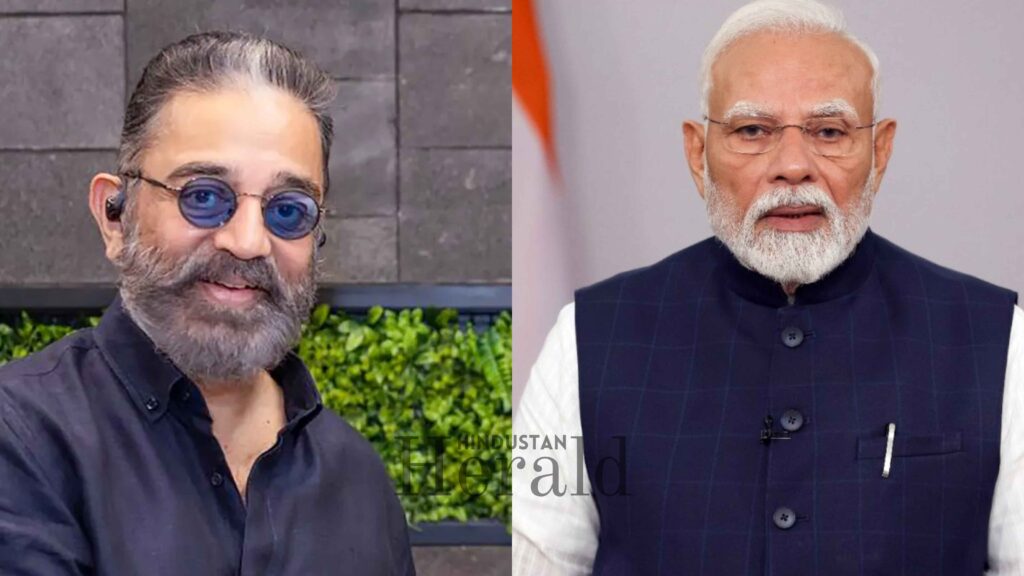
This is not tokenism. India’s renewable energy story over the past decade is substantive. The country has consistently ranked among the top five globally in solar installations. The long-term goal of reducing dependence on imported crude through domestic energy diversification is a genuine strategic priority, and Haasan’s acknowledgment of progress there lends credibility to his critique of the short-term response.
He noted that more than 60 countries have already imposed energy-saving rules and pointed to Singapore’s Prime Minister asking citizens to prepare for tough times as a comparable global example. The reference to Singapore is instructive. It is a small, trade-dependent economy that has been transparent with its citizens about what the conflict means for daily life. Haasan’s implicit argument is that Indian citizens deserve the same candour.
What a CMs Summit Would Actually Mean
The practical question is whether a Chief Ministers’ summit on the energy crisis is feasible in the near term, and what it could realistically accomplish.
India has held such summits before on issues ranging from water disputes to the COVID-19 pandemic response. The pandemic precedent is particularly relevant. PM Modi convened multiple all-CMs video conferences between 2020 and 2022, and while implementation varied across states, the consultative process itself helped align messaging and created a visible signal of coordinated response.
A fuel and energy crisis summit could accomplish several things: a coordinated reduction in VAT rates across states, even if asymmetric; an agreement on priority sectors for energy rationing should the crisis deepen; a joint communication strategy to manage public expectations; and a framework for Centre-state cost sharing if subsidies become necessary to protect the poor.
That said, the political reality is complicated. Several large states, including West Bengal, Tamil Nadu, Telangana, and Karnataka, are governed by parties in opposition to the Centre. Getting all of them to a table and into a coherent agreement would require political goodwill on both sides, something that has not always been in abundant supply during the current dispensation.
Still, the argument that this cannot be done is weaker than the argument that it is inconvenient. National emergencies, by definition, demand inconvenient coordination.
The Bigger Picture
Haasan’s video arrives at a moment when Indian political discourse is struggling to find a register that is neither blindly supportive of the government nor reflexively oppositional. His message threads that needle with some care.
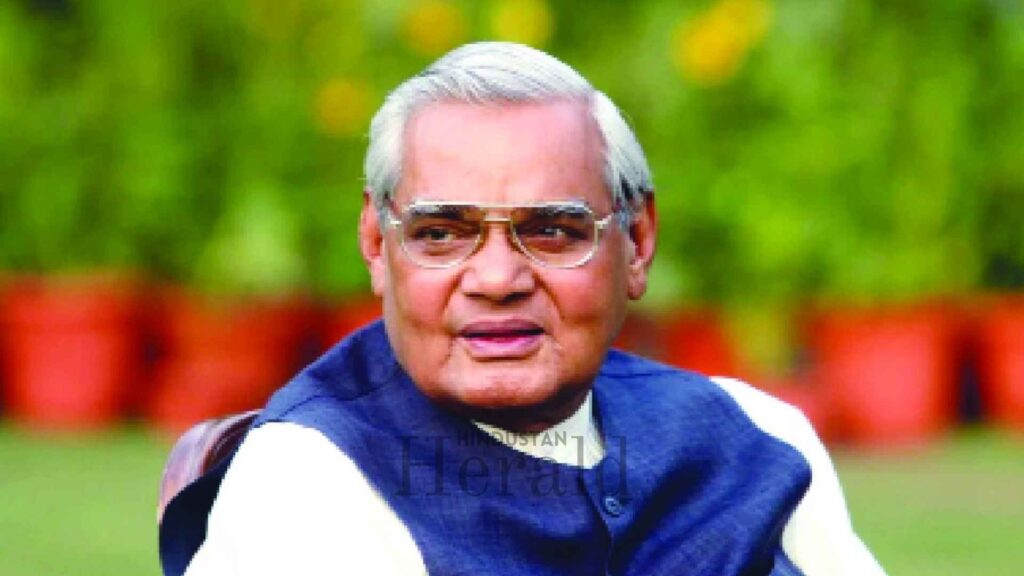
He quoted former Prime Minister Atal Bihari Vajpayee’s famous parliamentary statement that governments will come and go, but the nation shall remain, while arguing that in moments of crisis, national responsibility must rise above party politics.
It is a quote that both the ruling party and the opposition can claim inheritance over, which is precisely why it works as a rhetorical bridge. The message is directed not just at PM Modi but at every Chief Minister, every state finance minister, and every political leader who controls a piece of the policy response.
He closed with a reminder that geopolitics affects pedestrians on the street as much as the high-flying rich, and argued that if India faces this crisis together, the country will and can emerge stronger.
For now, the government has not formally responded to his call for a Chief Ministers’ summit. But the demand is on the record, made by a sitting member of Parliament with no partisan stake in its outcome. That is harder to dismiss than the usual opposition noise.
Whether PM Modi convenes such a summit in the weeks ahead may become an early test of whether the Centre is willing to govern the oil shock as a national emergency or manage it as a political inconvenience.
Stay ahead with Hindustan Herald — bringing you trusted news, sharp analysis, and stories that matter across Politics, Business, Technology, Sports, Entertainment, Lifestyle, and more.
Connect with us on Facebook, Instagram, X (Twitter), LinkedIn, YouTube, and join our Telegram community @hindustanherald for real-time updates.

Covers Indian politics, governance, and policy developments with over a decade of experience in political reporting.
- Ananya Sharma

- Ananya Sharma
- Ananya Sharma
- Ananya Sharma




Covers films, television, streaming, and celebrity culture with a focus on storytelling trends.
- Ayesha Khan
- Ayesha Khan
- Ayesha Khan
- Ayesha Khan




 Arun Upadhayay