
 By Shelesh Joshi and Rajiv Menon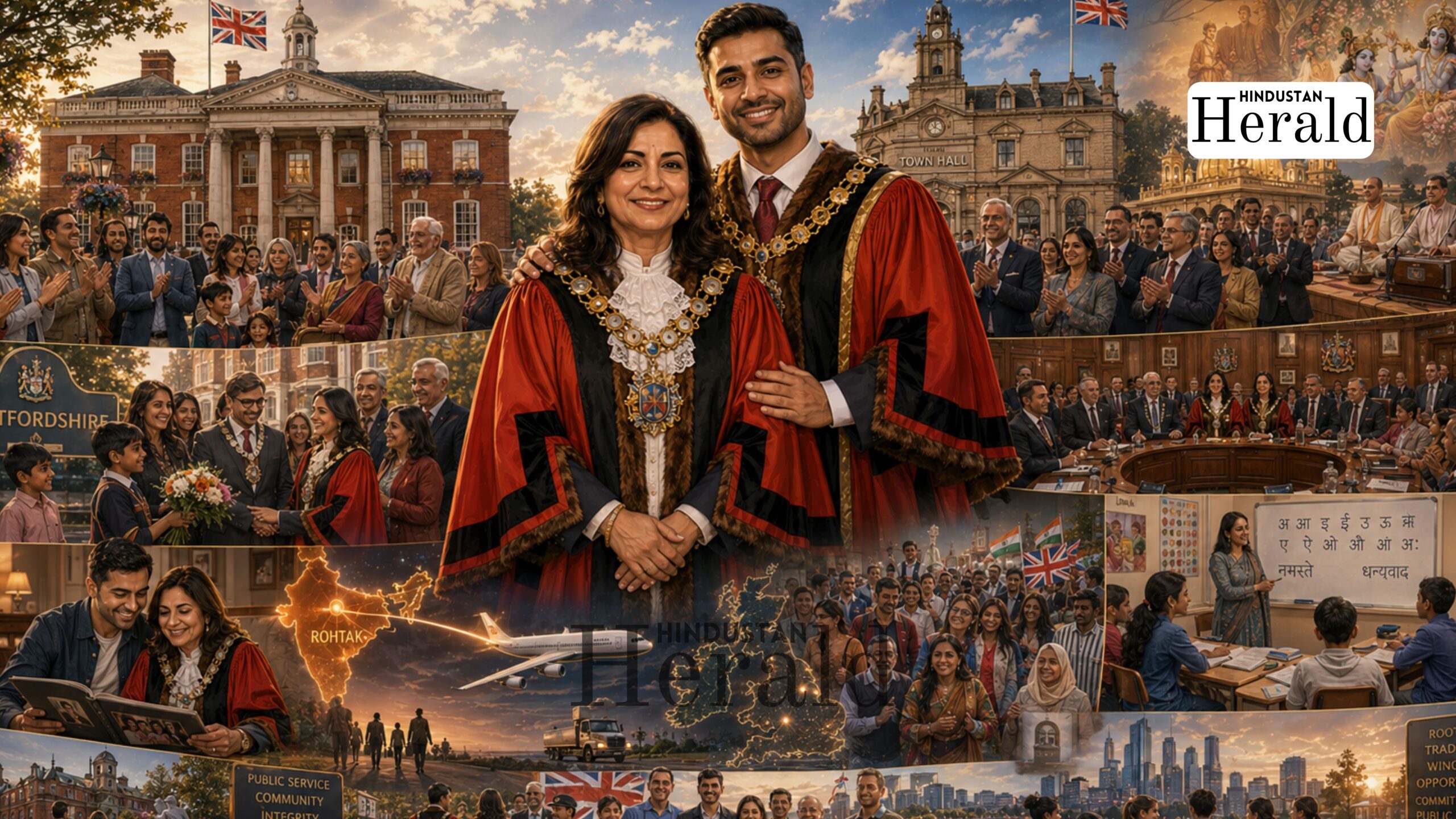
London, May 25: Sunil Dahiya is a businessman from Rohtak. Not a politician. Not a public figure. Just a man who packed up his family, moved them to England in 2013, and got on with building a life somewhere new.
When PTI called him recently, he did not have a speech ready. He talked about how his son Tushar was 10 when they landed. How the family goes back to Rohtak every year. How they still have a house there with relatives inside. Then he said it was a matter of great pride. That was it. And honestly, that small quiet sentence does more work than anything a journalist could write around it. Because what happened in Hertfordshire this month is the kind of thing that does not need decoration.
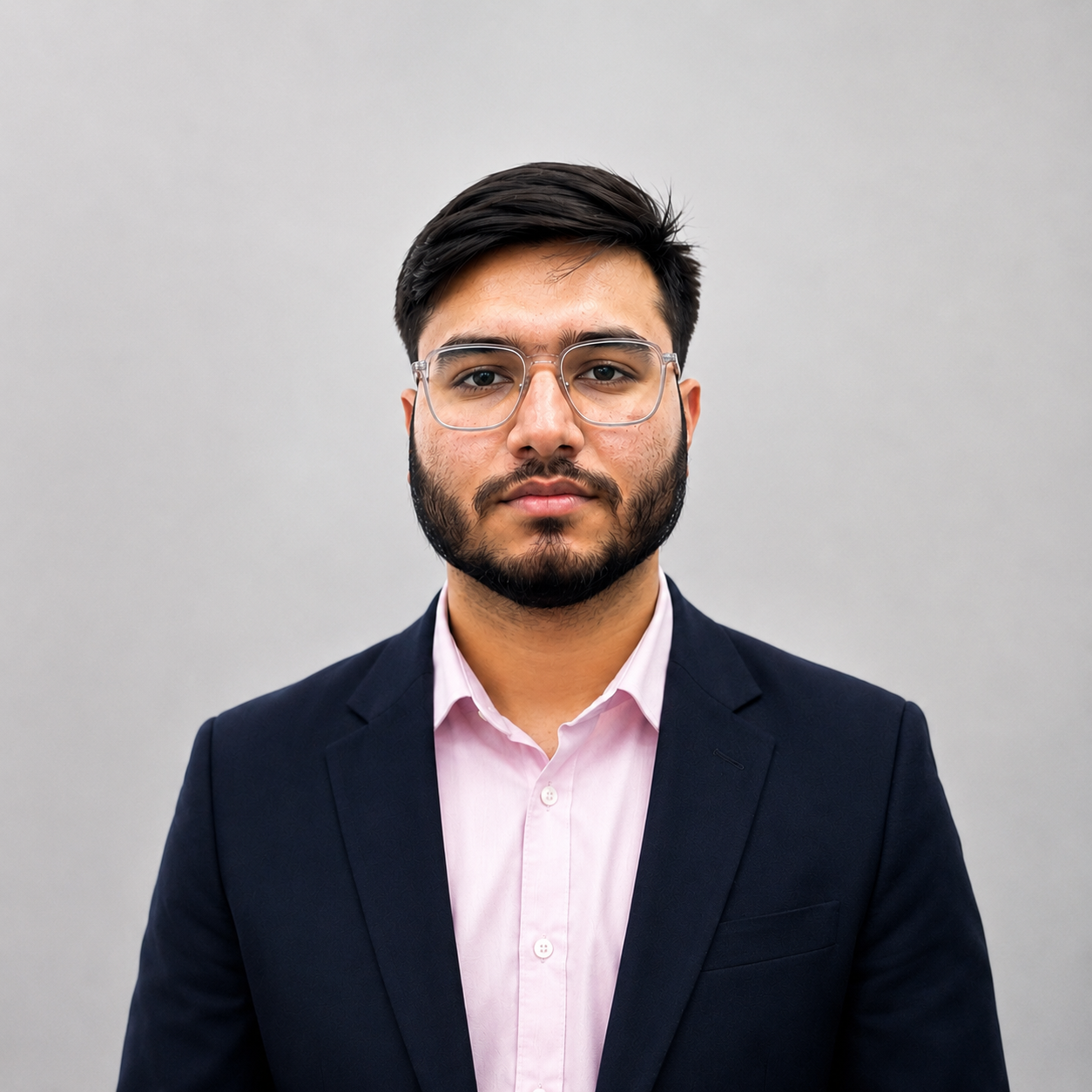
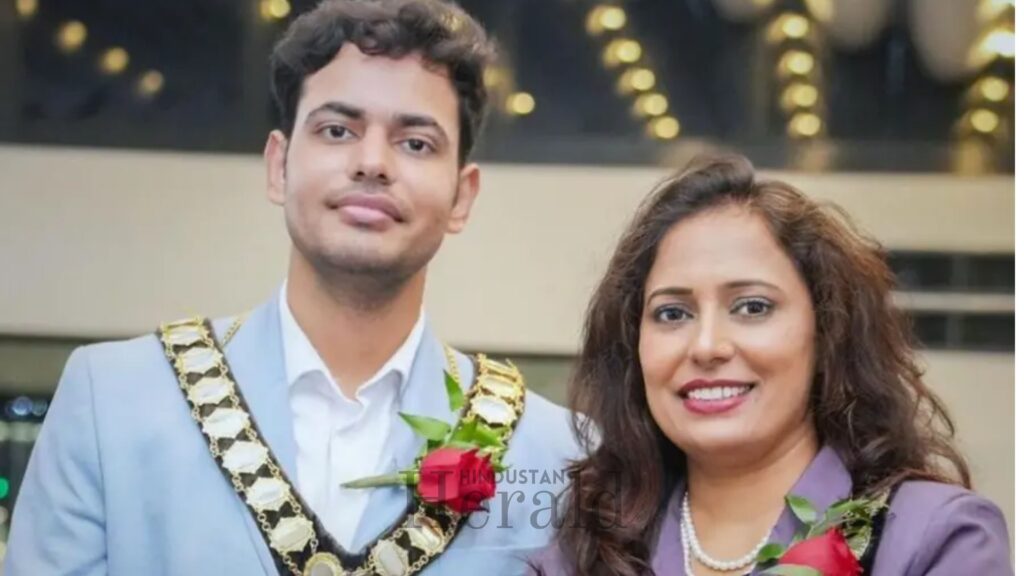
His son Tushar Kumar, 23, became the youngest Indian origin Mayor in UK history, taking charge of Elstree and Borehamwood Town Council on May 13. His wife Parveen Rani became the first Indian origin Mayor of Hertsmere Borough Council on May 20. Same family. Same county. One week apart.
Quick Summary
- Tushar Kumar, 23, became the youngest ever Indian origin Mayor of Elstree and Borehamwood Town Council on May 13, while his mother Parveen Rani became the first Indian origin Mayor of Hertsmere Borough Council on May 20.
- Tushar was just 20 years old and a second year undergraduate at King’s College London when he first stood for election in 2023.
- The family moved from Haryana’s Rohtak to England in 2013 when Tushar was only 10 years old.
- Before becoming mayor, Parveen Rani served as Cabinet Member for Streetscene, Parks, Leisure and Culture, Deputy Mayor of Hertsmere, and Global Envoy for Film and Television.
- Both are members of the Labour and Co operative Party.
- Britain is home to approximately 1.9 million people of Indian origin, the largest ethnic minority group per the 2021 ONS Census.
He Was 20 and Still in University
Here is what Tushar Kumar was doing in 2023. He was in his second year at King’s College London, studying for a BSc in Politics. Lectures. Seminars. Essays about political theory that most students find interesting for about a week before the deadlines pile up. Then he decided that studying politics was not enough. He stood for a council seat in Elstree and Borehamwood. He was 20. His classmates were probably not doing anything remotely similar.
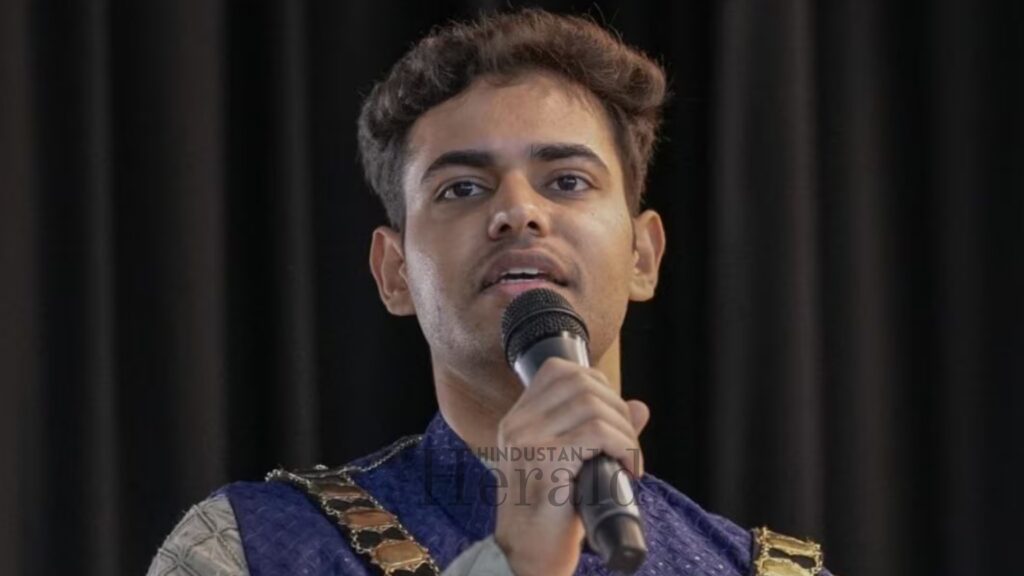
He won. Two years later he was deputy mayor. A year after that he became one of the youngest people to ever hold a mayoral position in the UK. The whole journey took three years. He did it while finishing his degree and he is starting his Masters in September.
His father told PTI that Tushar carries a particular belief. That age should never hold anyone back from public service. That you do not need to wait until you are older, more experienced, or better connected. You just need to start. Tushar started at 20. And what he has built since, in just three years in local politics, is something most career politicians twice his age have not managed.
The Day They Made Him Mayor
On May 13, Tushar was formally made Mayor at a ceremony at Fairway Hall in Borehamwood. It was not a big national event. No cameras from the BBC. No trending hashtag. Councillors came. Community groups came. Faith leaders came. His family sat in the front rows. Her Grace Visakha Dasi, president of ISKCON Bhaktivedanta Manor, offered a prayer at the ceremony.
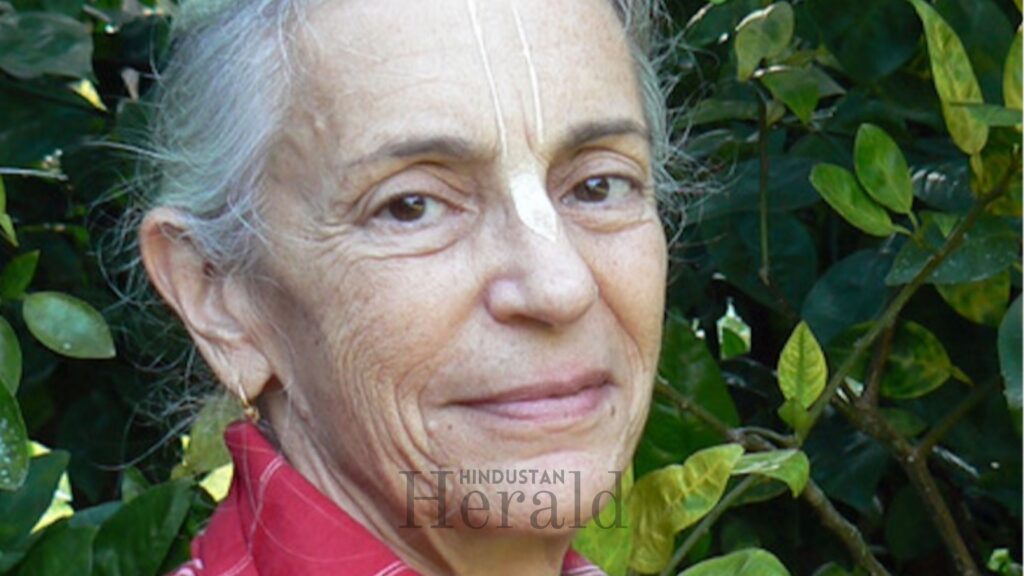
A Hindu prayer at a British civic ceremony in a town hall in Hertfordshire. No fanfare around it. No statement about what the moment represented. Just a new mayor who brought the things that matter to him into the room, the way anyone would. Tushar stood up and gave his speech. He said it was the greatest privilege of his life.
He announced his charity for the year: WD6 Food Support, a local food assistance organisation. Not a headline grabbing choice. A practical one. The kind that tells you what a person actually cares about long before they have done anything in the role.
What His Mother Has Been Doing This Whole Time
People will be tempted to write Parveen Rani as the warm side story. The proud mother in the background while the young mayor takes the spotlight. That would get it completely wrong.
Parveen has been building her own career in local government entirely on her own terms. She stood for election for the first time in 2023, the same year as Tushar, and she also won. Since then she served as Cabinet Member for Streetscene, Parks, Leisure and Culture. She was Deputy Mayor of Hertsmere. She held the role of Global Envoy for Film and Television.
None of those roles came to her because of Tushar. She earned each one through consistent presence, hard work, and the slow trust building that local government in Britain runs on. On May 20, a week after her son, she became the first Indian origin Mayor of Hertsmere Borough Council.
Nobody coordinated the timing. Both had simply been at it long enough that the nominations arrived in the same week. That is how it works. Recognition in local government is not handed out. It goes to people who have demonstrated, over years of unglamorous effort, that they have earned it. Both of them had.
The Hindi Classes Nobody Talked About
There is a detail in this story that does not fit neatly into any political narrative. According to Sunil Dahiya, both Tushar and Parveen used to teach Hindi free of cost to people born and raised in Britain. Tushar remains connected to an organisation called the Hindi Shiksha Parishad, which does language and cultural outreach work across communities here in the UK.
Think about that for a second. A mother and son, both holding demanding public roles, choosing in their spare time to sit down and teach Hindi to kids who might otherwise grow up without it.
Nobody asked them to. There is no council mandate for it. No funding stream. No award at the end. They just thought it was worth doing. People who come to the UK from India have always navigated this question. How much of where you came from do you carry forward? How much do you let go?
The Dahiya family answered it by sitting down and teaching a language to people who wanted to learn it. That detail does not appear in any official political biography. It just sits there quietly, telling you more about what kind of people these are than any of their official titles could.
What a Mayor in Britain Actually Does
It is only fair to be honest about this. A civic mayor in a British district council is not a powerful role. There is no executive authority. No budget to direct. No policy agenda to push. The mayor chairs council meetings, attends official occasions, supports a charity for the year, and shows up to community events that get photographed for local newspapers and go no further.
That is genuinely the whole job. So why does any of this matter? Not because of the power attached to the role. It matters because of whose face is now at the front of the room in two council chambers in Hertfordshire. For most of British history, those faces came from a very specific world. A specific class. A specific idea of who naturally belonged in civic leadership.
That is changing. Not dramatically. Not overnight. In exactly this way. A 23 year old from Rohtak taking a chair in Borehamwood. His mother taking another one in Hertsmere the following week. Quietly. In a part of England that most national commentators never visit.
From Rohna to Hertsmere
The family’s roots go deeper than Rohtak. Their ancestral village is Rohna, in Kharkhoda, in Haryana’s Sonepat district. They lived in Rohtak for years before Sunil moved them to England in 2013.
He told PTI the family goes back every year. They have a house in Rohtak where relatives still live. The connection to India has not been packed away since arriving here. It is active and ongoing. Tushar grew up carrying both things at once. England on one side. Haryana on the other.
His father said Tushar believes strongly that you must stay rooted in your culture and heritage even as you build somewhere new. In this family’s case, that is not just something they say. It is something they demonstrate every year on the trip back home, every week in the Hindi class, every meeting of the Hindi Shiksha Parishad.
Why India Should Look Past the Headline
Some people will read this story, feel proud for a few minutes, and move on. It deserves more than that. The India UK Free Trade Agreement has been in negotiation since January 2022. According to Business Standard, the same sticking points keep coming up. Visas for Indian professionals. Tariffs on Indian cars. Scotch whisky access. Professional qualification recognition. Four years. Multiple rounds of talks. Still no deal.
Trade agreements are political as much as they are economic. They get signed when governments on both sides decide the compromises are worth making. And that decision is shaped by who carries weight in a room. The Indian origin community in the UK numbers nearly two million people. It votes. It organises. It has produced a prime minister, multiple cabinet ministers, and now mayors and civic leaders at every level.
That community is embedded in British life. And that changes the environment in which negotiations happen. The Ministry of External Affairs has understood this for years. The Pravasi Bharatiya Divas events and the Pravasi Bharatiya Samman awards exist partly because India knows that its diaspora in the UK is a genuine asset. Every Indian origin figure in every civic room adds one more thread to that fabric.
A Father on the Phone
When all the analysis is done, the image that stays is simple. A man from Rohtak on the phone to a journalist. Talking about how his son was 10 when they arrived. How the family goes back every year. How there is still a house in Rohtak.
Then saying it is a matter of great pride. He did not reach for more. His wife and son are both mayors in Britain. In the same county. In the same week. Tushar is the youngest Indian origin mayor in UK history. Parveen is the first Indian origin mayor Hertsmere has ever had.
Sunil moved his family here thirteen years ago with nothing specific in mind. Now this. A matter of great pride does not begin to cover it. But it is a very Sunil Dahiya way of putting it. Understated. Honest. Not reaching for more than the moment asks for.
What Comes Next
Both Tushar and Parveen have a full year of civic duties ahead. Meetings to chair. Events to attend. Charities to support. The kind of schedule that is genuinely full and will produce no national headlines.
Tushar starts his Masters in September. Parveen will carry on the work she has been doing since 2023, just from a different chair now. The family will go back to Rohtak this year, as they do every year. And somewhere in Hertfordshire, the Hindi classes will probably continue. Quietly. Without a press release. Because a mother and son from Haryana decided it was worth doing and nobody has given them a reason to stop.
The Indian community’s story in the UK is long and it is not finished. It was not built by people who waited to be invited in. It was built by people who walked into rooms not designed for them, learned the rules, and stayed long enough to change what those rooms look like.
Tushar Kumar did that at 20. His mother did it alongside him, in the next borough. And a businessman from Rohtak answered the phone and called it a matter of great pride. He was right. He just did not say it loudly enough.
Stay ahead with Hindustan Herald — bringing you trusted news, sharp analysis, and stories that matter across Politics, Business, Technology, Sports, Entertainment, Lifestyle, and more.
Connect with us on Facebook, Instagram, X (Twitter), LinkedIn, YouTube, and join our Telegram community @hindustanherald for real-time updates.

Tracking world politics, global markets, trade movements, policy decisions, and the changing balance of economic power.
- Shelesh Joshi

- Shelesh Joshi
- Shelesh Joshi
- Shelesh Joshi




Specializes in South Asian geopolitics and global diplomacy, bringing in-depth analysis on international relations.
- Rajiv Menon
- Rajiv Menon
- Rajiv Menon
- Rajiv Menon
 Rajiv Menon and Ananya Sharma