
 By Shelesh Joshi and Rajiv Menon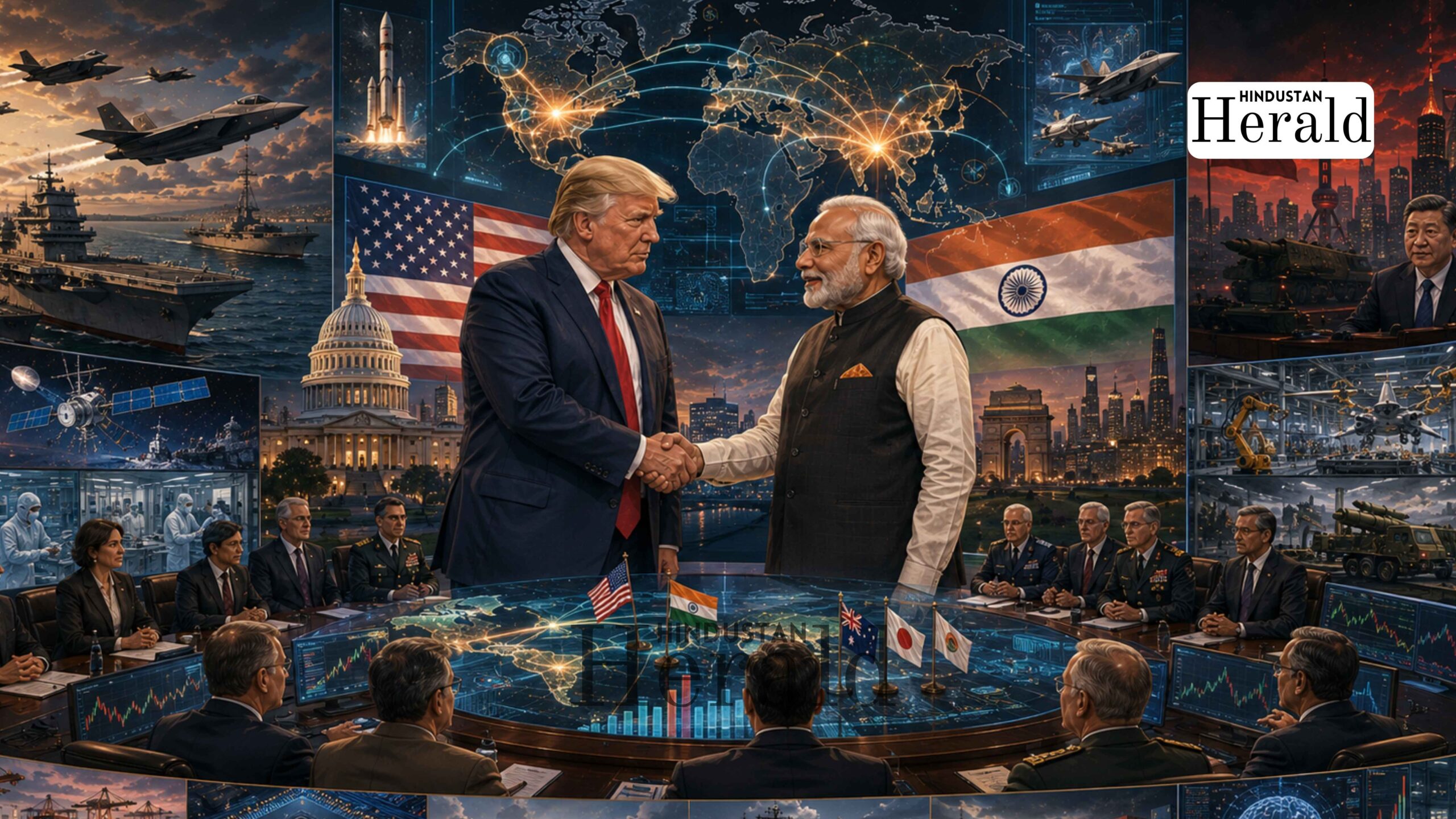
Washington D.C., May 25: The India-US relationship has just entered territory it has never quite been in before. When Donald Trump stood up in public and said “anything India wants, they get,” the India-US equation shifted in a way that no joint statement, no carefully worded communiqué, no diplomatic dinner could have achieved. Four words. No fine print. No press secretary visibly panicking in the background. In the world of India-US diplomacy, which runs on careful signals and calibrated language, that was genuinely remarkable. New Delhi heard it. Beijing heard it. Every foreign ministry across Asia heard it.
The question that serious people in South Block are now sitting with is not whether the statement was significant. It clearly was. The real question is what it actually produces, how durable it turns out to be, and how much of it survives contact with the grinding machinery of India-US trade negotiations, congressional politics, and the general unpredictability of the Trump White House. People who follow the India-US beat closely have seen grand moments before. The trick, as always, is entirely in the follow-through.
The India-US Relationship Has Never Been Simple
Let us be honest about the history here. The India-US story is not the story of natural allies who found each other late. It is the story of two countries that spent decades being genuinely suspicious of each other, slowly and sometimes painfully constructing something real on top of all that accumulated mistrust.
For most of the Cold War, Washington and New Delhi regarded each other with mutual exasperation. India championed non-alignment, which in Washington translated to “not reliably with us.” The United States armed Pakistan, treated Islamabad as the more useful partner on the subcontinent, and reacted to India’s 1998 nuclear tests by imposing sanctions almost reflexively.
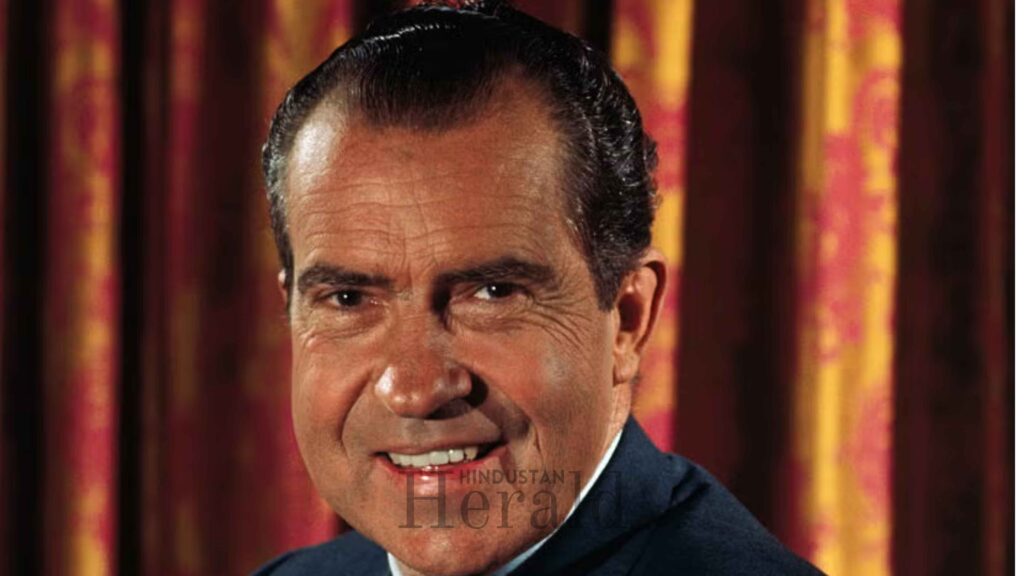
The 1971 moment is one that older Indian diplomats still mention when the conversation turns to bilateral trust. When India intervened in the Bangladesh liberation war, President Nixon sent the USS Enterprise carrier group into the Bay of Bengal as a direct warning.
An American aircraft carrier. Pointed at India. In 1971. That is the actual foundation beneath the warm India-US partnership everyone is celebrating today. Everything since then has been built brick by brick, deal by deal, on top of that history.
The 2008 civil nuclear agreement was the real turning point in the India-US story. Prime Minister Manmohan Singh nearly lost his government over it, survived a no-confidence vote, and delivered. President George W. Bush pushed it through a deeply sceptical nonproliferation establishment in Washington. When it passed, both sides understood that the bilateral relationship had crossed a threshold it would not easily recross.
Defence deals followed. Trade grew steadily. Indian-Americans rose to the top of major corporations and eventually into the highest offices in Washington. Bilateral goods and services trade crossed $190 billion by 2023, according to the US Trade Representative’s Office.
But rough edges remained throughout. Trump’s first term brought India-US trade fights and the removal of India’s GSP privileges in 2019. The Biden years were warmer in tone but produced fewer hard breakthroughs than the atmospherics suggested. India kept buying Russian oil after the Ukraine invasion, creating sustained awkwardness that neither side wanted to address publicly. So when Trump returns and makes the statement he made, something real must have changed in the India-US dynamic. And it has.
What Changed in the India-US Equation Under Trump
Part of what changed is genuinely personal. Narendra Modi and Donald Trump understand each other’s political language in a way that cuts through the usual India-US diplomatic friction. Both came to power as outsiders who broke the political establishments of their countries. Both speak to mass audiences in a register that bypasses institutions. Both believe, in their bones, that strength is what the world respects and that bilateral deals get more done than multilateral frameworks.
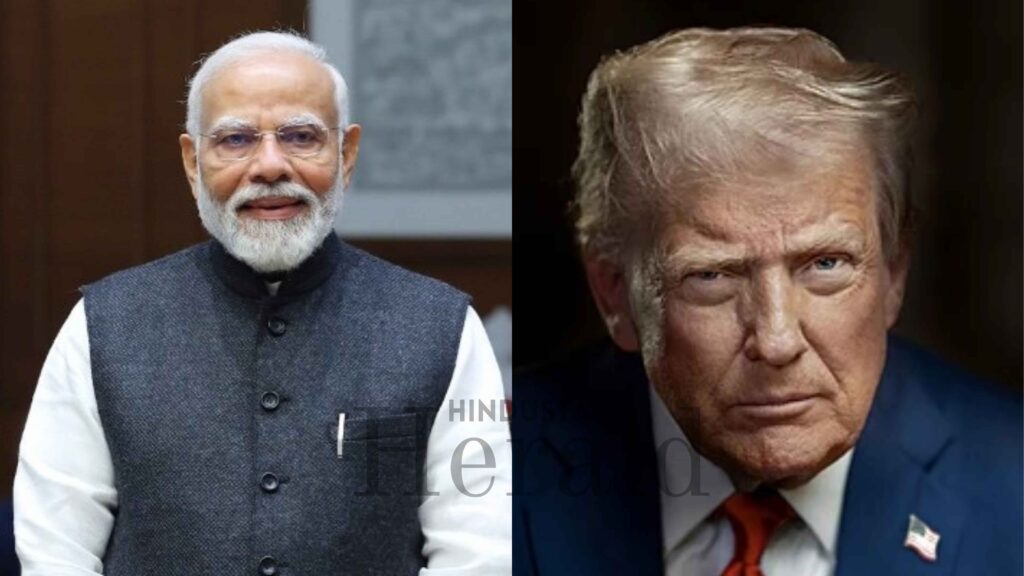
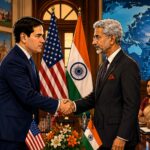
When Modi visited Washington in early 2025 for what became a genuinely significant India-US summit, people in the room describe a meeting that moved faster than these things usually do. Less careful positioning. More direct conversation. Two leaders who did not need interpreters in the political sense.
The India-US outcomes from that summit were specific enough to matter. Formal trade negotiations launched. Defence co-production elevated with actual targets rather than aspirational language. The iCET (Initiative on Critical and Emerging Technologies) framework given renewed momentum with clearer deliverables covering semiconductors, artificial intelligence, and quantum computing. A joint ISRO-NASA crewed mission formally announced. And then the remark. Whether Trump said it because he genuinely means it, because he was working the room, or because he wanted Beijing to hear it is impossible to know. With him, all three things tend to be simultaneously true.
What matters in India-US terms is that he said it publicly and on the record. In diplomacy, public statements create their own reality. Indian negotiators are already citing it in discussions. It will appear in bilateral briefing documents for years to come.
The 5 India-US Deals That Are Already Moving
The India-US relationship is not just warm words right now. Real deals are in motion.
First: The Bilateral Trade Framework. Formal negotiations toward a comprehensive India-US trade agreement are underway for the first time in years. The framework covers market access, tariff schedules, technology trade, and services. It is the most structured bilateral trade conversation in over a decade.
Second: GSP Restoration Talks. The restoration of India’s preferential trade status under the Generalised System of Preferences programme is actively being negotiated. Losing GSP in 2019 hurt Indian exporters in textiles, engineering goods, and chemicals. Getting it back is the most immediately tangible economic win available from the current India-US talks.
Third: The GE Aerospace F414 Engine Deal. This is the centrepiece of current India-US defence industrial cooperation. GE Aerospace is transferring technology for the F414 jet engine to India for use in the domestically developed Tejas Mk2 fighter aircraft. Indian workers building a next-generation jet engine inside India under American technology transfer. That is a genuinely new kind of India-US partnership, not a purchase but a full co-production.
Fourth: The iCET Technology Partnership. The India-US iCET framework is pushing toward actual industrial investment in semiconductors, AI, and quantum computing. Both governments want to move from dialogue to real supply chain integration. American chip companies are in active conversations about investment in India’s semiconductor mission.
Fifth: The ISRO-NASA Joint Mission. A crewed space mission involving an Indian astronaut travelling to the International Space Station is formally on the calendar for later this year. Symbolic but also practically significant as a demonstration of technological trust at the highest level of the India-US partnership.
The India-US-China Triangle Nobody Can Ignore
Here is the honest explanation for why American generosity toward India has reached this level. It is mostly about China. The India-US partnership has been accelerating in direct proportion to Beijing’s behaviour over the past several years. China spent the better part of a decade pushing into spaces across Asia that alarmed governments which had previously been content to do business and ask few questions.
Then in the summer of 2020, the strategic calculation changed overnight. Chinese and Indian soldiers fought each other with rocks and improvised weapons on a Himalayan ridgeline in Ladakh at nearly 14,000 feet. Twenty Indian soldiers died in the Galwan Valley. The Chinese side has never officially confirmed its casualties.
That moment did something to India’s strategic psychology that years of India-US diplomatic persuasion had failed to achieve. The careful Indian policy of separating economic engagement with China from the border dispute became politically untenable almost immediately. The public mood shifted hard. The government followed.
India accelerated defence purchases from the United States. It engaged more seriously with the Quad, which groups India, the United States, Japan, and Australia in an informal Indo-Pacific alignment. It began reducing Chinese technology from sensitive infrastructure. Hundreds of Chinese apps were banned. Investment rules were tightened sharply. For Washington, watching all this unfold, the strategic logic became almost too compelling to ignore.
India is the only country in Asia that combines the scale, the military capability, the democratic legitimacy, and the genuine strategic motivation to serve as a real counterweight to China. Not a client state. Not a proxy. An actual peer with its own reasons to push back.
That is what the India-US relationship is really built on right now. Not shared values alone, though those matter. Strategic necessity. “Anything India wants, they get” is, in cold strategic accounting, a sensible investment in the most consequential bilateral relationship in Asia.
What the India-US Trade Talks Are Actually Demanding
Take away the atmospherics and the asks from New Delhi are a fairly specific list. GSP restoration is the most immediate India-US economic priority. Losing preferential status in 2019 hurt specific export sectors hard. Getting it back costs Washington relatively little and gives Modi a domestic win he can point to.
On pharmaceuticals, the India-US argument should be straightforward but will not be. Indian generic drug companies supply a massive share of what American hospitals and pharmacies actually use. Tariffs on those medicines raise healthcare costs for American patients. That argument plays well in Congress when made clearly. Still, every trade negotiation involving medicines ends up harder than it looks from the outside.
Indian technology professionals are the single largest group using the programme, and the numbers have not been moving in a reassuring direction. The H-1B approval rates, visa issuances, and overall programme access for Indian applicants have been quietly shifting in ways that most people outside the industry have not yet noticed, something we broke down in detail when we reported on the recent drop in H-1B numbers and what it means for Indian professionals on the ground.
The Trump administration’s immigration instincts run in precisely the opposite direction from what New Delhi is asking for. The corporate lobby pushing for India-US visa liberalisation is powerful and well resourced. So is the political base pushing hard for restriction. The tension between those two forces has not resolved. It has only grown sharper. Something will have to give on this, and the direction it breaks will say a great deal about how seriously Washington takes its India-US partnership beyond the warm language of bilateral summits.
On technology, India wants the iCET framework to stop producing elegant joint statements and start producing actual industrial investment. Semiconductor partnerships. Real technology transfer in defence manufacturing. The kind of cooperation that creates facts on the ground rather than talking points in press releases. And in defence, the GE F414 deal is the current gold standard of what genuine India-US industrial partnership looks like. Both governments know it. Both want more of it.
The Russia Problem Sitting Inside Every India-US Conversation
There is a large uncomfortable fact sitting in the middle of all this India-US goodwill and it would be dishonest to skip past it. India has been buying Russian oil in substantial volumes since the Ukraine invasion. Its military still operates large inventories of Russian-origin platforms. MiG and Sukhoi fighters. The S-400 air defence system. Ammunition, spare parts, and maintenance contracts that run deep into the Indian defence ecosystem. The Trump administration has been quieter about this India-US tension than the Biden team was. Partly because Trump has been running his own back-channel with Moscow on Ukraine and is not in a strong position to lecture anyone about Russia relationships.
But the practical problem does not disappear because nobody is addressing it loudly at press conferences. When India-US defence cooperation deepens to the point where American sensors and communications equipment are being integrated into platforms that also carry Russian-origin components, questions about intelligence security and interoperability become genuinely complicated. American defence contractors and intelligence agencies have real concerns about what happens to sensitive technology in that environment.
Sources familiar with these conversations describe it as a managed tension. Both sides have agreed to navigate it carefully without letting it derail the broader India-US relationship. The working assumption is that India will gradually reduce its Russian military dependence over a realistic multi-year timeline, without anyone imposing a hard deadline that would be politically explosive. That is not a solution. It is a deferral. The India-US partnership will need a proper answer to this eventually.
Back Home: How India Is Reading This India-US Moment
Within the Indian government the response is careful satisfaction. Officials speaking on background describe the Trump remark as evidence of India’s growing strategic weight in the India-US equation, while being quick to add that turning presidential goodwill into signed agreements involves hard work that lies entirely ahead.
The Congress opposition has been pointed in its criticism. Their argument is that warmth from Washington comes with conditions. Those conditions typically involve India opening its agricultural markets, relaxing data localisation rules, and creating space for large American digital platforms in ways that carry significant domestic economic and sovereignty costs. That is not an unreasonable concern to raise about the ongoing India-US trade talks.
Indian industry has been broadly welcoming. CII, FICCI, and NASSCOM have all put out positive statements pointing to the export opportunities that better market access would create. The IT sector is watching the H-1B conversations with particular attention because for them it is not abstract. It is about whether their people get work visas on workable terms. Outside those circles, most ordinary Indians are watching with the measured interest of people who have seen many grand diplomatic moments produce rather less than advertised. The scepticism is earned. It is also healthy.
Where the India-US Partnership Goes From Here
Here is the thing about Trump’s promises that New Delhi understands from hard experience. He makes large, generous, public commitments. The machinery of the American government then spends the following months working out what those commitments mean in practice, which agencies own them, what the budget implications are, and how they fit around the other urgent priorities simultaneously on the table. The gap between what gets said at a photo opportunity and what gets implemented in India-US terms can be enormous.
New Delhi has dealt with this across multiple American administrations. The skill it has developed is in using periods of goodwill to build institutional structures that survive changes in political temperature. Treaties that get ratified. Frameworks written into law. Industrial partnerships that create their own constituencies and their own momentum regardless of who sits in the White House.
The 2008 nuclear deal remains the model. It worked because it was embedded deeply enough in both countries’ legal and institutional architecture that reversing it would require active effort from any successor government. Nobody has bothered.
The question for the current India-US moment is whether what is being built now has that kind of durability. Or whether it rests primarily on the personal chemistry between two leaders who will not be in office forever.
Strip away the noise and the India-US relationship is on a trajectory that neither election cycles nor difficult patches are likely to fundamentally reverse. The structural forces are too strong. China is not going to stop being a shared concern. American companies are not going to stop finding India’s market and workforce attractive. The Quad is not going to disappear.
What fluctuates is pace and ambition. A Trump who says “anything India wants” accelerates the India-US agenda. A future administration that gets frustrated with India’s Russia ties or its refusal to formally commit to anti-China positions might slow things down again.
India will keep being India through all of it. Taking what it can get on its own terms from the India-US partnership. Refusing to sign up for things it cannot honour. Maintaining strategic autonomy while deepening cooperation selectively and carefully.
That is not a flaw in this relationship. That is what the India-US partnership actually looks like when you see it clearly and honestly. “Anything India wants, they get.” New Delhi will spend the next several years finding out exactly what that means. Negotiating session by negotiating session. Line by line. Sector by sector. That is how it has always worked. That is how it works now.
Stay ahead with Hindustan Herald — bringing you trusted news, sharp analysis, and stories that matter across Politics, Business, Technology, Sports, Entertainment, Lifestyle, and more.
Connect with us on Facebook, Instagram, X (Twitter), LinkedIn, YouTube, and join our Telegram community @hindustanherald for real-time updates.

Tracking world politics, global markets, trade movements, policy decisions, and the changing balance of economic power.
- Shelesh Joshi

- Shelesh Joshi
- Shelesh Joshi
- Shelesh Joshi




Specializes in South Asian geopolitics and global diplomacy, bringing in-depth analysis on international relations.
- Rajiv Menon
- Rajiv Menon
- Rajiv Menon
- Rajiv Menon
 Rajiv Menon and Ananya Sharma