
 By Shelesh Joshi and Kavita Iyer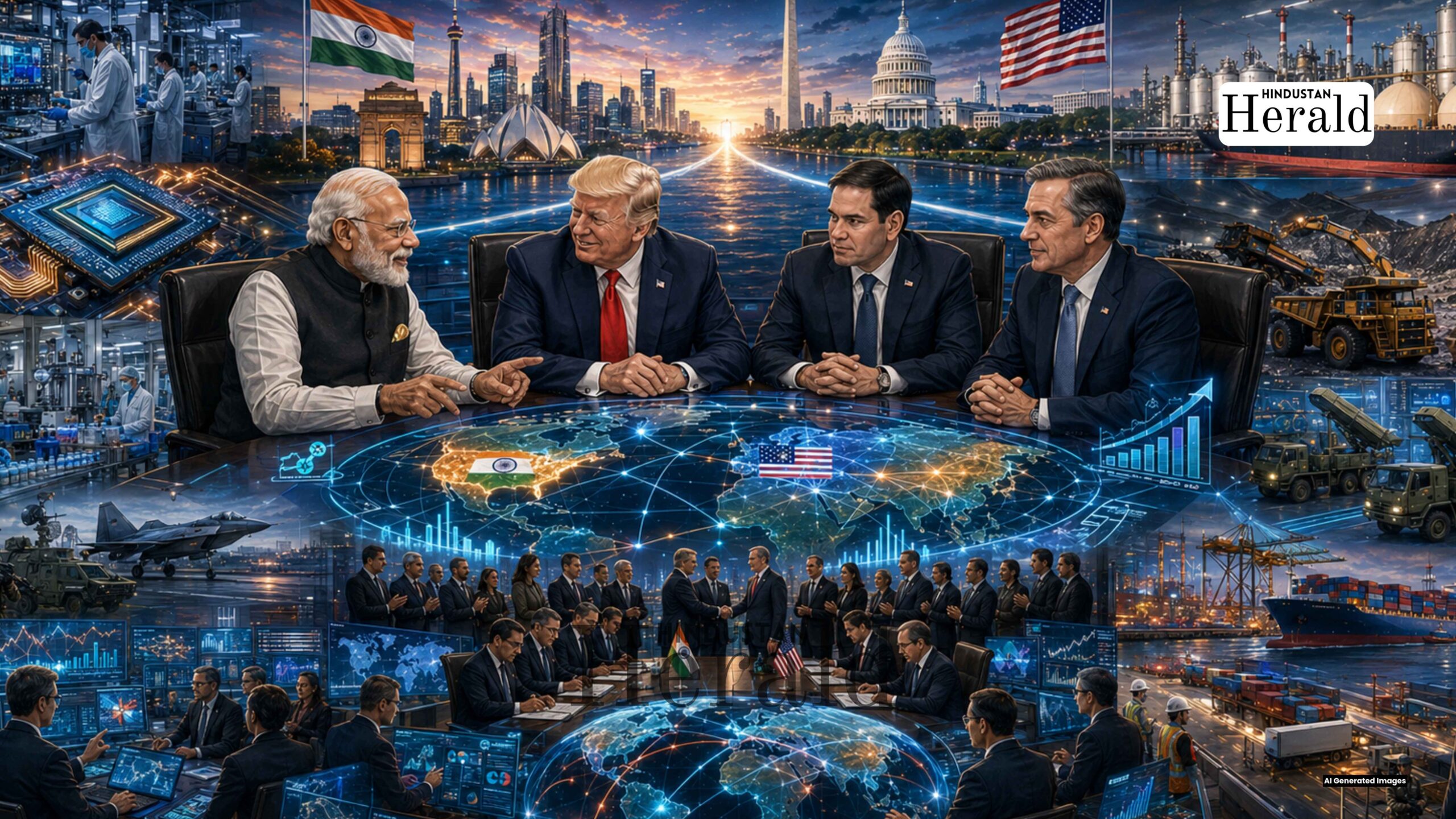
New Delhi, May 29: The India-US Trade Deal is entering its final stretch and something shifted this week to make that clearer than it has ever been. Not dramatically, not with any single announcement that would make front pages on its own. But if you were watching the signals closely, the picture that emerged between Monday and Friday was about as clear as it gets in trade diplomacy. Both sides know it. And both sides are saying it out loud now.
US Ambassador Sergio Gor said it plainly. Not in the careful, hedged language diplomats usually retreat to when deals are still in flux, but with the kind of directness that suggests internal confidence. Speaking at the US-India TRUST Initiative at IIT Delhi, he told the room that bilateral trade between the two countries had climbed from $20 billion to over $220 billion in just two decades. Then he said what everyone had been waiting to hear: “We fully expect that the trade deal will be signed over the next few weeks and months.”
A few days earlier, at the American Chamber of Commerce Leadership Summit in Delhi, he had made essentially the same point but wrapped it in a historical frame that was clearly intended to land. “Negotiations have been ongoing for a year and a half, but to put it in perspective, the European Union took almost 19 years.” Nobody in that room missed what he was doing. He was telling Indian business leaders that the wait was nearly over and telling Washington that this White House had achieved in months what others could not in decades.
Quick Summary
- US Ambassador Sergio Gor publicly declared the India-US trade deal will be signed “in the next few weeks and months,” speaking at IIT Delhi on May 29, 2026
- Bilateral trade between India and the United States has grown from $20 billion to over $220 billion in goods and services over the past two decades
- US Secretary of State Marco Rubio completed a four-day official visit to India starting May 23, meeting Prime Minister Modi and External Affairs Minister Jaishankar to advance trade and energy ties
- Indian companies have committed more than $20 billion in investments in the United States, with the US embassy in India ranking first among all American missions globally for investment mobilisation
- The next formal round of India-US trade negotiations is confirmed for June 5 and 6 in New Delhi, with government sources indicating the first tranche of the BTA could be signed before July 2026
- Both governments have set a bold “Mission 500” target, aiming to more than double bilateral trade to USD 500 billion by 2030 from the current baseline of $220 billion
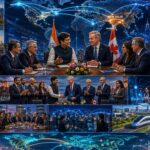
India-US Trade Deal Enters Final Weeks: What Changed and Why It Matters Now
It was not just Gor talking. Secretary of State Marco Rubio landed in Kolkata on May 23, his first visit to India in his current role, and the four days that followed were as packed as any diplomatic trip in recent memory. He visited the Mother House of the Missionaries of Charity. He met Prime Minister Modi. He sat down with External Affairs Minister S. Jaishankar. He attended the Quad Foreign Ministers’ meeting on May 26 alongside counterparts from Japan and Australia.
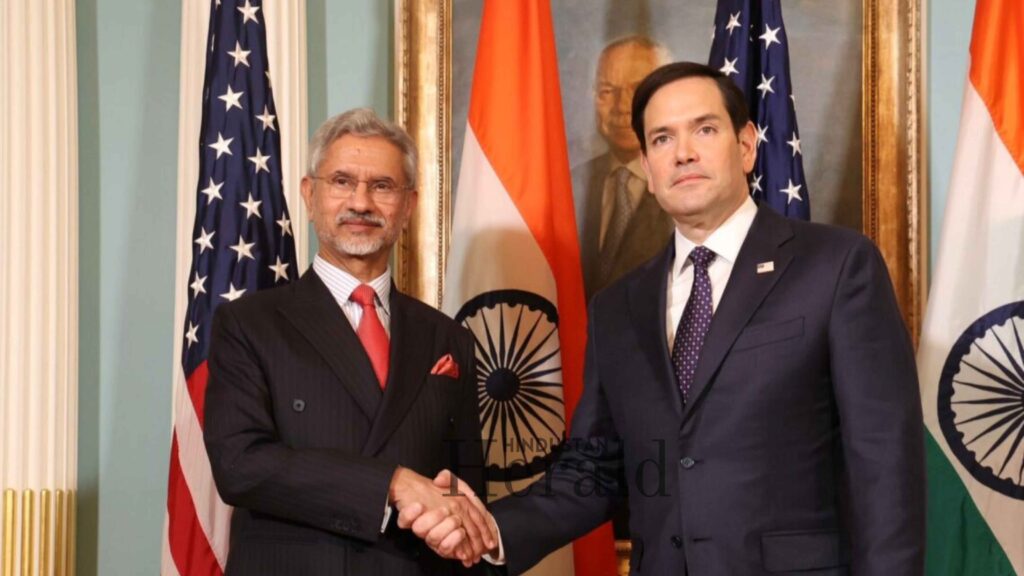
But the substance underneath all the ceremony was unmistakably economic. Rubio told Modi, according to the US government’s own readout, that “US energy products have the potential to diversify India’s energy supply.” He told reporters after the Modi meeting that India was “at the cornerstone of how the United States approaches the Indo-Pacific.” And he told Jaishankar that a trade deal could be wrapped up “very soon” a phrase that, coming from a Secretary of State mid visit, is not throwaway language.
Back on the ground in Delhi, Ambassador Gor was making the same point with even greater directness. Speaking at the US-India TRUST Initiative at IIT Delhi, he did not hedge. “Expect trade deal to be signed in next few weeks and months,” he said a public commitment that few sitting ambassadors would make unless the internal picture genuinely supported it.
He also praised Indian companies for committing more than $20 billion in investments in the United States. Ambassador Gor added to that by noting that the US embassy in India had ranked first among all American missions globally in terms of investment brought into the US $20.5 billion. These are not vanity numbers. They are the kind of figures that give the deal political cover on both sides of the Pacific.
By the end of the week, the Ministry of Commerce and Industry had confirmed what government sources had been hinting at formal negotiating rounds are scheduled for June 1 to 4 and separately for June 5 and 6 in New Delhi, with a US team flying in specifically to work through the remaining details of the Bilateral Trade Agreement. Sources with direct knowledge of the process told ANI that the first tranche of the deal could be signed before July. That is a hard timeline, not a diplomatic aspiration.
Eighteen Months of Grind
None of this arrived easily. The road to this point was genuinely difficult, and glossing over that would be a disservice to anyone trying to understand how durable this agreement might be once it lands. When President Trump returned to the White House for his second term, India was facing a real problem. Washington had slapped a 26 per cent reciprocal tariff on Indian goods, and the broader atmosphere around trade was hostile enough that Indian exporters were genuinely anxious. Pharmaceuticals, textiles, engineering goods, chemicals sectors that employ millions of Indians and generate substantial foreign exchange were all exposed.
India was the first country to enter formal bilateral trade agreement negotiations with the Trump administration. That was a deliberate choice. New Delhi calculated that early engagement was better than waiting, especially as competitors like Vietnam and Bangladesh were also scrambling to get Washington’s attention. The calculation was probably right, but it did not make the negotiations easy.
Agricultural market access was a sticking point from the beginning. American farm lobbies wanted India to open up. India, for reasons that are both economic and political, has always resisted. Non-tariff barriers were another battleground. So were digital trade rules, where American tech companies have long complained about the regulatory environment in India. These are not simple disagreements. They go deep into both countries’ domestic politics.
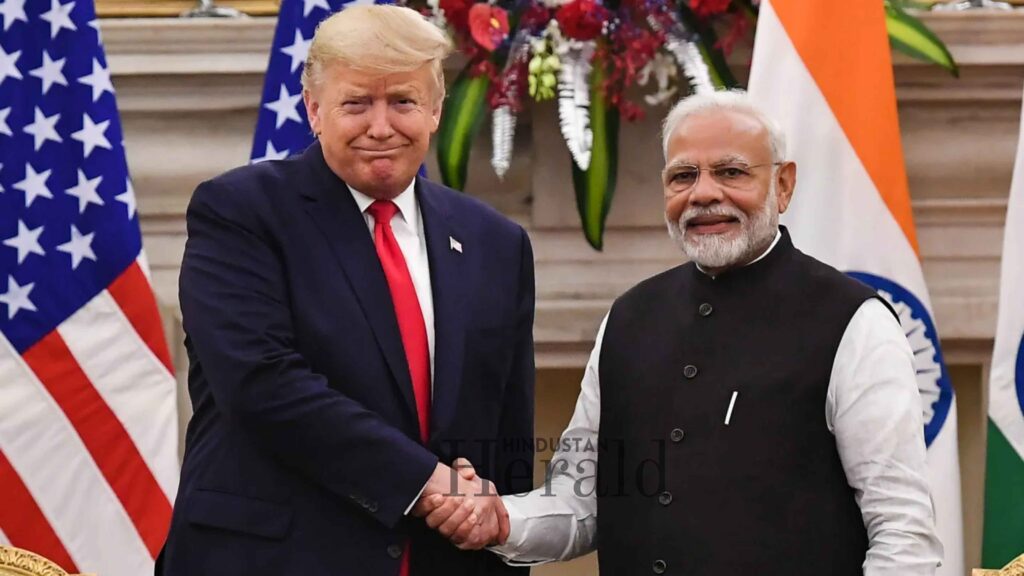
The breakthrough, when it came, arrived in early February 2026 after a call between Trump and Modi. On February 7, both governments issued a joint statement announcing a framework for an Interim Agreement. The White House followed with a fact sheet that laid out the key terms. The US would lower its Reciprocal Tariff on India from 25 per cent to 18 per cent. India would reduce or eliminate tariffs on American goods across priority categories and increase purchases of US petroleum, defence equipment, electronics, pharmaceuticals, telecom products, and aircraft. Both sides committed to negotiating digital trade rules and strengthening economic security cooperation.
Evan Feigenbaum of the Carnegie Endowment for International Peace said it clearly at the time: “The devil is in the details.” He was right to say it. The framework announcement was real progress, but the specifics which products, which timelines, what happens with agriculture remained unresolved. That is exactly what the June negotiating rounds are meant to settle.
What Is Actually at Stake
The Mission 500 target taking bilateral trade from $220 billion to USD 500 billion by 2030 sounds like the kind of round number that gets attached to ambitious political statements. But break it down by sector and it starts to look less like a slogan and more like a genuine structural shift.
Energy is the most immediate and commercially meaningful piece. Rubio was frank before his trip about wanting to sell India “as much energy as they’ll buy.” That framing reflects the reality of the moment. West Asian instability has disrupted supply chains. India’s continued reliance on Russian crude has become a diplomatic irritant with Washington. American producers are sitting on record export capacity. The pieces fit, even if the price negotiation is complicated.
Defence comes next. India has been steadily deepening its acquisition of American military hardware under the Major Defence Partner framework. A finalised trade deal is expected to ease the transfer of dual-use technology, reduce tariff friction on defence inputs, and potentially accelerate co-production programmes in jet engines, naval systems, and artillery. For Indian defence manufacturers trying to build domestic capacity, those are significant openings.
Semiconductors are where the longer game is being played. India is building its chip manufacturing ecosystem from the ground up under the India Semiconductor Mission. Access to American technology, IP frameworks, and joint research programmes does not produce results overnight, but it shapes the supply chain for the next decade. That is the kind of structural bet that serious investors should be paying attention to.
Pharmaceuticals deserve more attention than they typically get in these discussions. India is one of the largest suppliers of generic medicines to American consumers. Non tariff barriers including US FDA inspection delays and pricing related trade friction have long constrained what Indian pharma companies can do in the American market. A deal that meaningfully addresses those barriers would have a direct and measurable impact on the earnings of several large Indian pharmaceutical exporters.
Critical minerals are the quietly important thread running through all of this. Ambassador Gor specifically acknowledged India’s National Critical Minerals Mission and pointed to joint research exchanges at IIT Roorkee as evidence of deepening collaboration. The FORGE forum Secretary Rubio’s 54 country Resource Geo Strategic Engagement initiative is the multilateral structure within which this bilateral cooperation is being embedded. For both countries trying to build supply chains that are less dependent on China, critical minerals cooperation is not peripheral. It is foundational.
The Court Ruling Nobody Expected
Any honest account of where things stand has to reckon with the US Supreme Court’s decision on February 20, 2026, which struck down the reciprocal tariffs imposed under the International Emergency Economic Powers Act. That ruling removed the legal tool the Trump administration had been using to create tariff pressure in trade negotiations. Overnight, the negotiating landscape changed.
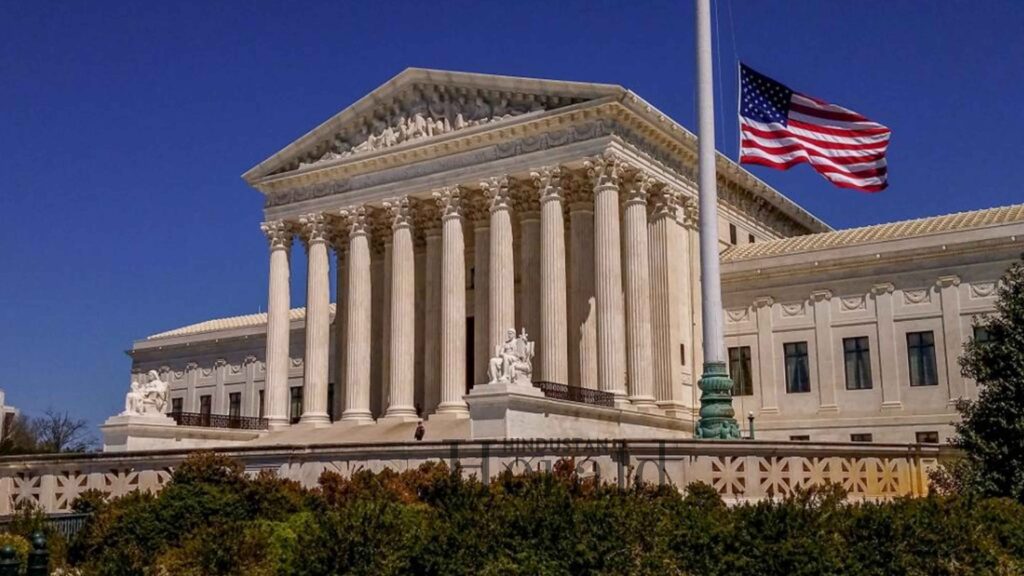
The court’s ruling introduced a universal 15 per cent duty applicable to all countries, which eliminated the differential tariff structure that had made India’s situation particularly urgent. For India, the immediate consequence was genuinely complex. On one hand, the preferential treatment embedded in the BTA framework is still expected to deliver a competitive advantage over countries operating under the universal rate. On the other hand, the tariff pressure that had driven New Delhi to the table quickly was now gone.
The Global Trade Research Initiative (GTRI) advised caution. Their argument was that India’s leverage had improved and that commitments made under duress should not be ratified without careful review. The government confirmed it was actively assessing the ruling’s implications. As it turns out, the official position is that the July deadline for the first tranche still holds but that is a decision being made in a different legal and strategic environment than the one that produced the February framework.
The Uncomfortable Bits
The optimism coming out of both capitals this week is real. But so are the fault lines. Relations between Washington and New Delhi took some genuine hits during Trump’s second term. The Trump administration’s claim that it had mediated an end to the India-Pakistan conflict a characterisation India forcefully rejected left a sour taste. Additional tariffs tied to India’s Russian oil purchases, imposed while China faced no comparable penalty for buying far larger volumes of the same oil, struck Indian officials as both commercially unfair and strategically inconsistent. These are not trivial grievances. They shape the atmospherics of every negotiating session.
The interim framework reportedly requires India to curtail Russian crude purchases. That is not a simple ask. India has been buying discounted Russian oil since the Russia-Ukraine war began because it makes economic sense for a country managing a large energy import bill against persistent inflationary pressure. Replacing that oil with more expensive American crude has a real fiscal cost. The government has not made any explicit public commitment on this point, and Modi’s careful language during the Rubio meeting calling for peace through “dialogue and diplomacy” without mentioning Russia by name suggests that New Delhi is not about to make one lightly.
For now, the preferred Indian approach appears to be managed ambiguity. Acknowledge the concern. Demonstrate goodwill through other means. Do not make a promise that cannot be kept.
Where This Leaves the Market
The honest investor takeaway from this week is straightforward. Both governments are signalling closure. The diplomatic architecture Rubio’s visit, confirmed June negotiating rounds, Gor’s public timeline commitment is consistent with a deal that is being managed toward a finish line, not one that is circling the runway indefinitely.
That does not mean the fine print is settled. It is not. Agriculture, digital trade rules, and the Russian oil question all have the potential to cause delay. The Supreme Court ruling has introduced legal uncertainty into a framework that was already complex. And both governments have domestic constituencies that will scrutinise whatever gets signed.
Still, the sectors that stand to benefit most clearly energy, defence, pharmaceuticals, semiconductors, and critical minerals are identifiable now. Companies with US market exposure, cross border supply chain operations, or technology partnerships on either side of this relationship should be running their scenarios ahead of a July announcement, not after.
For foreign institutional investors tracking India business news and emerging market positioning, a finalised trade deal with the United States would represent a structural upgrade in India’s global commercial standing at a moment when the China plus one trend is already generating meaningful capital reallocation into Indian manufacturing and services. A locked in tariff advantage with the world’s largest economy, sitting on top of India’s existing cost structure and scale, makes the investment thesis for a wide range of Indian equities considerably more compelling. That is not hype. That is arithmetic.
With $220 billion already on the table, $500 billion as the declared destination, and negotiators booked on flights to New Delhi for the first week of June, the question is no longer whether this deal gets done. The question is how clean the final text looks and how quickly markets can price it in once it does.
Stay ahead with Hindustan Herald — bringing you trusted news, sharp analysis, and stories that matter across Politics, Business, Technology, Sports, Entertainment, Lifestyle, and more.
Connect with us on Facebook, Instagram, X (Twitter), LinkedIn, YouTube, and join our Telegram community @hindustanherald for real-time updates.

Tracking world politics, global markets, trade movements, policy decisions, and the changing balance of economic power.
- Shelesh Joshi

- Shelesh Joshi
- Shelesh Joshi
- Shelesh Joshi




Former financial consultant turned journalist, reporting on markets, industry trends, and economic policy.
- Kavita Iyer
- Kavita Iyer
- Kavita Iyer
- Kavita Iyer